Imaginary interview with Orpheus
by Charactorium · Orpheus · Mythology · 6 min read
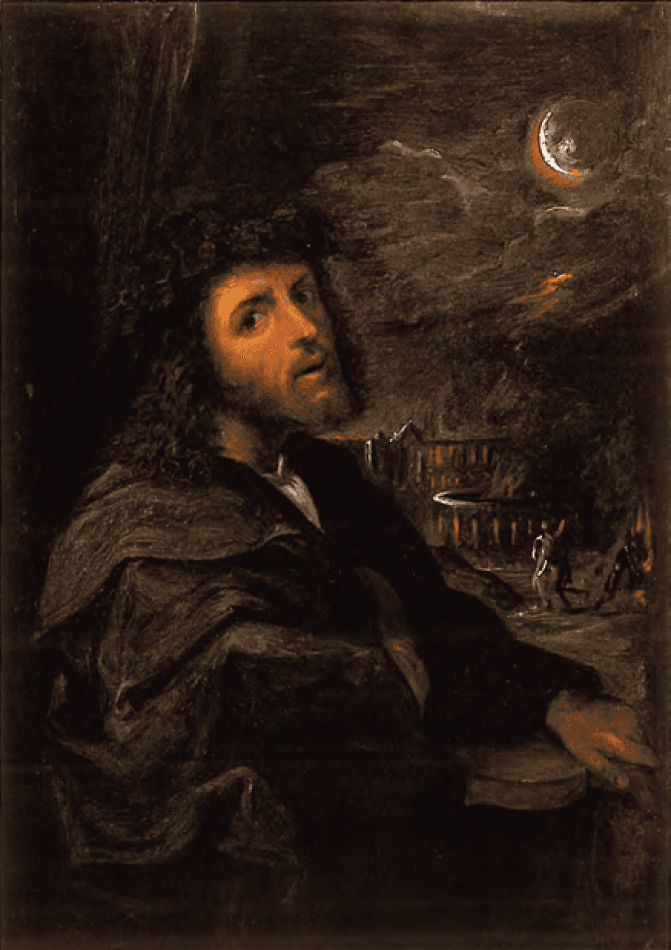
On the slopes of Mount Haemus, where the stone still echoes with songs of mourning, a man tunes a lyre whose strings seem to vibrate on their own. He wears the draped himation of Thracian poets, and his long hair falls over the instrument forged long ago by Hermes. Orpheus has agreed to speak, between silences that no mortal dares to break.
—You are said to be the son of a god. How did this lineage shape your voice?
My father is Apollo, the god of light and the arts, and my mother is Calliope, the foremost of the Muses. When I was born in Pieria, beneath the shadow of Mount Olympus, they say the birds fell silent to hear my first cry. Such a birth is not a source of pride; it is a debt: the lyre I carry is not a toy, but a fragment of the sacred brought down among men. In my native Thrace, I am seen less as a musician than as a bridge, one whose voice connects the altar of the gods to the feasts of mortals. I did not learn music; I received it as one receives breath.
Such a birth is not a source of pride; it is a debt.
—Tell us about this lyre. Where does its power come from?
It was fashioned by Hermes himself, from a tortoise shell and gut strings stretched like living nerves. With my plectrum, I pluck these strings and the world falls into order: the beasts lie down, the rivers slow, and even the rocks, they say, lend an ear. This is not magic in the sense that village sorcerers understand it—it is the order of things remembering its primal harmony. When I play, I do not command nature; I remind it of what it has forgotten. The day the sea tries to swallow me, I will silence it with the lyre, as one calms an angry child.
I do not command nature; I remind it of what it has forgotten.
—Do you remember the expedition with Jason? What was your role among the Argonauts?
Jason took me aboard not to row, but to keep the rhythm for those who did. On the ship speeding toward Colchis, my lyre set the cadence for exhausted arms and calmed the storms that Poseidon raised on a whim. But the trial I remember best was passing the Sirens. Their song lures sailors onto the rocks like honey draws flies; so I played louder than they, I drowned out their deadly voice with mine, and the crew passed without a single man throwing himself into the sea. Earlier, I had already driven off the Harpies that fouled the meals of the poor seer Phineas. Music, you see, is not just an ornament for banquets: it is a weapon.
I drowned out their deadly voice with mine, and the crew passed.
—What would you say about your role as a founder of mysteries? Many consider you a prophet.
In Thrace, I saw men living without knowing anything of what awaits them after the final breath, and that seemed to me a cruelty. So I passed on rites, songs—what are now called the Orphic teachings—so that the soul might know the path and not stray in the dark. Some say I also touched the cults of Dionysus, others the mysteries celebrated at Eleusis. I claim no title. But when one has descended the stair of the dead while still alive, one returns with knowledge that cannot be kept to oneself. The sacred is not a treasure to be buried: it is a lamp passed from hand to hand.
The sacred is not a treasure to be buried: it is a lamp passed from hand to hand.
—It is said that your music moves even stones. Is that a poet's image or the truth?
Ask the trees of Pieria that uprooted themselves to come listen to me; ask the rivers that held back their course. When I retreat into the forests in the afternoon, the wild beasts draw near without fear: the wolf lies down beside the fawn, and no one bares fangs. It is not that I tame them—it is that in the presence of a certain beauty, hunger and fear consent to be silent for a moment. Ovid, the Roman poet, would one day say that my lyre moved even the hardest rocks. He will be right without knowing it: for the rock, like the human heart, is never as hard as it believes.
The rock, like the human heart, is never as hard as it believes.
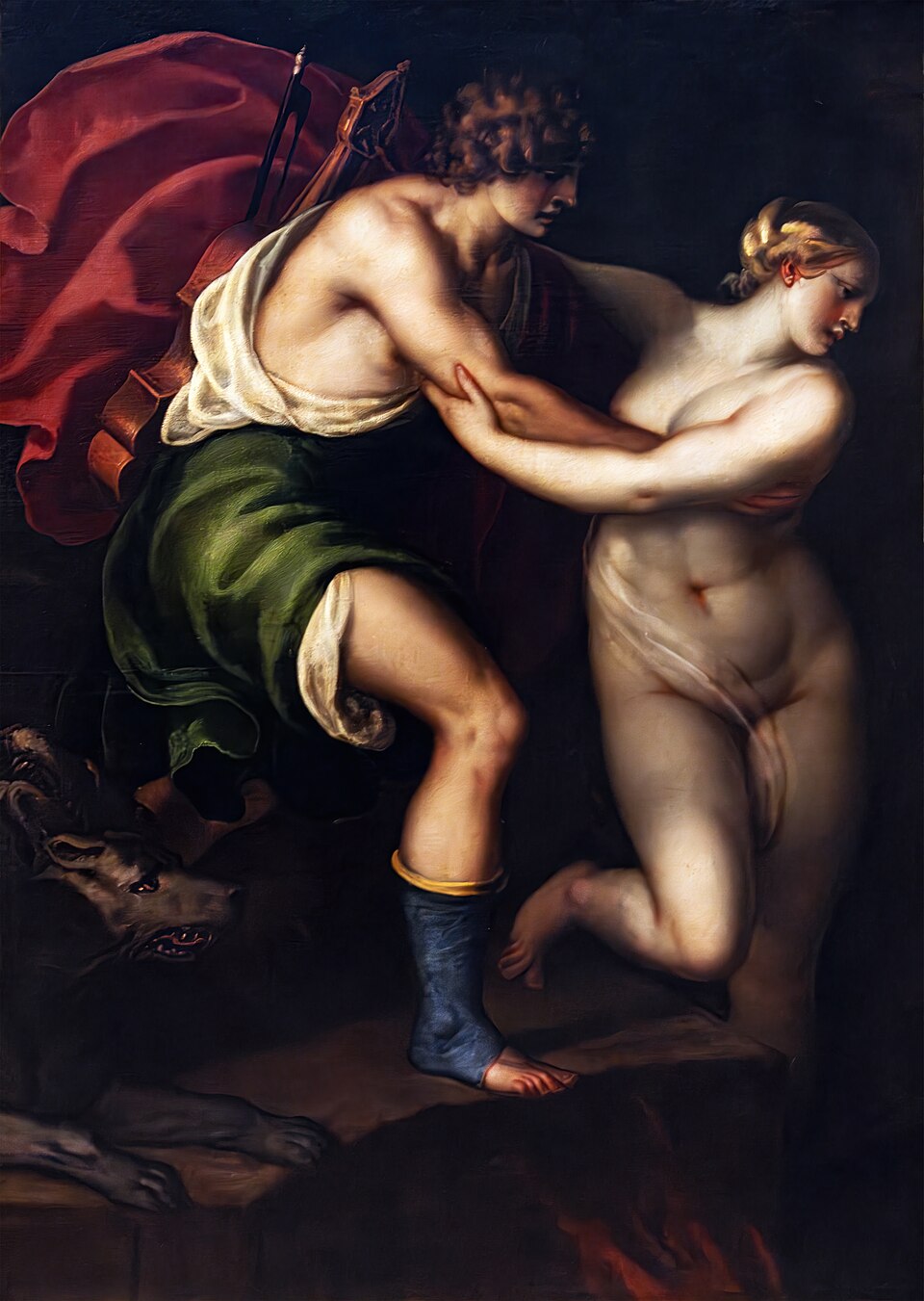
—Now comes the story everyone knows. How did you learn of Eurydice's death?
On our wedding day, Eurydice was walking barefoot through the tall grass when a snake bit her on the heel. She fell without a cry, and the venom took her before I could reach her. I set down my lyre. For the first time in my life, I found no note—silence fell upon me like a slab. All of nature that danced to my songs froze with me. It was in that emptiness that the mad idea was born: if my music softens the living and the beasts, why not the dead? Why not Hades himself? I picked up the instrument, took a torch, and turned my steps toward the entrance of the Underworld.
Silence fell upon me like a slab.
—How would you describe the moment when your song bent the rulers of the dead?
No one enters the kingdom of Hades alive; yet I descended, my torch in one hand, my lyre in the other. The shades crowded around me, astonished to hear a beating heart. Before the throne, I sang not to seduce but to speak the truth of my grief—that love too is a law, as old as death. And they say, as the poet Hyginus recounts, that Persephone herself relented, that Hades agreed to give me back Eurydice. One condition only: walk before her to the light without ever looking back. I accepted. What lover would not have accepted?
Love too is a law, as old as death.
—And then that fatal gesture. Why did you turn around?
We were climbing the dark path, she behind me, I straining to hear her light footsteps. But the closer I came to the exit, the more doubt gnawed at me: was she really there? Had Hades not tricked me with an empty shade? A few steps from daylight, anguish proved stronger than the command. I turned around. I saw her face for one last second, her arms reaching toward me—then she slipped backward, swallowed by the darkness, without a reproach. Virgil would say that I lost her forever in that instant. It was not death that defeated me, you see, but my own impatience. I had charmed the Underworld and could not charm myself.
I had charmed the Underworld and could not charm myself.
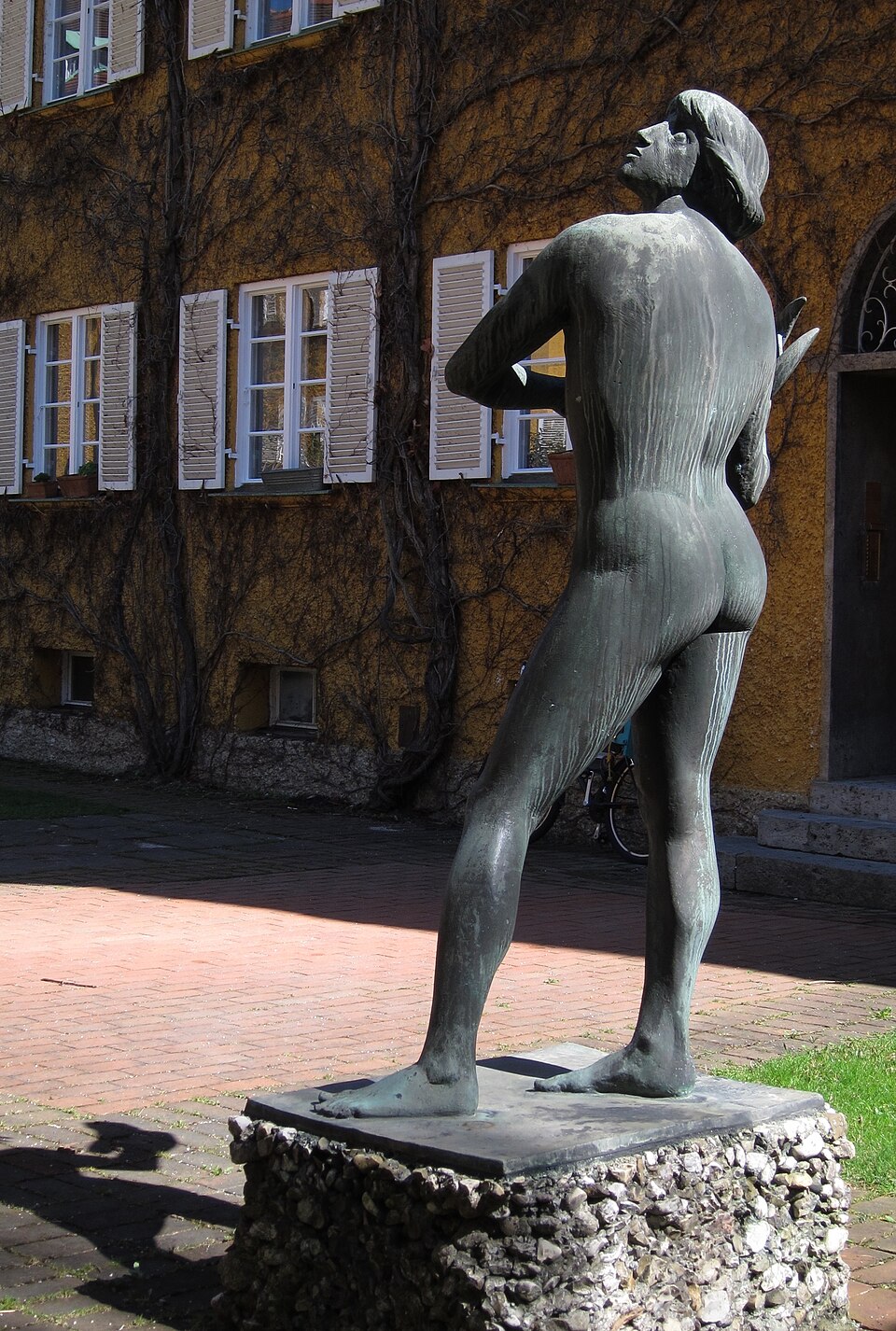
—After this loss, how did you live? They say you withdrew into the mountain.
I withdrew to the slopes of Mount Haemus, in Thrace, far from the feasts where I used to be invited at sunset. There, I no longer tuned my lyre except for the wind and the stones. My song was no longer that which calms storms or guides Argonauts: it was a long lament, and nature, faithful, wept with me. I renounced weddings, banquets, the company of women—not out of contempt, but because a man who has held Eurydice a second time can no longer reach out to another. Grief, when it is just, itself becomes a form of music.
Grief, when it is just, itself becomes a form of music.
—Your end is said to have a strange marvel: a head that continues to sing. What of it?
They say my head, severed from my body, rolled into the waves and drifted to the island of Lesbos, still singing as it floated on the water. That my skull, washed ashore, kept a prophetic voice that men came to consult. If this is true, then understand this: the voice does not die with the throat that carries it. My hymns, my rites, my songs will be passed down on papyrus scrolls long after my bones have bleached. This is perhaps the only victory a poet can win over death—not to escape it, but to keep singing through the mouths of others.
The voice does not die with the throat that carries it.
—In the end, what do you think remains of a man's music?
Look at the laurel crown placed on the brow of victors: it dries, it crumbles, and yet it is woven anew each season. My music is like that. I charmed beasts, soothed rivers, softened Hades, and I could not keep the one I loved—the lyre is not all-powerful, it never promised to conquer fate. But it promises something else: that nothing beautiful is ever completely lost. As long as a child in Thrace plucks a string thinking of me, Eurydice will rise a little toward the light. That is what I leave behind: not an answer to death, but a reason to sing despite it.
Not an answer to death, but a reason to sing despite it.
This imaginary interview was generated by artificial intelligence from sources documented in Orpheus's profile. It dramatises what the figure might have said based on what we know about them, but does not constitute attested historical testimony. For primary sources and factual documentation, refer to the full profile.