Kids interview Orpheus
by Charactorium · Orpheus · Mythology · 5 min read
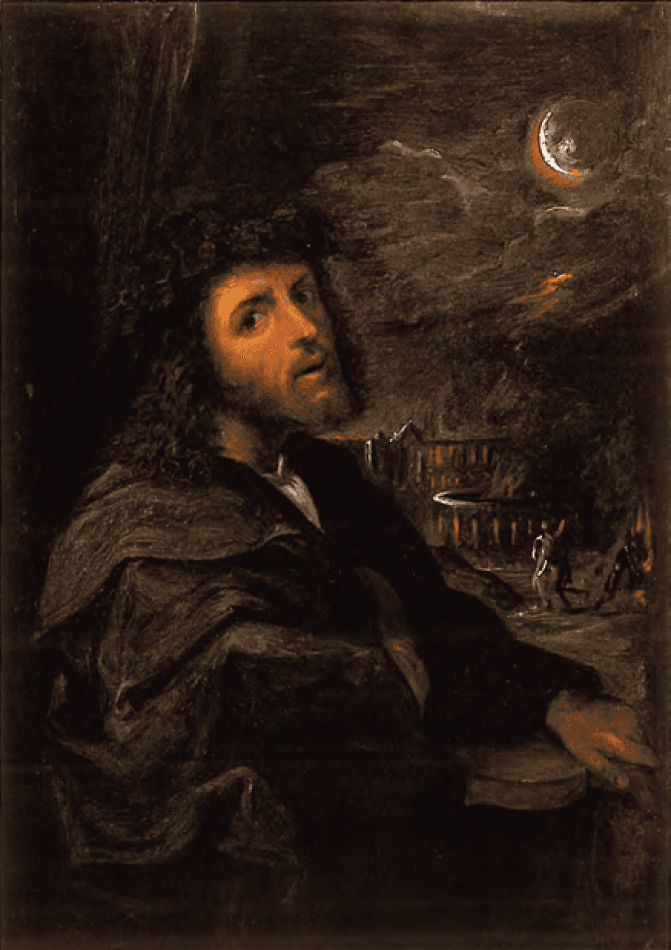
Two young visitors, on a school field trip, approach a long-haired man tuning a lyre near a spring. He looks up, surprised and touched that children have come to listen. "Come closer," he says with a smile. "Sit on the grass. I'll tell you about my world."
—Is it true your dad was a god? What was it like having such a father?
You know, my child, my father was Apollo, the god of music and light. And my mother, Calliope, was a Muse — a goddess who breathes inspiration into poets, like a gentle wind in the mind. I grew up in Pieria, a green land right by my father's sacred mountain. Having a god for a father wasn't about gold gifts. It was a gift in the fingers. When I touched the strings, the music came by itself, like water from a spring. Imagine opening your mouth to speak, and a song comes out instead. That's what it was like.
My father didn't give me gold, he gave me a song in my fingers.
—Were you the best musician? Was there anyone stronger than you?
People said I surpassed all others in the art of music. But listen well: I never said it myself. A poet who boasts, his music rings false. When you sing well, it's not for yourself, it's for the listener. I sometimes wore a laurel crown — a crown of leaves, not a king's, just the mark of those who sing and make fine verses. But the real prize, my child, was not the crown. It was seeing a rough man cry while listening to me. That was worth more than all the gold in Thrace.
A poet who boasts, his music rings false.
—Your lyre, was it really magic? Where did it come from?
Ah, my lyre! It was forged by Hermes, the swift-footed god, then it came to me. A lyre is a small stringed instrument plucked with a plectrum — a pointed chip, like a large scale. And when I played... imagine a river slowing down to listen. The trees bent their branches. Wild beasts, wolves, deer, came and sat in a circle, gentle as lambs. Even the rocks seemed to hold their breath. It wasn't a magic trick to frighten. It was music reminding everything that it could be calm. Beauty, my child, disarms everything.
Beauty disarms everything, even a wolf.
—When you played, how did it feel inside you?
Beautiful question, little one. When I played, I forgot where my hand ended and the string began. The plectrum plucked, the sound rose, and I was no longer quite myself. It was like breathing, but bigger. My body became a bridge between the gods above and the people below. You know, I would wake at dawn and the first thing I did was tune my lyre in the cool silence. If a string was out of tune, my whole day was out of tune. A well-tuned lyre is like a heart at peace. Everything else comes from that.
A well-tuned lyre is like a heart at peace.
—They say you boarded a ship with heroes. Was it dangerous?
Oh yes, dangerous! I boarded the ship of Jason, with the Argonauts, those heroes who went to fetch the Golden Fleece all the way to Colchis, at the edge of the sea. Picture a wooden ship, exhausted rowers, and suddenly Sirens — creatures that sing to lure sailors and drown them. Their song was so beautiful you wanted to jump into the water to join them. So I took my lyre and sang louder than them. My music drowned out theirs. The men kept rowing, saved. Sometimes, my child, you don't fight danger with a sword. You fight it with a more beautiful song.
You don't always fight danger with a sword, but with a more beautiful song.
—Didn't the other heroes make fun of a guy with just a lyre?
At first, maybe, a little. Imagine those big fellows with their muscles and weapons, and me, with my little wooden instrument. But when the sea raged and the waves shook us, it was my music that calmed the waters and gave rhythm to the oars. And when poor seer Phineus was tormented by the Harpies — winged monsters that stole his food — it was again my lyre that helped drive them away. After that, no one laughed anymore. A strong arm is useful on a battle day. But something that calms the fear of the whole crew — that, my child, is worth a hundred swords.
A strong arm serves one day, but what calms fear serves every day.
—Who is Eurydice? Why does everyone talk about her?
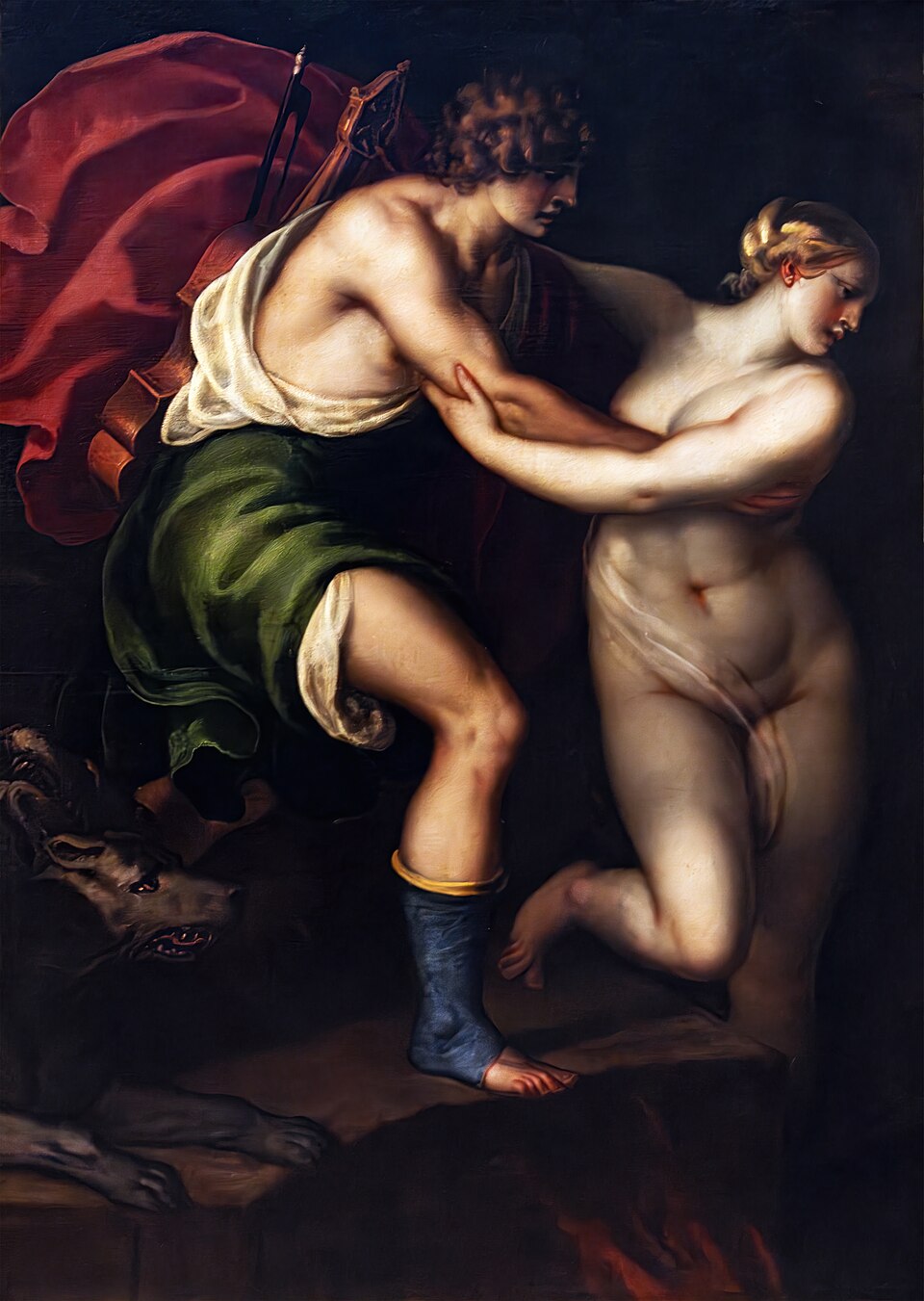
Eurydice... she was my love, my child. My wife. The day I lost her, the sun seemed black to me. A snake had bitten her foot, and she died, just like that, in an instant. You know that hollow feeling in the chest when you lose someone? I couldn't accept it. I sat on Mount Haemus, in Thrace, and played such sad music that nature itself wept with me. But weeping wasn't enough. I decided a crazy thing, something no living person had ever dared: to go find her where the dead go.
The day I lost her, the sun seemed black to me.
—Wait... you really went down among the dead? Weren't you scared?
I was terribly afraid, my child. Imagine descending, alive, into a dark and cold kingdom from which no one returns — the Underworld, the realm of Hades. I clutched my lyre against me like you clutch a torch in the dark. And I played. I played before Hades and Persephone, the king and queen of the dead. My music moved them so much that they agreed to give Eurydice back to me. On one condition: to ascend without ever turning back to look at her before the light. One single rule. So simple. And yet the hardest of all.
I clutched my lyre against me like you clutch a torch in the dark.
—And then? Did you turn around? Why couldn't you hold on?
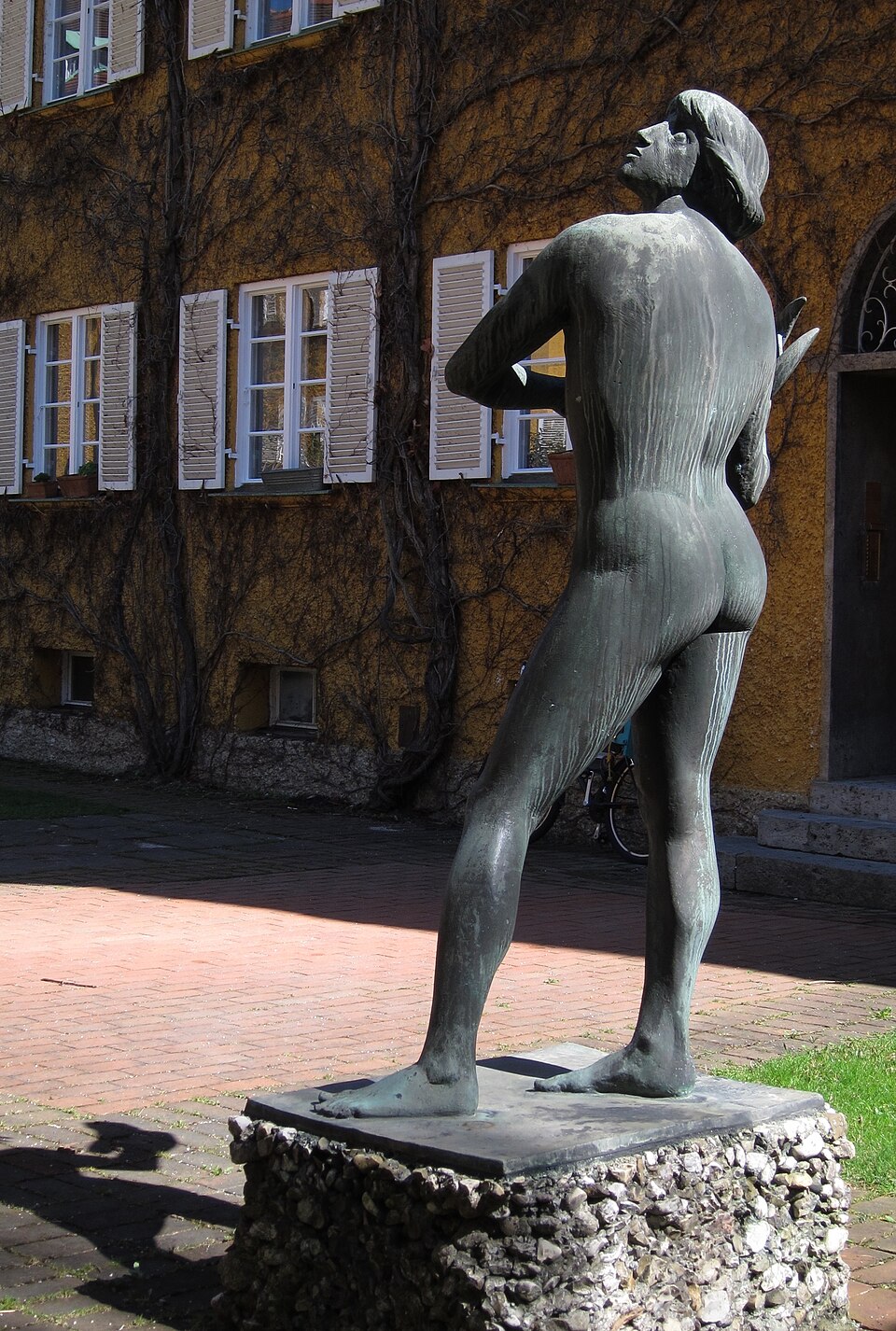
Yes... I turned around. And there lies my whole tragedy — that Greek word for a fate you cannot avoid, even when you see it coming. I had almost reached the light. I heard her steps behind me, but I no longer heard her breathe. Doubt gnawed at me: what if she wasn't there? A second of fear, a single glance back... and she vanished like smoke, forever. You see, my child, it wasn't death that defeated me. It was my impatience. To love, sometimes, is also to know how to trust without looking.
It wasn't death that defeated me, it was my impatience.
—After all that, what became of you? Did people forget you?
Forgotten? Oh no, my child. After my death, they say my body floated to the island of Lesbos, and my head, resting on the shore, still sang and even gave oracles — messages from the gods. In Thrace, they kept my songs and prayers: the Orphic Hymns, sacred poems to honor the gods. People gathered around these teachings in secret cults. I became more than a musician: a kind of prophet, a bridge between men and mystery. You see, a beautiful song does not die with the one who sings it. It continues to travel from mouth to mouth.
A beautiful song does not die with the one who sings it.
—If we had to remember just one thing about you, what would it be?
Remember this, my young friends: gentleness is stronger than you think. All my life, I never raised a sword. I tamed wild beasts, calmed storms, softened the king of the dead himself — just with strings and a little voice. The men of my time celebrated warriors. I showed them that you can move the world with beauty. So when you encounter something ugly or violent, remember Orpheus. Don't answer by shouting louder. Answer by singing truer. That is my true legacy.
Don't answer by shouting louder, answer by singing truer.
This imaginary interview was generated by artificial intelligence from sources documented in Orpheus's profile. It dramatises what the figure might have said based on what we know about them, but does not constitute attested historical testimony. For primary sources and factual documentation, refer to the full profile.