Imaginary interview with Osiris
by Charactorium · Osiris · Mythology · 5 min read
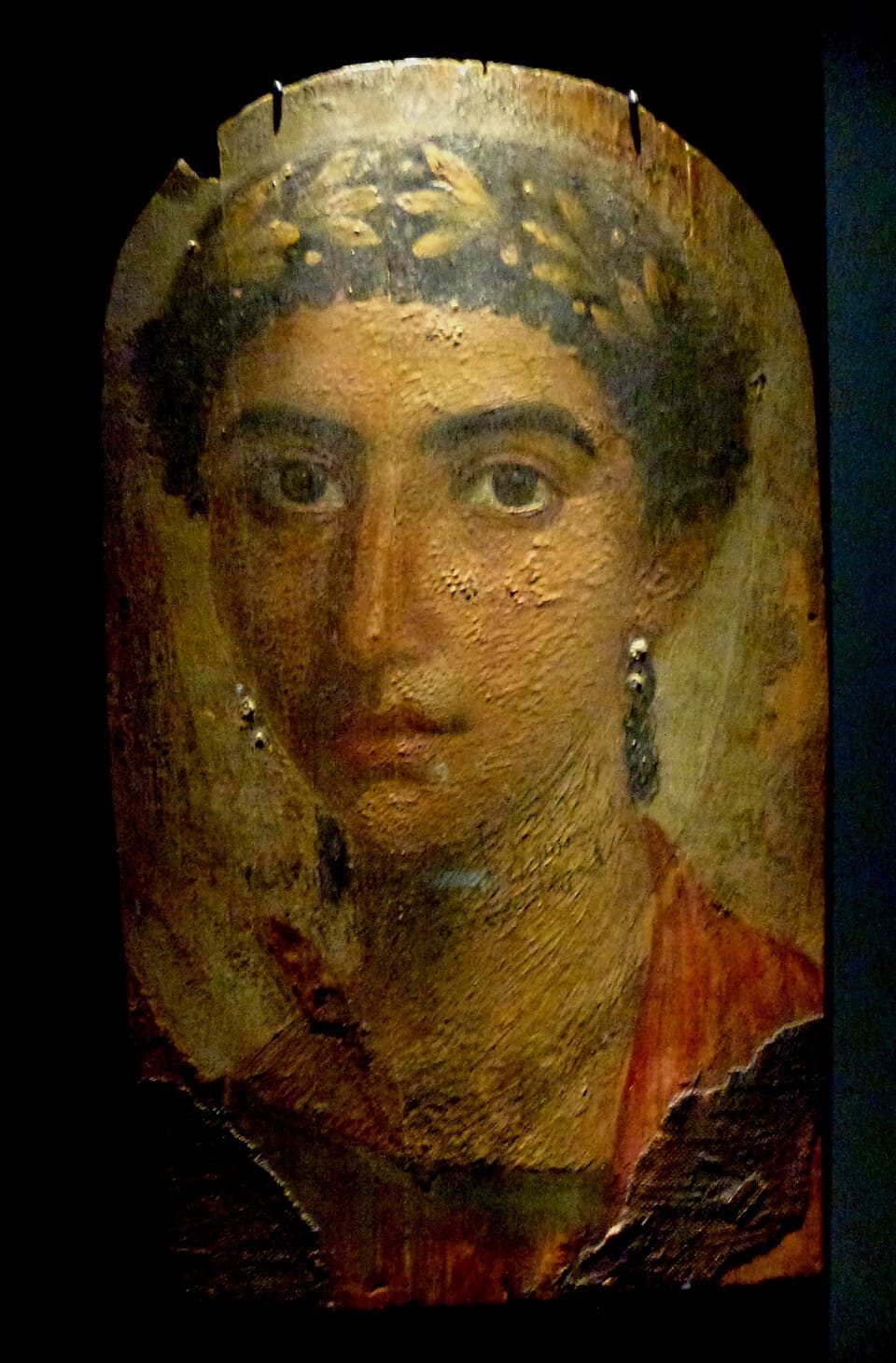
In the oblique light of a chapel at Abydos, where incense still rises toward the carved walls, a figure wrapped in linen stands motionless on a low throne. His skin green as the river silt, his tall crown cleaving the shadows, Osiris consents to speak. He answers slowly, from the unchanging present of the gods.
—How do you tell what happened to you at your brother's hands?
Set was my brother, and it is by a brother's hand that death enters the world. He laid me low, he unmade me, he scattered my body in fourteen pieces across the lands and waters of the river, like a harvest thrown to the wind. The Coffin Texts say it bluntly: he committed an abominable act in killing his brother. I do not feel for him the rancor of men; he is disorder, and disorder is part of order. But what arose afterward was no longer quite me, and it was more than me. One truly dies only once; the rest is metamorphosis.
One truly dies only once; the rest is metamorphosis.
—And how did you return?
Through Isis. My wife, my sister, traveled the banks and marshes to gather what Set had scattered. She collected every part of me, anointed them, wrapped them in linen bandages, and with her breath and her wings she rekindled in me a fire that death thought extinguished. From that embrace was born Horus, the heir, who would claim my throne in broad daylight. By the magic of Isis, I became the first whose body was preserved for eternity. That is why, ever since, the living wrap their dead as I was wrapped: they seek to repeat, on every corpse, the gesture of my sister.
The living wrap their dead as I was wrapped.
—You now rule over the Duat. What happens when a soul appears before you?
It descends into the Duat, the underworld where I sit upon my throne. There, the heart of the deceased is placed on one pan of the scales; on the other, a single feather, that of Ma'at, truth and justice. If the heart weighs heavier than the feather, burdened with lies and violence, the soul is lost. If it balances, the deceased enters eternal life and becomes, in turn, an Osiris. I do not judge in anger: I am the threshold, the measure. The judgment of the dead is not a punishment, it is a weighing. Each arrives laden with what they have done with their days under the sun.
I do not judge in anger: I am the threshold, the measure.
—Why did the Egyptians so fear this passage before you?
Because one does not lie before a scale. During their lives, they learned the spells to cross the gates of the Duat, those words you call the Book of the Dead. They knew that I rule over the kingdom of the dead and that souls present themselves to be judged according to their earthly deeds. This fear made them better: a man who knows he will be weighed hesitates before stealing from his neighbor or starving the orphan. The tribunal was not a distant threat, it was a compass for the life before. They built tombs, recited spells, but the true baggage was a light heart. The rest is only linen and stone.
One does not lie before a scale.
—You wear very recognizable insignia. What do they say about you?
On my head, the Atef crown: the white crown of Upper Egypt, flanked by two ostrich feathers. It says that I rule, but on the other shore. In my hands crossed upon my chest, I hold the heka scepter, the shepherd's crook, and the nekhakha flail, the instrument that beats the grain. One gathers the flock, the other separates the wheat from the chaff: together they say that the king guides and that he nourishes. A god is known by what he bears. When a pharaoh crosses these same insignia on his chest, he is not playing a role: he affirms that at his death, he will become me.
One gathers the flock, the other beats the grain: the king guides and he nourishes.
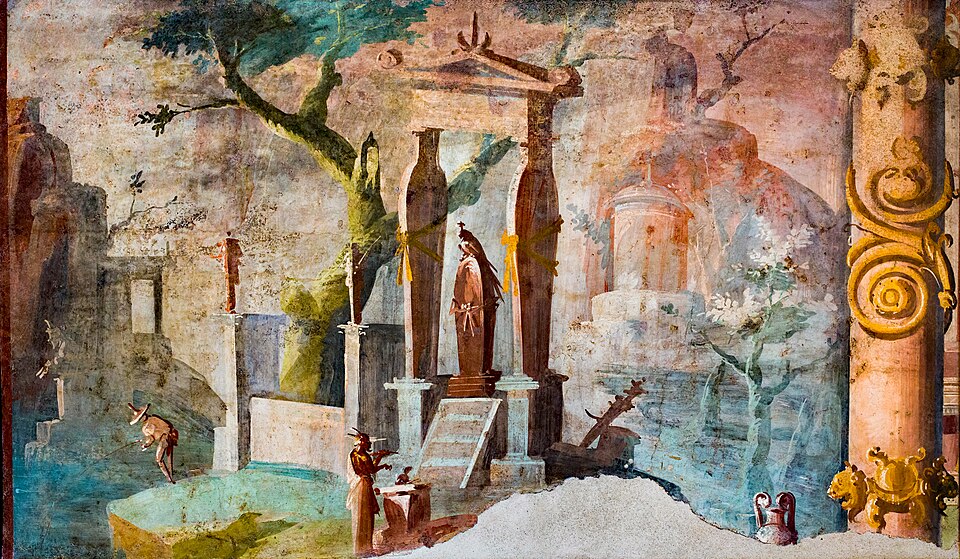
—What does the Djed pillar raised in your name mean to you?
The Djed, that four-barred pillar that worshippers fashion into an amulet, is my spine. When Isis had recomposed me, it was my backbone that straightened first, like a trunk raised after the storm. Raising the Djed is to reenact that moment: stability returning, the vertical triumphing over collapse. It is placed against the throat of mummies so that the dead, too, may stand upright in the other world. Where the Atef crown proclaims my kingship, the Djed proclaims my resurrection — not a fragile return, but a permanence. As long as a Djed stands somewhere in Egypt, I am not entirely laid low.
As long as a Djed stands somewhere in Egypt, I am not entirely laid low.
—Your mysteries are celebrated at Abydos. What is enacted there each year?
Abydos is the place of my heart, the great center where pilgrims come from the Delta to the cataract. Each year, thousands of worshippers gather to reenact, in broad daylight, what was done to me in shadow: my death, the lamentations of Isis and Nephthys, then my rebirth. Priests take the roles, my barque is carried in procession, they weep, and they rejoice. On the walls of the Temple of Seti I, it is engraved that I receive the offerings of the living and bless those who honor my name. It is not a spectacle: by reliving my passion, the crowd ensures that they too will share in my resurrection.
By reliving my passion, the crowd ensures that they too will share in my resurrection.

—Why were the faithful so eager to rest near your sanctuary?
Because to be buried at Abydos, or to erect a stele with one's name there, was to lie down in my shadow. The Egyptians believed that proximity to my sanctuary eased the great passage: one departed from the very place where I returned. Those who could not rest there would at least send their engraved name, so that the annual procession might brush against it and carry it to me. It is a commerce of faithfulness: they honor my memory, and according to the inscriptions, I bless those who honor my name. A dead person who is still named is not entirely dead. At Abydos, the name was a barque, and my sanctuary, the port.
A dead person who is still named is not entirely dead.
—You are said to be present in the Nile flood. How do you experience this connection to the river?
Look at the Nile: each year it recedes, the earth cracks, you would think it dies. Then the water rises, overflows, and deposits that black silt that makes the grain sprout. This rising is me returning. The Egyptians have long understood that my cycle and that of the river are one: my death is the low water, my resurrection is the flood. That is why I became the most venerated god in all the Black Land — not because I am terrible, but because I am necessary. Without the flood, no bread or beer; without me, no promise that death is but a season.
My death is the low water, my resurrection is the flood.
—What does the sheaf of wheat associated with your cult represent to you?
The wheat is my simplest lesson, one that a child understands. The seed is buried in the earth, thought lost, entombed like a dead person in his grave — and after a few weeks, a green stalk pierces the soil. I was sometimes fashioned as a silhouette of earth sown with barley: they watered me, and watched me turn green again. These vegetating Osirises placed in tombs told the deceased: you will sprout again like this grain. The sheaf placed in my hands is not a harvest ornament; it is the oath that nothing buried with love remains sterile. The grain that dies nourishes; the dead who pass through me are reborn.
You will sprout again like this grain: that is all the harvest says.
This imaginary interview was generated by artificial intelligence from sources documented in Osiris's profile. It dramatises what the figure might have said based on what we know about them, but does not constitute attested historical testimony. For primary sources and factual documentation, refer to the full profile.