Kids interview Osiris
by Charactorium · Osiris · Mythology · 5 min read
Two young visitors, aged twelve, on a school trip, have crossed the gates of an Egyptian temple. Before them stands Osiris, the green-skinned god, tall crown and gentle gaze. He invites them to sit near his throne to answer all their questions.
—Is it true that your own brother once killed you? What's it like to be betrayed like that?
Yes, my child. My brother Set killed me out of jealousy. He wanted my throne. Imagine trusting someone your whole life, and then one day the closest person turns against you. That's betrayal. Set didn't just take my life: he cut my body into fourteen pieces and scattered them across the land of Egypt. He did it so I would never be found. But you see, hatred doesn't always win. My story doesn't end there, and that's what makes it beautiful.
Hatred doesn't always win, even when it comes from your own brother.
—And how did you come back to life if you were in fourteen pieces?
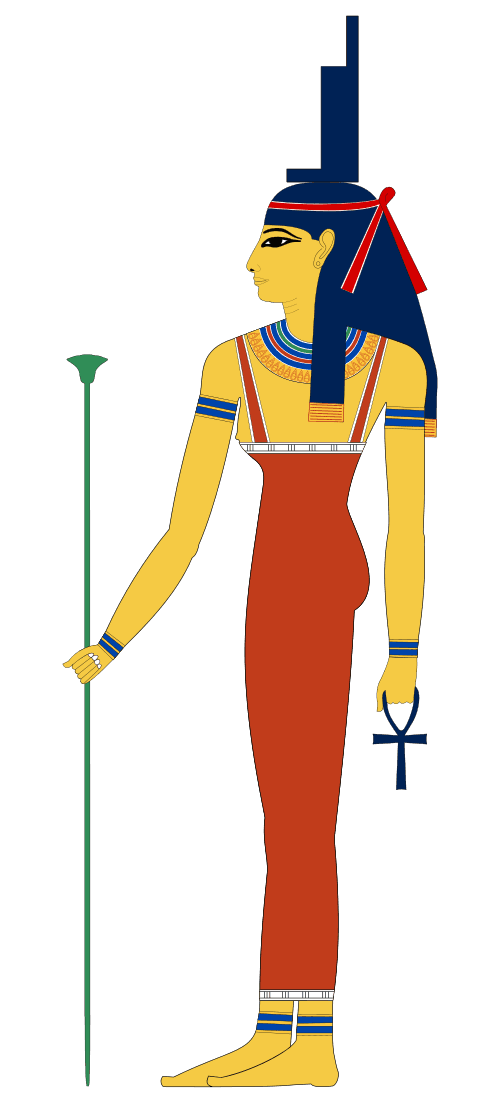
Thanks to Isis, my wife. She, my child, is the heroine of this story. Imagine a woman who travels the entire country, from north to south, to find every piece of the one she loves. She searched long, she wept, but she never gave up. Her sister Nephthys wept with her. When Isis had gathered all the pieces, she spoke magical words, and life returned to me. The Coffin Texts recount this moment. That is why in my land, they say love is stronger than death.
Isis's love stitched back together what hatred had torn apart.
—Now what do you do as a god? Where do you live?
I rule over the Duat, my child — the underworld, the realm of the dead. Don't think it's a sad place. It is a place of order and justice. I sit on my throne, dressed in white, and every soul that dies comes before me. Imagine a great silent hall, softly lit, where each one waits their turn. The Book of the Dead says I rule over the realm of the dead. My job is to ensure everyone is treated with justice, and to grant eternal life to those who deserve it.
The realm of the dead is not a sad place, it is a place of justice.
—How do you know if someone was good or bad during their life?
Good question, my child! We perform what is called the judgment of the dead. Imagine a great scale. On one side, we place the heart of the deceased. On the other, a simple feather — the feather of truth. If the heart is as light as the feather, it means the person lived honestly, without lies or cruelty. They may then enter eternal life. But if the heart is heavy with bad deeds, it sinks. You see, we don't weigh gold or wealth. We weigh only the goodness of the heart. That is the most important thing of all.
We don't weigh your wealth, we weigh the goodness of your heart.
—Why did people say you were the god of wheat and the river?
Because my own story resembles that of the earth, my child. Look at the grain of wheat: it is buried in the soil, it disappears like a dead person. Then, a few weeks later, a green shoot comes out of the earth. It is reborn! That is exactly like me: dead, then returned to life. And every year, the great river, the Nile, overflowed and covered the fields with fertile mud. Without that flood, nothing grew, people went hungry. So they said the flood was my rebirth. My resurrection nourished an entire people.
Like the buried grain that sprouts, I die and am reborn every year.
—So everyone was afraid when the river flooded?
No, my child, on the contrary — it was a celebration! You might imagine a flood is frightening. But in our land, the Nile flood was awaited with joy. Without it, the earth remained dry and hard as stone. When the water rose, it brought black silt, rich mud, and the farmers knew the harvests would be good. They thanked me for that. To the ancient Egyptians, the overflowing water was fertility — the power to grow life. The sheaves of wheat placed in temples were a gift to say thank you.
In our land, the flood was not a fear, it was a promise of harvest.
—In drawings, you are instantly recognizable. What exactly do you wear?
You have a sharp eye, my child! I wear objects that no one else has all together. On my head, the Atef crown: a tall white crown with two ostrich feathers on the sides. In my crossed hands, I hold two royal objects. The crook, like that of a shepherd guiding his flock. And the flail, the tool used to thresh wheat. Imagine: with one, I guide my people; with the other, I remind that I am the god of harvests. These objects told everyone, at a single glance: here is the king of the dead.
The crook to guide, the flail to nourish — these are my two royal hands.
—And what is that strange pillar often seen next to you?
Ah, you mean the Djed! It is a small pillar with bars at the top, like a column. They said it was my spine — the backbone that keeps you upright. Touch your own back, my child: without that bone, you could not stand. Well, the Djed pillar was the symbol of my solidity, my stability regained after my resurrection. People wore small Djed-shaped amulets as good luck charms, to have strength and a long life themselves. It meant: stand straight, life goes on.
The Djed pillar was my spine — the symbol that life stands upright.

—Did people come to see you somewhere? Was there a big festival for you?
Yes, my child, at Abydos! That was my greatest sanctuary. Every year, thousands of people made a long journey on foot to come. Imagine the crowd, the dust of the roads, the songs. There, my entire story was reenacted like a great play: my death, Isis's tears, then my rebirth. People wept, then rejoiced. It was like reliving my adventure all together. The temple later built by Pharaoh Seti I still bears images of all this carved on its walls. Coming to Abydos was like touching eternity with your fingertips.
At Abydos, thousands of people relived my death and rebirth, together.
—Is it because of your story that they wrapped mummies in bandages?
Exactly, my child. When Isis reassembled my body, she wrapped it carefully to protect it, with strips of white linen. That became the model. The Egyptians thought: if we prepare the body like that of Osiris, then the dead will be able to be reborn like Osiris. This is called mummification. They dried the body, wrapped it in long strips of cloth, gently, almost like swaddling a baby. It wasn't meant to scare. It was an act of love and hope, to tell the deceased: you are not truly lost, you will continue to live elsewhere.
The mummy wasn't meant to scare — it was an act of hope.
—If we were good all our lives, could we meet you one day?
What a beautiful question to end with, my child. In the belief of my people, yes: whoever lived with an honest heart would one day come before me, in the Duat. And if they had been just, I would open the door of eternal life for them. But listen to me well: you don't need to wait until the end to do good. The feather of truth, you can think of it today. Be kind, tell the truth, help others. That is what makes a heart light. And a light heart, you see, is already a bit of eternity that you carry within you.
A light heart is already a bit of eternity that you carry within you.
This imaginary interview was generated by artificial intelligence from sources documented in Osiris's profile. It dramatises what the figure might have said based on what we know about them, but does not constitute attested historical testimony. For primary sources and factual documentation, refer to the full profile.