Kids interview Paul Éluard
by Charactorium · Paul Éluard (1895 — 1952) · Literature · 5 min read
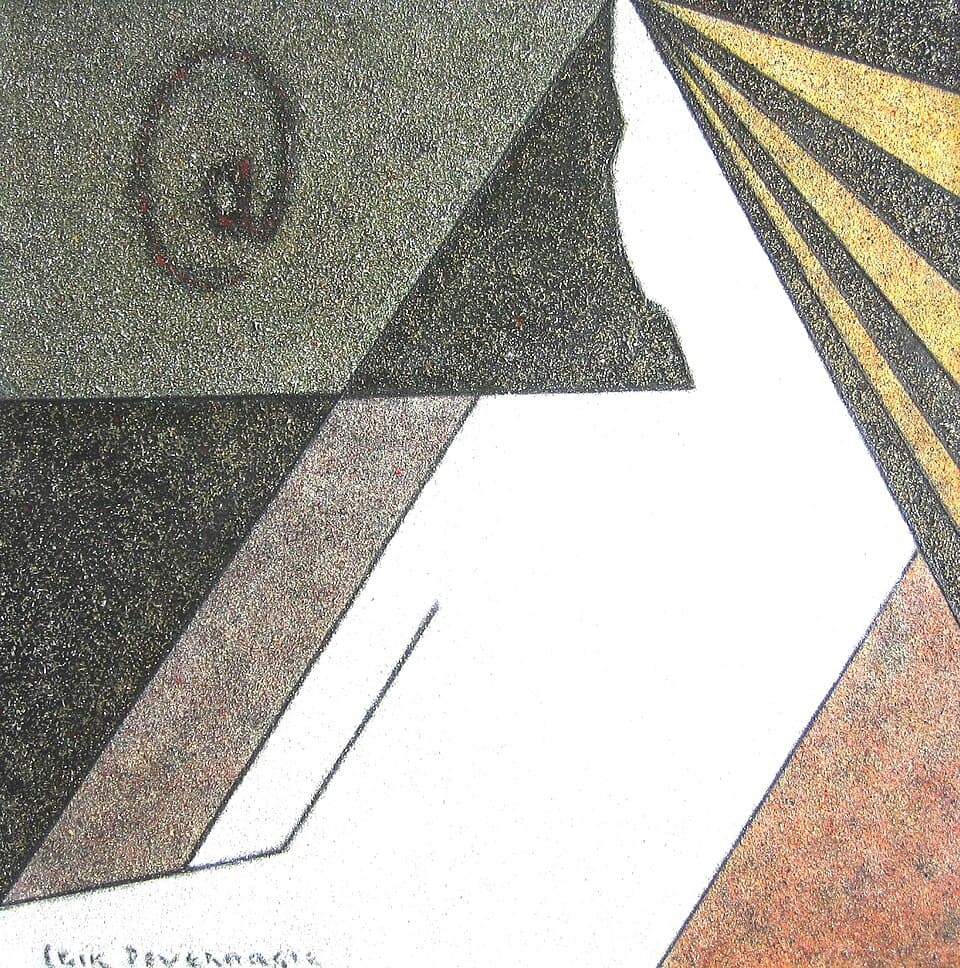
That morning, two young visitors of twelve enter a Parisian apartment with walls covered in paintings. A gentle-eyed man invites them to sit down and smiles at them. His name is Paul Éluard, and he has agreed to tell them everything.
—How old were you when you got sick and went to the mountains?
I was seventeen, my child. A nasty cough, tuberculosis, sent me far from Paris, to Davos, in the Swiss mountains. Imagine a big white building in the middle of the snow, where you lie for hours breathing cold air. It was sad, and yet… that's where it all began. A young Russian girl was treating her lungs like me. Her name was Helena, but I called her Gala. We read poems together between coughing fits. You see, sometimes life throws you into a gray place to give you the most beautiful encounter. Illness gave me love before it gave me verse.
Illness gave me love before it gave me verse.
—How did you feel when Gala left with the painter Dalí?
It broke me, I won't lie to you. In 1929, Gala left to live with my friend the painter Salvador Dalí. I thought we would stay together all our lives. Imagine lending your most precious treasure, and it never comes back. I cried, a lot. But do you know what a poet does with his pain? He transforms it. All that grief, I poured it into my poems about love and loss. I even wrote to her that she remained the woman of my life. Sadness, when you put it into words, stops hurting you alone. It becomes something beautiful for others.
Sadness, when you put it into words, stops hurting you.
—Why did you write that the earth is blue like an orange? That's weird, isn't it?
Ha! You're right, it's weird, and it's done on purpose. The earth is blue like an orange — an orange isn't blue, and the earth isn't an orange! But when you stick together two things that have nothing to do with each other, it wakes up your mind. It's called a surrealist image: you bring together two distant words to create surprise. With my friends, we used to write without thinking, letting the words come on their own. Imagine closing your eyes and your hand writing whatever it wants. That was our game in 1929, in the collection L'Amour la Poésie. Poetry isn't about saying what's true: it's about making you see differently.
Sticking two words that have nothing to do with each other wakes up your mind.
—Is it true you were friends with Picasso? What did you do together?
Oh yes, Pablo Picasso was a true friend. I often spent my afternoons in the painters' studios, in Montparnasse. It smelled of paint and turpentine, the floor was covered with canvases. We talked about art, laughed, gently argued. Picasso even illustrated one of my collections, Les Yeux fertiles, in 1936. And with the photographer Man Ray, I made a book where my poems answered his images. You see, I often wrote a poem looking at a painting, like answering a letter. At home, the walls overflowed with canvases offered by my friends. My apartment was almost a small museum.
I wrote a poem looking at a painting, like answering a letter.
—How did you write? Did you carry a notebook?
Always, my child! I kept a small notebook by my bedside. In the morning, barely awake, I jotted down the images that had come to me during the night. I believed my mind worked even while I slept. Imagine a fisherman casting his net into sleep and hauling up words upon waking. Later, I'd copy everything neatly on the typewriter, before sending it to print. But the real magic moment was the pencil racing across the paper. Tracing the letters by hand was part of the poem itself. A poet starts with a notebook and a pencil stub, nothing more.
A poet starts with a notebook and a pencil stub.
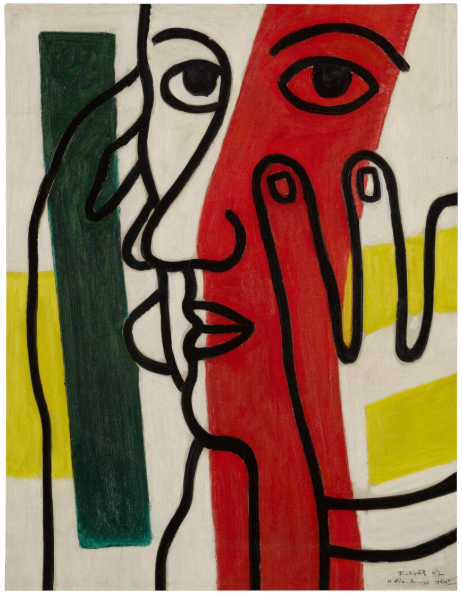
—Is it true that your poem 'Liberté' was originally a love poem?
It's absolutely true, and I love this story. Originally, I was writing this poem for the woman I loved, my dear Nusch. At the end, I wanted to write her name. And then, at the last moment, I changed my mind. Instead of the name, I wrote a single word: Liberté. And by the power of a word, I begin my life again. Do you realize? A love poem for one person became a cry for an entire country. It was 1942, France was occupied by the German army. That small change transformed everything. A word, sometimes, can open a door that a thousand soldiers cannot close.
A word can open a door that a thousand soldiers cannot close.
—I heard that planes dropped your poem from the sky. Is that a joke?
No, it's no joke, and even I had trouble believing it! During the Occupation, my poem Liberté was printed on leaflets, small sheets of paper. And the English planes, the RAF, parachuted them over France. Imagine thousands of leaves falling from the sky like a snow of words, onto people who were scared and hungry. A poem doesn't fire bullets. But it gives back courage, and courage was the most precious weapon. Distributing these texts was dangerous: you risked prison. That's why I say a poem can be stronger than a gun.
Thousands of leaves falling from the sky like a snow of words.
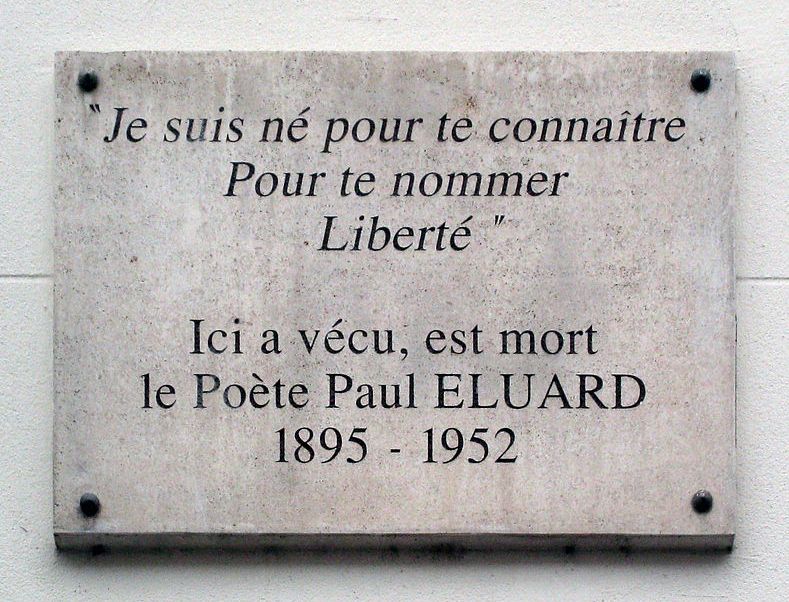
—During the war, what did you eat? Were you cold?
We were cold, and we were hungry, my child. I wrote these words: Paris a froid Paris a faim. It wasn't an image, it was true. Food was rationed: a little bread, sometimes a little cheese, and each person had a very small portion. No more roasted chestnuts sold on the street in winter. People slept standing up in the metro to be a little less cold. Imagine a big tired city, wearing old clothes to keep warm. That's the city I put in my resistance poems. Writing about hunger and cold was a way of saying: we are still here, we are standing.
Writing about hunger and cold was saying: we are standing.
—Were you afraid of being arrested because of your poems?
Yes, I was afraid, and it was normal to be afraid. Under the Occupation, writing against the occupier could land you in prison, or worse. So I published in secret, in the clandestinity: we printed the poems in secret, passed them from hand to hand. Our meetings among friends, once joyful and loud, had become silent and discreet. Imagine writing an important letter knowing you must never be seen giving it. My collection Au rendez-vous allemand came out at the Liberation, in 1944, when we could finally breathe. Being afraid doesn't stop you from acting. Courage isn't not trembling; it's writing anyway.
Courage isn't not trembling; it's writing anyway.
—If we remember one thing about you, what would it be?
What a beautiful question to end with. If you must remember only one thing, remember this: words have enormous power. I was a poet of love, with Capitale de la douleur in 1926, and a poet of freedom, with Liberté in 1942. For me, it was the same fight. Loving someone and loving freedom come from the same place in the heart. When you write a true word, it comes out of you and goes to live in other people's minds, sometimes for centuries. You too, my child, have that power at the tip of your pencil. Never forget it. A well-chosen word can change a life, and even change the world a little.
A well-chosen word can change a life, and even change the world a little.
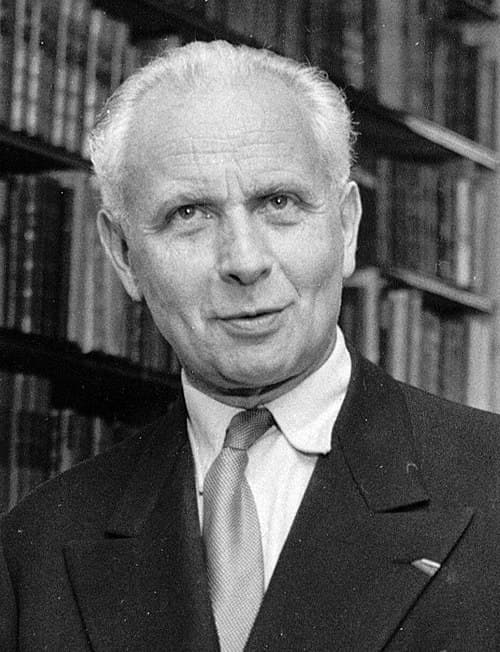
This imaginary interview was generated by artificial intelligence from sources documented in Paul Éluard's profile. It dramatises what the figure might have said based on what we know about them, but does not constitute attested historical testimony. For primary sources and factual documentation, refer to the full profile.