Imaginary dialogue between André Breton and Paul Éluard
by Charactorium · Paul Éluard (1895 — 1952) · Literature · 5 min read
It is in a modest apartment in Montparnasse, its walls covered with canvases by Picasso and Ernst, that André Breton meets Paul Éluard one winter evening in 1947. The low lamp illuminates an open notebook, photographs of Nusch placed on the table, and the silence of a man hollowed out by grief. They have known each other since 1919, since the early provocations of Dada and the nights of automatic writing; their friendship has known outbursts, ruptures, and reunions. Breton comes this evening without ceremony, as a demanding brother, to push his old comrade to say what public poetry hides.
—Paul, I knew you marked by Gala long before our surrealist battles. That encounter at the Davos sanatorium — what remains of it in you?
You know I only speak of it reluctantly, André, and here you are pressing where it burns. I was seventeen, spitting blood at Davos, and that young Russian woman entered my room like a new fever. Gala taught me that desire and death were hand in hand — perhaps that's where all my lyricism comes from. When she left me for Dalí, I felt the earth pull away from under my feet. But the pain she caused me only nourished the verses I wrote. I could not hold it against her. You don't reproach a wound for having opened a spring.
You don't reproach a wound for having opened a spring.
—Remember our afternoons at La Rotonde, our evenings of automatic writing with Aragon and Péret. What were you really seeking in those games?
I was seeking what you yourself were seeking, André — to catch reason off guard. We would sit down, the smoke would rise, and one of us would toss out a word that the other would catch in midair without knowing why. It was exhilarating and a little frightening: we let someone inside us speak whom we did not know. You saw a method in it, almost a science of the unconscious; I saw above all the door to love and images. Les Yeux fertiles, which Picasso illustrated, was born from those hours. We were young, convinced we could change life around a café table. I am not ashamed to have believed it.
We let someone inside us speak whom we did not know.
—You know I distrust the 'beautiful line.' So explain to me this 'La terre est bleue comme une orange' that caused so much gossip in the group.
You play the innocent, André, you who defend the image that brings two distant realities together better than anyone. That line from L'Amour la Poésie is not a whim: it is exact. Never a mistake, words do not lie. The earth and the orange have the same roundness, the same offering to the gaze; by striking them together, I make a spark leap forth that logic would stifle. That is my work as a poet — not to describe, but to strike two flints against each other. In my notebook, I note these encounters of words as one picks up pebbles. Capitale de la douleur is full of these collisions. Love alone taught me to see the world that way.
Not to describe, but to strike two flints against each other.
—They say your poem Liberté was first a love poem. You who wanted to name a woman, how did you name a people?
It's true, and few know it. I was writing for Nusch, writing her name on my notebooks, on the sand, on the snow. And then, as the stanzas unfolded, I understood that what I was naming overflowed a single woman. At the last moment, I erased her name and wrote Liberté. By the power of a word, I was starting my life over. The poem appeared clandestinely in Poésie et Vérité, in 1942, and then the RAF airdropped it as leaflets over occupied France. Thousands of sheets falling from the sky! An intimate poem become a weapon. I premeditated nothing, André — it was the word itself that willed it.
By the power of a word, I was starting my life over.
—You joined the Communist Party in the midst of the Occupation, and you remain in it. Doesn't this commitment stifle the free poet I once knew?
I knew you would ask me that question, and that you would not like my answer. Paris was cold, Paris was hungry — I wrote it in Au rendez-vous allemand. Faced with this misery, I could no longer play alone with images. The clandestine life taught me that poetry could go down into the street, in the form of a leaflet, at the risk of those who distributed it. You fear that the party will dictate my verses; I believe it made me useful. I renounce nothing of surrealism, but oppression forced me to choose my side. A poet who turns his eyes away from the hunger of his people is no more than a jeweler. I prefer to be a voice than a jewel.
I prefer to be a voice than a jewel.
—I saw you devastated by Nusch's death, in 1946. This table, these photographs before us — how do you still write, my old brother?
You did well to come this evening, André; few dare to look at these photographs with me. When Nusch died suddenly, from a hemorrhage, time overflowed everywhere. I thought I would never hold a pencil again. And then I understood that staying silent would be to betray her a second time. So Le Temps déborde came out of me like a cry — not to console, but so that her presence might endure in words. Loss, you see, is love that continues without a body. You have known my muses, Gala then Nusch; they have always been the center of my work. Today I write in absence as I wrote in desire. It is the same spring, grown bitter.
Loss is love that continues without a body.
—When we founded the group, in 1924, and you disappeared on your world tour, did you already believe that poetry could transform life?
Ah, you don't forget my flight! You took up a collection to bring me back, worried about my sanity. The truth is, I was suffocating — I wanted to test whether the world kept its promises or only my poems. Yes, I already believed, and I still believe, that poetry can change life: not by decreeing laws, but by making men capable of seeing and desiring differently. Surrealism was not a literary school for us; it was a way of living with open eyes. I traveled seas only to end up understanding that revelation lay in a notebook, at my bedside. One goes very far to come back to a single right word.
One goes very far to come back to a single right word.
—You always wrote in response to painters — Ernst, Picasso, Man Ray. Why this need to blend your verses with their images?
Because I never believed that poetry lived alone. At Eaubonne, I shared a roof, a woman, walls painted by Max Ernst — art was not an ornament, it was the air we breathed. With Man Ray, in Facile, my poems married the photographs of Nusch; desire passed from image to word without a border. Picasso illustrated my collections as one extends a sentence. You know this, you who always wanted to unite the arts: a canvas gives me a verse, a verse calls for a canvas. My walls are covered with their gifts, and each painting is a question to which I try to answer as a poet. We were a family that thought through each other's hands.
A canvas gives me a verse, a verse calls for a canvas.
—That word, Liberté, escaped you to become that of millions of men. Doesn't that frighten you, you who love intimate things?
It stunned me at first, I admit. You write in secret, for a single ear, and suddenly a poem is torn from your hands and runs the roads of occupied Europe. Read in hiding, copied, airdropped as leaflets — it no longer belonged to me. But no, André, it does not frighten me: it is the highest fate a poem can know. I was born to name, and a name is truly alive only when others take it up again. That my most intimate verse became the cry of a people is proof that love and liberty speak the same language. I only lent my voice to a word greater than myself.
A name is truly alive only when others take it up again.
—Under the Occupation, our meetings became clandestine and dangerous. What did fear change in your way of writing?
Fear, André, stripped me of the superfluous. When every printed page can get you arrested, you no longer bother with coquetry. My verses became more naked, more direct, like a hand held out in the dark. Our former evenings, joyful and talkative, had become whispered rendezvous, where poems were slipped like weapons. I learned there that clandestinity was a school of courage as much as a school of style. Au rendez-vous allemand bears this mark: they are poems written to be murmured, copied, passed on. Fear did not silence me — it taught me to write only the essential.
My verses became more naked, like a hand held out in the dark.
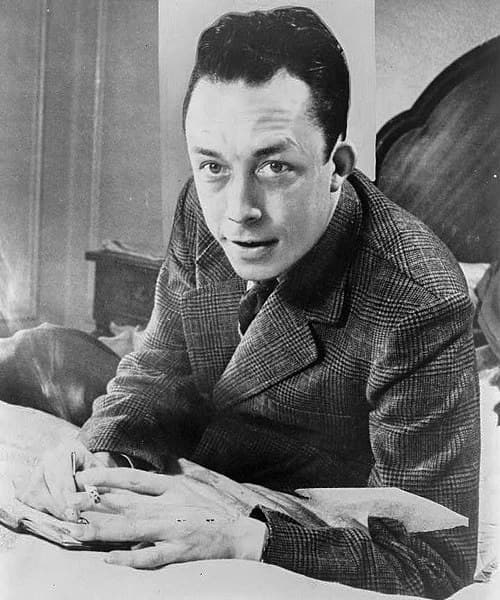
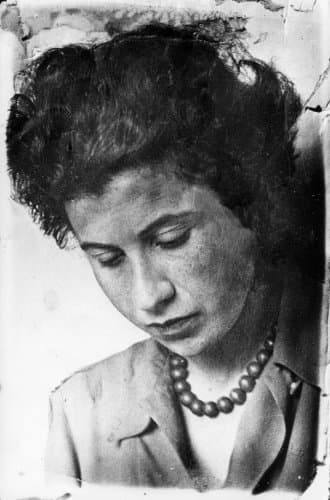
This imaginary interview was generated by artificial intelligence from sources documented in Paul Éluard's profile. It dramatises what the figure might have said based on what we know about them, but does not constitute attested historical testimony. For primary sources and factual documentation, refer to the full profile.