Imaginary interview with Paul Éluard
by Charactorium · Paul Éluard (1895 — 1952) · Literature · 6 min read
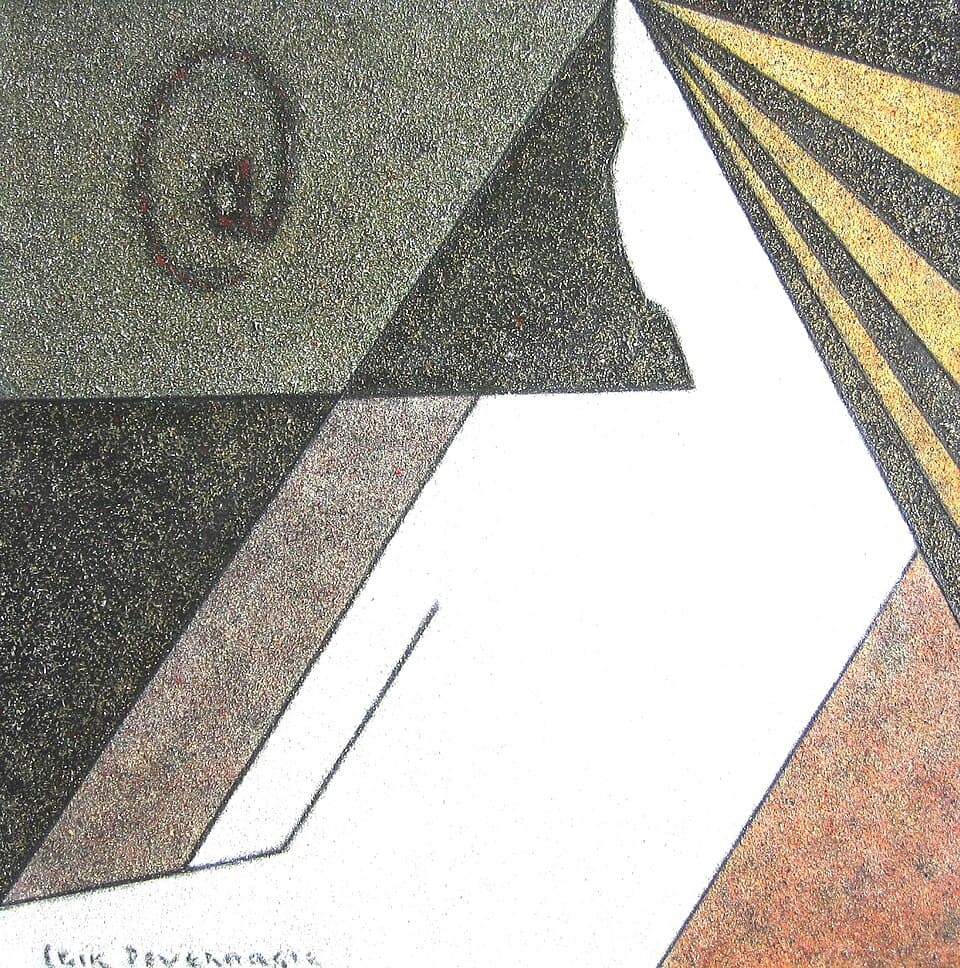
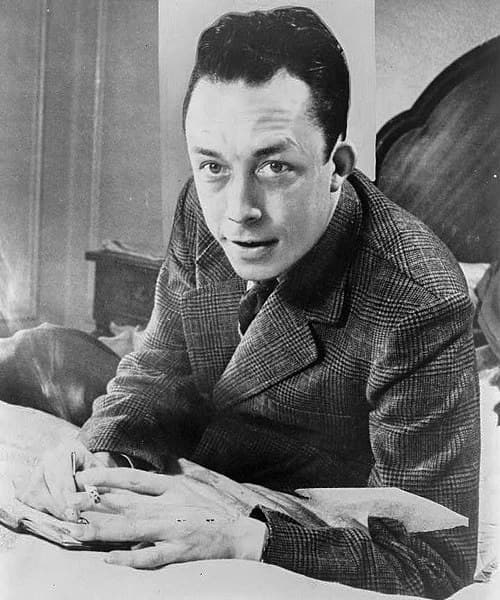
November 1947. In a Parisian apartment whose walls are covered with canvases gifted by Picasso and Ernst, a man with a gentle gaze welcomes us, a dog-eared notebook beside him. The war is over, Nusch is gone, and the voice of Paul Éluard — the poet read by all of France but not always known by name — is at once tender and somber.
—How did you enter the surrealist adventure?
It all began after the other war, that of 1914, where they stuck an orderly's armband on me among the gassed soldiers. I came out of it sickened by humanity. Then there was André Breton, Tzara, that magnificent uproar of Dada that spat on every established value, and in 1924 the first Manifesto. We would gather in the evening, Aragon, Péret, us, around writing games where the hand had to run faster than reason — automatic writing, we called it. The idea was mad and right: if you stop monitoring your mind, the unconscious delivers images that no calculation could find. It was that freedom — long before the other — that I fell in love with.
The hand had to run faster than reason.
—What do you say to those who find your images absurd, like this earth blue as an orange?
I was much mocked for that line from L'Amour la Poésie, in 1929: 'La terre est bleue comme une orange'. They saw it as provocation, a coquetry. But read the rest: 'Jamais une erreur les mots ne mentent pas'. A surrealist image is not a lie; it is two distant realities brought together to spark a flash. The orange and the earth resemble each other in roundness, in the promise of sweetness they hold in the hand. The poet does not describe the world as it is seen; he reveals the secret correspondences that the laziness of the eye hides from us. When the juxtaposition is right, the reader starts, then smiles: he has recognized something he knew without knowing it.
An image is not a lie: it is two distant realities brought together to spark a flash.
—Do you remember your first meeting with Gala?
1912. I was seventeen and my lungs were eaten away; they had sent me to the sanatorium in Davos, in the Swiss snows, to die or to heal. It was there, among the coughers and wool blankets, that a young Russian named Helena, whom I called Gala, looked at me. We read together, we wrote notes to each other from bed to bed. She was my first muse — that word poets wear out, but for me it meant a physical necessity: without a woman to name, I did not write. She left me later for Dalí, and it broke me. But I wrote to her that the pain she caused had only nourished my verses — and for that, I could not hold it against her.
Without a woman to name, I did not write.
—It is said that in 1924 you disappeared without telling anyone. What happened?
There are moments when you can no longer stand yourself. In 1924, without a word to Gala, without a word to Breton, I took to the sea and traveled around the world as one flees a fire one carries within. My surrealist friends, believing it was a bout of madness, organized a collection to bring me back. They were right to be afraid, and wrong to think I was losing myself: I was searching for myself. Poetry is not always enough to keep a man upright; sometimes you need to put an ocean between yourself and your ghosts. I came back, of course. One always returns to those one loves and to the table where one writes.
Sometimes you need to put an ocean between yourself and your ghosts.
—Why did you so insist on writing your books with painters — Man Ray, Picasso, Ernst?
Because a poem is not alone in the world. In Eaubonne, in the early twenties, I lived with Max Ernst and Gala in a house where the walls themselves became paintings. Later, in 1935, I married my verses to the photographs that Man Ray took of Nusch in Facile — flesh, word, light fused on the same page. Then Picasso illustrated Les Yeux fertiles, and our friendship was worth all the academies. I believe a poet must frequent painters as a thirsty man frequents a spring: they see with their hands what I try to say with my mouth. My very apartment was a museum of their gifts, a loving disorder of canvases.
Painters see with their hands what I try to say with my mouth.
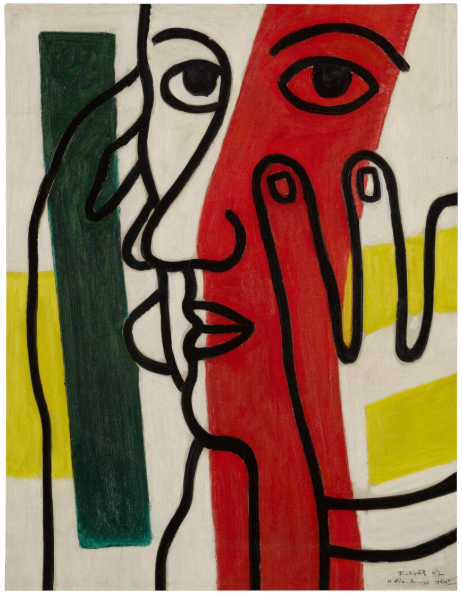
—When did your poetry stop being only intimate and become a fight?
In 1936, when Spain caught fire. Seeing Franco crush the Republic, seeing fascism advance like an oil slick — that is not something you contemplate from the balcony of the Montparnasse cafés where we remade the world. I signed, I wrote, I took sides. A poet who stays silent in the face of injustice betrays twice: his conscience and his tongue. That is why I joined the Communist Party in 1942, and why I never left despite the pressure. I was criticized for mixing politics with beauty. But beauty that says nothing of men's hunger is merely a salon ornament. I chose a poetry that grips the fist as much as the heart.
Beauty that says nothing of men's hunger is merely a salon ornament.
—Tell us the true story of the poem 'Liberté'.
At first, it was a love poem. I wrote the name of Nusch on my notebooks, on the sand, on the snow, like a child carves a name on tree bark. And then, at the last stanza, at the last moment, I understood that the name I was seeking across the whole earth was not only that of a woman. I erased Nusch and wrote: Liberté. 'Et par le pouvoir d'un mot / Je recommence ma vie.' With a single substituted word, an intimate declaration became a cry for an entire gagged people. Published clandestinely in Poésie et Vérité in 1942, the poem had already slipped from my hands. The rest belonged to History, not to me.
I erased the name of the beloved woman, and I wrote: Liberté.
—What does it feel like to learn that your verses are falling from the sky onto an occupied country?
I was told that in 1942 the RAF airdropped thousands of leaflets bearing 'Liberté' over occupied France. Imagine: a poem raining from the sky like a downpour, picked up in ditches, hidden in a pocket at the risk of one's life. The clandestine leaflet, that mimeographed sheet passed under the coat, had become a weapon — not one that kills, but one that keeps people standing. A poet always dreams of being read; I had never imagined being read like that, in fear and hope intermingled. It taught me one thing: words, when they strike true, no longer belong to the one who wrote them. They become the common property of those who resist.
A poem raining from the sky, hidden in a pocket at the risk of one's life.
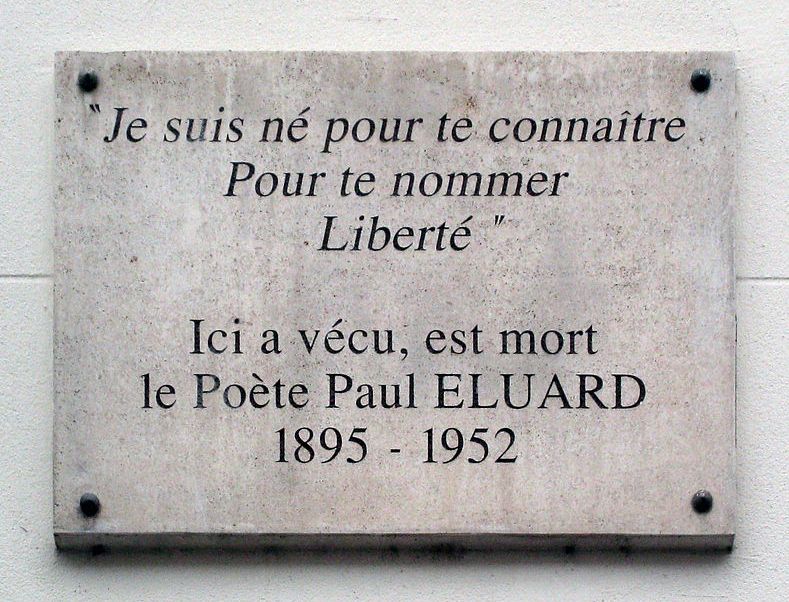
—In 'Courage', you depict a starving Paris. How do you write misery without betraying it?
'Paris a froid Paris a faim / Paris ne mange plus de marrons dans la rue.' Those lines from Au rendez-vous allemand, published at the Liberation in 1944, I did not invent at my desk: I saw them. Rationed food, old women in the airless metro, the city sleeping on its feet. To convey misery, you must neither prettify it nor underline it with a thick stroke. You must name the simple things — the cold, the absent bread, the chestnuts no longer sold on the street corner — and let the reader recognize his own hunger in them. The greatness of a humiliated people lies in these tiny details. The poet is then merely a faithful clerk of dignity.
To convey misery, you must name the simple things and let the reader recognize his own hunger.
—How did you keep writing after Nusch's death?
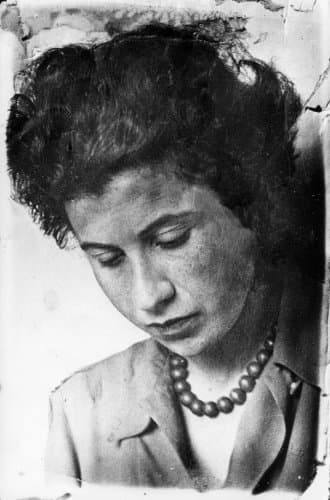
In 1946, a cerebral hemorrhage snatched her from me in an instant. Nusch, my wife since 1934, my model, the face that Man Ray photographed and that I carried in every verse — gone. You don't write after that: you bleed onto the paper. Le Temps déborde, in 1947, is not a book; it is an open wound. I thought I would die with her, I wandered like a man from whom half the body has been removed. The poetry that had served me to celebrate love now had to bear grief, and it is the hardest thing I have attempted: to make loss sing without consoling it too quickly. To love, I learned, is to accept that one day time overflows.
You don't write after that: you bleed onto the paper.
—Deep down, what is a poet for?
That is the question I ask myself every morning when I open the notebook placed by my bedside, where I jot down images that came during sleep. I believe the poet's purpose is to give back to men the words that are confiscated from them. From the surrealism of the twenties to the Resistance, I never changed my trade: to liberate. First liberate the unconscious, through the unexpected image; then liberate peoples, through the poem that is airdropped. Beauty and justice are not two roads: they are the same, followed to the end. A poet who had only served to enchant salons would have missed his life. I would like it to be said of me that my verses helped a few men to begin theirs again — by the sole power of a word.
The poet's purpose is to give back to men the words that are confiscated from them.
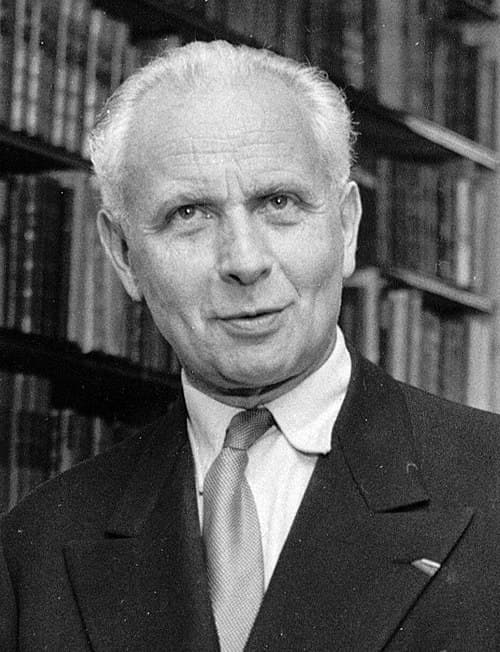
This imaginary interview was generated by artificial intelligence from sources documented in Paul Éluard's profile. It dramatises what the figure might have said based on what we know about them, but does not constitute attested historical testimony. For primary sources and factual documentation, refer to the full profile.