Imaginary dialogue between Shou and Ra
by Charactorium · Ra · Mythology · 5 min read
It is at the hour when the Mandjet glides toward the western horizon, somewhere above the sands of Iunu, that Shu takes his place beside his father on the deck of the solar barque. The air still trembles with heat, the disk declines, and already one can make out in the distance the shadowy maw of the Duat. Shu knows this journey better than anyone: it is he, the air, who separates the sky from the earth so that the barque may pass. This evening, before the descent, he wants to hear Ra speak of what he alone has carried since the beginning.
—Father, each morning I lift the sky so that your Mandjet may rise. But you, what do you feel when the horizon opens and you ascend?
You who part the vault with your arms, Shu, you know better than anyone what that first instant is. When I leave the east, I do not ascend: I am reborn. The barque quivers, the crew intones the song of rising, and light flows from my eye upon the Two Lands. At the zenith, I reign; my heat makes the barley rise and the fruits swell, and the priests of Iunu raise their offerings toward me. Then I decline toward the west, and it is then that I pass into the Mesektet, the evening barque. This journey I have accomplished since the world was the world, without ever breaking it. If I stopped my course even once, the barley would no longer rise.
When I leave the east, I do not ascend: I am reborn.
—Soon we enter the Duat, and I already sense its coils in the shadow. Tell me, Father, how do you bear facing Apophis every night?
You are right to lower your voice, Shu — where we are going, the serpent of chaos lies in wait. Every night, when the Mesektet plunges into the Duat, Apophis rears his coils to drink the waters and stop my course. And every night he must be pierced, cut, repelled, so that dawn may be possible. This is not a victory won once: it is an endless battle, renewed each crossing. If I faltered, chaos would swallow order, the Ma'at I have maintained since the beginning. You see, the world does not hold because it is solid; it holds because someone, in the night, refuses to yield.
The world does not hold because it is solid; it holds because someone, in the night, refuses to yield.
—Father, it is whispered that your true name is kept hidden, even from us your children. Why does he who illuminates everything conceal this?
You touch there, Shu, upon what I entrust to no one. My true name I carry locked in my chest, and no one knows it — for to know a god's name is to hold his power in your hand. I am the creator, he who engendered himself and drew all beings from his word; but that word, my first name, remains sealed. Even you, my son, who travel at my side, will not hear it. It is not mistrust of you: it is that all power has a threshold that must never be crossed. The sun gives everything to the world — its light, its warmth, its life — and keeps for itself this one secret.
To know a god's name is to hold his power in your hand.
—At dawn you are a scarab, at noon a crowned falcon, and now you are merged with Amun the hidden. Father, how can you be so many faces?
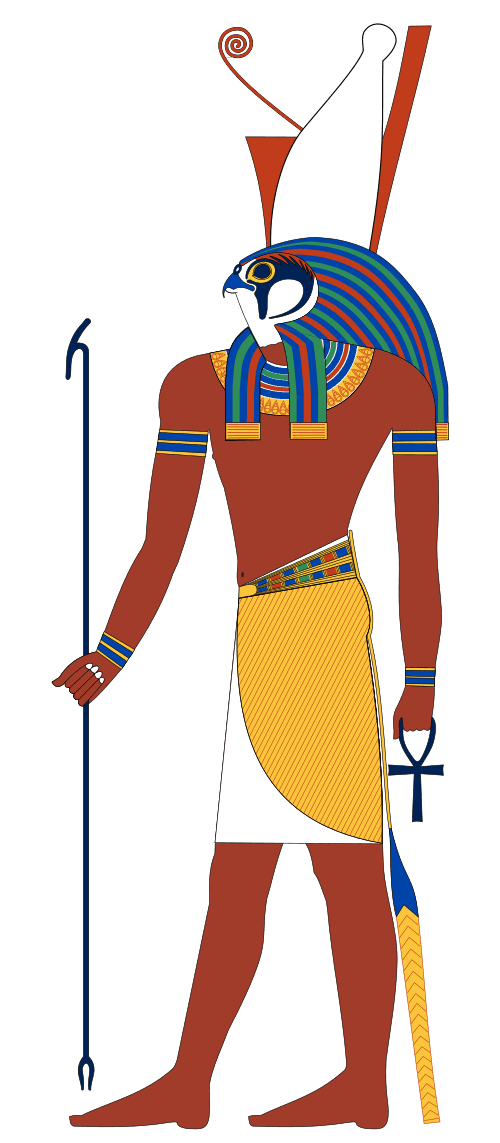
Look at the disk paling at this moment, Shu, and you will understand. At dawn I am Khepri, the scarab who pushes the new sun out of the darkness; at noon I am Ra-Horakhty, the crowned falcon who dominates the sky; at evening I decline, an old man ready to die in order to be reborn. These are not masks: they are the ages of a single day, and therefore of a single life. And when the men of Thebes unite me with Amun, the hidden god, to make Amun-Ra, they join what is seen with what is concealed — my light with his mystery. I am one, but I transform myself ceaselessly. It is by changing form that I remain eternal.
These are not masks: they are the ages of a single day.
—When we passed over Iunu this morning, I saw their stone needles raised toward you. Father, why do kings call themselves your sons?
You saw rightly, Shu: those obelisks that kings plant toward the sky are rays of stone, frozen to touch me. Iunu, which they also call Heliopolis, is the heart of my cult; there my priests sustain my course with their morning rites. And the pharaoh proclaims himself my son — sa-Ra — for he knows that without this link to the sun, his throne would be nothing but mud. By claiming to be born of me, he ties his earth to my sky: he becomes the guardian of Ma'at among the living, as I guard it among the gods. Thus the power of kings descends from my light, and their monuments are but hands stretched toward the barque.
Those obelisks that kings plant toward the sky are rays of stone, frozen to touch me.
—You once told me that you feed on the offerings of the temples. Father, what truly sustains your strength during the journey?
You remember, Shu, that dawn when I showed you the smoke rising from all the sanctuaries at once? That is my food. I do not eat bread and beer like men, but the essence of the offerings — the incense, myrrh, gratitude burned on the altars — restores me at each stage. These gifts are not in vain: it is the exchange that maintains the world. The living give me their rites, I give them light and the flood. Without their outstretched hands, even my course would weaken, for a god also lives on what is consecrated to him. The sun and man nourish each other — and you, the air between us, carry their prayers up to me.
The living give me their rites, I give them light and the flood.
—In the night of the Duat, when the serpent finally yields, what keeps you going until dawn, Father?
It is dawn itself that holds me, Shu. In the blackest part of the Duat, when Apophis lies cut and the waters are free again, I traverse the twelve hours of the night as one traverses a death. There, in the Amduat, I join my light to the body of Osiris, and it is from this encounter that I draw the strength to be reborn. The night is not the enemy: it is the womb in which I remake myself. When at last Khepri emerges in the east, it is not the same sun of yesterday that rises — it is a new sun, washed by the crossing. That is why I do not fear the setting: I know it carries the morning within it.
The night is not the enemy: it is the womb in which I remake myself.
—Father, seeing you so close at sunset, I find you almost weary. You, the creator, can you truly grow old?
You have a keen eye, my son — in the evening, I age. The god who engendered himself at the beginning, who drew from the primeval Nun the earth, the sky, and you yourself, the air that separates them, this god declines each day like an old man. My limbs grow heavy, my disk reddens and lowers. But that is precisely the secret of creation: it is never finished. I did not make the world once and for all; I remake it with each turn of the barque, being born at dawn, maturing at noon, dying at evening to be reborn again. The weariness you see is not an end — it is the price of renewal. To create, Shu, is not an act: it is a faithfulness.
I did not make the world once and for all; I remake it with each turn of the barque.
—You said that your light reaches even the dead. Father, how far does your reign truly extend, from the highest sky to the deepest tombs?
Everywhere, Shu — that is the weight I carry. By day, my rays cover the Two Lands, make the fields green and guide the living. But by night, when I pass through the Duat, my light descends to the dwellings of the dead and awakens them for an instant at my passing. From the highest firmament, which you support, to the most sealed tombs, nothing escapes my course. That is why kings build at Karnak and even in Nubia sanctuaries where my disk strikes the stone. To reign over the sky would be light; to reign also over death, that is what never rests. The sun has no border, and that is why it has no rest.
To reign over the sky would be light; to reign also over death, that is what never rests.
—Before the descent, Father, one last thing: you who keep your name secret, what would you like men to remember of you?
Let them remember my course, Shu, rather than my name. The name I keep; but the journey I give them to see each day, from rising to setting, without ever failing them. Let men look to the east in the morning and know that order has conquered chaos for one more night. Let them see in the flood, in the ripe barley, in the warmth on their backs, the proof that I have passed. I do not ask that they pierce my mystery — I ask that they trust my faithfulness. You who have accompanied me from the beginning are well placed to say it: a god is measured not by what he hides, but by what he begins again without tiring.
A god is measured not by what he hides, but by what he begins again without tiring.
This imaginary interview was generated by artificial intelligence from sources documented in Ra's profile. It dramatises what the figure might have said based on what we know about them, but does not constitute attested historical testimony. For primary sources and factual documentation, refer to the full profile.