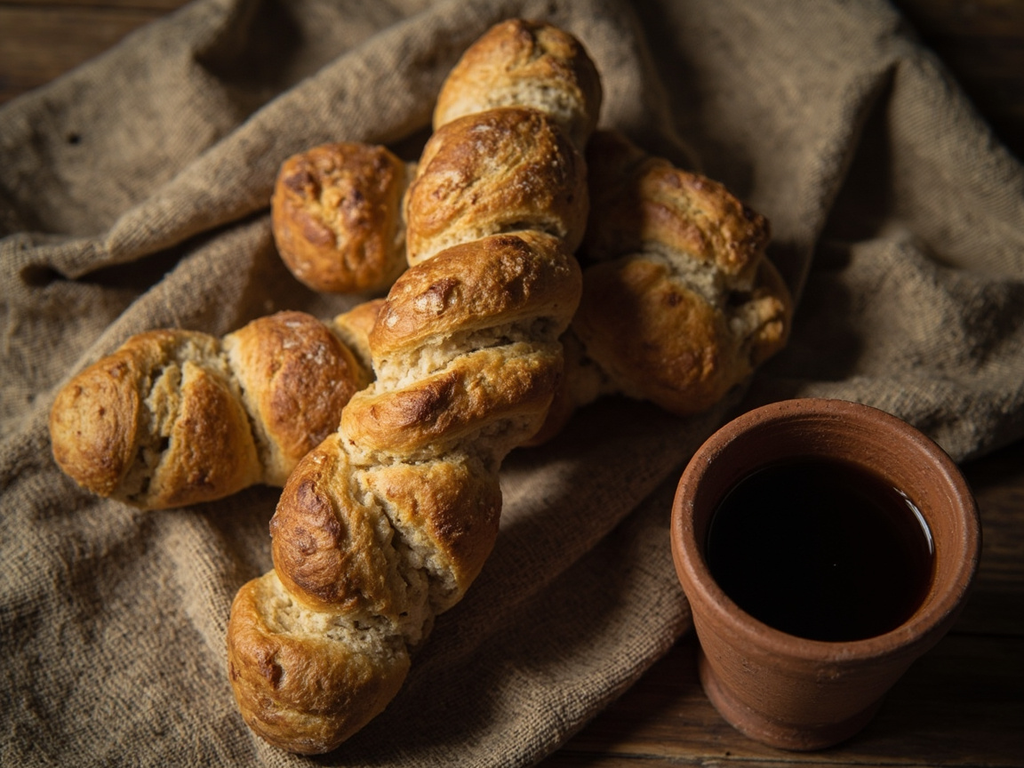
 flip
flipBarley cake with honey for the march
Barley cake with honey for the march
Why this dish? Arminius's Cheruscan warriors covered long distances on foot through forests and marshes to set their ambushes. A dense cake, sweetened with honey and nourishing, slipped into the *sagum*, sustained the effort where no pot could heat.
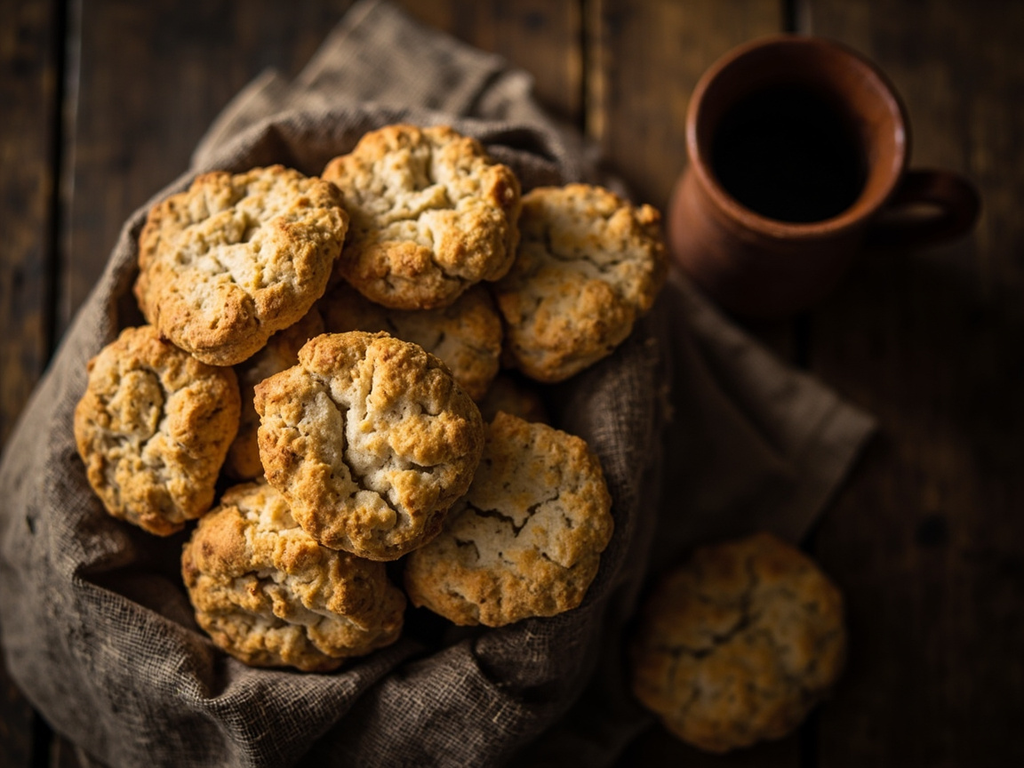
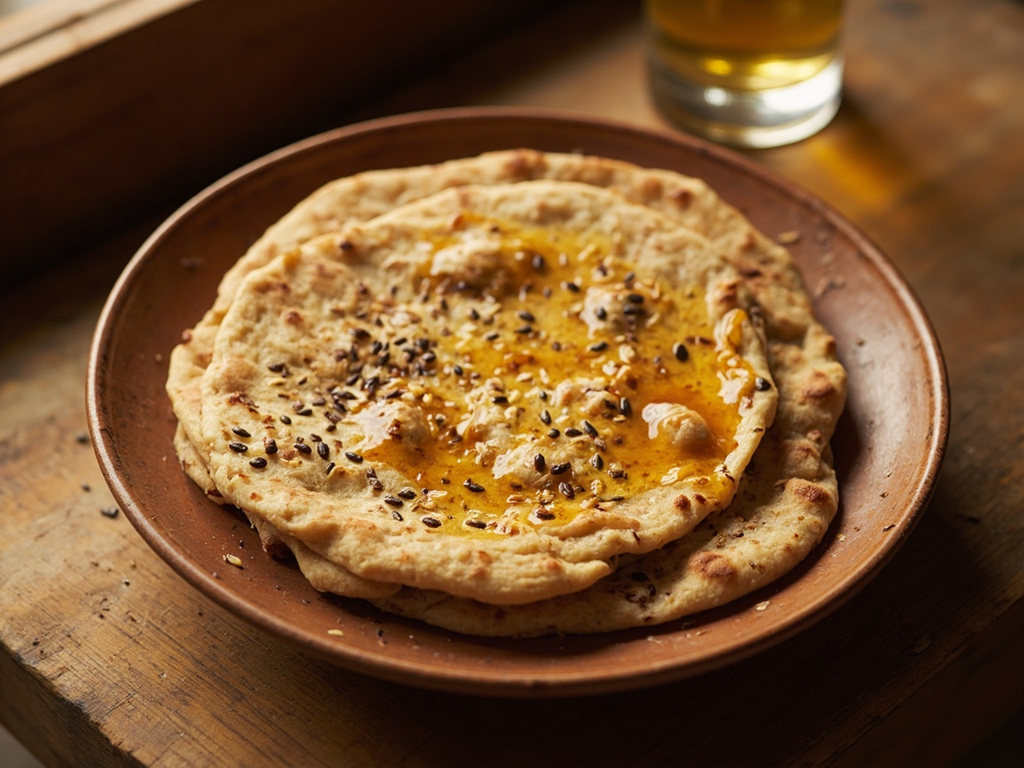
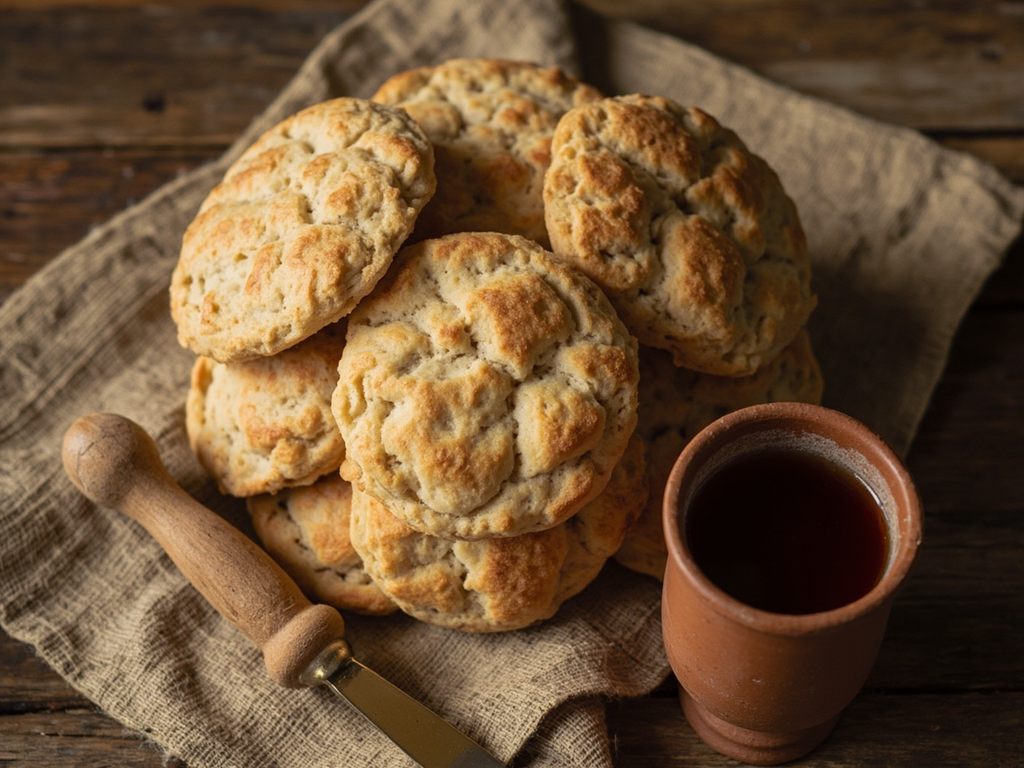
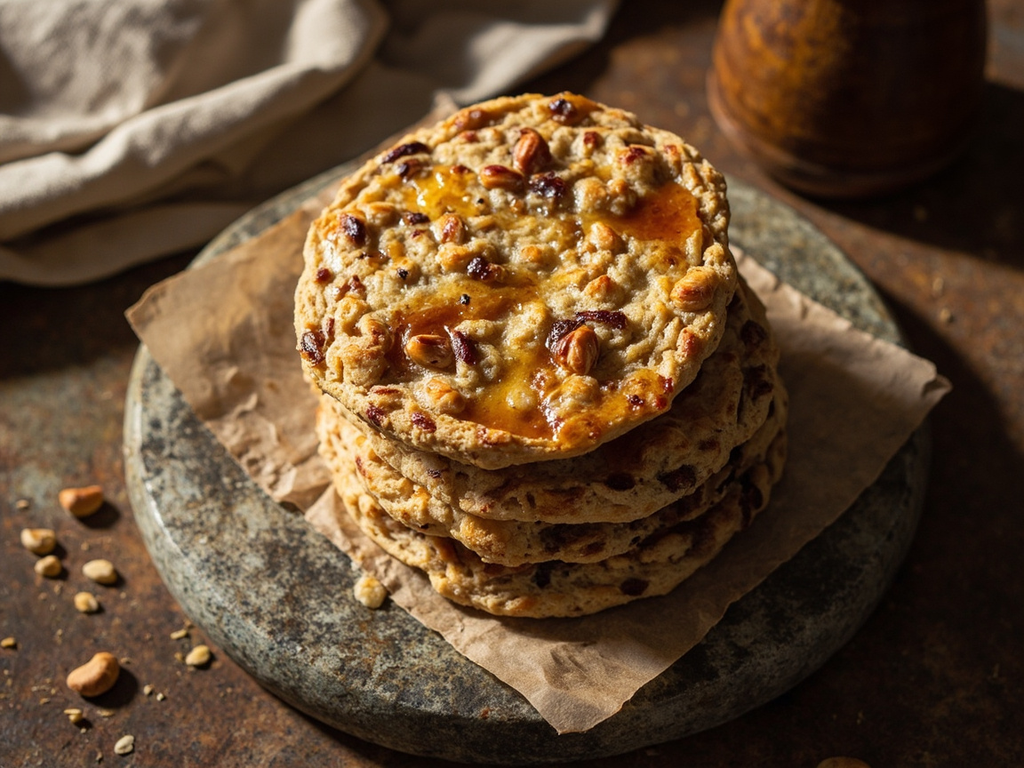
A flat, compact cake of barley and honey, cooked on a hot stone. Energetic, long-lasting, it is the warrior's field snack.
Before you go tracking the eagles in the thickets, slip this under your cloak. A barley cake bound with honey, baked on the hearth stone — it will not betray you like the soft Roman bread that molds at the first rain. Bite into it as you march, drink a gulp of spring water, and keep your step light: it is on our legs and our patience, not on long supply trains, that we beat the legions.
- •Barley flour (coarse) — two handfuls (base)
- •Honey — a spoonful (energy, binder, sugar)
- •Animal fat — a little (softness, calories)
- •Water — as needed (binder)
- •Salt — a pinch (taste)
Barley cake with honey for the march
A flat, compact cake of barley and honey, cooked on a hot stone. Energetic, long-lasting, it is the warrior's field snack.
Why this dish? Arminius's Cheruscan warriors covered long distances on foot through forests and marshes to set their ambushes. A dense cake, sweetened with honey and nourishing, slipped into the *sagum*, sustained the effort where no pot could heat.
Before you go tracking the eagles in the thickets, slip this under your cloak. A barley cake bound with honey, baked on the hearth stone — it will not betray you like the soft Roman bread that molds at the first rain. Bite into it as you march, drink a gulp of spring water, and keep your step light: it is on our legs and our patience, not on long supply trains, that we beat the legions.
Ingredients (period version)
- Barley flour (coarse) — two handfuls (base)
- Honey — a spoonful (energy, binder, sugar)
- Animal fat — a little (softness, calories)
- Water — as needed (binder)
- Salt — a pinch (taste)
Ingredients
- Barley flour — 250 g (grain base)
- Honey — 2 tbsp (sugar, binder, preservation)
- Lard or butter — 30 g (softness, calories)
- Warm water — ~120 ml (binder)
- Salt — 1 pinch (seasoning)
- Crushed hazelnuts (optional) — 30 g (energy, crunch)
Method
- Mix barley flour and salt, then rub in the fat with your fingertips.
- Add honey and warm water gradually until a firm, non-sticky dough forms (add hazelnuts if desired).
- Shape into flat cakes about 1 cm thick.
- Cook on a hot stone, cast iron griddle, or dry pan over medium heat, 4-5 minutes per side until browned.
- Let cool: the cake hardens and keeps for several days, ideal to carry.
How it was made : Before leavened bread, grains were cooked as unleavened flat cakes on stones or griddles, a technique attested since the Neolithic in Northern Europe. Barley, low in gluten, does not rise like wheat: it produced dense cakes. With honey and fat, such a cake concentrated calories — perfect as a marching ration, where Tacitus emphasizes the mobility and frugality of Germanic warriors compared to the heavily supplied Roman army.
The contemporary twist : An Iron Age "energy bar": barley-honey-hazelnut cake to take hiking, a rustic ancestor of sports snacks.
Sources : Tacitus, Germania, ch. 23 · Archaeology of milling and cereal cooking practices in Iron Age Northern Europe
Arminius · Charactorium