 flip
flipDried figs, cheese, and olives of the blind beggar
Dried figs, cheese, and olives of the blind beggar
Why this dish? Blind and banished, Oedipus wanders the roads leaning on his beggar's staff until he reaches Colonus, guided by his daughter Antigone. The destitute traveler of ancient Greece eats what keeps and carries: dried figs, hard cheese, brine-cured olives, stale bread.
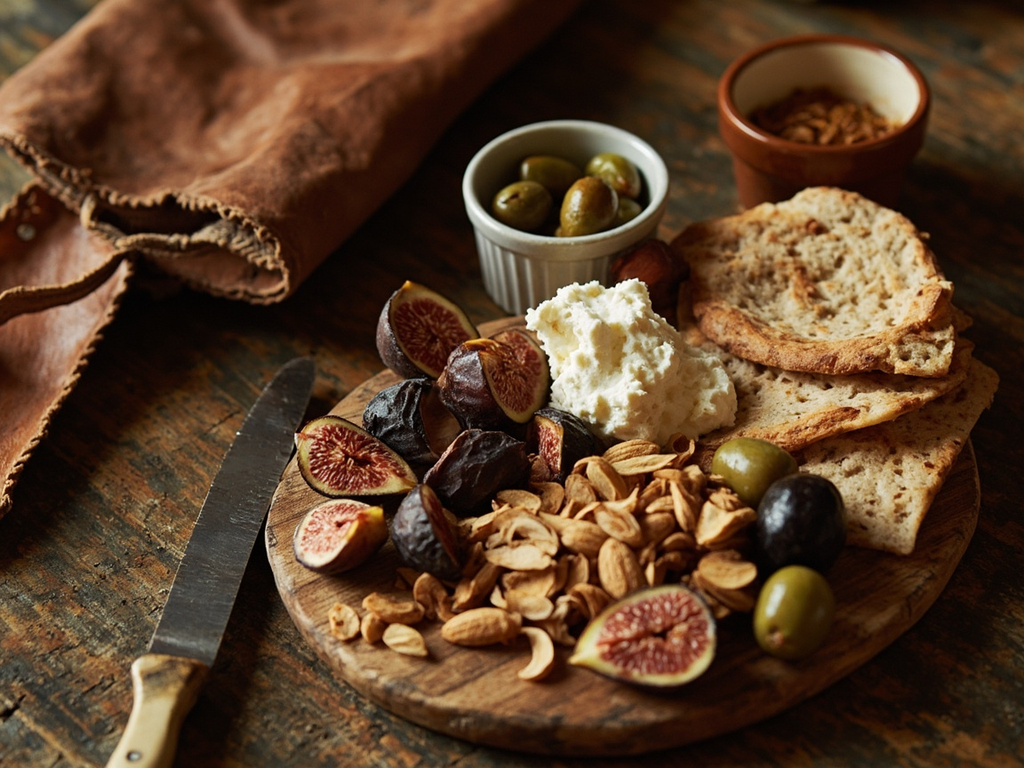
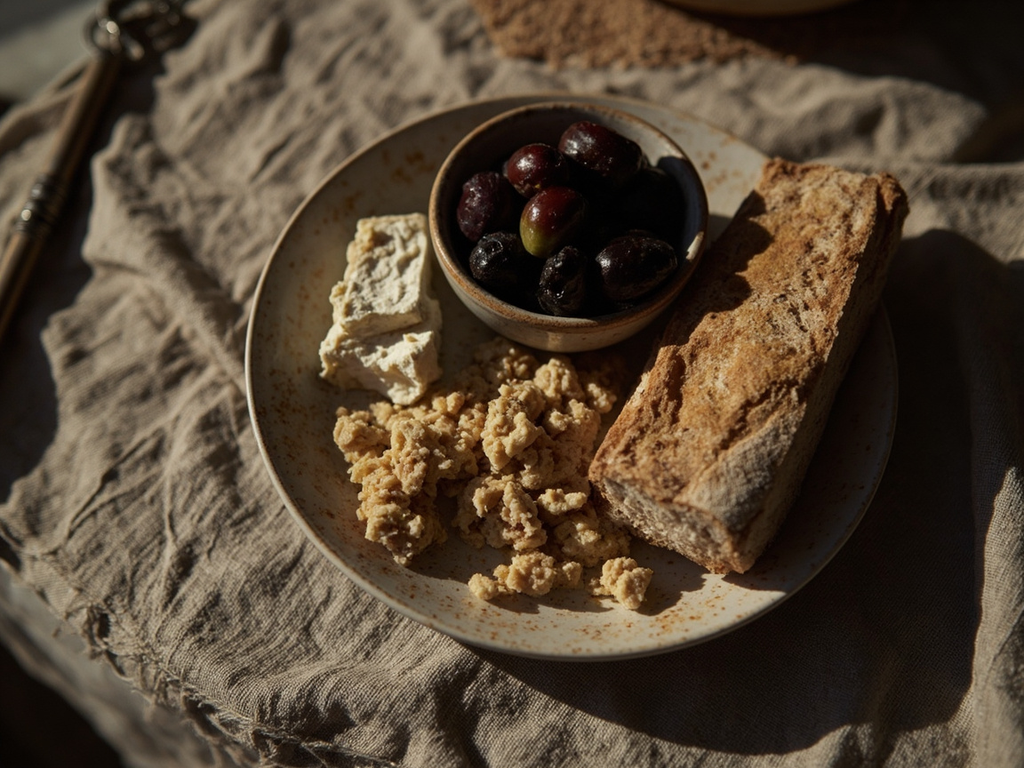
No cooking, no fire: a handful of sweet dried figs, plump brine-cured olives, and a piece of hard sheep's cheese. The frugal, nourishing fare of one who no longer has a palace or a kingdom, only the road.
Look at my groping hands, stranger, and this staff that serves as my eyes. I once had tables groaning under roasted ram; I have only these figs that my daughter Antigone slips into my pouch, this hard cheese and these olives that keep on the road. Break it with me in the shade of a wall. The fig quenches and sustains, the salt of the olive revives the heart — and one who walks to Colonus needs no more. Sweetness remains with me, you see, even when all else has gone dark.
- •Dried figs — a handful (sweetness, walking energy)
- •Dry sheep's cheese — a piece (preserved protein)
- •Brine-cured olives — a few (salt, relish)
- •Stale barley bread — what remains (base)
Dried figs, cheese, and olives of the blind beggar
No cooking, no fire: a handful of sweet dried figs, plump brine-cured olives, and a piece of hard sheep's cheese. The frugal, nourishing fare of one who no longer has a palace or a kingdom, only the road.
Why this dish? Blind and banished, Oedipus wanders the roads leaning on his beggar's staff until he reaches Colonus, guided by his daughter Antigone. The destitute traveler of ancient Greece eats what keeps and carries: dried figs, hard cheese, brine-cured olives, stale bread.
Look at my groping hands, stranger, and this staff that serves as my eyes. I once had tables groaning under roasted ram; I have only these figs that my daughter Antigone slips into my pouch, this hard cheese and these olives that keep on the road. Break it with me in the shade of a wall. The fig quenches and sustains, the salt of the olive revives the heart — and one who walks to Colonus needs no more. Sweetness remains with me, you see, even when all else has gone dark.
Ingredients (period version)
- Dried figs — a handful (sweetness, walking energy)
- Dry sheep's cheese — a piece (preserved protein)
- Brine-cured olives — a few (salt, relish)
- Stale barley bread — what remains (base)
Ingredients
- Soft dried figs — 6–8 (sweetness, energy)
- Aged sheep's cheese (like pecorino or kefalotyri) — 80 g (protein)
- Kalamata olives — about ten (salt, relish)
- Stale barley or whole wheat bread — 2 slices (base)
- Olive oil & oregano — a drizzle, 1 pinch (binder, flavor)
- Almonds or walnuts — a handful (optional) (crunch, energy)
Method
- Arrange the figs, olives, and almonds in a cloth or travel plate.
- Break the cheese into pieces by hand or with a knife.
- Drizzle the cheese and bread with olive oil, sprinkle with oregano.
- Serve as is, without cooking — the fare is eaten by hand, on the road.
How it was made : Figs (fresh and dried), olives, and cheese formed the basic trio of ordinary Greek food and traveler's fare. Dried figs, sweet and easy to carry, were the ultimate energy food; sheep's cheese and brine-cured olives kept for a long time. Stale bread soaked in oil completed this cold meal.
The contemporary twist : Present it as "Antigone's pouch": a small raw linen bundle opened to reveal figs, olives, and cheese — frugality as an art of plating.
Sources : Sophocles, Oedipus at Colonus (the wanderings of the blind man guided by Antigone) · Andrew Dalby, Siren Feasts (1996) — figs, cheese and olives in Greek diet
Oedipus · Charactorium