 flip
flipDate and Semolina Khabis
Date and Semolina Khabis
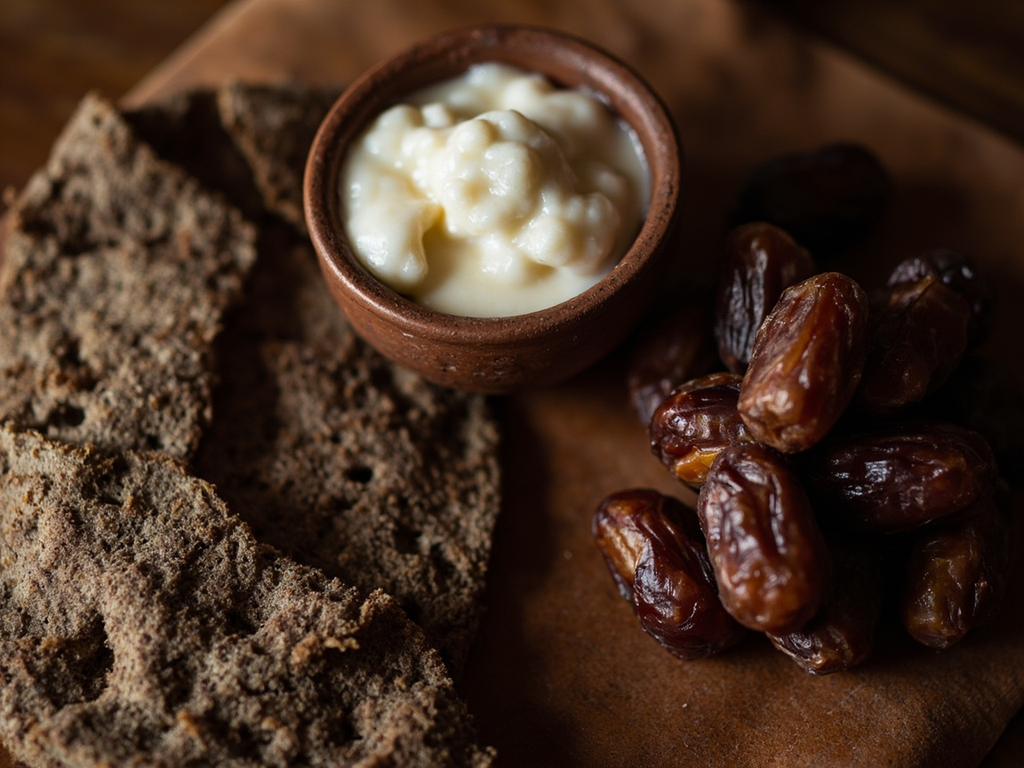
Why this dish? Between two verses, on the sufra of Baghdad, people picked at sweets with honey and dates. Khabis, a sweet paste of semolina and fruit, was an everyday treat as much as a festive one — a simple comfort for the nocturnal poet Abu Nuwas.
A melting paste of toasted semolina bound with honey, dates, and clarified butter, perfumed with rose water and cinnamon. Neither cake nor cream: a dense, warm sweetness shared in bites at the end of the meal with the fingers.
When the night wears on and the cup grows bitter with fatigue, I call for khabis! Brown the semolina in melted butter, mix in honey and crushed dates until everything is fragrant, then a tear of rose water to perfume the palate. It's soft as a confession, sticky as a secret — I take a bite with my fingertips, and I forgive the night its excesses.
- •Wheat semolina — two handfuls (base)
- •Clarified butter (samn) — a good spoonful (matière grasse)
- •Honey — to taste (sucre)
- •Crushed dates — a handful (douceur et liant)
- •Rose water, cinnamon — a hint (parfum)
Date and Semolina Khabis
A melting paste of toasted semolina bound with honey, dates, and clarified butter, perfumed with rose water and cinnamon. Neither cake nor cream: a dense, warm sweetness shared in bites at the end of the meal with the fingers.
Why this dish? Between two verses, on the sufra of Baghdad, people picked at sweets with honey and dates. Khabis, a sweet paste of semolina and fruit, was an everyday treat as much as a festive one — a simple comfort for the nocturnal poet Abu Nuwas.
When the night wears on and the cup grows bitter with fatigue, I call for khabis! Brown the semolina in melted butter, mix in honey and crushed dates until everything is fragrant, then a tear of rose water to perfume the palate. It's soft as a confession, sticky as a secret — I take a bite with my fingertips, and I forgive the night its excesses.
Ingredients (period version)
- Wheat semolina — two handfuls (base)
- Clarified butter (samn) — a good spoonful (matière grasse)
- Honey — to taste (sucre)
- Crushed dates — a handful (douceur et liant)
- Rose water, cinnamon — a hint (parfum)
Ingredients
- Fine wheat semolina — 150 g (base)
- Clarified butter (ghee) — 60 g (matière grasse)
- Honey — 4 tbsp (sucre)
- Pitted dates, pureed — 100 g (douceur et liant)
- Water — 150 ml (liquide)
- Rose water — 1 tsp (parfum)
- Cinnamon — 1 pinch (épice)
- Crushed almonds or pistachios — a handful (garniture)
Method
- Melt the clarified butter and toast the semolina over low heat until golden.
- Gradually add hot water while stirring, then the date puree and honey.
- Cook, stirring, until a thick, glossy paste that pulls away from the pan.
- Remove from heat and flavor with rose water and cinnamon.
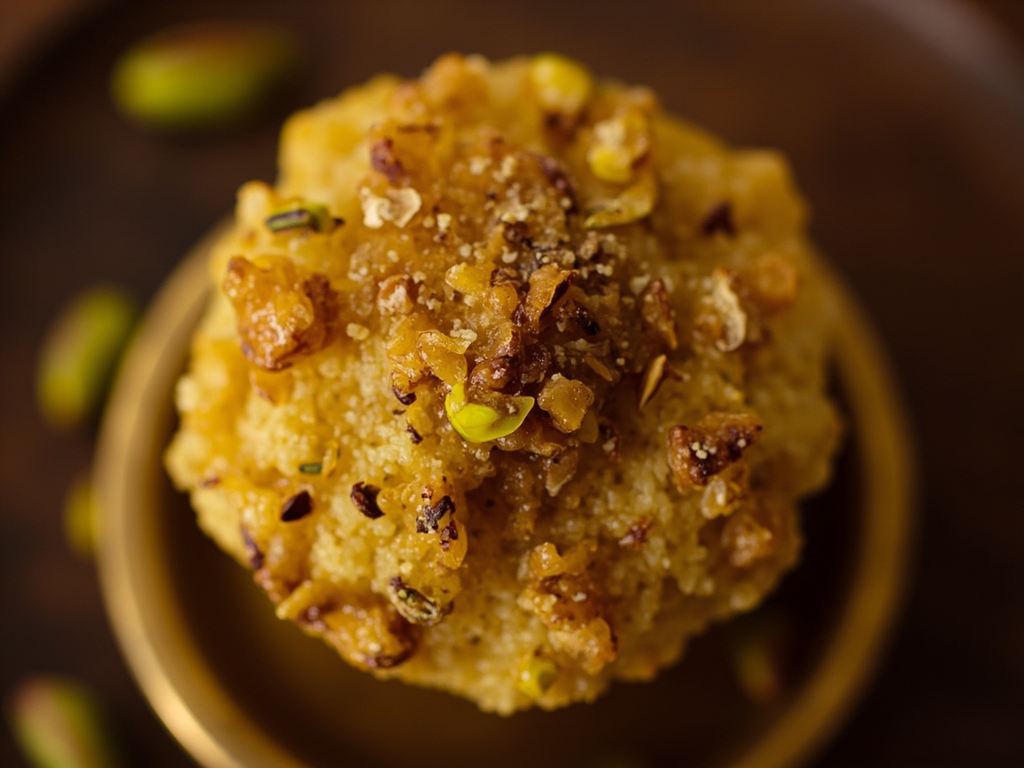
- Pour into a dish, smooth, sprinkle with almonds or pistachios, and serve warm in bites.
How it was made : Khabis is a family of sweet pastes (semolina, starch, fruit) very common in Abbasid culinary collections. It was bound with honey or date syrup (dibs), perfumed with rose water and saffron, and often served at the end of a banquet. Cane sugar existed but was costly; honey and dates dominated.
The contemporary twist : Mold the khabis into small domes dusted with pistachio: "poet's bites" to offer with mint tea.
Sources : Ibn Sayyār al-Warrāq, Kitāb al-Tabīkh (10th c.) ; Lilia Zaouali, L'Islam à table (2007)
Abu Nuwas · Charactorium