 flip
flipTharid, Bread Soaked in Chickpea Broth
Tharid, Bread Soaked in Chickpea Broth
Why this dish? Tharid — crumbled bread soaked in a broth of meat and vegetables — was the everyday dish of the Arab world, from humble to scholarly. For a scholar absorbed in his treatises at the House of Wisdom, it was the simple, nourishing meal shared from a single large bowl.
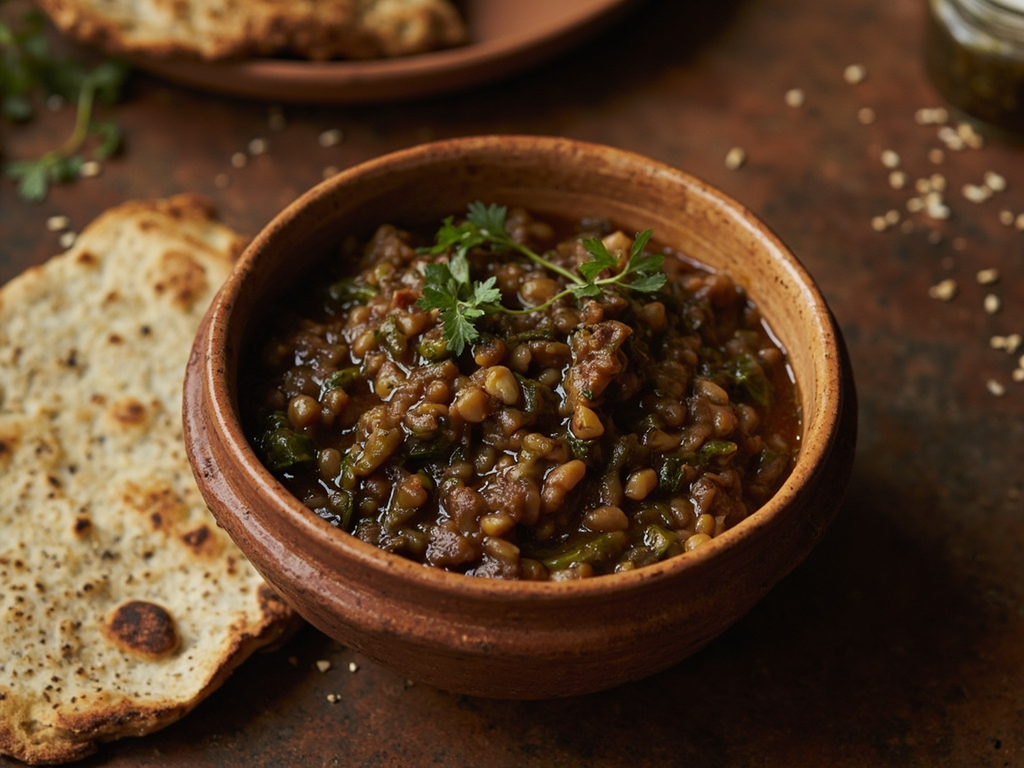
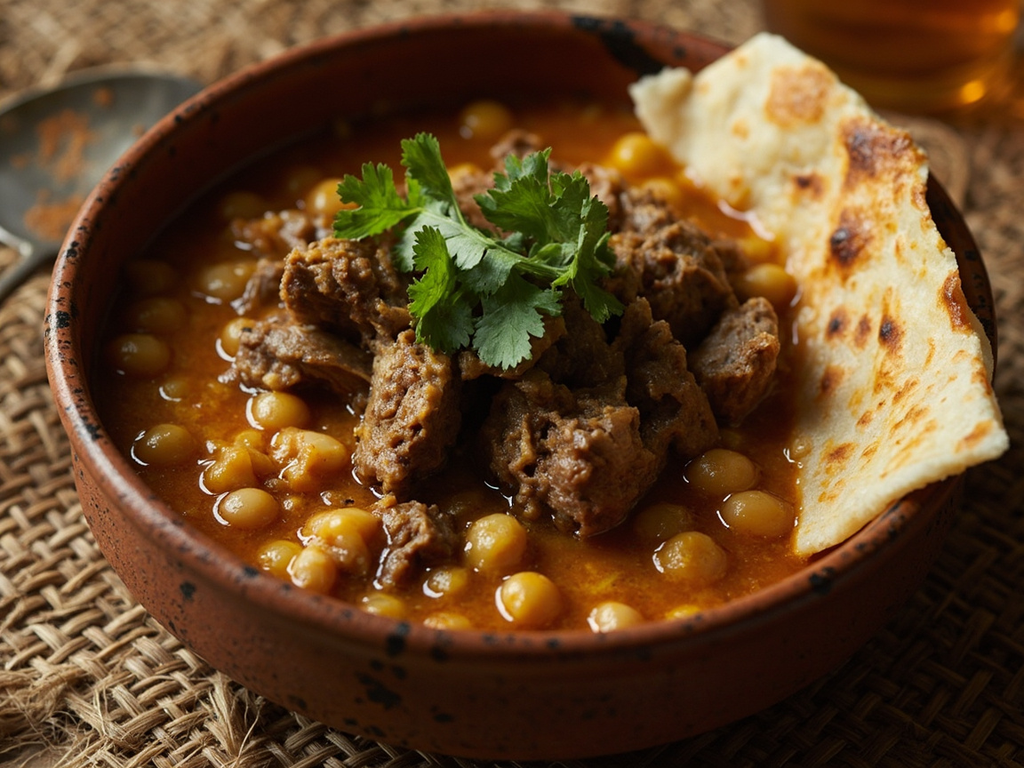
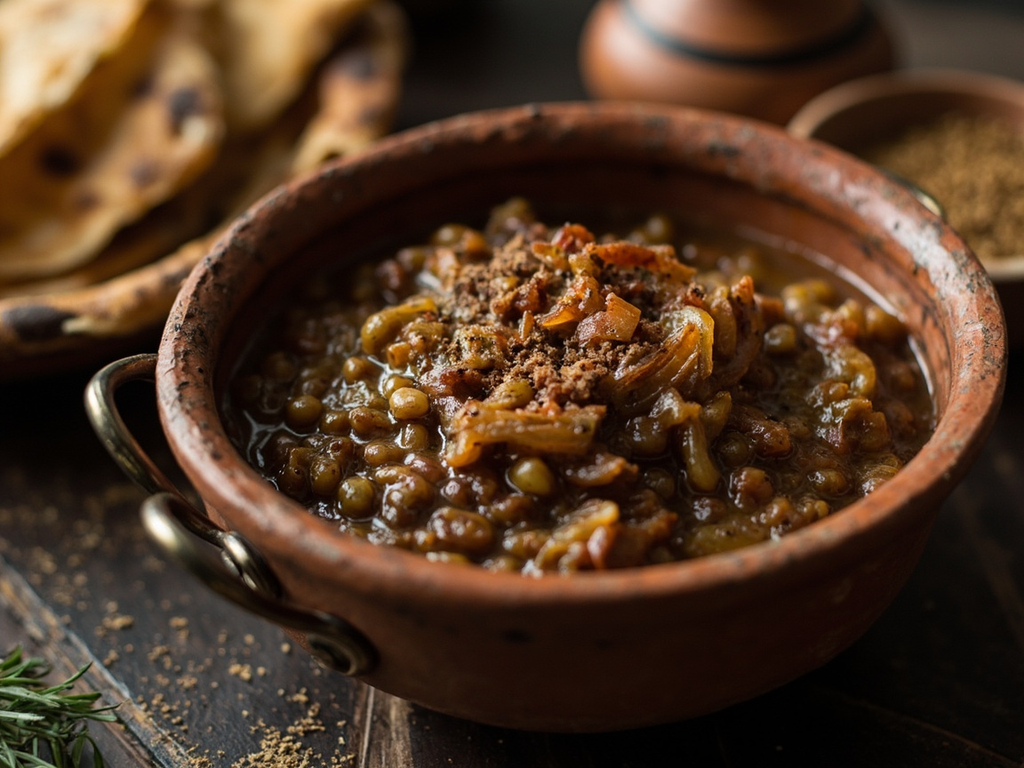
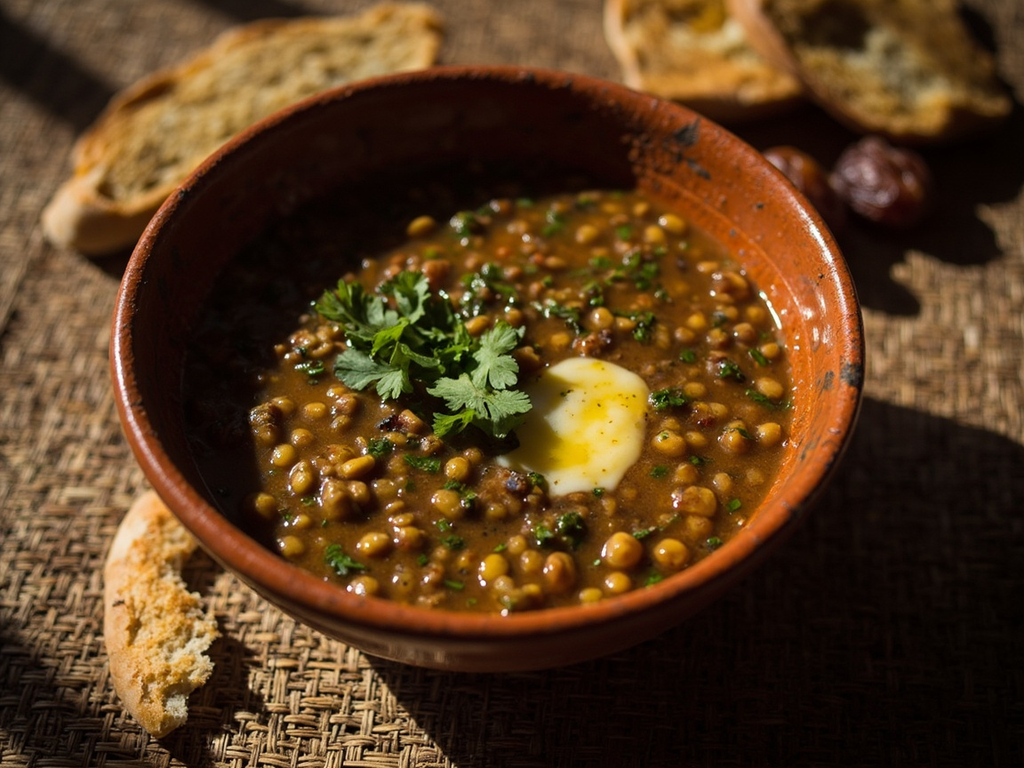
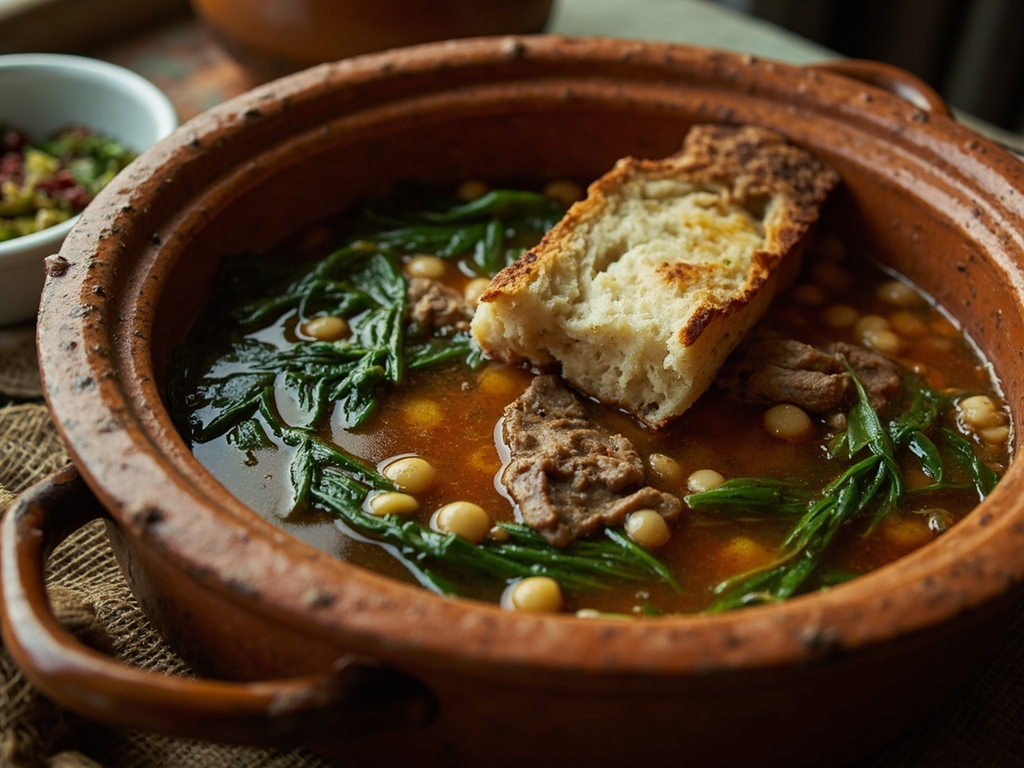
Pieces of stale bread line the bottom of a dish, drenched in a fragrant broth of lamb, chickpeas and chard. The bread soaks up the liquid and becomes soft: a humble, filling and deeply comforting dish.
See how the simplest is often the wisest. I spend my days bent over the manuscripts of the Greeks, translating and measuring, and in the evening I ask for nothing more than a bowl of tharid. We break yesterday's bread, cover it with a broth where lamb, chickpeas and chard simmer, and eat with three fingers of the right hand, as is proper. This dish, which the Prophet himself praised, they say, nourishes the body without weighing down the mind — and it is with a clear mind that one must think.
- •Stale bread — several flatbreads (soaking base)
- •Lamb — a few pieces (broth and garnish)
- •Chickpeas — a handful, soaked (substance)
- •Chard or spinach — a bunch (leafy green)
- •Onion — one (aromatic)
- •Cumin, coriander, pepper — to taste (spices)
Tharid, Bread Soaked in Chickpea Broth
Pieces of stale bread line the bottom of a dish, drenched in a fragrant broth of lamb, chickpeas and chard. The bread soaks up the liquid and becomes soft: a humble, filling and deeply comforting dish.
Why this dish? Tharid — crumbled bread soaked in a broth of meat and vegetables — was the everyday dish of the Arab world, from humble to scholarly. For a scholar absorbed in his treatises at the House of Wisdom, it was the simple, nourishing meal shared from a single large bowl.
See how the simplest is often the wisest. I spend my days bent over the manuscripts of the Greeks, translating and measuring, and in the evening I ask for nothing more than a bowl of tharid. We break yesterday's bread, cover it with a broth where lamb, chickpeas and chard simmer, and eat with three fingers of the right hand, as is proper. This dish, which the Prophet himself praised, they say, nourishes the body without weighing down the mind — and it is with a clear mind that one must think.
Ingredients (period version)
- Stale bread — several flatbreads (soaking base)
- Lamb — a few pieces (broth and garnish)
- Chickpeas — a handful, soaked (substance)
- Chard or spinach — a bunch (leafy green)
- Onion — one (aromatic)
- Cumin, coriander, pepper — to taste (spices)
Ingredients
- Stale country bread or flatbread — 4 thick slices (soaking base)
- Lamb neck or shoulder — 400 g (broth and garnish)
- Cooked chickpeas — 200 g (substance)
- Chard (or spinach), chopped — 1 bunch (leafy green)
- Onion, sliced — 1 (aromatic)
- Ground cumin — 1 tsp (spice)
- Ground coriander — 1 tsp (spice)
- Black pepper and salt — to taste (seasoning)
Method
- Brown the onion, add the meat and sear.
- Cover with water, add salt, cumin, coriander and pepper, and simmer for 1 hour 15 minutes.
- Add the chickpeas and chopped chard; continue for 20 minutes.
- Arrange the stale bread pieces at the bottom of a large shallow dish.
- Pour the boiling broth over the bread and distribute the meat and vegetables.
- Let the bread soak for a minute before serving, piping hot.
How it was made : Tharid is one of the oldest documented Arab dishes, pre-dating Islam and remaining popular through all eras. It was eaten by hand, from a common dish, making it a meal of shared conviviality.
The contemporary twist : Drizzle with a splash of extra virgin olive oil and a squeeze of lemon juice at serving, and call it 'the translators' soup'.
Sources : Ibn Sayyâr al-Warrâq, Kitâb al-Tabîkh (10th c.) ; Maxime Rodinson, 'Recherches sur les documents arabes relatifs à la cuisine', Revue des études islamiques, 1949
Al-Kindi · Charactorium