 flip
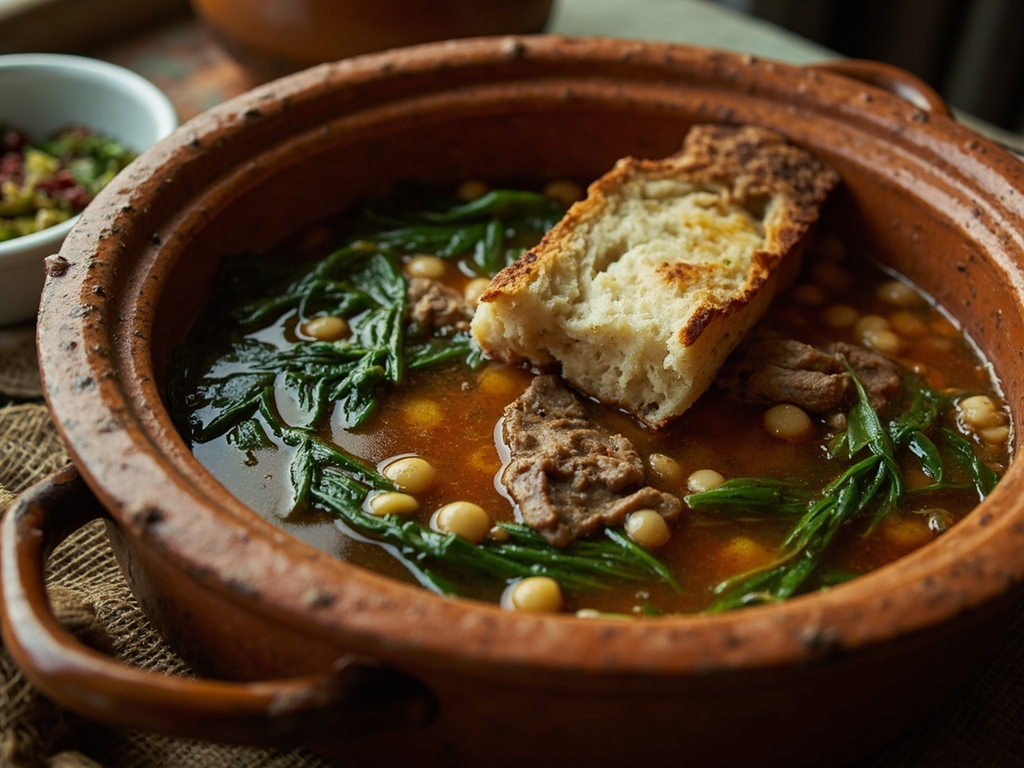
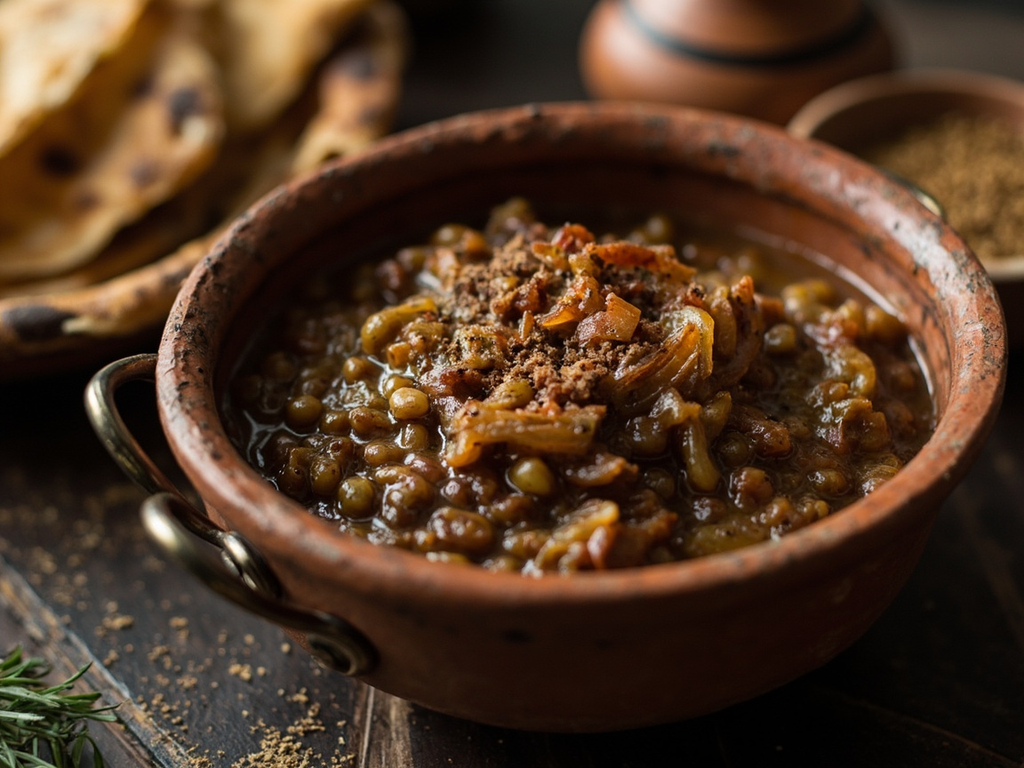
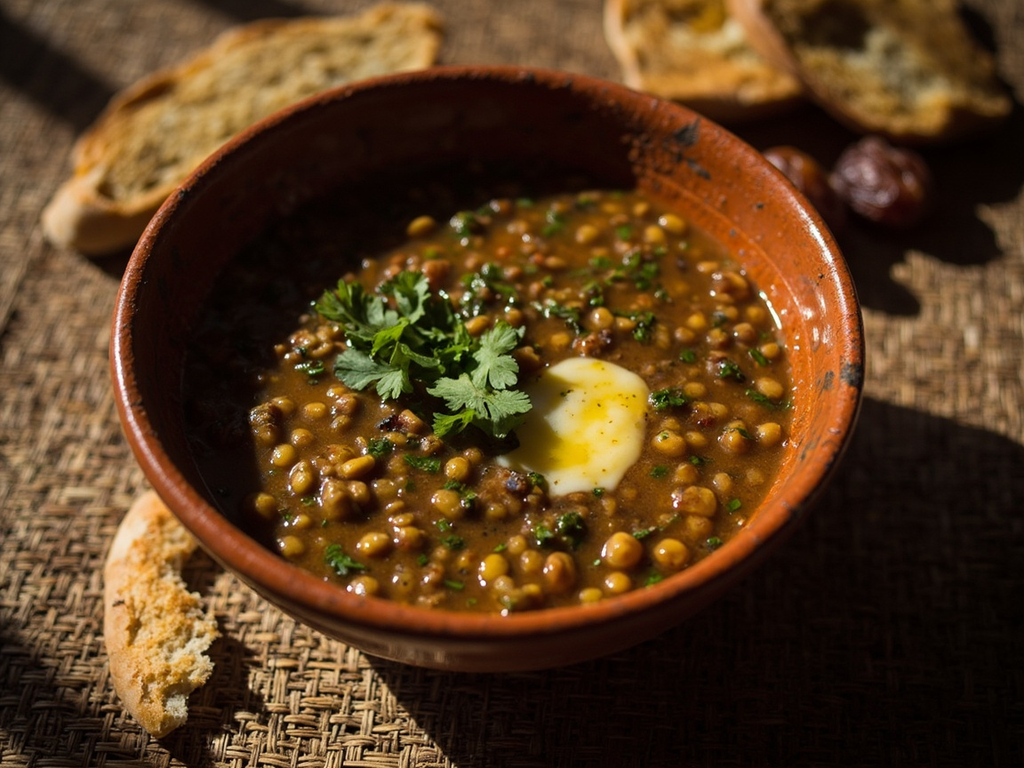
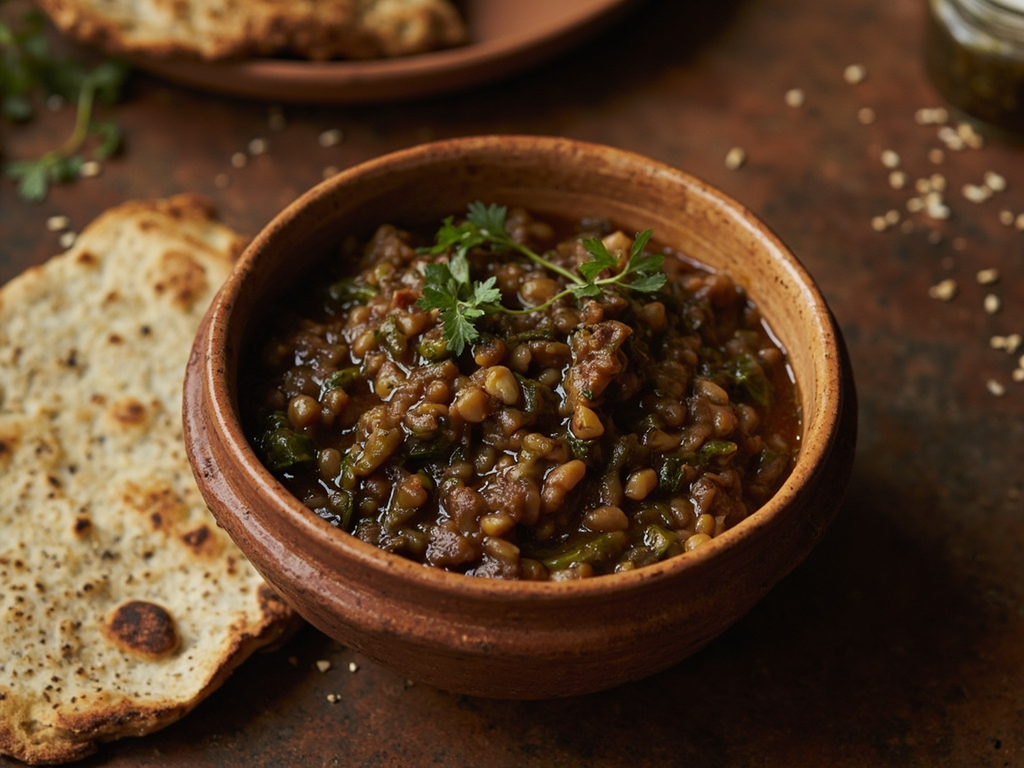
flipʿAdasiyya — Pot of Lentils with Chard and Cumin
ʿAdasiyya — Pot of Lentils with Chard and Cumin
Why this dish? Chroniclers report that Al-Fârâbî lived with great sobriety, contenting himself with bread, vegetables, and little meat, and despising the luxury of the table. This lentil pot, a dish of simple people and poor students in Baghdad, exactly matches his way of eating between study sessions.
A thick pottage of brown lentils melted with chard leaves, seasoned with cumin and a touch of murrī. Nourishing and economical, it is the meal of a thinker who does not want his belly to distract his mind.
Know, O reader, that the sage does not eat for the pleasure of the tongue, but so that the body remains the docile servant of the soul. At my table, we cooked lentils in clear water until they fell apart like a thought that ripens, then we threw in garden chard and a little pounded cumin. A drop of murrī suffices to give depth; the rest is vanity. I lived on this pot during my long nights in Baghdad, and it never betrayed me.
- •Brown lentils — a good handful per person (nourishing base)
- •Chard leaves (silq) — one bunch (vegetable)
- •Pounded cumin — to taste (master spice)
- •Murrī — a few drops (umami condiment)
- •Olive or sesame oil — a drizzle (fat)
- •Onion — one (aromatic)
ʿAdasiyya — Pot of Lentils with Chard and Cumin
A thick pottage of brown lentils melted with chard leaves, seasoned with cumin and a touch of murrī. Nourishing and economical, it is the meal of a thinker who does not want his belly to distract his mind.
Why this dish? Chroniclers report that Al-Fârâbî lived with great sobriety, contenting himself with bread, vegetables, and little meat, and despising the luxury of the table. This lentil pot, a dish of simple people and poor students in Baghdad, exactly matches his way of eating between study sessions.
Know, O reader, that the sage does not eat for the pleasure of the tongue, but so that the body remains the docile servant of the soul. At my table, we cooked lentils in clear water until they fell apart like a thought that ripens, then we threw in garden chard and a little pounded cumin. A drop of murrī suffices to give depth; the rest is vanity. I lived on this pot during my long nights in Baghdad, and it never betrayed me.
Ingredients (period version)
- Brown lentils — a good handful per person (nourishing base)
- Chard leaves (silq) — one bunch (vegetable)
- Pounded cumin — to taste (master spice)
- Murrī — a few drops (umami condiment)
- Olive or sesame oil — a drizzle (fat)
- Onion — one (aromatic)
Ingredients
- Brown or green lentils — 250 g (base)
- Chard (or spinach if unavailable) — 300 g (vegetable)
- Ground cumin — 1 tsp (spice)
- Soy sauce or light miso paste (substitute for murrī) — 1 tsp (umami)
- Olive oil — 2 tbsp (fat)
- Onion — 1 large (aromatic)
- Salt — to taste (seasoning)
Method
- Sauté the sliced onion in oil until golden.
- Add the rinsed lentils and cover with water to a depth of three fingers; simmer for 30–40 minutes.
- Halfway through cooking, add the chopped chard (stems first, then leaves).
- When the lentils start to fall apart, lightly mash them with a spoon to thicken.
- Season with cumin, murrī (or substitute), and salt; serve with flatbread.
How it was made : Lentils (ʿadas) are among the oldest and humblest foods of the Near East. In the 10th century, they were boiled at length in water with pot herbs and seasoned with murrī and spices. This was the dish of the modest, ascetics, and students, in contrast to the meat stews of the rich.
The contemporary twist : A drizzle of fresh olive oil and a cloud of toasted cumin at serving time, presented in a deep bowl: frugality becomes elegance.
Sources : Ibn Sayyâr al-Warrâq, Kitāb al-Tabīkh (10th century) · Nawal Nasrallah, Annals of the Caliphs' Kitchens (2007)
Al-Farabi · Charactorium