 flip
flipSikbāj — Sweet-and-Sour Meat Stew with Vinegar and Dates
Sikbāj — Sweet-and-Sour Meat Stew with Vinegar and Dates
Why this dish? Al-Fârâbī frequented the scholarly circles and princely courts of Baghdad, Damascus, and Aleppo, where he was hosted by Emir Sayf al-Dawla. Sikbāj, the quintessential royal stew of Abbasid banquets, is the dish that would have been served to him as an honored guest, even though he otherwise lived so frugally.
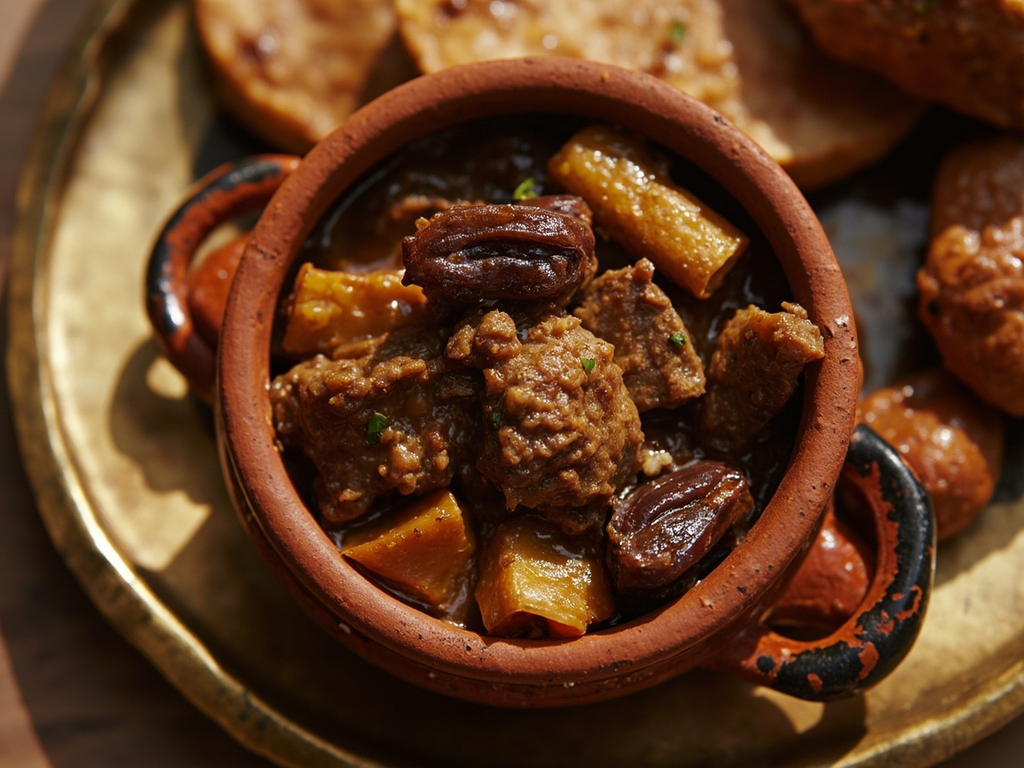
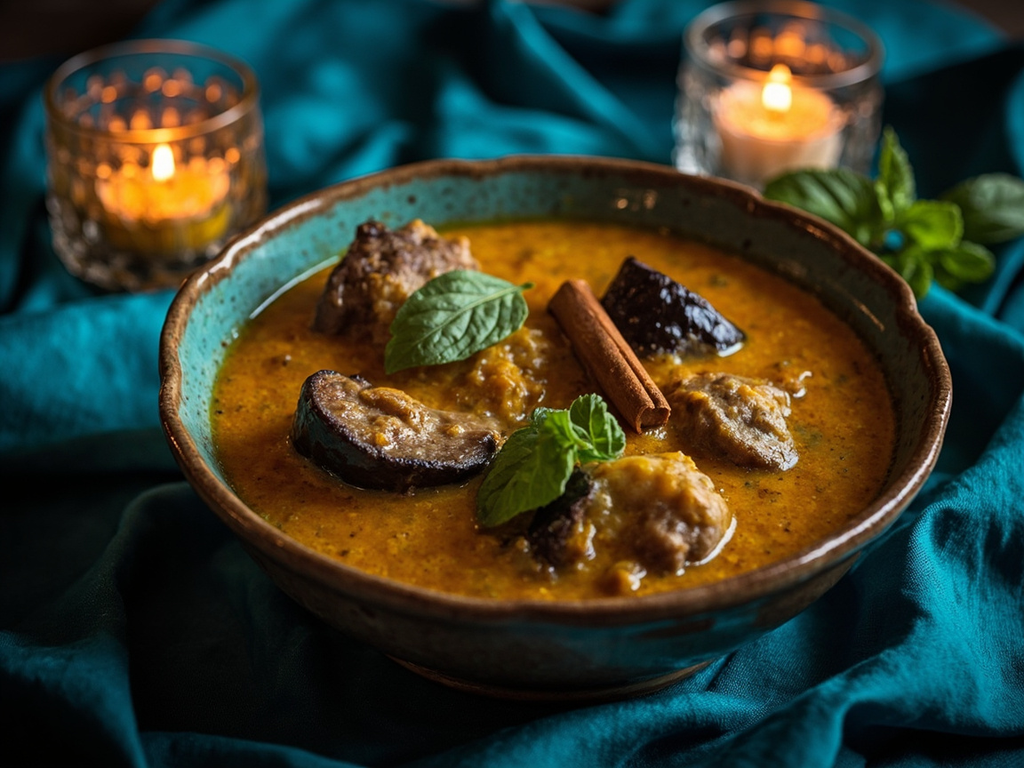
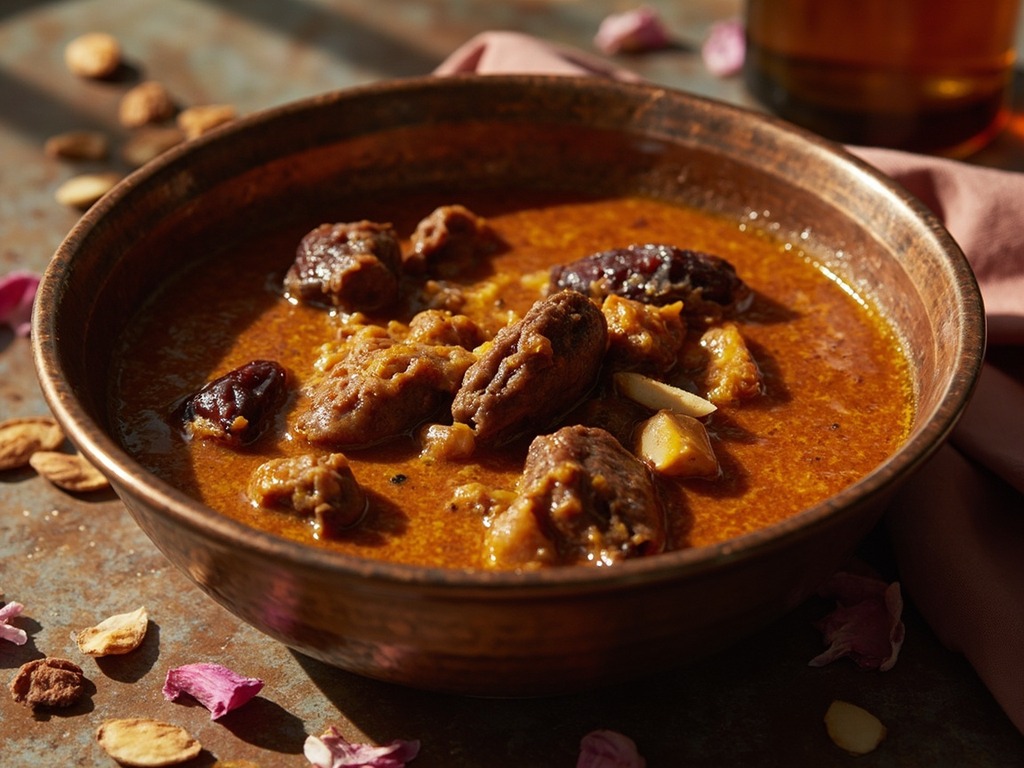
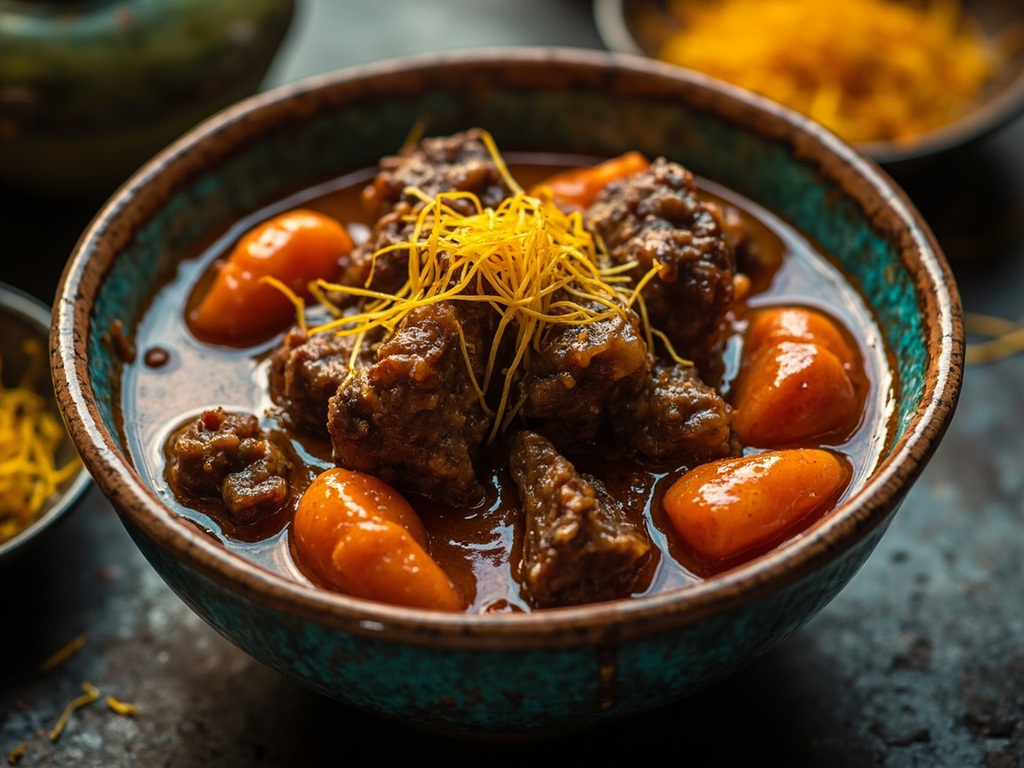
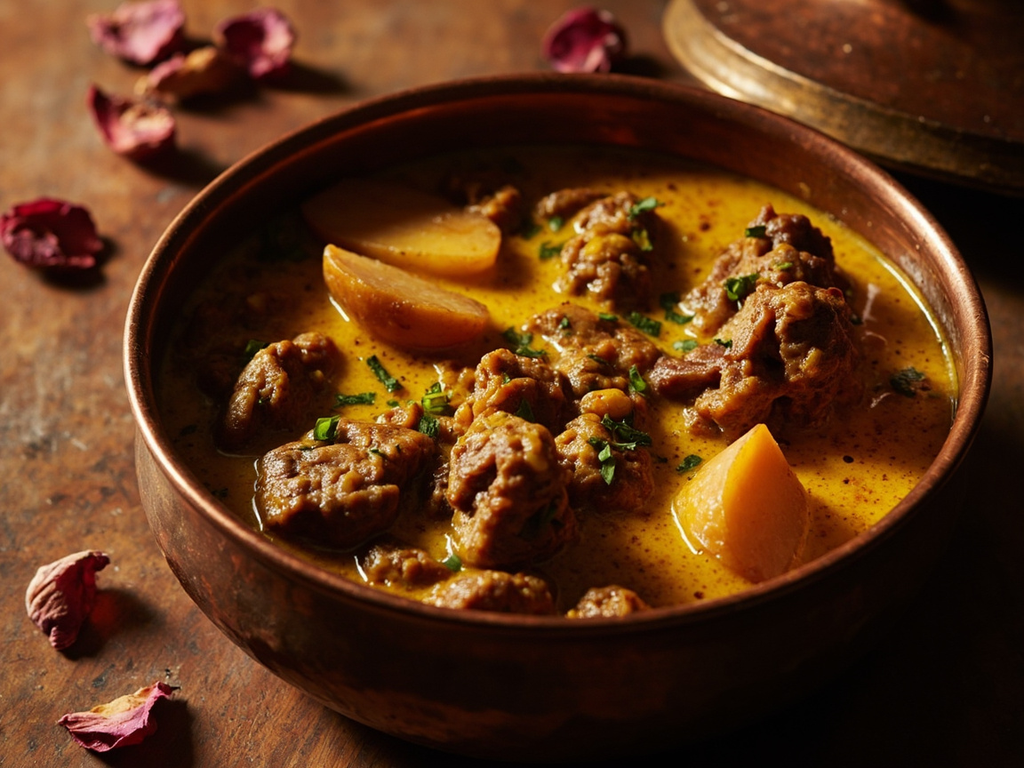
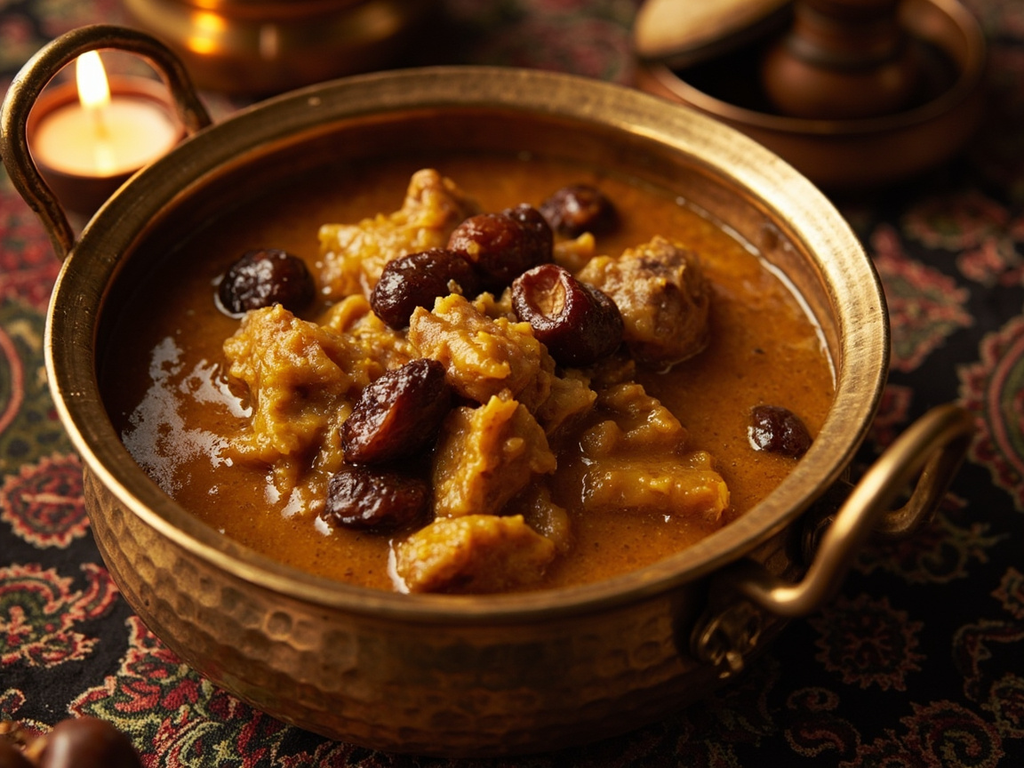
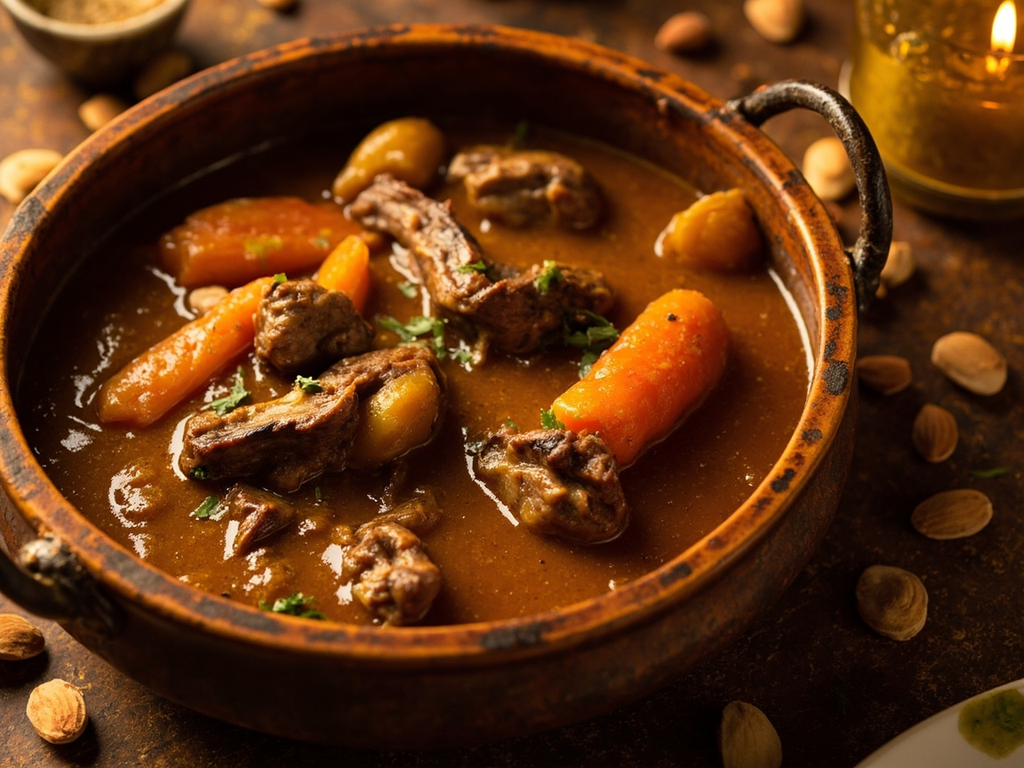
A meat stew long simmered in vinegar sweetened with date syrup and honey, perfumed with cinnamon and saffron: the sweet-and-sour balance that made the glory of Abbasid tables.
One day I was received at a prince's table, and they served this sikbāj that the powerful adore. See how vinegar contends with honey: thus goes the world, where bitter and sweet constantly mingle. The cook seized the meat, drowned it in vinegar cut with water, threw in the saffron that tints gold, and let it all sing on the embers until evening. I tasted it out of courtesy, for the philosopher knows how to honor his host—but my heart remained faithful to my bread and lentils.
- •Mutton or beef — in large pieces (base)
- •Wine vinegar — generously (master acidity)
- •Date syrup (dibs) and honey — to sweeten (sweetness)
- •Onions — several (aromatic)
- •Cinnamon, coriander, saffron — to taste (spices)
- •Carrots or eggplants — seasonal (vegetables)
Sikbāj — Sweet-and-Sour Meat Stew with Vinegar and Dates
A meat stew long simmered in vinegar sweetened with date syrup and honey, perfumed with cinnamon and saffron: the sweet-and-sour balance that made the glory of Abbasid tables.
Why this dish? Al-Fârâbī frequented the scholarly circles and princely courts of Baghdad, Damascus, and Aleppo, where he was hosted by Emir Sayf al-Dawla. Sikbāj, the quintessential royal stew of Abbasid banquets, is the dish that would have been served to him as an honored guest, even though he otherwise lived so frugally.
One day I was received at a prince's table, and they served this sikbāj that the powerful adore. See how vinegar contends with honey: thus goes the world, where bitter and sweet constantly mingle. The cook seized the meat, drowned it in vinegar cut with water, threw in the saffron that tints gold, and let it all sing on the embers until evening. I tasted it out of courtesy, for the philosopher knows how to honor his host—but my heart remained faithful to my bread and lentils.
Ingredients (period version)
- Mutton or beef — in large pieces (base)
- Wine vinegar — generously (master acidity)
- Date syrup (dibs) and honey — to sweeten (sweetness)
- Onions — several (aromatic)
- Cinnamon, coriander, saffron — to taste (spices)
- Carrots or eggplants — seasonal (vegetables)
Ingredients
- Lamb shoulder or braising beef — 800 g (base)
- Red wine vinegar — 120 ml (acidity)
- Date syrup — 2 tbsp (sweetness)
- Honey — 1 tbsp (sweetness)
- Onions — 2 large (aromatic)
- Cinnamon — 1 stick (spice)
- Ground coriander — 1 tsp (spice)
- Saffron — 1 pinch (color and aroma)
- Carrots — 3 (vegetable)
Method
- Sear the meat pieces in a little oil and set aside.
- Sauté the sliced onions, add the meat and cover with water; simmer for 1 hour.
- Add the vinegar, cinnamon, coriander, and carrots; continue for 40 minutes.
- Stir in the date syrup, honey, and saffron infused in a little hot water.
- Reduce until the sauce coats a spoon; adjust the sweet-and-sour balance; serve piping hot.
How it was made : Sikbāj is one of the most prestigious and best-documented dishes of Abbasid cuisine: legend attributes it to the Sassanid king Khosrow. The sweet-and-sour principle—meat, vinegar, and a sweetener (date dibs, honey, or sugar)—was at the heart of refined 10th-century taste. It features prominently in al-Warrāq's Kitāb al-Tabīkh.
The contemporary twist : Serve the sikbāj over pearl barley semolina and sprinkle with toasted slivered almonds: a homage to the medieval Orient in a contemporary plate.
Sources : Ibn Sayyâr al-Warrâq, Kitāb al-Tabīkh (10th century) · Charles Perry (trans.), A Baghdad Cookery Book (2005)
Al-Farabi · Charactorium