 flip
flipMaza, the Scholar's Barley Cake
Maza, the Scholar's Barley Cake
Why this dish? Papyrus rolls are read on a settled stomach, not a full one. The barley maza, kneaded in an instant and eaten cold, is the bread of the Library worker as well as the sailor: Apollonius knew it on both sides, that of the scholar bent over the Pinakes and that of the traveler bound for Rhodes.
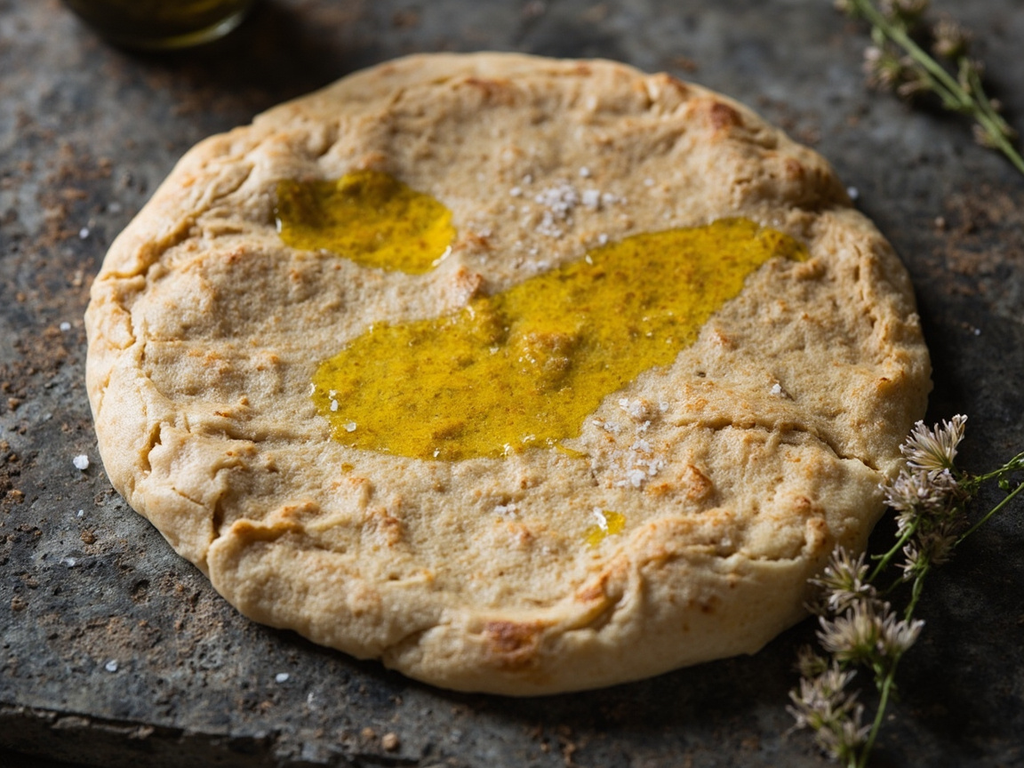
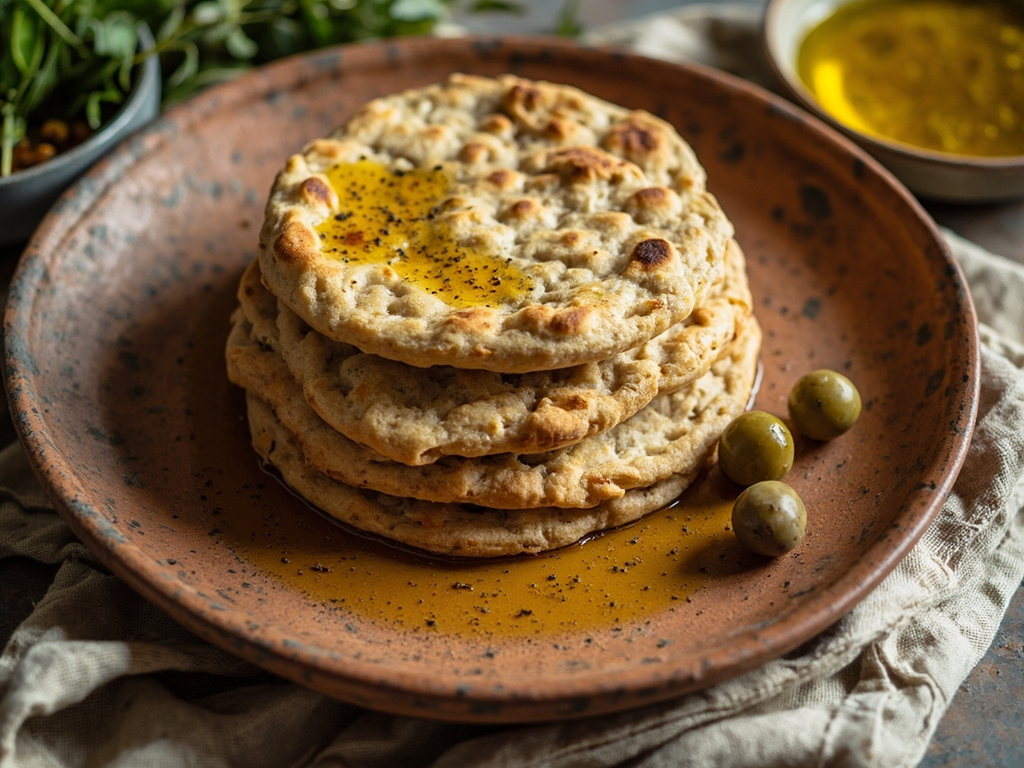
A dough of toasted barley, barely kneaded with water, a drizzle of oil, and salt, shaped into a dense cake. Eaten as is, dipped in wine cut with water, or spread with a little honey as desired. It is the quintessential Greek food, even more common than wheat bread.
Friend, do not think that you need an oven and a cook to eat like a Greek. I take my toasted barley flour — the *alphita* — I moisten it with a little water and oil, I add salt, and with my hands I press it all into a cake: there you have it. When I was composing my *Argonautica* at night, it was this that kept me company, eaten right on the table among the scrolls. Barley nourishes the sober man; save wheat for feast days.
- •Toasted barley flour (alphita) — two good handfuls (base)
- •Spring water — enough to bind (binder)
- •Olive oil — a drizzle (fat)
- •Salt — a pinch (seasoning)
Maza, the Scholar's Barley Cake
A dough of toasted barley, barely kneaded with water, a drizzle of oil, and salt, shaped into a dense cake. Eaten as is, dipped in wine cut with water, or spread with a little honey as desired. It is the quintessential Greek food, even more common than wheat bread.
Why this dish? Papyrus rolls are read on a settled stomach, not a full one. The barley maza, kneaded in an instant and eaten cold, is the bread of the Library worker as well as the sailor: Apollonius knew it on both sides, that of the scholar bent over the Pinakes and that of the traveler bound for Rhodes.
Friend, do not think that you need an oven and a cook to eat like a Greek. I take my toasted barley flour — the *alphita* — I moisten it with a little water and oil, I add salt, and with my hands I press it all into a cake: there you have it. When I was composing my *Argonautica* at night, it was this that kept me company, eaten right on the table among the scrolls. Barley nourishes the sober man; save wheat for feast days.
Ingredients (period version)
- Toasted barley flour (alphita) — two good handfuls (base)
- Spring water — enough to bind (binder)
- Olive oil — a drizzle (fat)
- Salt — a pinch (seasoning)
Ingredients
- Barley flour (or ground barley flakes) — 150 g (base)
- Warm water — 8 to 10 cl (binder)
- Olive oil — 2 tbsp (fat)
- Fine salt — 1 generous pinch (seasoning)
- Honey (optional) — 1 tsp (for the sweet version)
Method
- If using barley flakes, toast them dry in a pan then grind into a coarse flour: this toasting gives the flavor.
- Mix the barley flour, salt, and oil in a bowl.
- Add warm water little by little, working with your hands until you get a firm, non-sticky dough.
- Shape into 2 or 3 thick cakes and press them well between your palms.
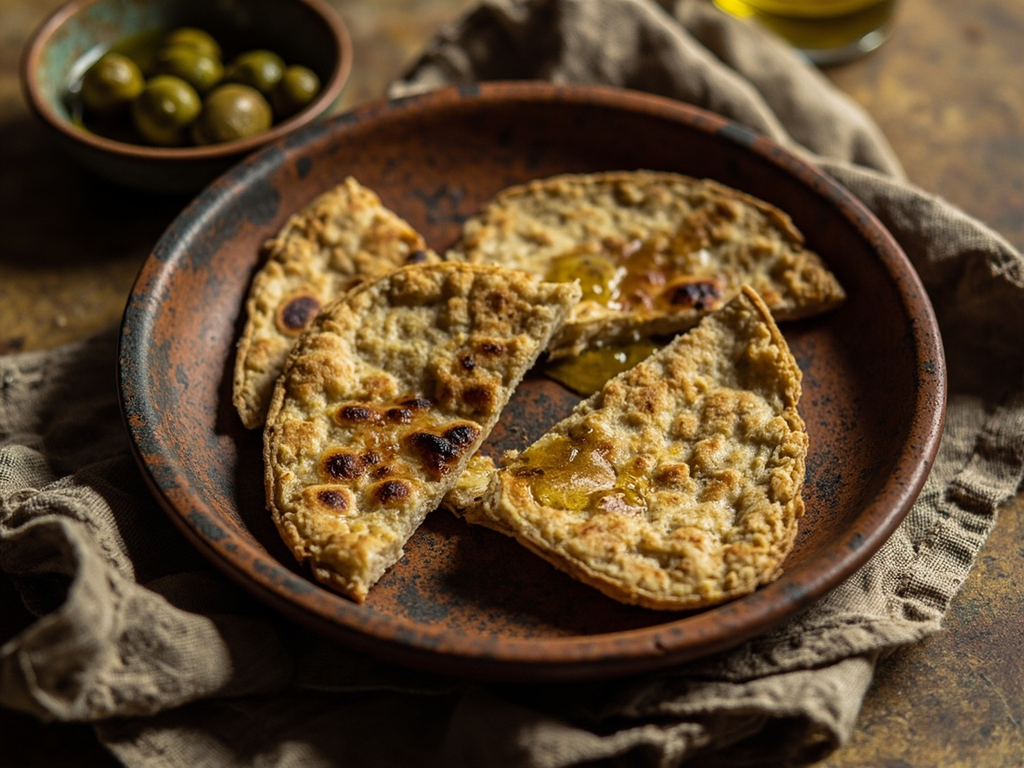
- Eat without cooking, or place on a hot griddle for 5 minutes for a crust. Serve with a drizzle of oil, or a little honey for the sweet version.
How it was made : Barley was toasted before grinding (*alphita*) because it was easier to digest and kept better. The uncooked or barely heated maza was the everyday food of the Greeks: Athenaeus cites dozens of variants. It was dipped in wine, oil, or broth.
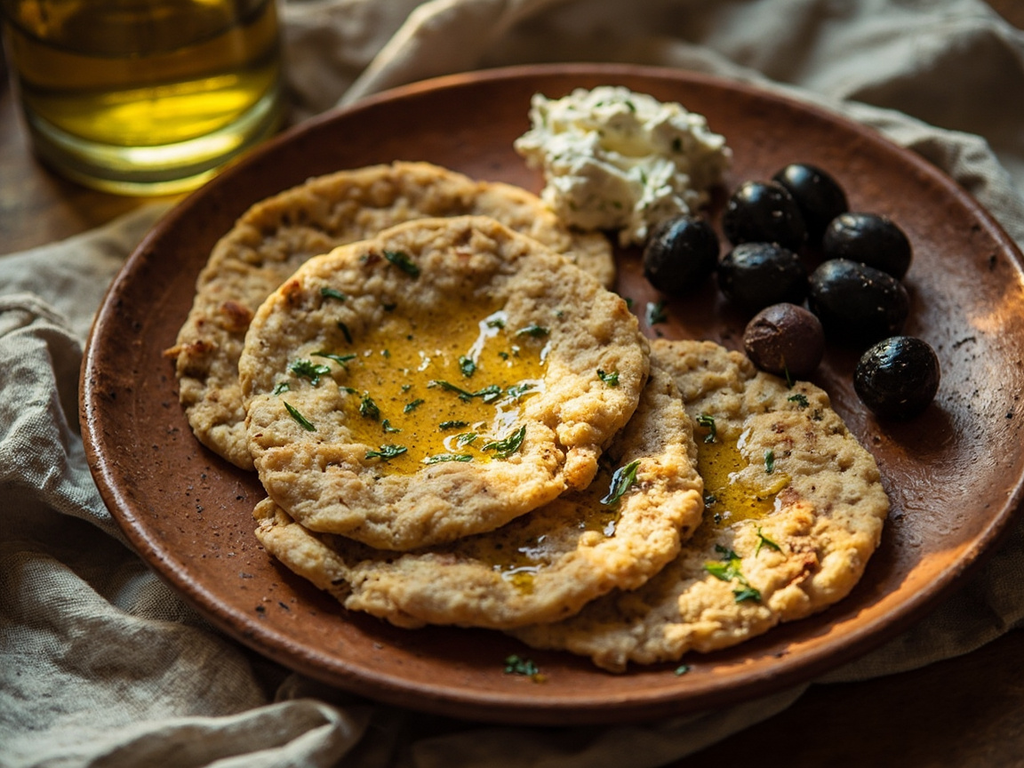
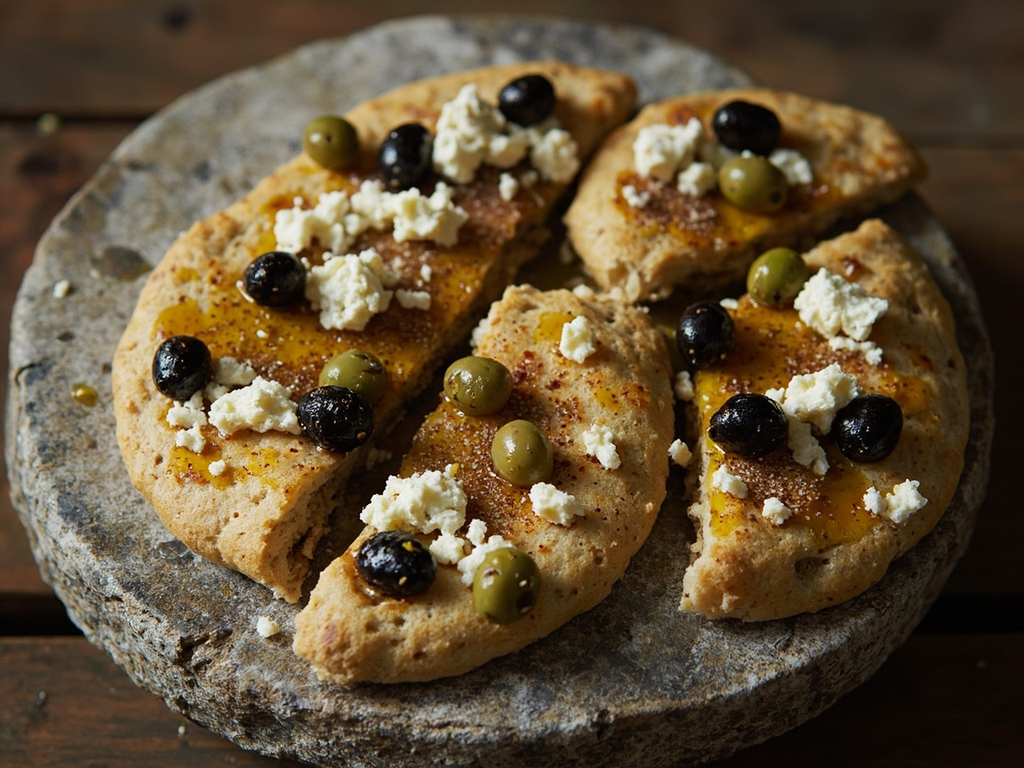
The contemporary twist : Served as small cakes with a dash of extra virgin olive oil and fresh herbs, a 'philosopher's bread' to nibble as an appetizer.
Sources : Athenaeus, *Deipnosophistae*, Book III · J. Wilkins & S. Hill, *Food in the Ancient World* (2006)
Apollonius of Rhodes · Charactorium