 flip
flipBrined Olives with Bitter Herbs
Brined Olives with Bitter Herbs
Why this dish? The olive tree is one of the master trees of the garden and the promised land. After Eden, humanity learns to preserve in order to survive the lean seasons: the olive, inedible raw, must be de-bittered and salted. This is the gesture of foresight, contrary to the lost abundance of the garden.
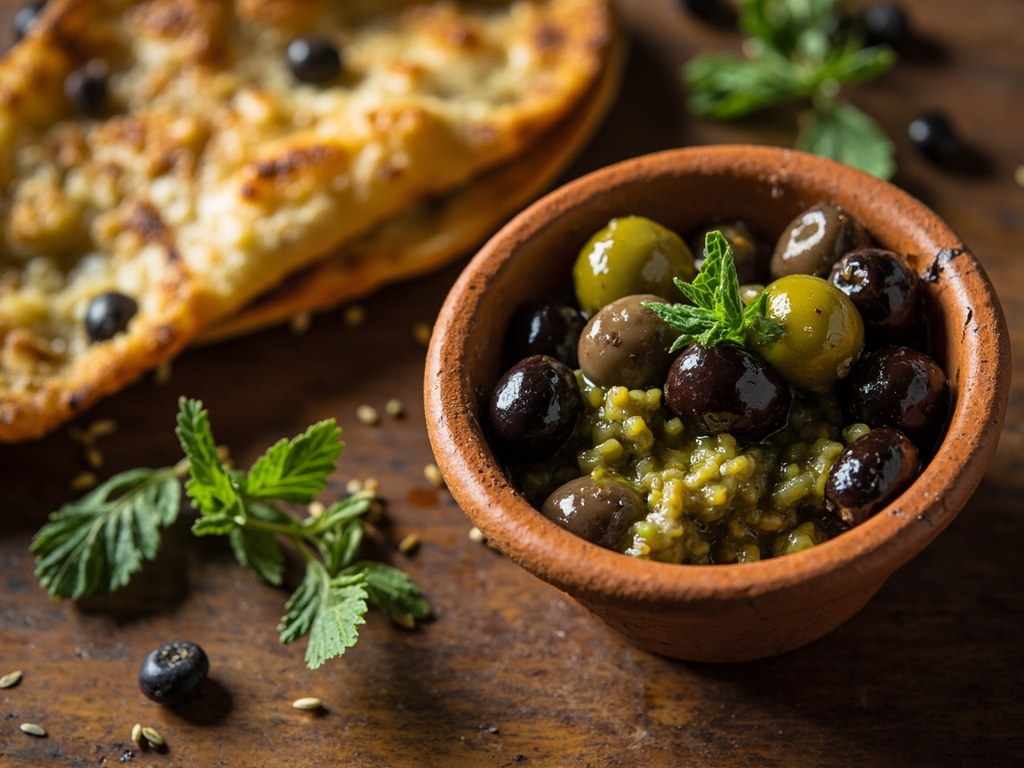
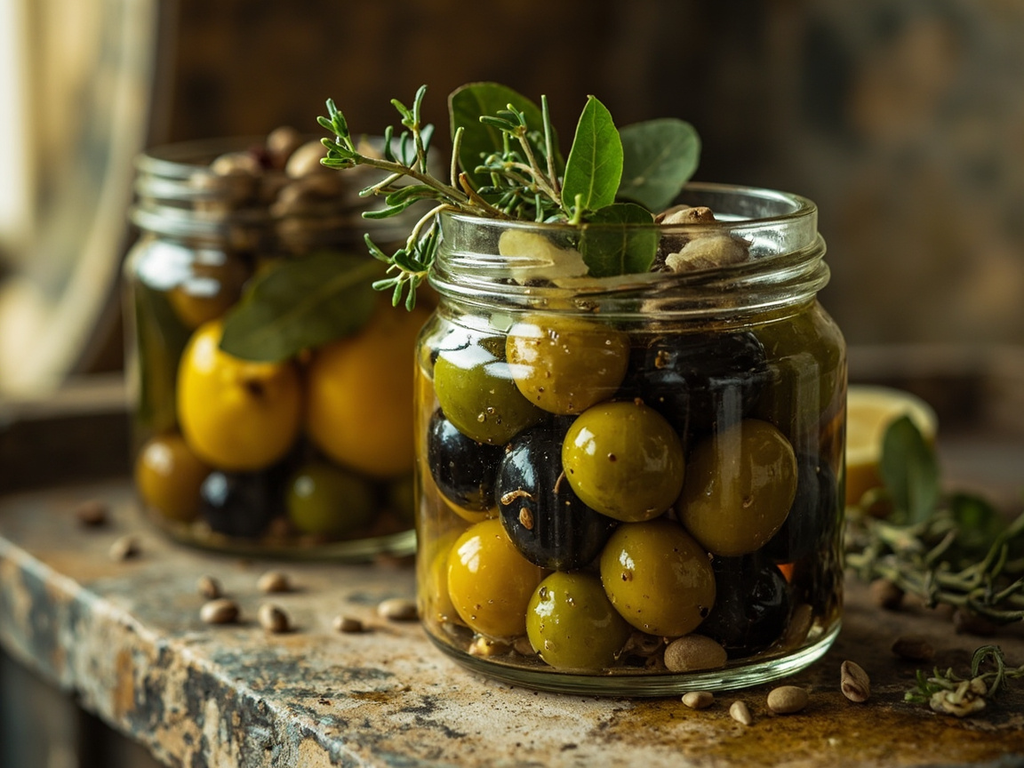
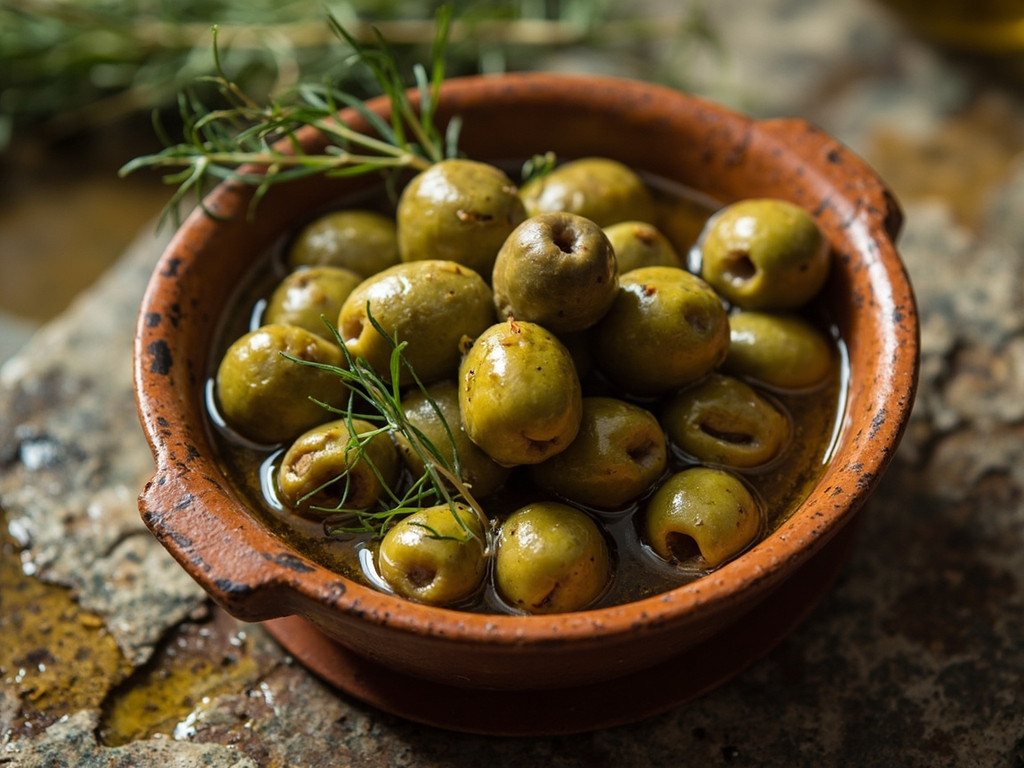
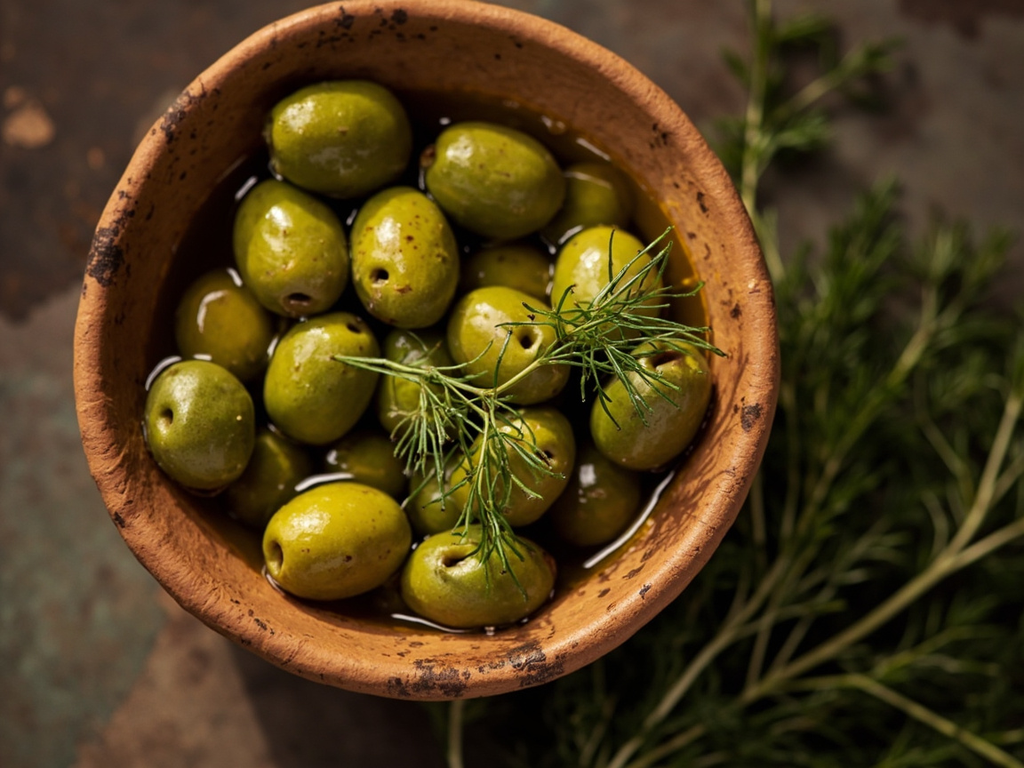
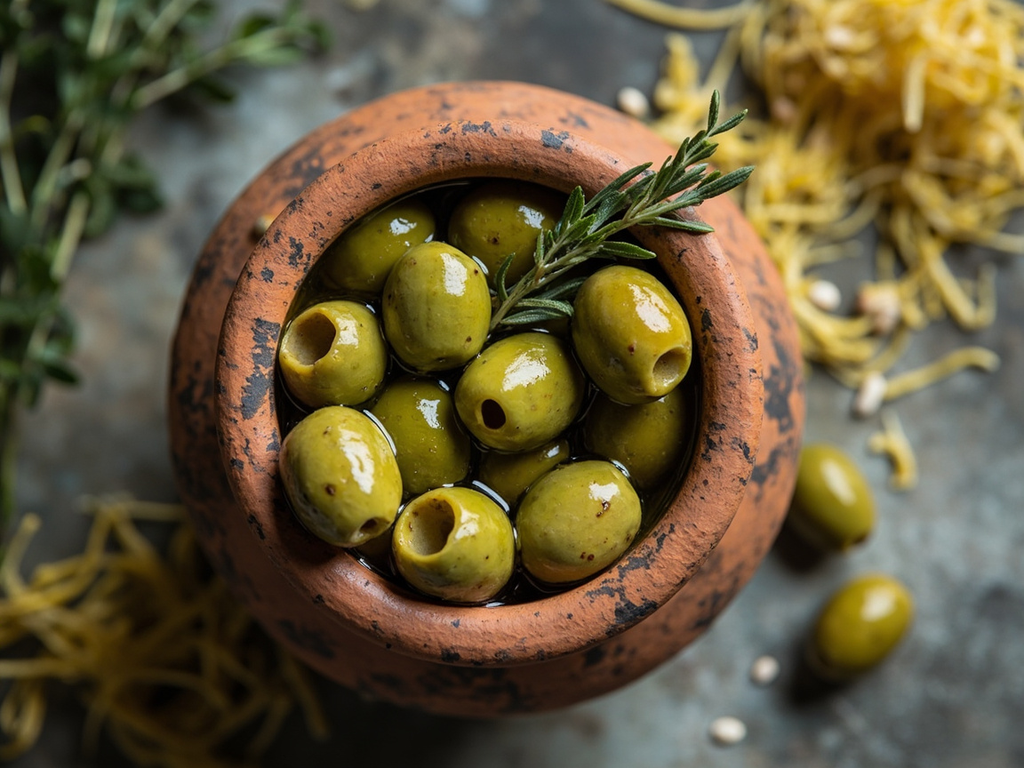
Cracked green olives, long soaked to remove bitterness, then preserved in brine with hyssop, coriander, and lemon peel. Salty, still slightly bitter, fragrant: the sentinel of ancient pantries.
In the garden, nothing was stored: everything was picked at the moment of desire. But outside, one must think of tomorrow. The olive plucked from the tree burns the mouth with bitterness — it must be cracked, drowned in water changed many times, for days, then buried in salted water with herbs from the hillside. Patient, oh patient: what haste spoils, time perfects. When winter comes, you will bless the full jar.
- •Freshly picked green olives — a basket (fruit to preserve)
- •Sea salt — to saturate the water (brine and preservation)
- •Fresh hyssop and coriander — a few sprigs (flavor)
- •Lemon peel — a few strips (freshness)
Brined Olives with Bitter Herbs
Cracked green olives, long soaked to remove bitterness, then preserved in brine with hyssop, coriander, and lemon peel. Salty, still slightly bitter, fragrant: the sentinel of ancient pantries.
Why this dish? The olive tree is one of the master trees of the garden and the promised land. After Eden, humanity learns to preserve in order to survive the lean seasons: the olive, inedible raw, must be de-bittered and salted. This is the gesture of foresight, contrary to the lost abundance of the garden.
In the garden, nothing was stored: everything was picked at the moment of desire. But outside, one must think of tomorrow. The olive plucked from the tree burns the mouth with bitterness — it must be cracked, drowned in water changed many times, for days, then buried in salted water with herbs from the hillside. Patient, oh patient: what haste spoils, time perfects. When winter comes, you will bless the full jar.
Ingredients (period version)
- Freshly picked green olives — a basket (fruit to preserve)
- Sea salt — to saturate the water (brine and preservation)
- Fresh hyssop and coriander — a few sprigs (flavor)
- Lemon peel — a few strips (freshness)
Ingredients
- Raw green olives (untreated) — 500 g (fruit to preserve)
- Coarse salt — 100 g per liter of water (brine)
- Water — about 1 liter (brine)
- Coriander seeds + thyme/hyssop sprigs — 1 tablespoon + a few sprigs (flavor)
- Lemon zest — from 1 lemon (freshness)
Method
- Crack each olive with a knife blow or crush slightly.
- Cover with cold water and change the water morning and evening for 7 to 10 days, to leach out bitterness (taste to judge).
- Prepare the brine: dissolve 100 g coarse salt per liter of water, bring to a boil, then let cool completely.
- Drain the olives, pack them into a clean jar with coriander, herbs, and lemon zest.
- Cover completely with cold brine, ensuring olives remain submerged (use a grape leaf or a clean weight to hold them down).
- Close and let mature in a cool place for 3 to 4 weeks before tasting.
How it was made : The de-bittering of olives in water followed by brine preservation is attested since high antiquity throughout the eastern Mediterranean basin. It was a vital technique: the olive tree produced oil (light, cooking, anointing) and the preserved fruit, a staple for months without harvest.
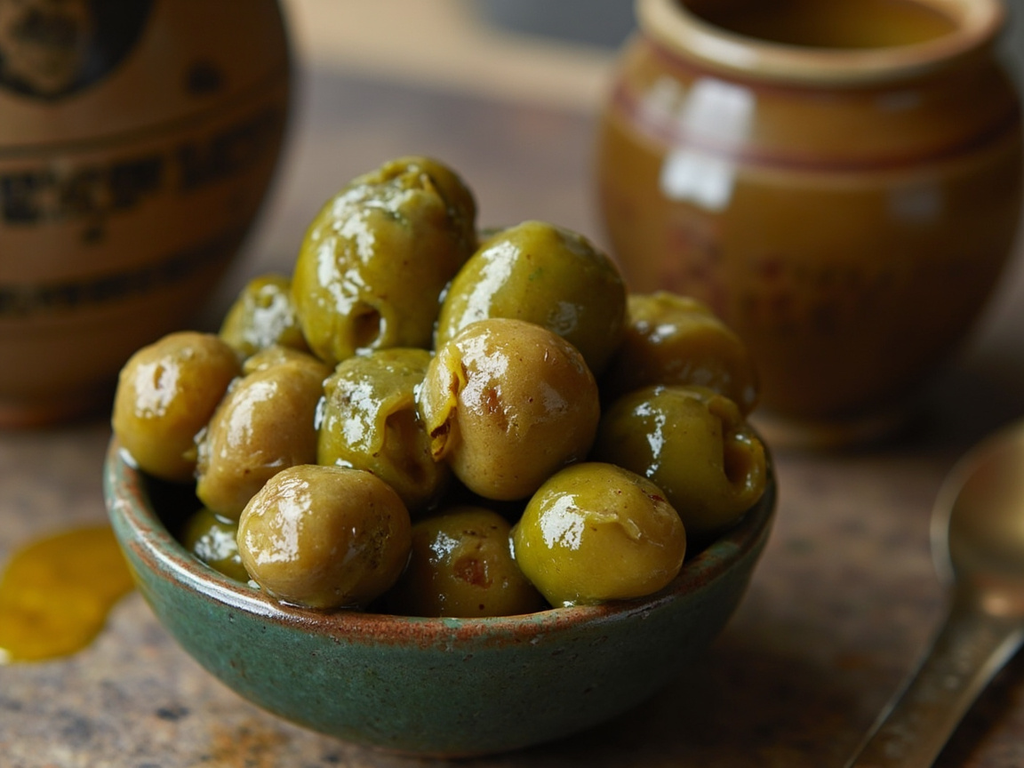
The contemporary twist : Before serving, sauté the drained olives for a minute in a pan with a drizzle of olive oil and zest: warm and glossy, they lose all austerity.
Sources : Deuteronomy 8:8 · Nathan MacDonald, What Did the Ancient Israelites Eat? (2008)
Adam and Eve · Charactorium