 flip
flipRoast Haunch of Venison with Redcurrant Sauce
Roast Haunch of Venison with Redcurrant Sauce
Why this dish? Pope grew up in Binfield, in the heart of Windsor Forest, which he immortalised in his poem 'Windsor-Forest' (1713), celebrating its hunts and game. Venison — roe deer or fallow deer from the royal parks — was the quintessential English festive meat, a symbol of prestige exchanged among gentlemen.
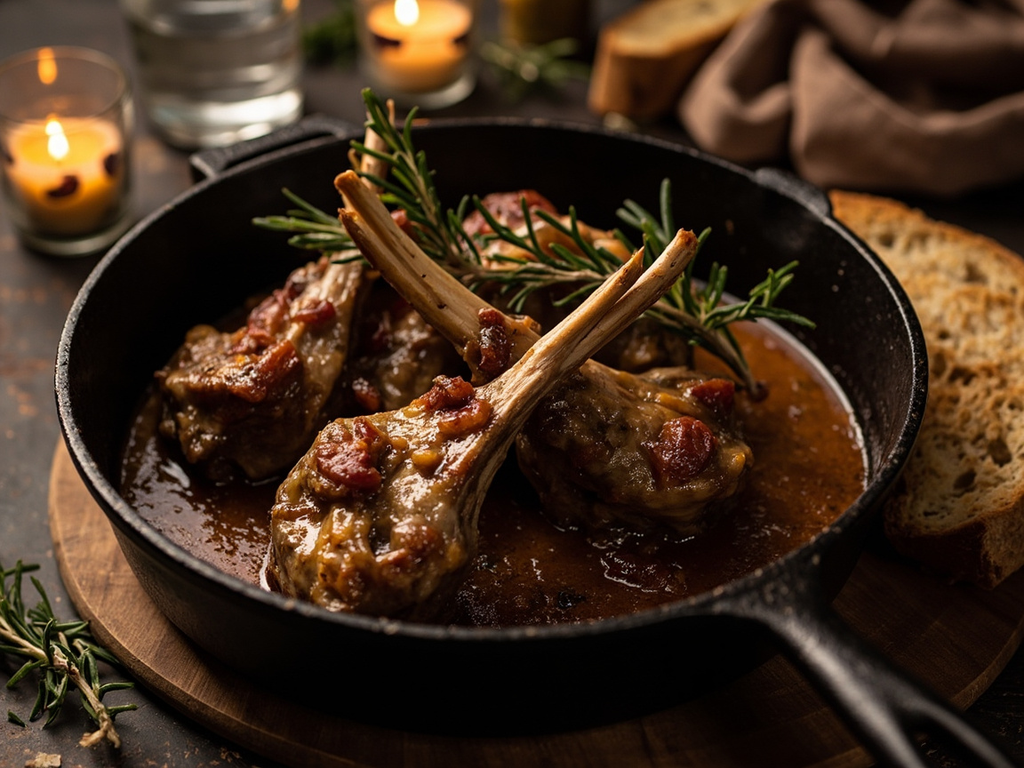
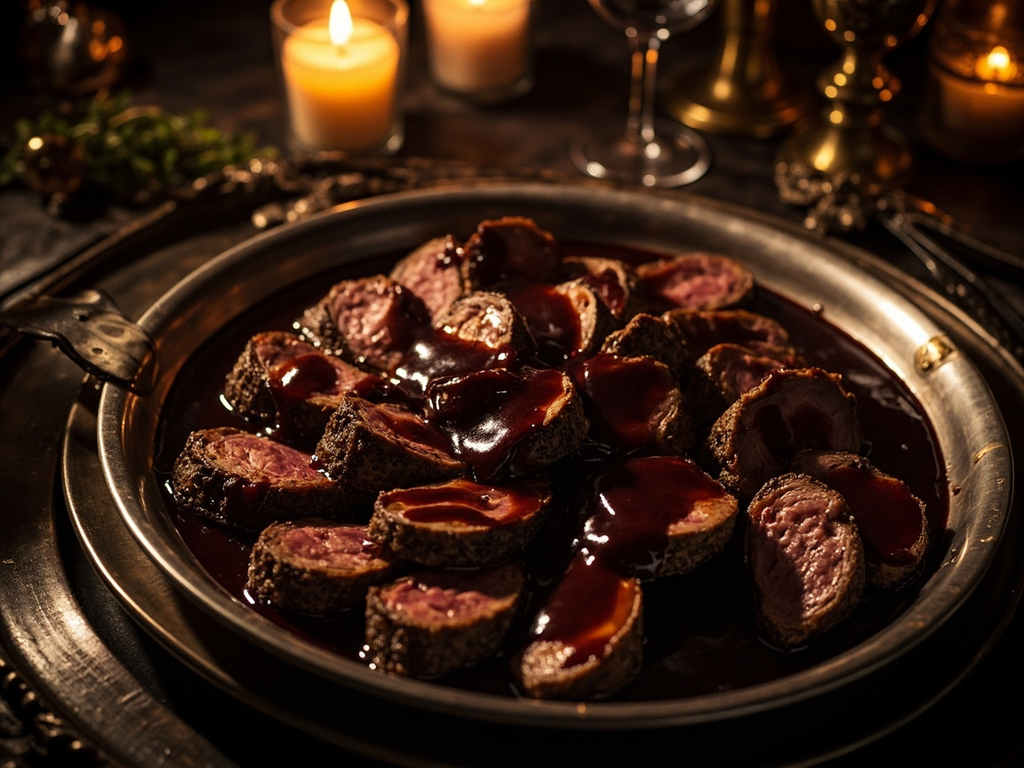
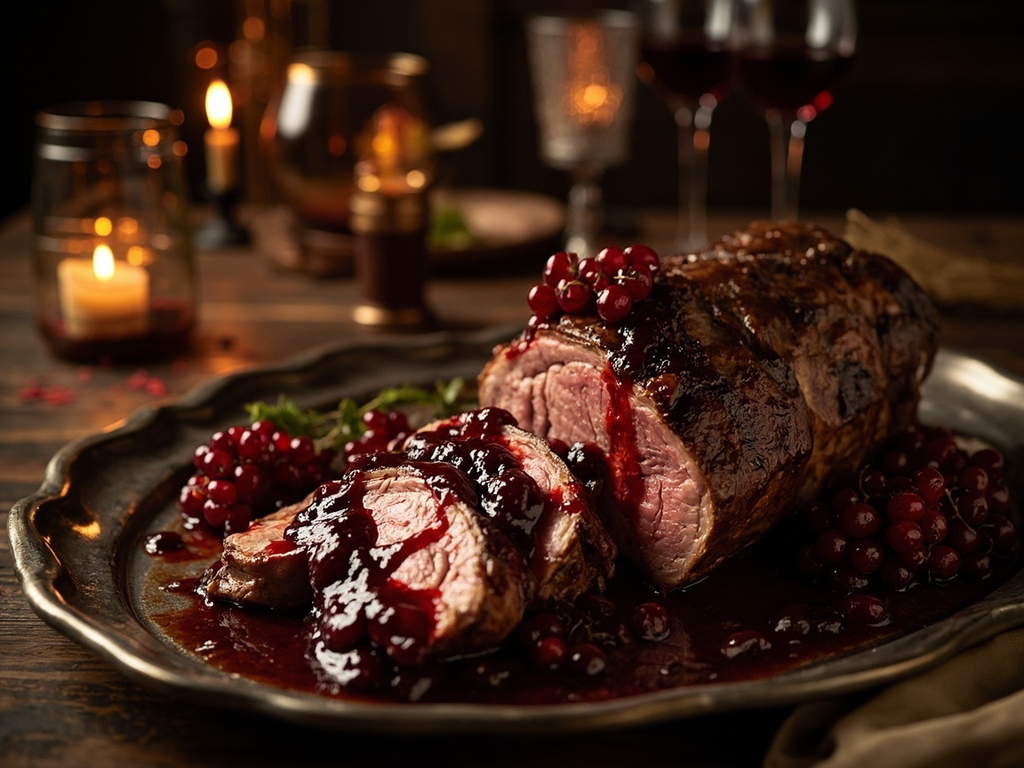
A haunch of roe deer roasted on the spit, marinated in spices and wine, served rare with a sweet-and-sour redcurrant sauce. The prestige dish placed at the centre of the table to remove the soup.
Ah, venison! As a child at Binfield, I heard the hunting horns resound beneath the oaks of Windsor, and no dish recalls those mornings better. A fine haunch, rubbed with pepper and mace, left to rest in wine before slowly turning on the spit, basted with its own juices. It is served still rosy, accompanied by a redcurrant sauce whose sharpness awakens the noble flesh. This is a gentleman's dish, Sir — it demands patience, like a good couplet that one polishes and repolishes before offering it to the world.
- •Haunch of roe deer or fallow deer — a fine piece (noble meat)
- •Red wine (claret) — a pitcher (marinade)
- •Pepper and mace — cracked (spices)
- •Fat bacon for barding — a few strips (roasting fat)
- •Redcurrants — a bowl (tart sauce)
- •Sugar — a handful (sweet-sour balance)
- •Salt — to taste (seasoning)
Roast Haunch of Venison with Redcurrant Sauce
A haunch of roe deer roasted on the spit, marinated in spices and wine, served rare with a sweet-and-sour redcurrant sauce. The prestige dish placed at the centre of the table to remove the soup.
Why this dish? Pope grew up in Binfield, in the heart of Windsor Forest, which he immortalised in his poem 'Windsor-Forest' (1713), celebrating its hunts and game. Venison — roe deer or fallow deer from the royal parks — was the quintessential English festive meat, a symbol of prestige exchanged among gentlemen.
Ah, venison! As a child at Binfield, I heard the hunting horns resound beneath the oaks of Windsor, and no dish recalls those mornings better. A fine haunch, rubbed with pepper and mace, left to rest in wine before slowly turning on the spit, basted with its own juices. It is served still rosy, accompanied by a redcurrant sauce whose sharpness awakens the noble flesh. This is a gentleman's dish, Sir — it demands patience, like a good couplet that one polishes and repolishes before offering it to the world.
Ingredients (period version)
- Haunch of roe deer or fallow deer — a fine piece (noble meat)
- Red wine (claret) — a pitcher (marinade)
- Pepper and mace — cracked (spices)
- Fat bacon for barding — a few strips (roasting fat)
- Redcurrants — a bowl (tart sauce)
- Sugar — a handful (sweet-sour balance)
- Salt — to taste (seasoning)
Ingredients
- Haunch or shoulder of venison — 1.2 kg (meat)
- Full-bodied red wine — 250 ml (marinade)
- Black pepper + mace (or nutmeg) — 1 tsp each (spices)
- Bacon fat or lard — 100 g (fat)
- Redcurrants (or redcurrant jelly) — 200 g (sauce)
- Sugar — 2 tbsp (sweet-sour)
- Butter — 20 g (sauce liaison)
- Salt — to taste (seasoning)
Method
- The day before, rub the meat with pepper and mace, pour the red wine over it, and marinate in the refrigerator.
- Pat the meat dry, bard with bacon fat, roast at 220°C for 15 minutes, then reduce to 170°C, basting regularly with the marinade (about 40–45 minutes for pink).
- Meanwhile, simmer the redcurrants with sugar and a little water until syrupy, then whisk in the butter.
- Let the meat rest for 10 minutes under foil, season with salt.
- Slice and nap with the redcurrant sauce; serve at the centre of the table as the centrepiece.
How it was made : Venison was rarely bought: it was received as a gift from great estates, making it a social marker. It was traditionally eaten with sweet-sour sauces made from red fruits, and Georgian cookbooks recommend barding and marinating in wine to tenderise the lean meat.
The contemporary twist : Replace the haunch with a quick-seared venison fillet, deglaze the pan with redcurrant vinegar — same spirit, in a speedy dinner version.
Sources : Alexander Pope, *Windsor-Forest* (1713) · Robert Smith, *Court Cookery* (1723)
Alexander Pope · Charactorium