 flip
flipEpityron, Crushed Olive Paste with Herbs
Epityron, Crushed Olive Paste with Herbs
Why this dish? The olive tree was Athena's sacred tree and the wealth of Attica; this olive paste, which keeps for weeks in a jar, accompanied Demetrius from the Lyceum to exile — a taste of Athens to carry everywhere.
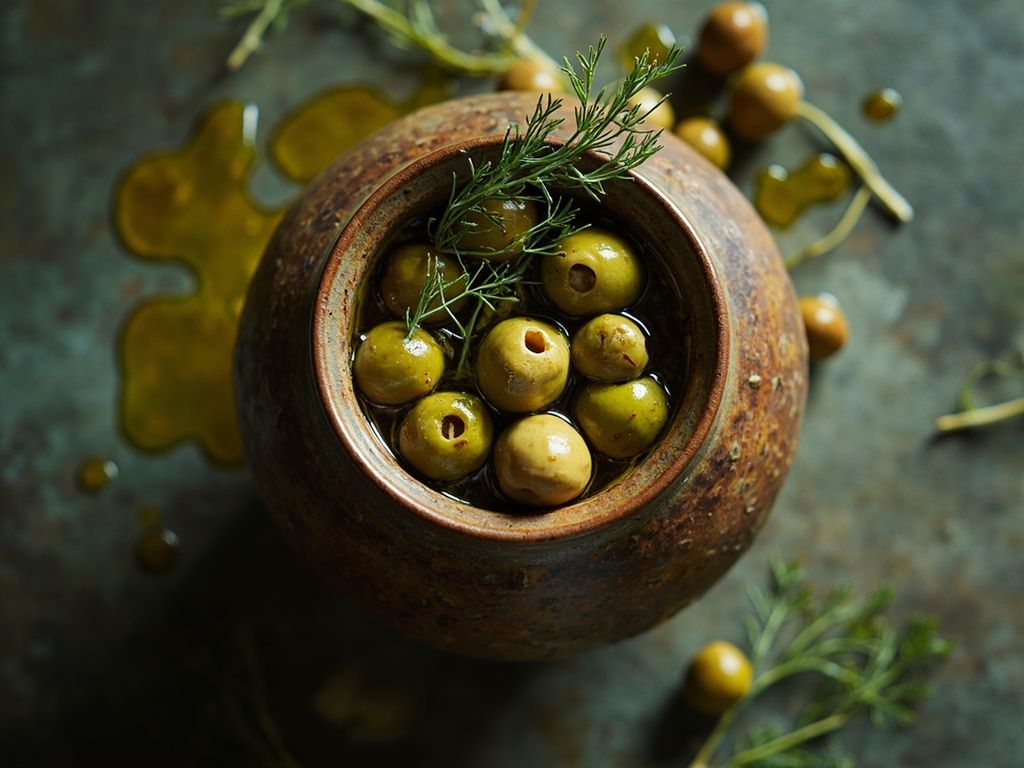
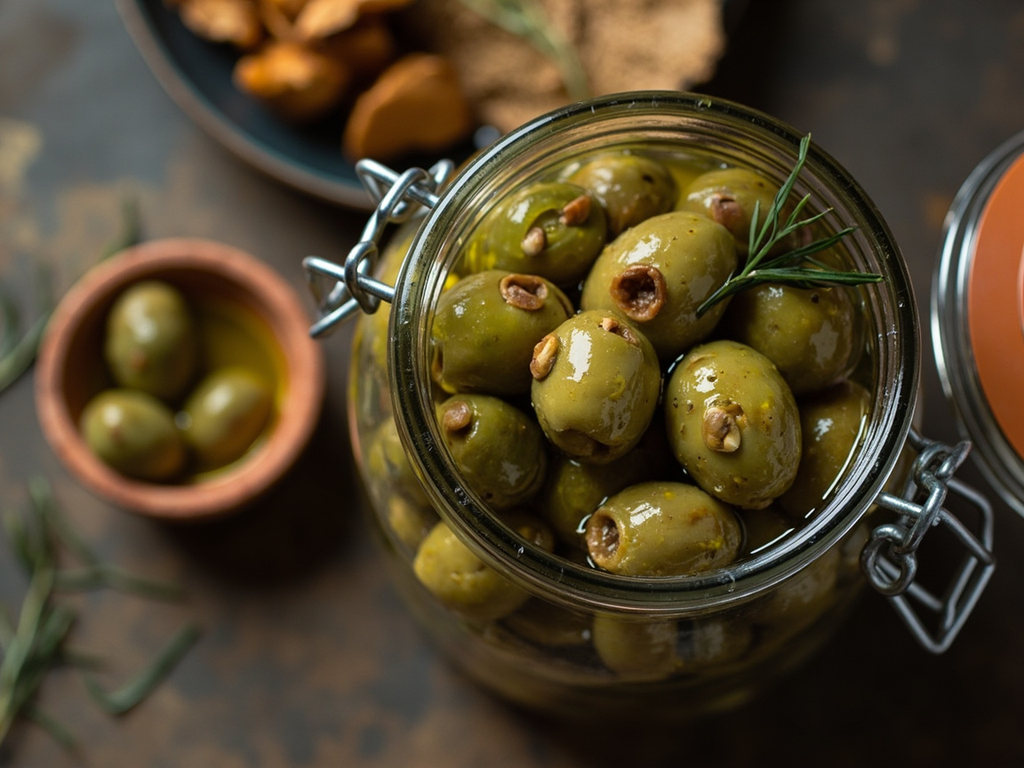
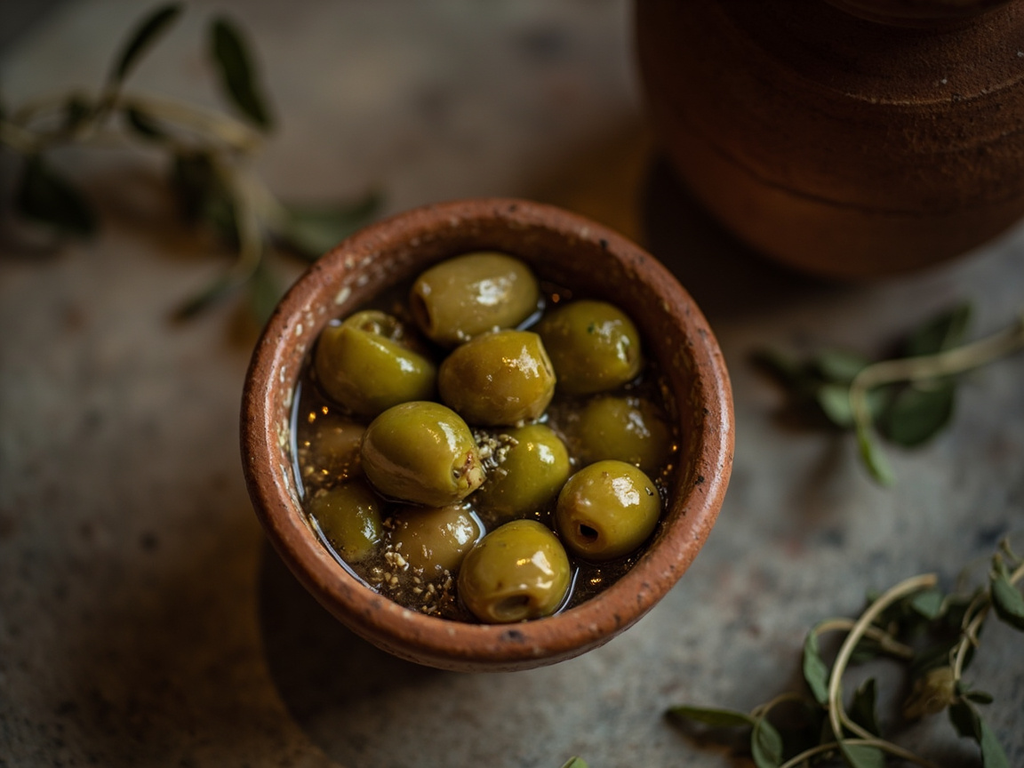
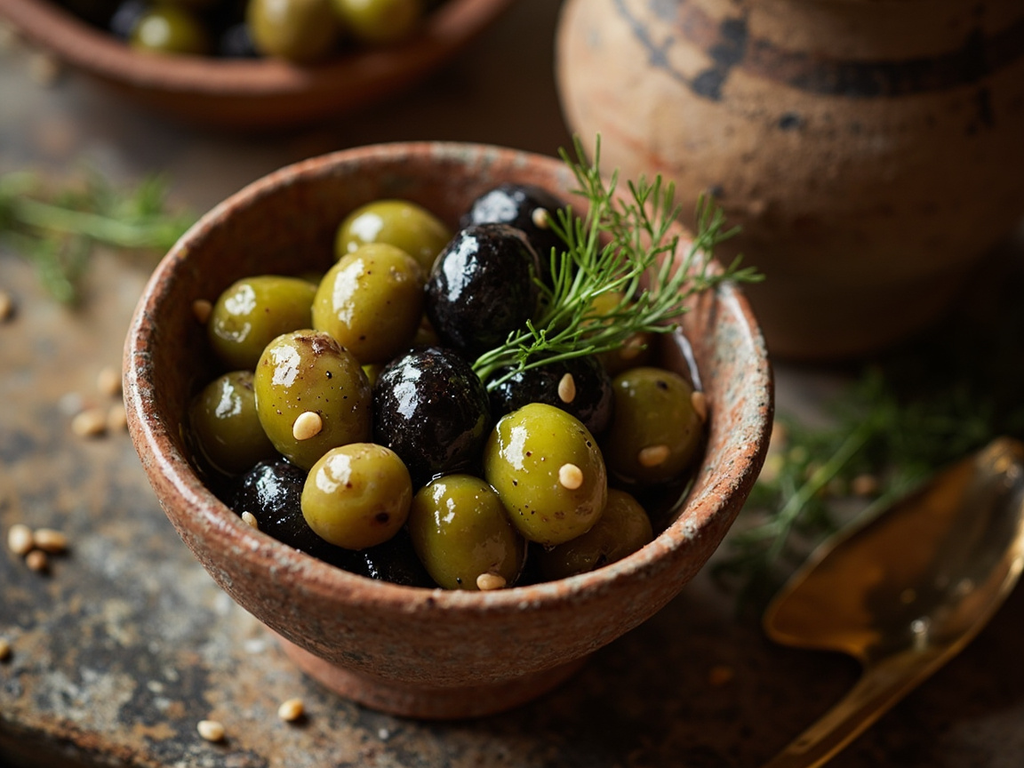
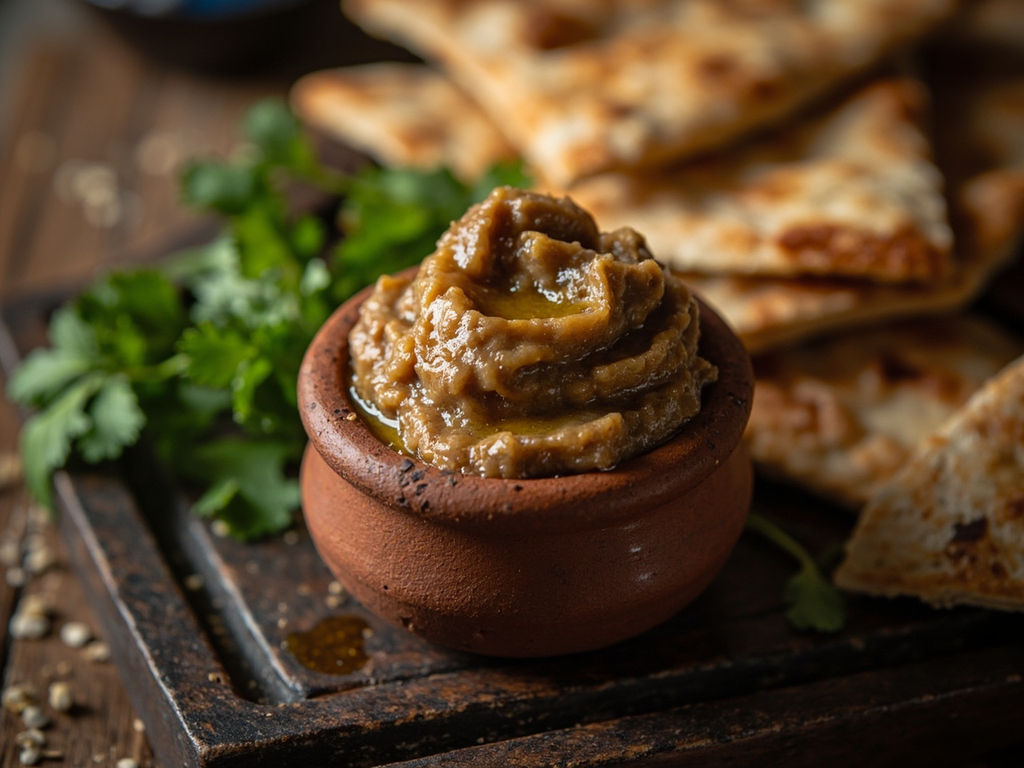
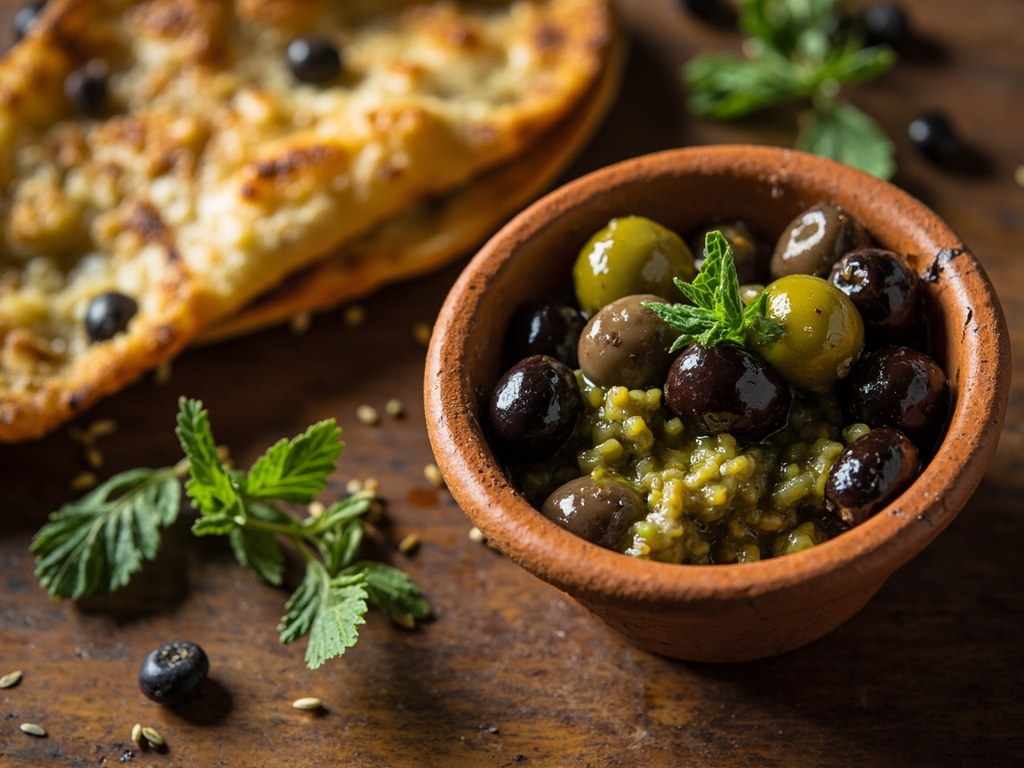
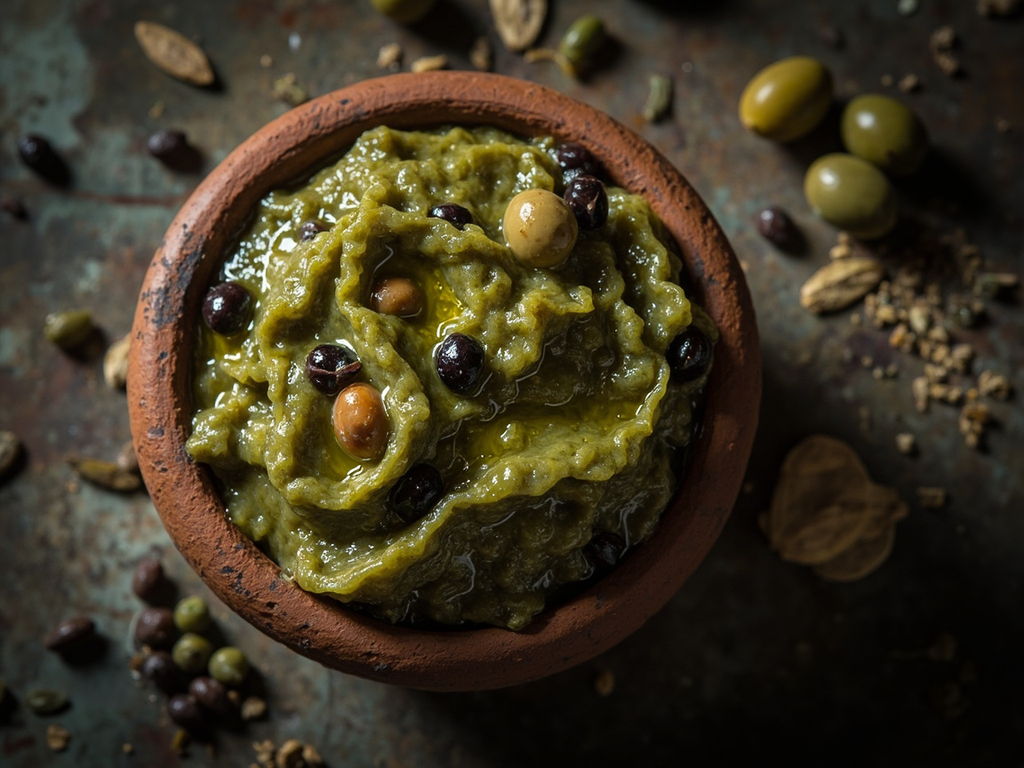
Black and green olives crushed with capers, bitter herbs, vinegar, and oil into a rustic, bold paste spread on maza. Salty, sharp, deeply vegetal: the soul of Attica in a pot.
Know this: as long as an Athenian has olives in his jar, he is never quite poor nor quite in exile. Pound together black and green olives, add the pungent caper, the bitter herbs of the hill, a dash of vinegar — and keep it all under oil, away from air. In Alexandria, far from my Acropolis, it was by breaking flatbread on this dark paste that I rediscovered the taste of Athena's tree.
- •Pitted black and green olives — two handfuls (base)
- •Capers — a small handful (salty pungency)
- •Bitter herbs (rue, fennel, coriander) — a few sprigs (herbs)
- •Wine vinegar — a drizzle (acidity / preservation)
- •Olive oil — to cover (binder / preservation)
Epityron, Crushed Olive Paste with Herbs
Black and green olives crushed with capers, bitter herbs, vinegar, and oil into a rustic, bold paste spread on maza. Salty, sharp, deeply vegetal: the soul of Attica in a pot.
Why this dish? The olive tree was Athena's sacred tree and the wealth of Attica; this olive paste, which keeps for weeks in a jar, accompanied Demetrius from the Lyceum to exile — a taste of Athens to carry everywhere.
Know this: as long as an Athenian has olives in his jar, he is never quite poor nor quite in exile. Pound together black and green olives, add the pungent caper, the bitter herbs of the hill, a dash of vinegar — and keep it all under oil, away from air. In Alexandria, far from my Acropolis, it was by breaking flatbread on this dark paste that I rediscovered the taste of Athena's tree.
Ingredients (period version)
- Pitted black and green olives — two handfuls (base)
- Capers — a small handful (salty pungency)
- Bitter herbs (rue, fennel, coriander) — a few sprigs (herbs)
- Wine vinegar — a drizzle (acidity / preservation)
- Olive oil — to cover (binder / preservation)
Ingredients
- Pitted black and green olives — 200 g (mix) (base)
- Drained capers — 2 tbsp (salty pungency)
- Fennel seeds and coriander seeds — 1 tsp total (herbs)
- Wine vinegar — 1 tbsp (acidity / preservation)
- Extra virgin olive oil — 4 to 5 tbsp (binder / preservation)
Method
- Briefly crush fennel and coriander seeds in a mortar to release their aromas.
- Add olives and capers, pound coarsely (keep some texture, not a purée).
- Stir in the vinegar, then drizzle in the oil until a spreadable paste forms.
- Taste: capers and olives already provide salt, adjust with herbs rather than salt.
- Transfer to a jar, cover with a film of oil, and refrigerate; keeps 2–3 weeks.
How it was made : Cato later described a Roman epityrum (olives, herbs, oil, vinegar) directly inherited from the Greek world: a pantry condiment designed to last, without refrigeration, thanks to salt, vinegar, and oil sealing out air.
The contemporary twist : Serve in a small glass with a drizzle of new oil and a strip of candied lemon peel (only 21st century!) to brighten the bitters: the Mediterranean aperitif in its oldest form.
Sources : Cato the Elder, De Agricultura (recipe for epityrum) · Andrew Dalby, Siren Feasts
Demetrius of Phalerum · Charactorium