 flip
flipRye Honey Cakes with Hazelnuts
Rye Honey Cakes with Hazelnuts
Why this dish? When legend takes her to the court of Logres and the outskirts of Camelot, Agatha the village woman brings what a peasant can offer most precious for a feast day: a honey cake, perfumed with the rare spices of a passing merchant. The luxury of the humble, made of honey and patience.
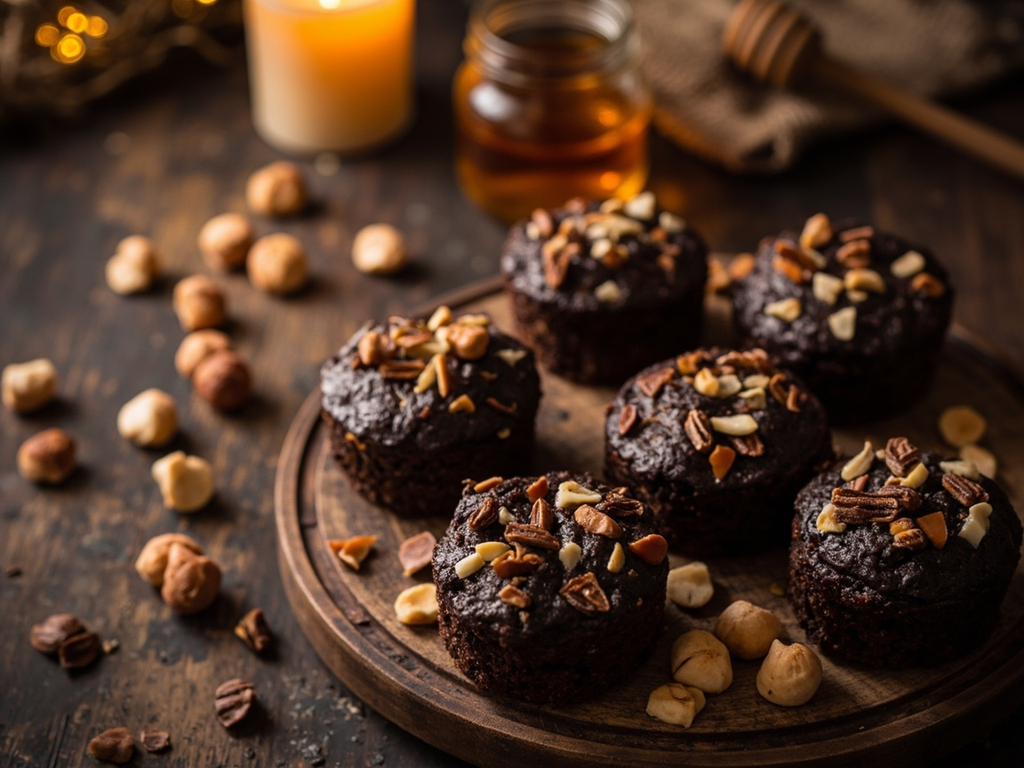
Small dense cakes of rye flour and honey, studded with crushed hazelnuts and scented with anise and cinnamon. Soft, dark, fragrant: the ancestor of gingerbread, reserved for days that matter.
Today is a feast day, so I untie my cloth purse where a little cinnamon sleeps—God knows what it cost me from the merchant! I knead the honey into the rye flour, brown as the earth of my furrows, I toss in the hazelnuts I knocked down under the oak and a pinch of anise. At the village oven, while the common bread bakes, I slip in my cakes. They come out dark and shiny, and their smell, believe me, draws children from three hamlets.
- •Rye flour — two bowls (base)
- •Honey — equal parts to flour (sweetener / binder)
- •Toasted hazelnuts — a handful (garnish)
- •Anise and cinnamon — a pinch (festive spices)
Rye Honey Cakes with Hazelnuts
Small dense cakes of rye flour and honey, studded with crushed hazelnuts and scented with anise and cinnamon. Soft, dark, fragrant: the ancestor of gingerbread, reserved for days that matter.
Why this dish? When legend takes her to the court of Logres and the outskirts of Camelot, Agatha the village woman brings what a peasant can offer most precious for a feast day: a honey cake, perfumed with the rare spices of a passing merchant. The luxury of the humble, made of honey and patience.
Today is a feast day, so I untie my cloth purse where a little cinnamon sleeps—God knows what it cost me from the merchant! I knead the honey into the rye flour, brown as the earth of my furrows, I toss in the hazelnuts I knocked down under the oak and a pinch of anise. At the village oven, while the common bread bakes, I slip in my cakes. They come out dark and shiny, and their smell, believe me, draws children from three hamlets.
Ingredients (period version)
- Rye flour — two bowls (base)
- Honey — equal parts to flour (sweetener / binder)
- Toasted hazelnuts — a handful (garnish)
- Anise and cinnamon — a pinch (festive spices)
Ingredients
- Rye flour — 200 g (base)
- Honey — 200 g (sweetener / binder)
- Hazelnuts — 60 g, crushed (garnish)
- Green anise seeds — 1 tsp (spice)
- Cinnamon — 1/2 tsp (spice)
- Baking soda (or baking powder) — 1/2 tsp (leavening (modern touch))
Method
- Gently warm the honey until liquid, remove from heat.
- Mix the rye flour, anise, cinnamon, and baking soda, then stir in the warm honey to form a thick dough.
- Add the crushed hazelnuts, dry-toasted in a pan beforehand.
- Let the dough rest for 1 hour, then shape into small flat cakes on a baking sheet.
- Bake at 170°C for 15 minutes: they should remain soft and darken. Let cool slightly before biting.
How it was made : The "nieulles" (wafers, honey rings) and medieval gingerbread descend from ancient honey cakes. Rye, the poor man's grain in the Northwest, yields a dense, dark crumb; imported spices (cinnamon, ginger) were a luxury reserved for banquets and feast days.
The contemporary twist : A light glaze of honey and citrus zest brushed on top, and a hazelnut planted on the summit: "Brocéliande honey cakes" worthy of a banquet tea.
Sources : Le Ménagier de Paris (c. 1393) · Bruno Laurioux, Une histoire culinaire du Moyen Âge
Agatha Southeil · Charactorium