 flip
flipZarda — Saffron Sweet Rice from the Delhi Court
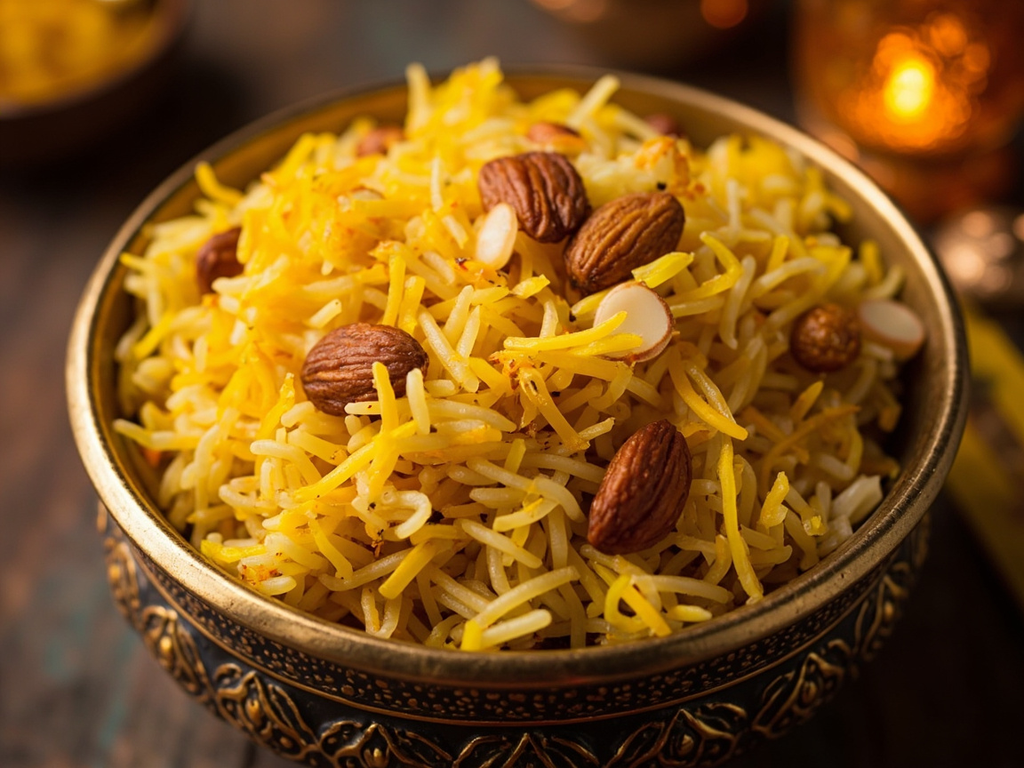
Zarda — Saffron Sweet Rice from the Delhi Court
Why this dish? Appointed qadi (judge) by Sultan Muhammad ibn Tughluq, Ibn Battuta lived seven years in Delhi and described the opulence of court banquets, where rice perfumed with saffron, sugar, and dried fruits was a prestige dish.
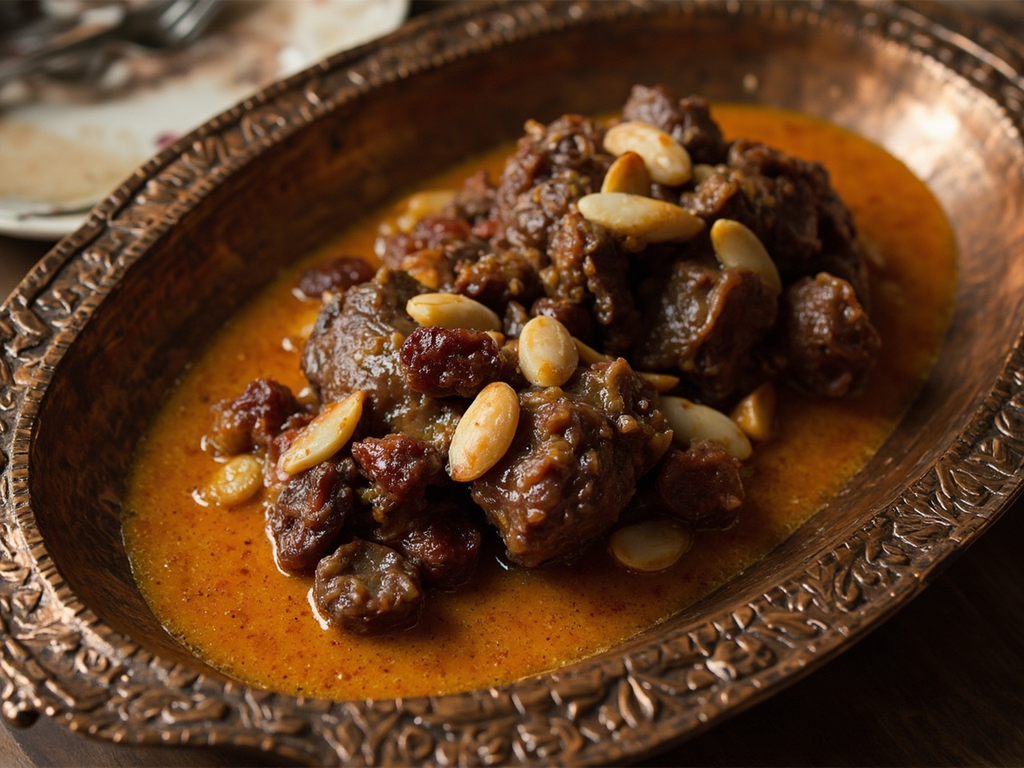
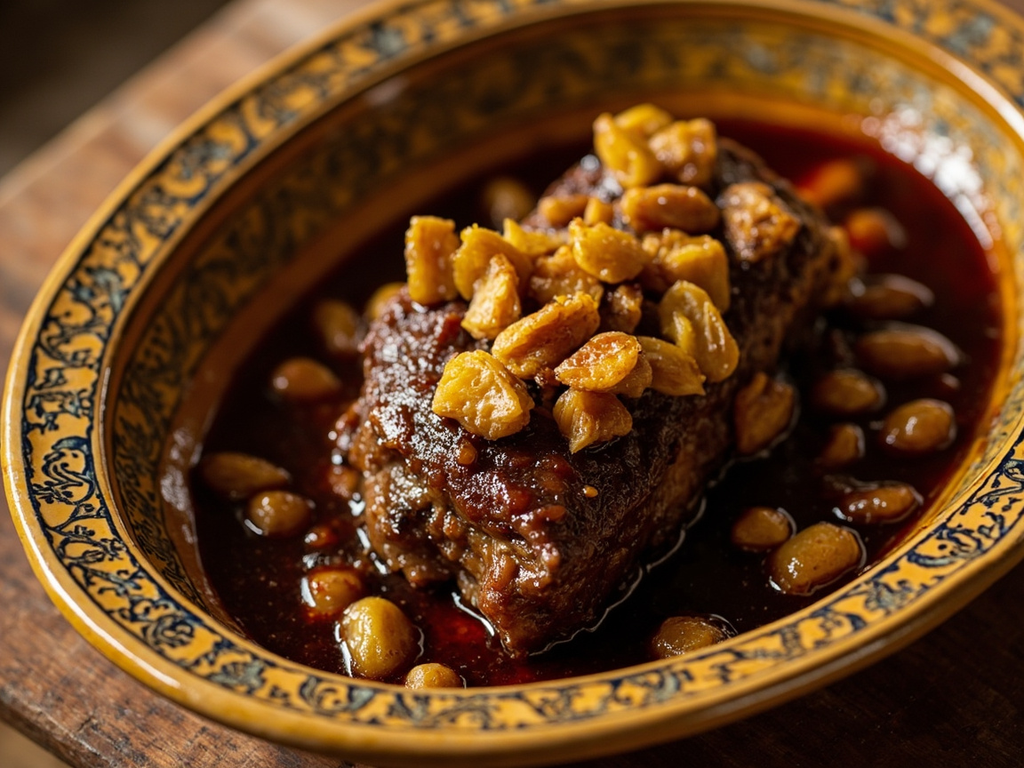
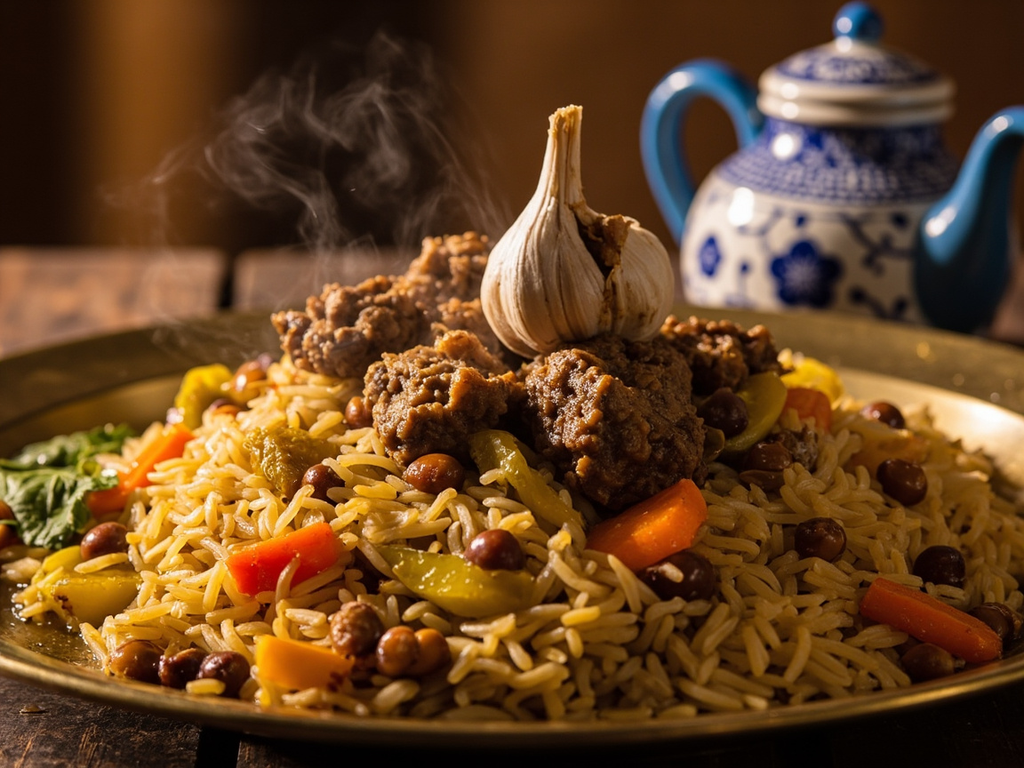
Long-grain rice gilded with saffron, sweetened, scented with cardamom and rose water, studded with almonds and golden raisins fried in clarified butter. The sugary splendor of princely tables in medieval Muslim India.
By God, reader, I had never seen such magnificence before reaching Delhi! The sultan, whose generosity surpassed understanding, had trays laid out where the rice shone like molten gold from the saffron. They sweetened it with sugar, perfumed it with rose and cardamom, crowned it with almonds toasted in butter. I ate it as a respected judge, and I noted everything, for who would believe my tale if I did not describe it in detail?
- •Fragrant long-grain rice — one measure (base)
- •Cane sugar — generous (sweetness)
- •Saffron — a good pinch (color, fragrance)
- •Cardamom — a few pods (spice)
- •Rose water — a dash (fragrance)
- •Almonds and raisins — a handful (garnish)
- •Clarified butter (ghî) — a ladle (richness)
Zarda — Saffron Sweet Rice from the Delhi Court
Long-grain rice gilded with saffron, sweetened, scented with cardamom and rose water, studded with almonds and golden raisins fried in clarified butter. The sugary splendor of princely tables in medieval Muslim India.
Why this dish? Appointed qadi (judge) by Sultan Muhammad ibn Tughluq, Ibn Battuta lived seven years in Delhi and described the opulence of court banquets, where rice perfumed with saffron, sugar, and dried fruits was a prestige dish.
By God, reader, I had never seen such magnificence before reaching Delhi! The sultan, whose generosity surpassed understanding, had trays laid out where the rice shone like molten gold from the saffron. They sweetened it with sugar, perfumed it with rose and cardamom, crowned it with almonds toasted in butter. I ate it as a respected judge, and I noted everything, for who would believe my tale if I did not describe it in detail?
Ingredients (period version)
- Fragrant long-grain rice — one measure (base)
- Cane sugar — generous (sweetness)
- Saffron — a good pinch (color, fragrance)
- Cardamom — a few pods (spice)
- Rose water — a dash (fragrance)
- Almonds and raisins — a handful (garnish)
- Clarified butter (ghî) — a ladle (richness)
Ingredients
- Basmati rice — 300 g (base)
- Sugar — 150 g (sweetness)
- Saffron infused in a little warm milk — 1 pinch (color, fragrance)
- Green cardamom — 5 pods (spice)
- Rose water — 1 tsp (fragrance)
- Blanched almonds — 50 g (garnish)
- Golden raisins — 40 g (garnish)
- Ghî (clarified butter) — 3 tbsp (richness)
Method
- Rinse the rice, then cook it in boiling water with the cardamom pods until three-quarters done; drain.
- Make a light syrup with the sugar and a little water, add the infused saffron and rose water.
- Fry almonds and raisins in ghî until golden.
- Gently mix the rice with the saffron syrup, cover, and let finish cooking over very low heat (steamed) so the grains absorb the flavor.
- Mound on a platter, sprinkle with almonds and raisins, serve warm as a festive dish.
How it was made : The princely kitchens of sultanate India continued the Persian tradition of sweet perfumed rice. Later compilations like the Ni'matnâma (Book of Delights of Malwa) attest to these preparations of rice with saffron, sugar, and rose water inherited from the time of Ibn Battuta's travels.
The contemporary twist : A sheet of edible silver leaf (vark), as on Indian festival sweets today, to evoke the gold of the banquets described by the traveling qadi.
Sources : Ibn Battuta, Rihla (account of his stay in Delhi) · Ni'matnâma-i-Nâsir Shâhî (Book of Delights of Malwa)
Ibn Battûta · Charactorium