 flip
flipTiber pike in agrodolce
Tiber pike in agrodolce
Why this dish? Chronicles tell that Chigi, to impress his guests, pretended to throw his silverware into the Tiber after use. The fish from that same river, served sweet-and-sour with saffron, was a centerpiece of his banquets by the water at the Farnesina.
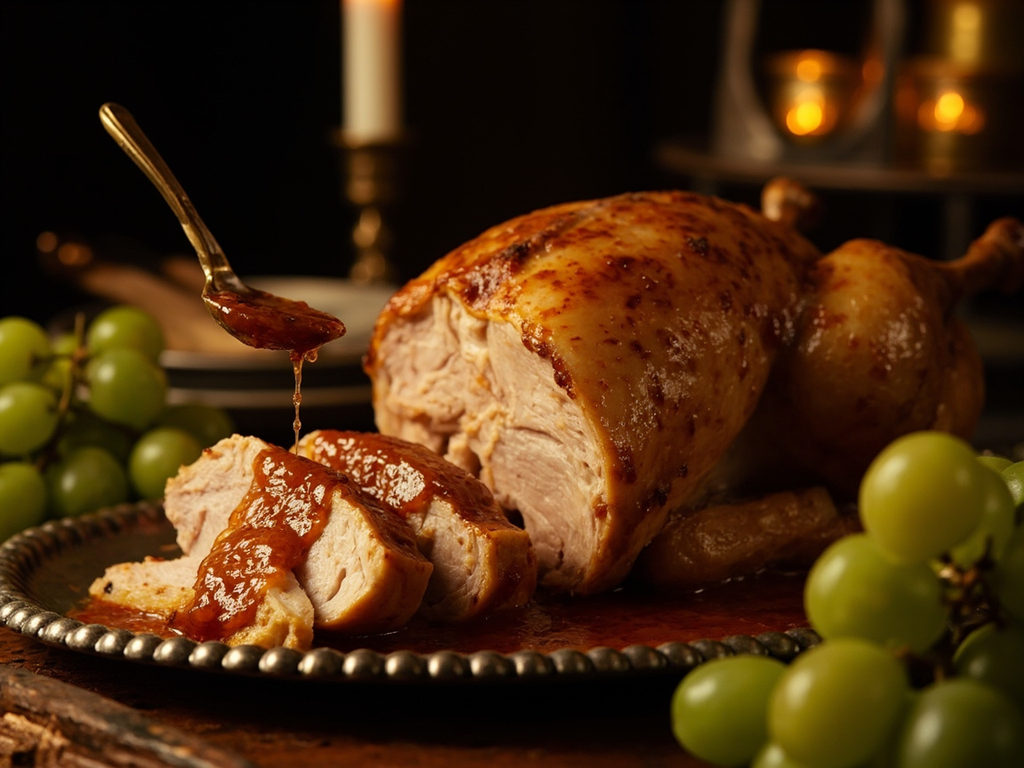
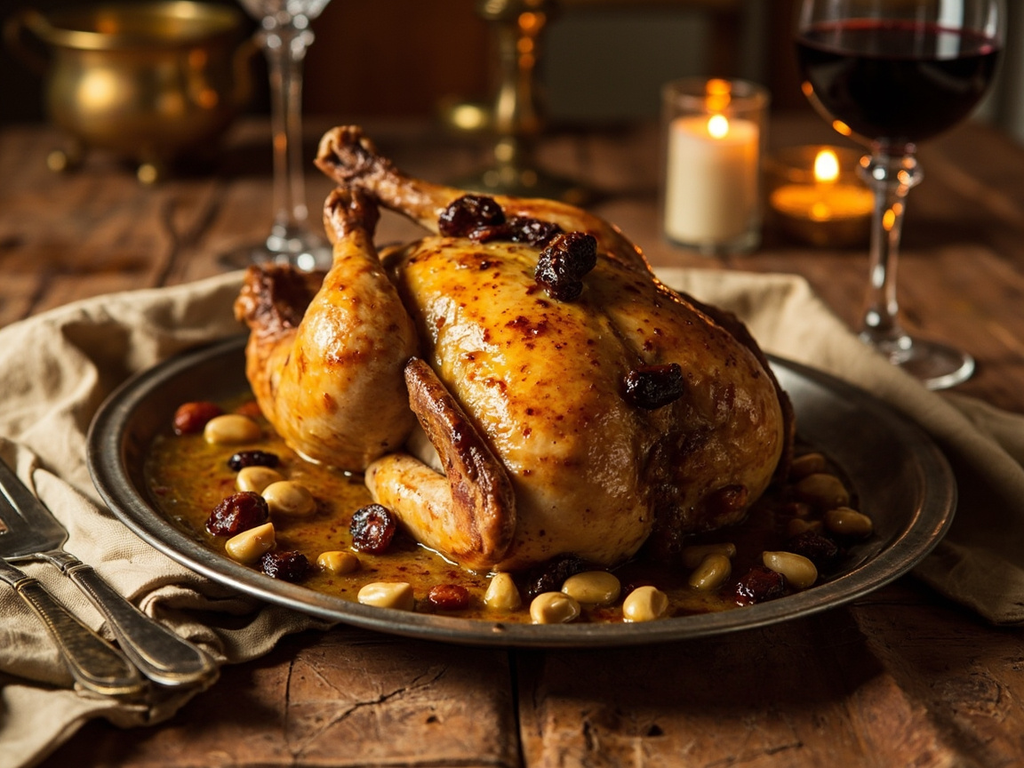
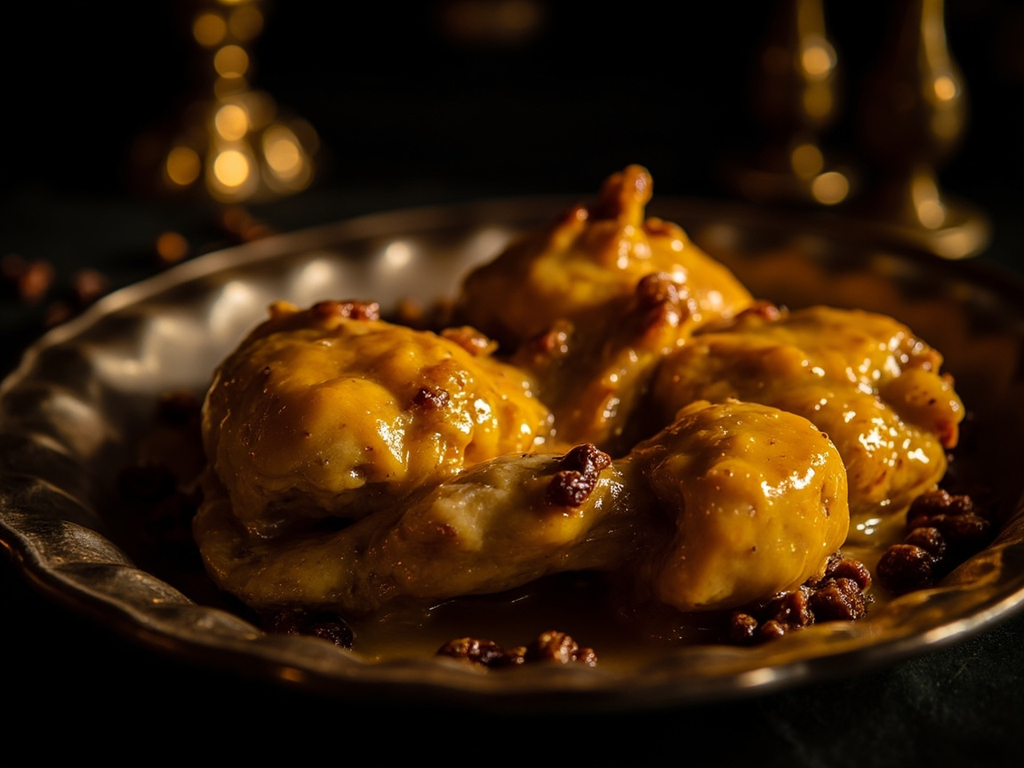
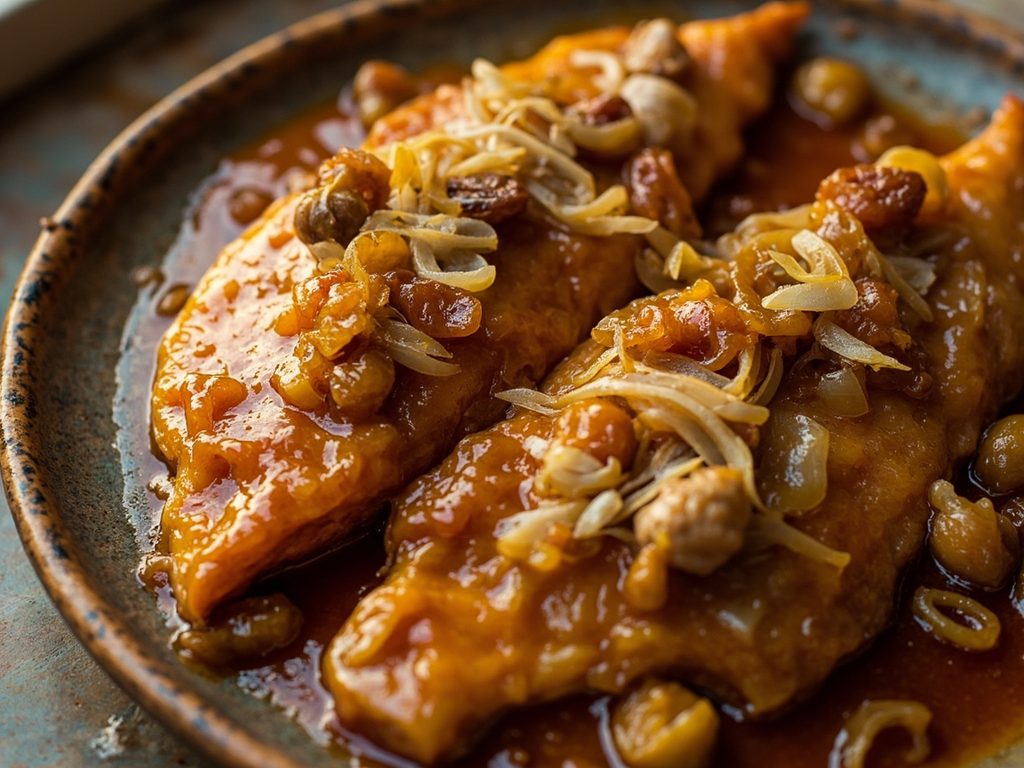
River fish pieces simmered in a sweet-and-sour sauce of melted onions, honey-sweetened vinegar, scattered with raisins and pine nuts, gilded with saffron. Agrodolce was the great fashion of Renaissance tables: bright, brilliant, perfumed.
They say I throw my silver into the Tiber when my guests have dined — let them gossip, they do not see the nets stretched underwater that catch it again! But what I do not feign is the fish this river gives me. My cook sears it, then lays it in onions melted in vinegar sweetened with honey; he sows Corinth raisins and pine nuts, and gilds it all with a pinch of saffron worth its weight in gold. Sour and sweet at once, like fortune: that is how I regale the cardinals.
- •Pike or tench from the Tiber — a fine fish cut into pieces (main piece)
- •Onions — three, sliced (melting sauce base)
- •Vinegar — a cup (acidity)
- •Honey — a generous spoonful (sweetness of agrodolce)
- •Raisins — a handful (fruity sweetness)
- •Pine nuts — a handful (richness and crunch)
- •Saffron — a few threads (golden color and perfume)
- •Olive oil and flour — as needed (cooking the fish)
Tiber pike in agrodolce
River fish pieces simmered in a sweet-and-sour sauce of melted onions, honey-sweetened vinegar, scattered with raisins and pine nuts, gilded with saffron. Agrodolce was the great fashion of Renaissance tables: bright, brilliant, perfumed.
Why this dish? Chronicles tell that Chigi, to impress his guests, pretended to throw his silverware into the Tiber after use. The fish from that same river, served sweet-and-sour with saffron, was a centerpiece of his banquets by the water at the Farnesina.
They say I throw my silver into the Tiber when my guests have dined — let them gossip, they do not see the nets stretched underwater that catch it again! But what I do not feign is the fish this river gives me. My cook sears it, then lays it in onions melted in vinegar sweetened with honey; he sows Corinth raisins and pine nuts, and gilds it all with a pinch of saffron worth its weight in gold. Sour and sweet at once, like fortune: that is how I regale the cardinals.
Ingredients (period version)
- Pike or tench from the Tiber — a fine fish cut into pieces (main piece)
- Onions — three, sliced (melting sauce base)
- Vinegar — a cup (acidity)
- Honey — a generous spoonful (sweetness of agrodolce)
- Raisins — a handful (fruity sweetness)
- Pine nuts — a handful (richness and crunch)
- Saffron — a few threads (golden color and perfume)
- Olive oil and flour — as needed (cooking the fish)
Ingredients
- Fillets or steaks of pike, zander, or trout — 600 g (fish)
- Onions — 3 medium, thinly sliced (sauce base)
- White wine vinegar — 100 ml (acidity)
- Honey — 2 tablespoons (sweetness)
- Raisins — 50 g (rehydrated) (fruitiness)
- Pine nuts — 40 g (crunch)
- Saffron — 1 pinch (threads) (color and perfume)
- Olive oil — 4 tablespoons (cooking)
- Flour — for dusting fish (browning)
- Salt — to taste (seasoning)
Method
- Lightly flour the fish pieces and quickly brown them in olive oil; set aside.
- In the same pan, gently melt the sliced onions until golden and tender.
- Deglaze with vinegar, add honey, rehydrated raisins, pine nuts, and saffron; let reduce to a syrupy sauce for a few minutes.
- Return the fish to the sauce, salt, and simmer covered for 5–8 minutes to absorb flavors.
- Serve warm or cold (agrodolce improves with resting), coated with its shiny sauce.
How it was made : Sweet-and-sour (agrodolce) runs through all medieval and Renaissance Italian cuisine: Maestro Martino and later Bartolomeo Scappi (cook to the popes) offer many fish and meat dishes with vinegar sweetened by honey or sugar, garnished with raisins and pine nuts. Prepared in advance and served cold, this type of dish kept better, a valuable asset before refrigeration.
The contemporary twist : Served cold in a jar on a board, with a few fresh herbs, it is a Renaissance version of escabeche — perfect for a summer buffet.
Sources : Maestro Martino, Libro de arte coquinaria (c. 1465) · Bartolomeo Scappi, Opera dell'arte del cucinare (1570)
Agostino Chigi · Charactorium