 flip
flipCappone in agrodolce (capon in sweet-and-sour sauce)
Cappone in agrodolce (capon in sweet-and-sour sauce)
Why this dish? Botticelli worked for the Medici and frequented Florence's wealthy tables; roast capon glazed with a spiced sweet-and-sour sauce is exactly the prestige dish served at banquets that punctuated the commission of an altarpiece or a Primavera.
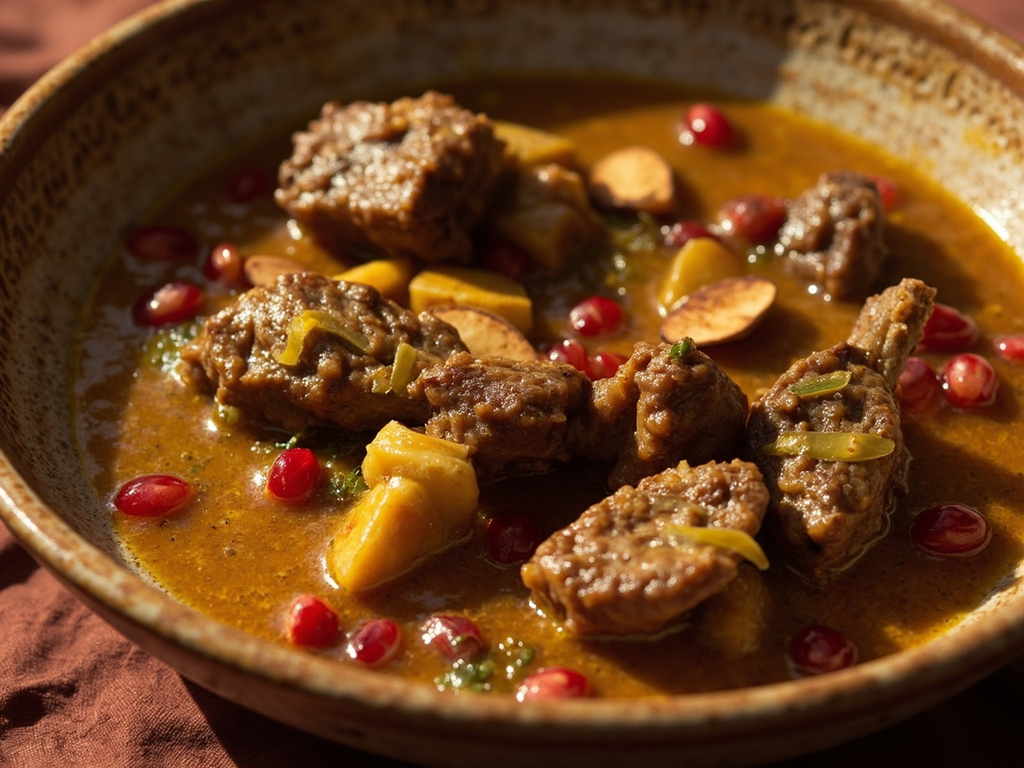
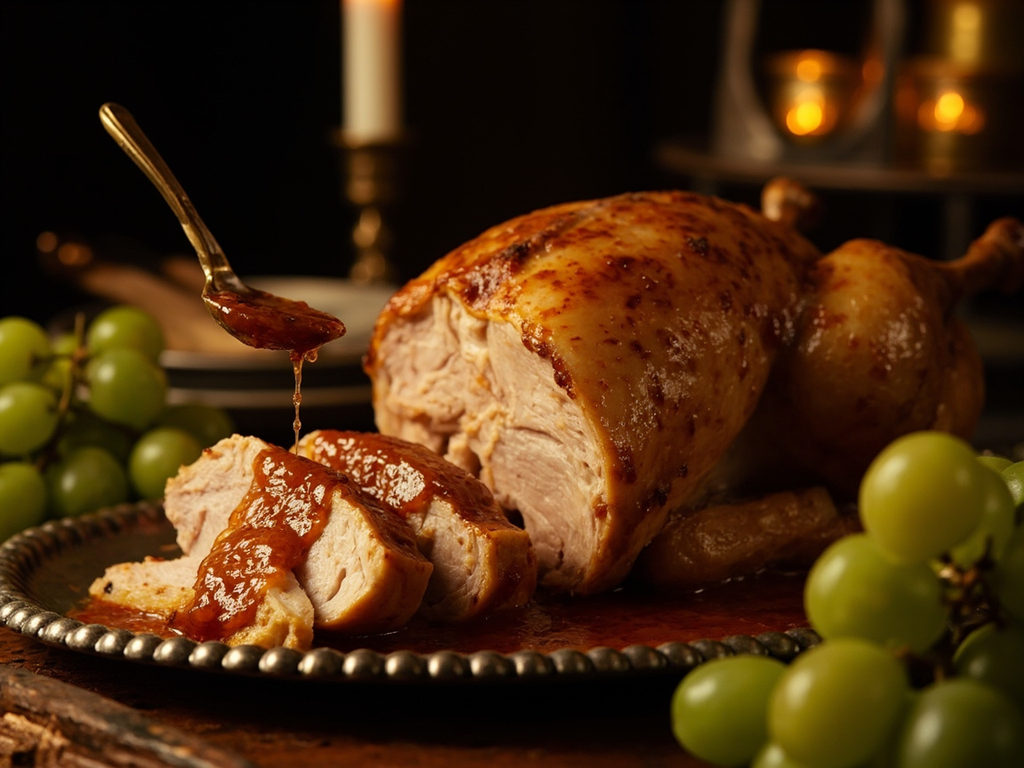
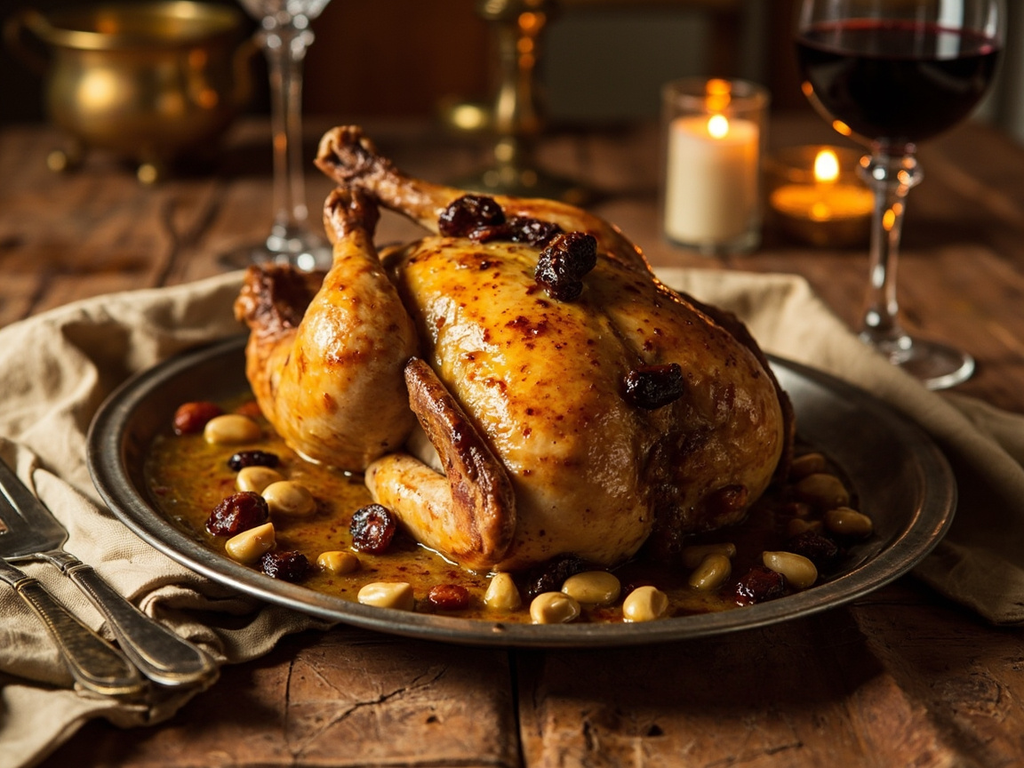
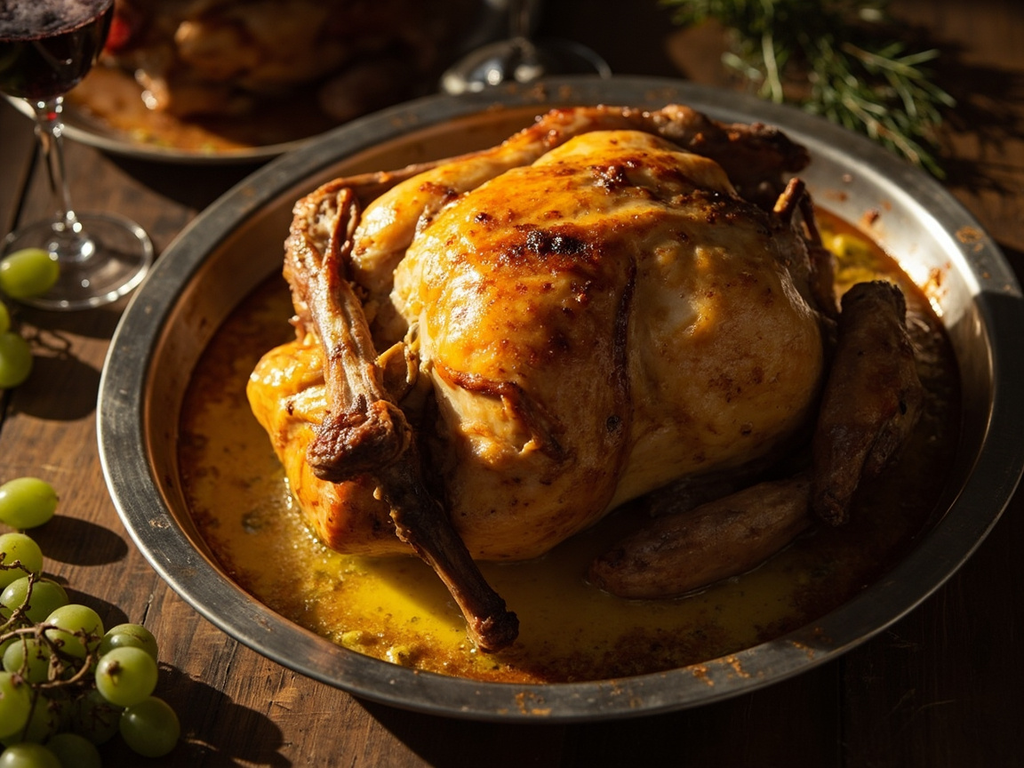
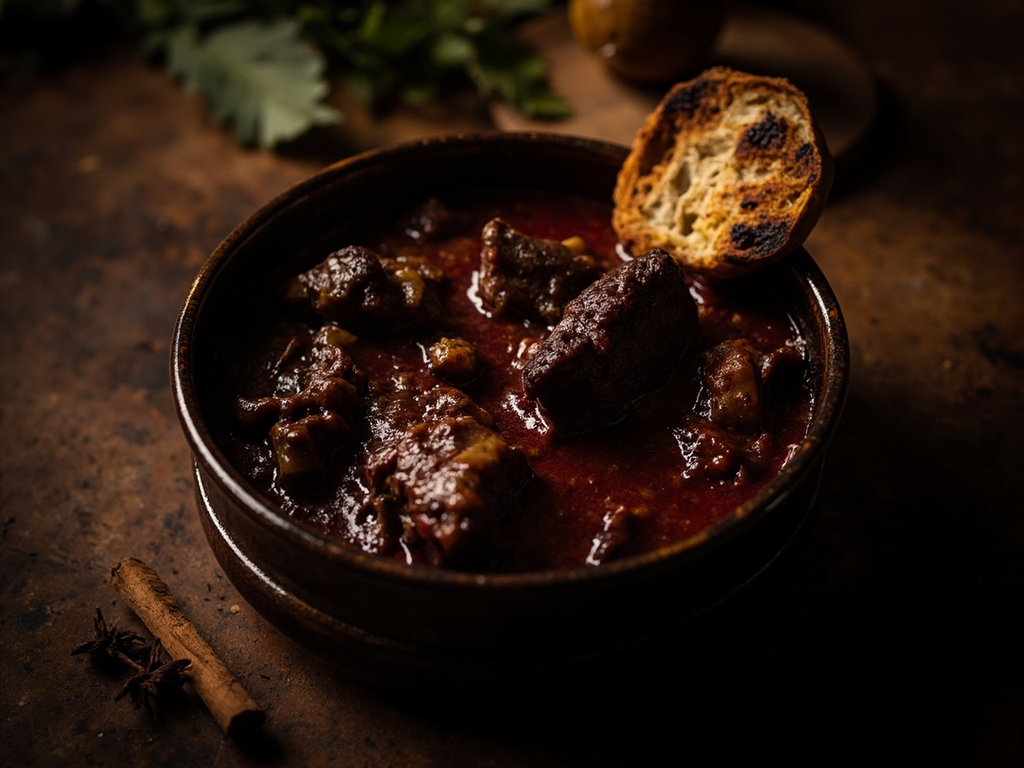
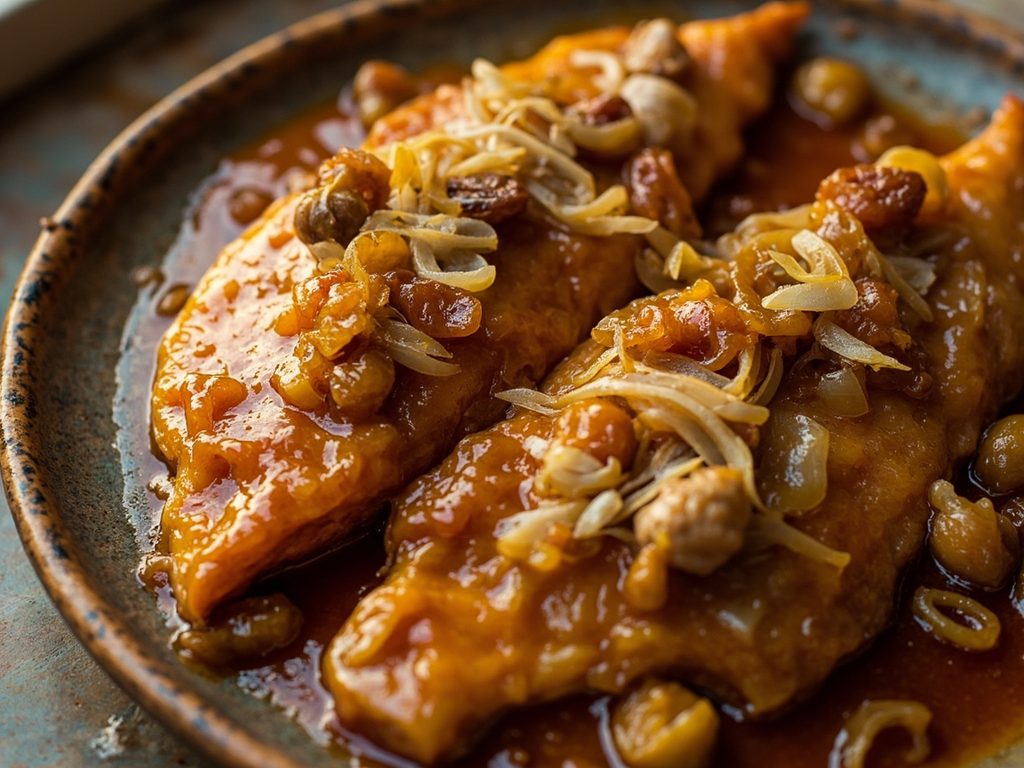
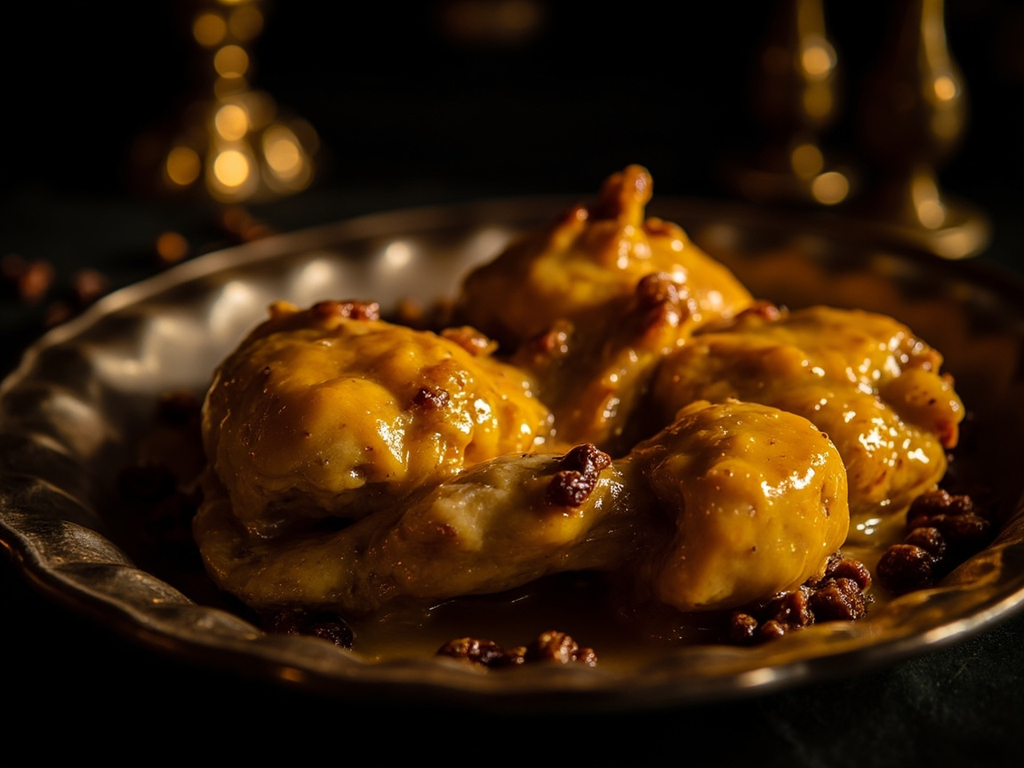
A roasted capon, carved and coated with a glossy "agrodolce" sauce: vinegar sweetened with sugar and raisins, melted onions, saffron, and mild spices. The triumph of Renaissance sweet-and-sour taste, where sweetness boldly invades savory.
Here is a dish worthy of a table where one speaks of frescoes and Medici. We roast the capon on the spit until its skin shines like the gold of my halos, then bathe it in a sauce where vinegar and sugar quarrel and harmonize, like shadow and light on a face. I throw in a full pinch of saffron—for what gilds the dish honors the guest. Taste: the sour awakens, the sweet soothes, and the spice transports you. Such is the cooking of a century that loves beauty too much to serve it bland.
- •Capon — a fine one (festive meat)
- •Wine vinegar — as needed (acidity (agro))
- •Sugar — as desired (sweetness (dolce))
- •Raisins — a handful (sweetness, texture)
- •Onions — a few (sauce base)
- •Saffron — a pinch (color, aroma (signature))
- •Cinnamon, ginger, cloves — ground (sweet spices)
Cappone in agrodolce (capon in sweet-and-sour sauce)
A roasted capon, carved and coated with a glossy "agrodolce" sauce: vinegar sweetened with sugar and raisins, melted onions, saffron, and mild spices. The triumph of Renaissance sweet-and-sour taste, where sweetness boldly invades savory.
Why this dish? Botticelli worked for the Medici and frequented Florence's wealthy tables; roast capon glazed with a spiced sweet-and-sour sauce is exactly the prestige dish served at banquets that punctuated the commission of an altarpiece or a Primavera.
Here is a dish worthy of a table where one speaks of frescoes and Medici. We roast the capon on the spit until its skin shines like the gold of my halos, then bathe it in a sauce where vinegar and sugar quarrel and harmonize, like shadow and light on a face. I throw in a full pinch of saffron—for what gilds the dish honors the guest. Taste: the sour awakens, the sweet soothes, and the spice transports you. Such is the cooking of a century that loves beauty too much to serve it bland.
Ingredients (period version)
- Capon — a fine one (festive meat)
- Wine vinegar — as needed (acidity (agro))
- Sugar — as desired (sweetness (dolce))
- Raisins — a handful (sweetness, texture)
- Onions — a few (sauce base)
- Saffron — a pinch (color, aroma (signature))
- Cinnamon, ginger, cloves — ground (sweet spices)
Ingredients
- Capon or large free-range chicken — 1 (1.8–2.5 kg) (meat)
- Red wine vinegar — 8 cl (acidity)
- Sugar — 2 tbsp (sweetness)
- Raisins — 60 g (sweetness)
- Onions — 2 (sauce base)
- Saffron — 1 pinch of pistils (color, aroma)
- Cinnamon — 1/2 tsp (spice)
- Ground ginger — 1/4 tsp (spice)
- Ground cloves — a pinch (spice)
- Chicken broth — 20 cl (sauce liquid)
- Olive oil, salt — to taste (cooking)
Method
- Salt the capon, oil it, roast in the oven at 190°C for about 1 hour 30 minutes (until 75°C internal), basting with its juices.
- Soak the raisins in warm water; infuse the saffron in 2 tbsp of hot broth.
- Finely chop the onions and gently sweat them in oil until golden.
- Deglaze with vinegar, add sugar, reduce for 2 minutes, then add broth, infused saffron, spices, and drained raisins.
- Simmer for 10 minutes until syrupy; adjust sweet-sour balance.
- Carve the capon, generously coat with hot sauce, and serve immediately.
How it was made : Agrodolce is the signature taste of Italian medieval and Renaissance cuisine, codified by Maestro Martino and Platina. They sweetened vinegar's acidity with sugar, honey, and raisins, colored with saffron, and perfumed with spices brought from the East by merchants. Roasts were cooked on a spit turned by hand before the hearth, sauced at serving.
The contemporary twist : Present the whole capon on a bed of mirror sauce, sprinkled with toasted pine nuts and a veil of saffron: a golden nod to the luminous flesh tones of Botticelli's Venuses.
Sources : Maestro Martino da Como, Libro de arte coquinaria (~1465) · Platina, De honesta voluptate et valetudine, 1474
Sandro Botticelli · Charactorium