 flip
flipHare Civet with Sweet Spices and Wine
Hare Civet with Sweet Spices and Wine
Why this dish? Montaigne enjoyed the game of his Périgord, a premier hunting land. As mayor of Bordeaux and a distinguished host, he received guests at his table: this richly spiced civet bound with wine was the prestige dish for a feast day, when one wished to honor one's guests.
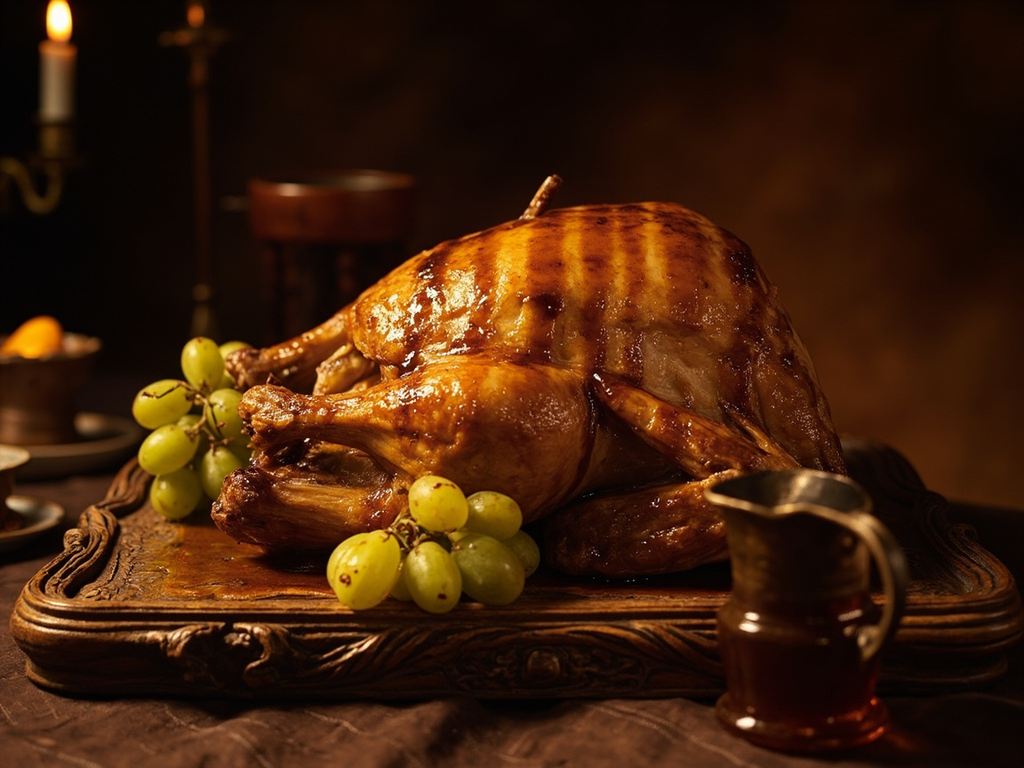
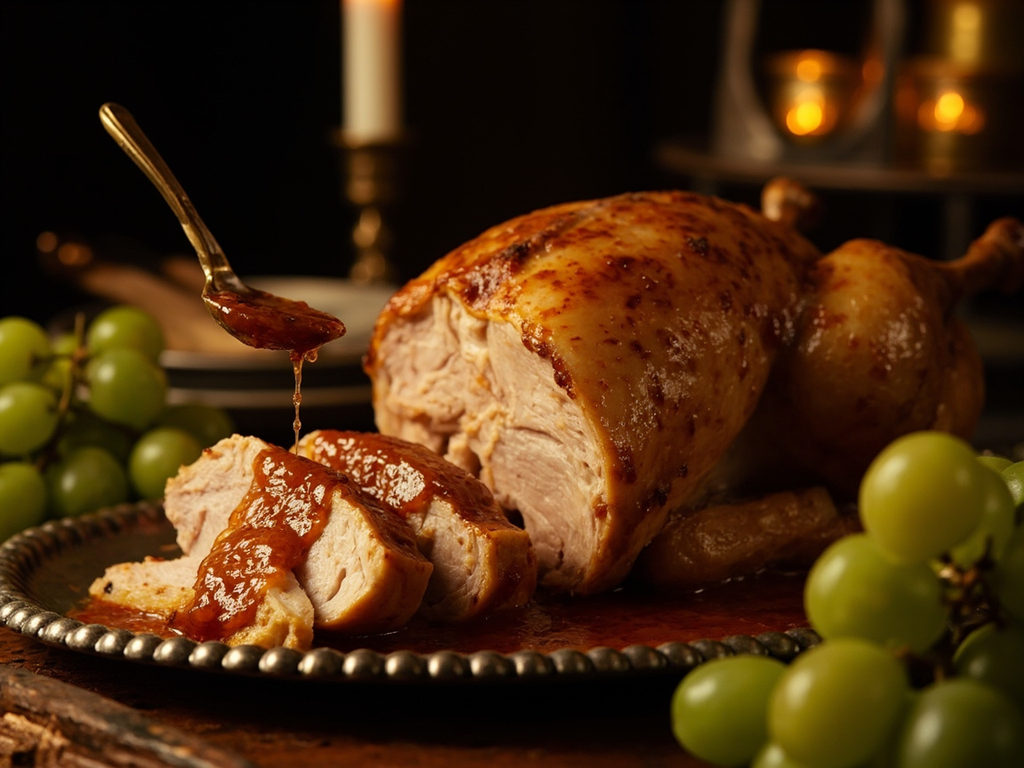
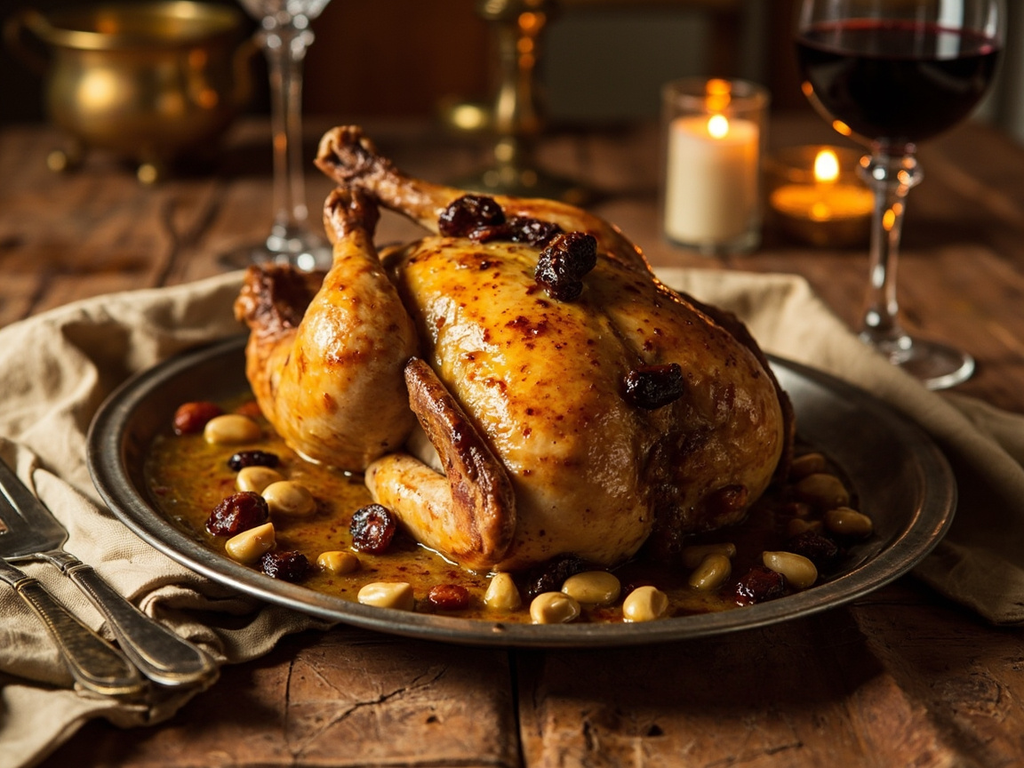
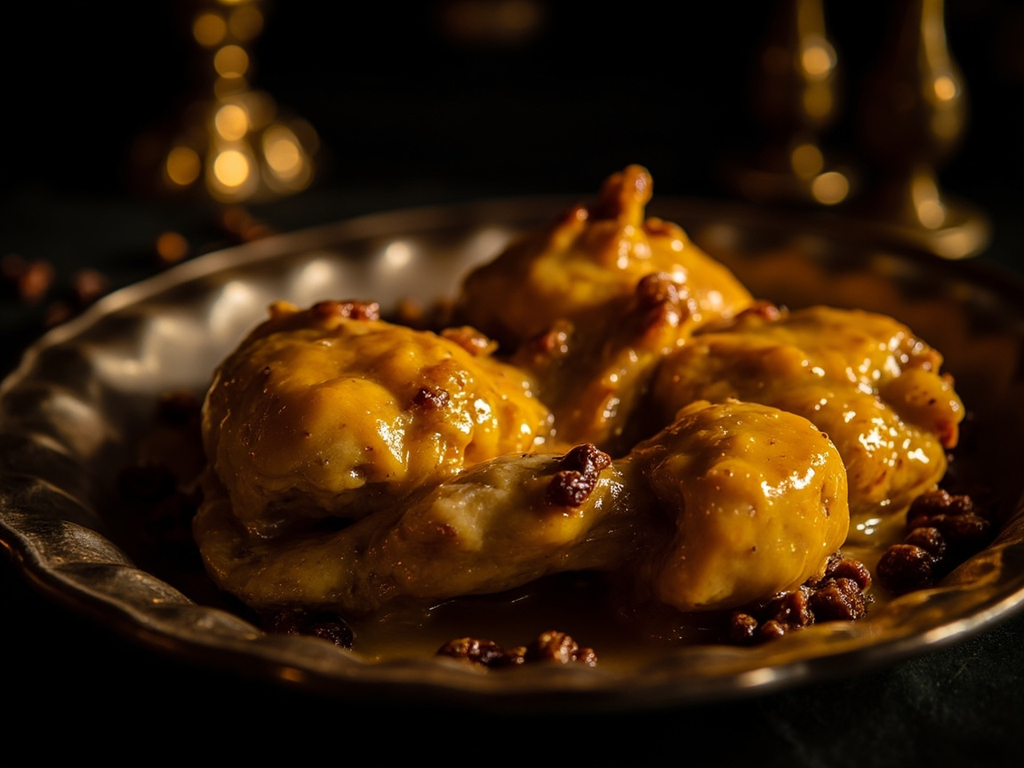
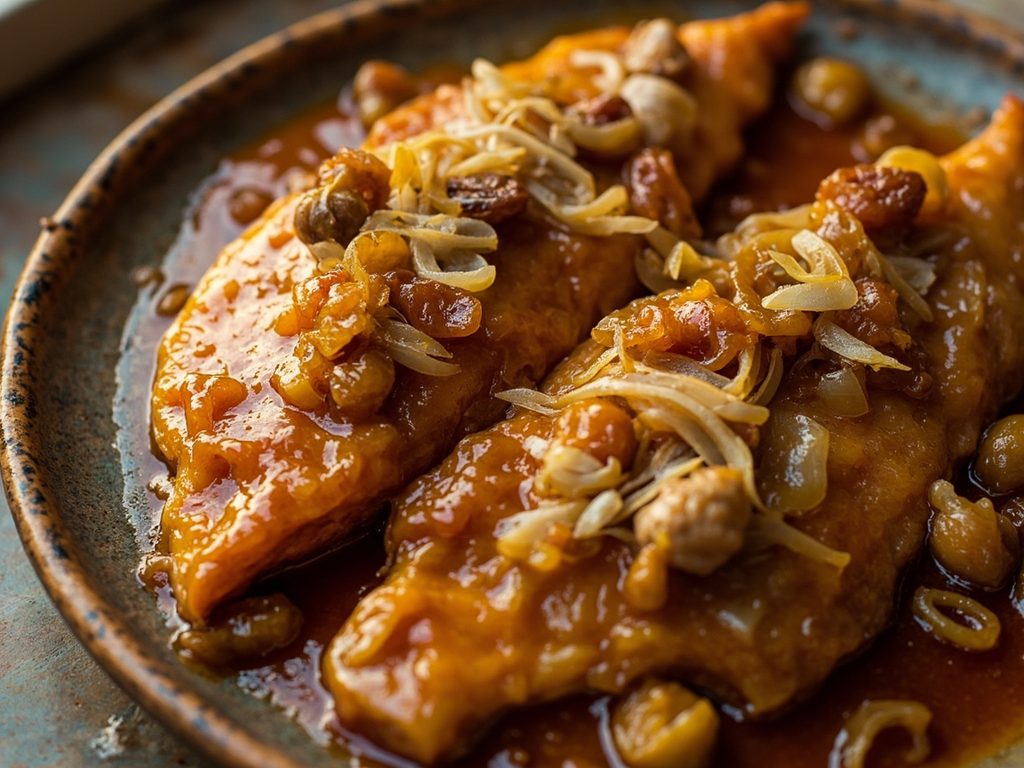
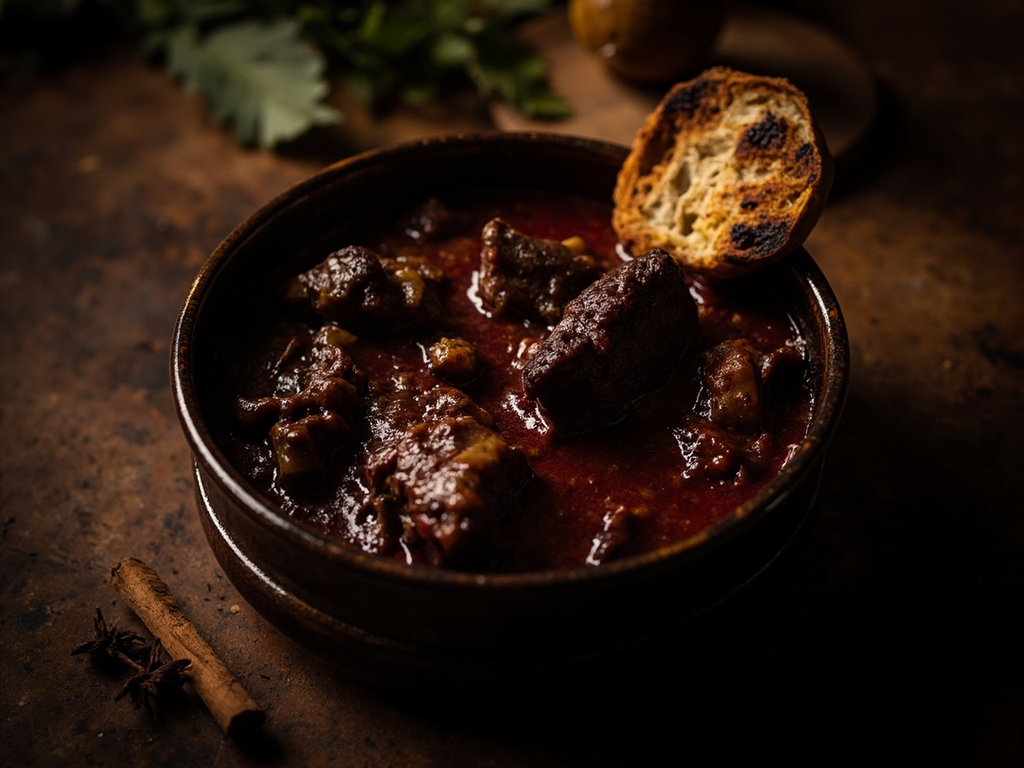
A hare long-stewed in red wine and sweet spices — cinnamon, ginger, clove — brightened with a dash of verjuice: the great dark, fragrant sauce of Renaissance banquets, where sweet-spicy prevailed over pungent.
When I wish to honor my friends, reader, I have this hare from my woods served, simmered all a long afternoon in the wine from my vines. One puts in cinnamon, ginger, a little clove — for our fathers loved meats perfumed like the Orient — and a dash of verjuice to wake it all. Conversation at table pleases me as much as the meat, I admit: a good dish is nothing if not seasoned with good talk.
- •Hare (or wild rabbit) — one, cut up (game)
- •Red wine — a pint (cooking liquid)
- •Cinnamon, ginger, clove, grains of paradise — pounded spices (flavoring)
- •Onions — a few (aromatic base)
- •Verjuice — a dash (acidity)
- •Toasted bread — two slices (sauce thickener)
- •Lard — a piece (fat)
Hare Civet with Sweet Spices and Wine
A hare long-stewed in red wine and sweet spices — cinnamon, ginger, clove — brightened with a dash of verjuice: the great dark, fragrant sauce of Renaissance banquets, where sweet-spicy prevailed over pungent.
Why this dish? Montaigne enjoyed the game of his Périgord, a premier hunting land. As mayor of Bordeaux and a distinguished host, he received guests at his table: this richly spiced civet bound with wine was the prestige dish for a feast day, when one wished to honor one's guests.
When I wish to honor my friends, reader, I have this hare from my woods served, simmered all a long afternoon in the wine from my vines. One puts in cinnamon, ginger, a little clove — for our fathers loved meats perfumed like the Orient — and a dash of verjuice to wake it all. Conversation at table pleases me as much as the meat, I admit: a good dish is nothing if not seasoned with good talk.
Ingredients (period version)
- Hare (or wild rabbit) — one, cut up (game)
- Red wine — a pint (cooking liquid)
- Cinnamon, ginger, clove, grains of paradise — pounded spices (flavoring)
- Onions — a few (aromatic base)
- Verjuice — a dash (acidity)
- Toasted bread — two slices (sauce thickener)
- Lard — a piece (fat)
Ingredients
- Hare or rabbit — 1, cut into pieces (approx. 1.5 kg) (meat)
- Full-bodied red wine — 75 cl (marinade and cooking)
- Cinnamon — 1 stick (sweet spice)
- Ground ginger — 1 tsp (spice)
- Cloves — 3 (spice)
- Onions — 2 (aromatic)
- Verjuice (or sweet wine vinegar) — 2 tbsp (acidity)
- Grilled country bread — 2 slices (thickener)
- Bacon lardons or smoked pork belly — 100 g (fat, flavor)
Method
- The day before, marinate the hare pieces in the wine with sliced onions and spices.
- Drain the meat (reserve the marinade), brown it in fat with the lardons in a casserole.
- Add the onions, moisten with the strained marinade, and bring to a simmer.
- Cover and simmer for 2 to 3 hours over low heat until the meat falls off the bone.
- Soak the grilled bread in a little broth, blend it, and stir into the sauce to thicken (the old way, without flour).
- Add the verjuice, adjust seasoning, and serve very hot, the sauce dark and fragrant.
How it was made : Renaissance French cooking thickened sauces not with flour — which came later — but with soaked, strained breadcrumbs. Eastern spices (cinnamon, ginger, clove, grains of paradise) marked prestige dishes, and sweet-spicy dominated pungent. The term "civet" derives from "cive" (onion/scallion) which formed its base.
The contemporary twist : Plate the civet in a dark, deep bowl, sprinkle with candied orange zest and grilled bread crumbles: a nod to the sweet-spicy of the period, in a bistronomic style.
Sources : Lancelot de Casteau, Ouverture de cuisine (1604) · Le Viandier (Taillevent tradition)
Michel de Montaigne · Charactorium