 flip
flipHare Civet with Verjuice and Spices
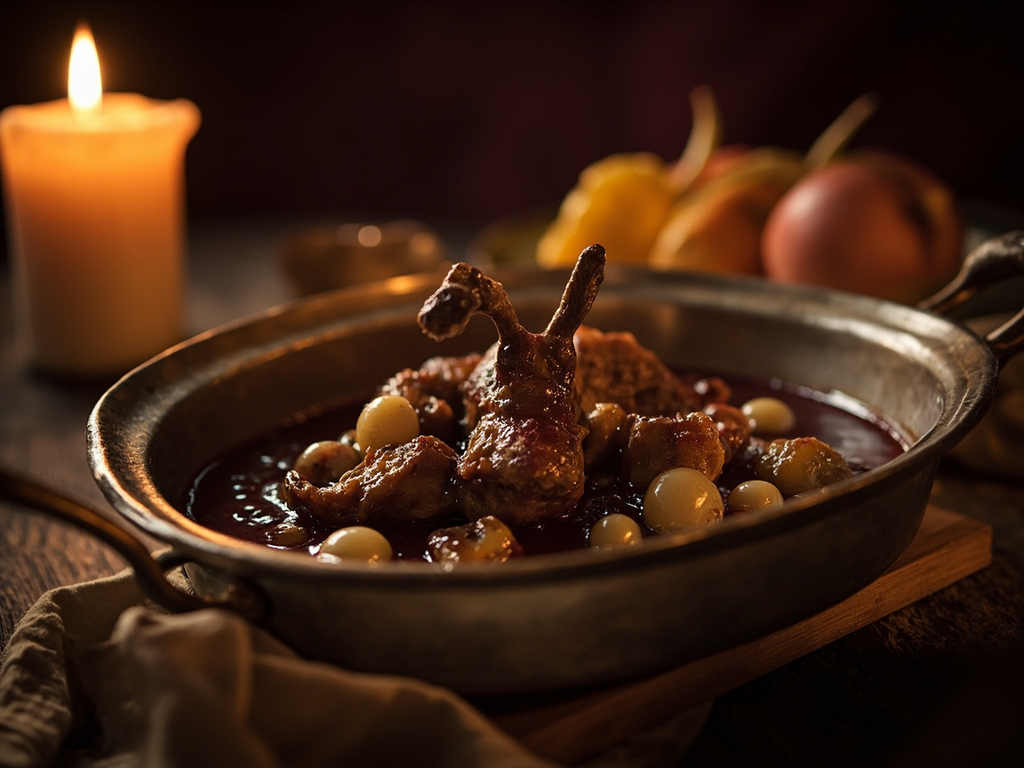
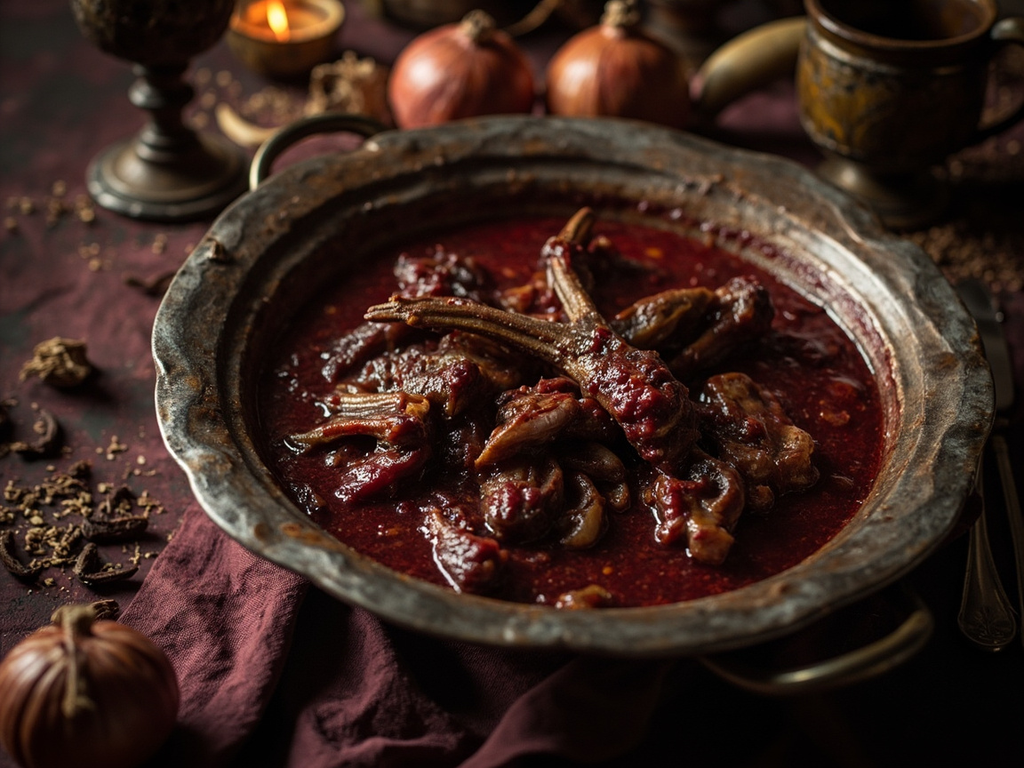
Hare Civet with Verjuice and Spices
Why this dish? A gentleman of Saintonge, Agrippa frequented hunts and seigneurial tables where game honored the guests. The hare civet, long simmered in wine and bound with its own blood, was the noble dish of feast days and returns from the hunt.
A dark, deep hare stew, marinated in Gascon wine, perfumed with spices and sharpened with verjuice. The sauce, bound according to ancient custom with the animal's blood, is the pinnacle of Renaissance game cooking.
Here is the dish for days when the sword was sheathed to celebrate. Marinate the hare all day in the wine of our hillsides, then gently cook it on the fire with clove, ginger, and cinnamon, and bind the sauce with its blood, as our fathers did. A dash of verjuice at the last moment, and the dark flesh takes on a flavor worthy of all the poets' praises. Serve it with bread for sopping, and spare not the wine of Saintonge.
- •Hare with its blood — one, skinned (main meat)
- •Red Gascon wine — a pint (marinade and sauce)
- •Bacon — a piece (cooking fat)
- •Onions — a few (aromatic)
- •Ginger, cinnamon, clove, long pepper — to taste (spices)
- •Verjuice — a dash (acidity)
Hare Civet with Verjuice and Spices
A dark, deep hare stew, marinated in Gascon wine, perfumed with spices and sharpened with verjuice. The sauce, bound according to ancient custom with the animal's blood, is the pinnacle of Renaissance game cooking.
Why this dish? A gentleman of Saintonge, Agrippa frequented hunts and seigneurial tables where game honored the guests. The hare civet, long simmered in wine and bound with its own blood, was the noble dish of feast days and returns from the hunt.
Here is the dish for days when the sword was sheathed to celebrate. Marinate the hare all day in the wine of our hillsides, then gently cook it on the fire with clove, ginger, and cinnamon, and bind the sauce with its blood, as our fathers did. A dash of verjuice at the last moment, and the dark flesh takes on a flavor worthy of all the poets' praises. Serve it with bread for sopping, and spare not the wine of Saintonge.
Ingredients (period version)
- Hare with its blood — one, skinned (main meat)
- Red Gascon wine — a pint (marinade and sauce)
- Bacon — a piece (cooking fat)
- Onions — a few (aromatic)
- Ginger, cinnamon, clove, long pepper — to taste (spices)
- Verjuice — a dash (acidity)
Ingredients
- Hare (or saddle and legs of hare) — 1.5 kg (main meat)
- Full-bodied red wine — 75 cl (marinade and sauce)
- Smoked bacon — 150 g (cooking fat)
- Onions — 3 (aromatic)
- Ground ginger — 1 tsp (spice)
- Cinnamon — 1/2 tsp (spice)
- Cloves — 3 (spice)
- Verjuice (or green grape juice / mild vinegar) — 3 tbsp (acidity)
- Salt, pepper — to taste (seasoning)
Method
- The day before, marinate the hare pieces in wine with one onion and the spices.
- The next day, drain the meat (reserve the marinade) and brown it in rendered smoked bacon with the remaining onions.
- Add the strained marinade, spices, and salt; cover and simmer for 1.5 to 2 hours until the meat is tender.
- Remove the meat, reduce the sauce, then bind it off the heat: with the animal's blood according to tradition, or failing that with a little blended chicken liver to remain faithful to the period.
- Reheat the meat in the sauce, add the verjuice at the last moment, adjust seasoning, and serve with country bread.
How it was made : The civet (from cive, onion) is attested as early as the Middle Ages in Taillevent's Le Viandier and Le Ménagier de Paris. The blood binding, the use of verjuice and oriental spices (ginger, cinnamon, clove) characterize the sweet-and-sour, spiced cuisine of the elite until the 17th century.
The contemporary twist : Served on a large slate plate with parsnip purée and a few fresh cranberries, the old civet takes on a gastronomic air.
Sources : Taillevent, Le Viandier · Le Ménagier de Paris (c. 1393)
Agrippa d'Aubigné · Charactorium