 flip
flipLibum, cheese cake offered to the Lares
Libum, cheese cake offered to the Lares
Why this dish? After Germanicus' death, Agrippina brought his ashes to the Mausoleum of Augustus in Rome, in a funeral march followed by all the people. Libum, a ritual cake offered to household gods and the dead, evokes that domestic piety that structured her life as a matron.
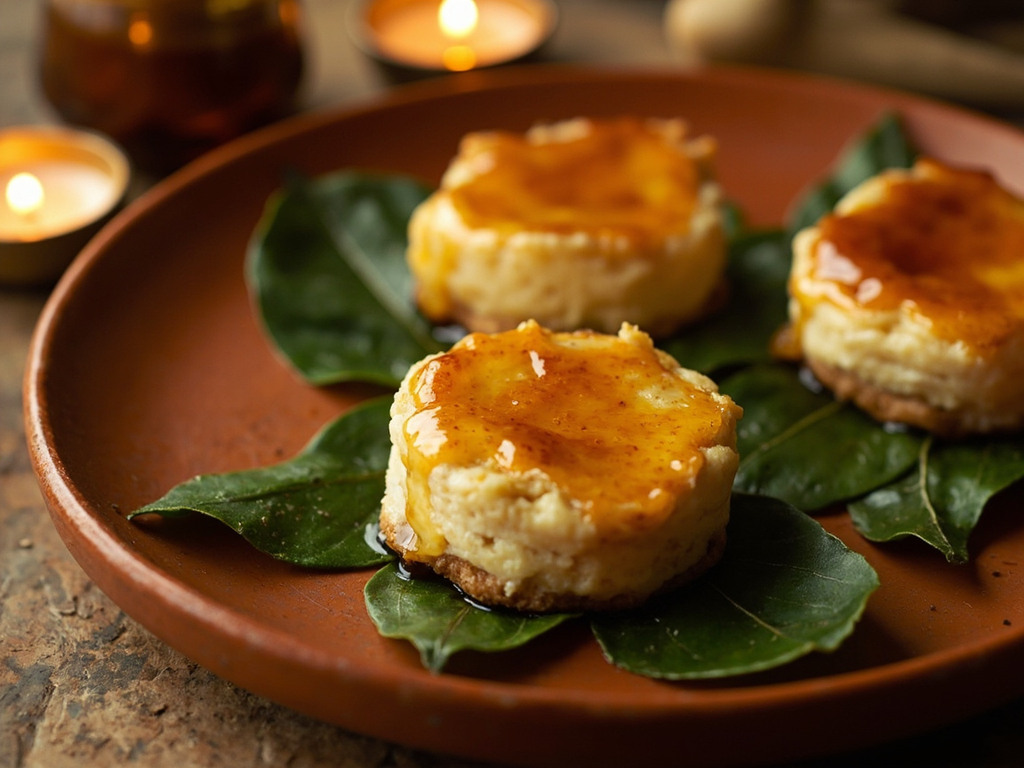
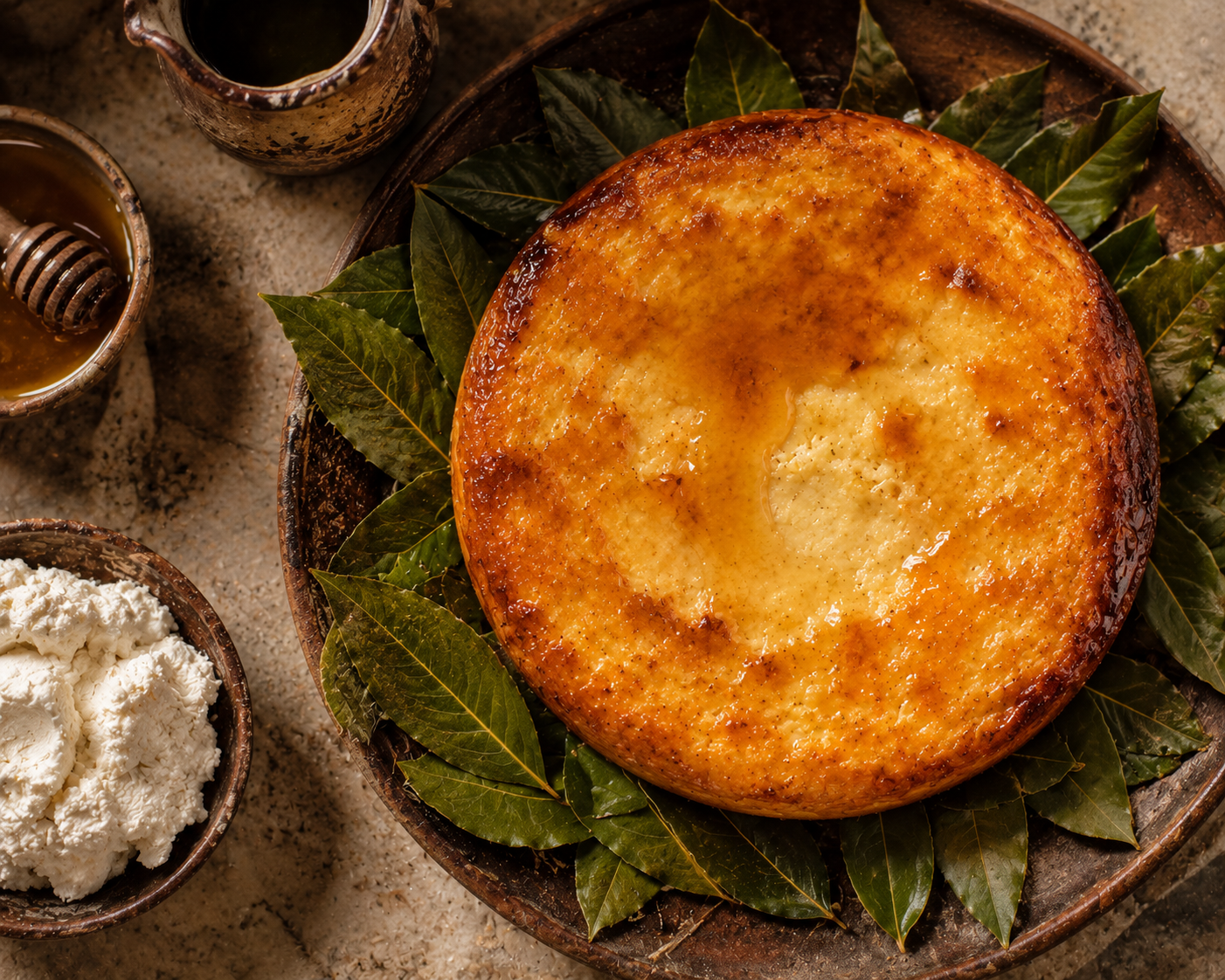
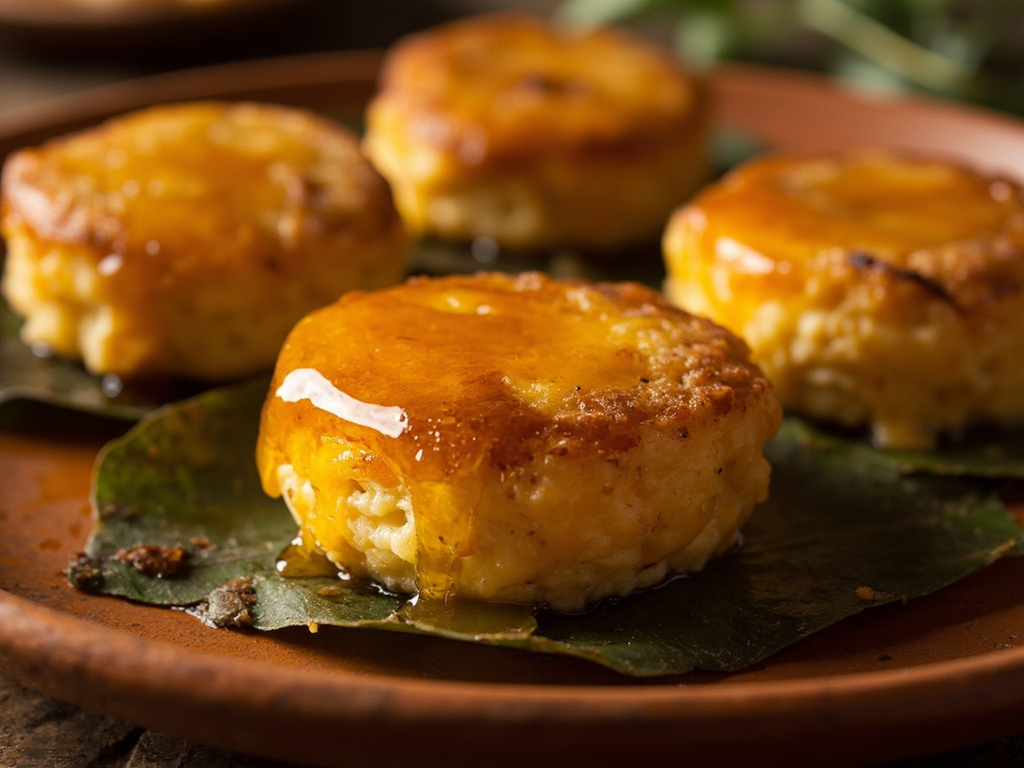
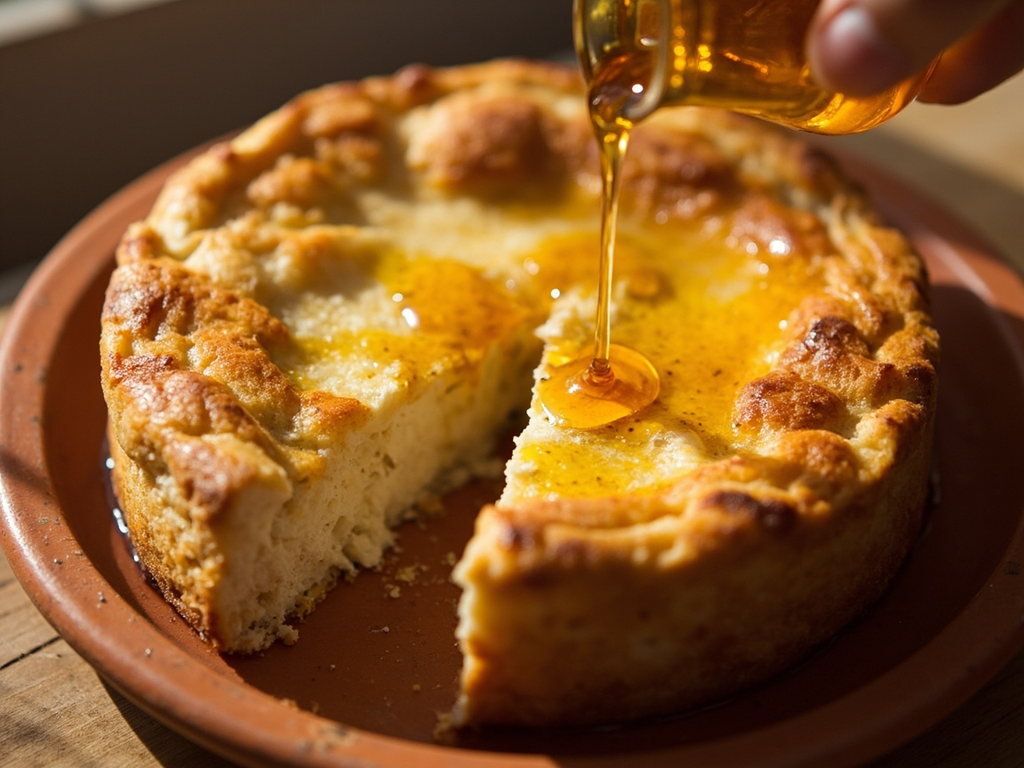
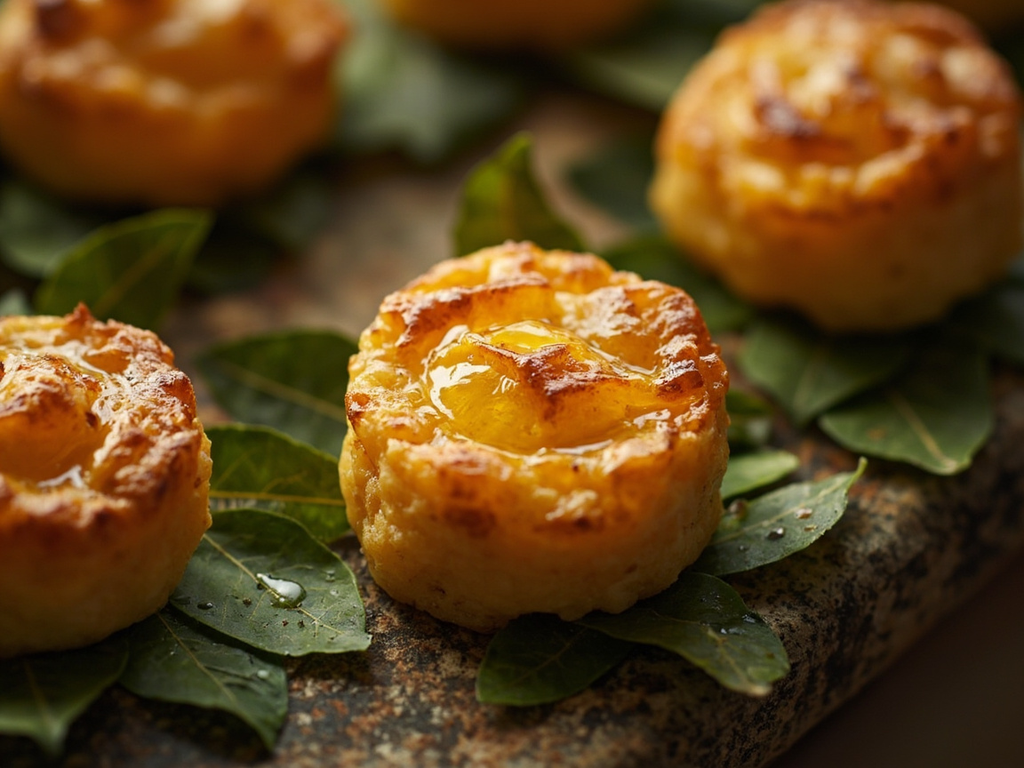
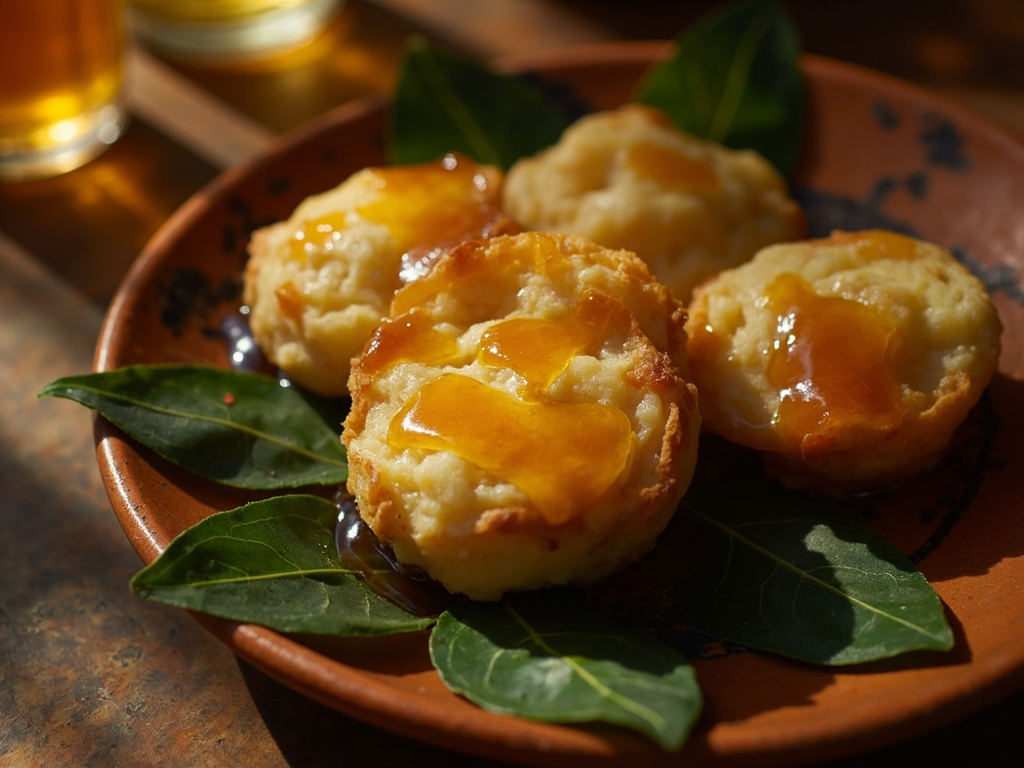
A small, soft cake made from fresh cheese, flour, and egg, placed on bay leaves and gently baked, then drizzled with honey. It was offered to household deities before being shared—inspired by Roman domestic rites, without reproducing the sacred.
Before my household touches the meal, I never forget the gods who guard it. I have this libum kneaded—cheese, a little flour, an egg—and I place it on bay leaves, as my mother taught me. When I brought my Germanicus' ashes to Augustus' tomb, it was still with such offerings that I honored his shade. The honey flows over it: what is sweet to the gods is afterwards sweet to the living.
- •Fresh cheese — two pounds (base)
- •Wheat flour — one pound (structure)
- •Egg — one (binder)
- •Bay leaves — a few (fragrant support)
- •Honey — for drizzling (final sweetness)
Libum, cheese cake offered to the Lares
A small, soft cake made from fresh cheese, flour, and egg, placed on bay leaves and gently baked, then drizzled with honey. It was offered to household deities before being shared—inspired by Roman domestic rites, without reproducing the sacred.
Why this dish? After Germanicus' death, Agrippina brought his ashes to the Mausoleum of Augustus in Rome, in a funeral march followed by all the people. Libum, a ritual cake offered to household gods and the dead, evokes that domestic piety that structured her life as a matron.
Before my household touches the meal, I never forget the gods who guard it. I have this libum kneaded—cheese, a little flour, an egg—and I place it on bay leaves, as my mother taught me. When I brought my Germanicus' ashes to Augustus' tomb, it was still with such offerings that I honored his shade. The honey flows over it: what is sweet to the gods is afterwards sweet to the living.
Ingredients (period version)
- Fresh cheese — two pounds (base)
- Wheat flour — one pound (structure)
- Egg — one (binder)
- Bay leaves — a few (fragrant support)
- Honey — for drizzling (final sweetness)
Ingredients
- Ricotta or well-drained fresh cheese — 250 g (base)
- Wheat flour — 120 g (structure)
- Egg — 1 (binder)
- Fresh bay leaves — 6 to 8 (fragrant support)
- Honey — 4 tbsp (final sweetness)
Method
- Mash the fresh cheese with a fork until smooth.
- Add the flour and egg, mix to form a soft dough.
- Shape into small domes and place each on a bay leaf.
- Bake at 180°C for 30–35 minutes, covered with a lid or another dish for gentle cooking, until golden.
- Drizzle with warm honey upon removal from the oven and serve warm (the bay leaf is not eaten).
How it was made : Cato the Elder gives the exact recipe for libum in De Agri Cultura: pounded cheese, flour, one egg, slow cooking under a clay cover (testum) on bay leaves. It was a ritual offering to household gods, later consumed by the household.
The contemporary twist : Serve the warm liba on a plate like miniature cheesecakes, with a drizzle of honey and zest, a 2000-year-old nod to cheese pastry.
Sources : Cato the Elder, De Agri Cultura, 75 (libum)
Agrippina the Elder · Charactorium