 flip
flipDulcia domestica — honey-and-nut stuffed dates
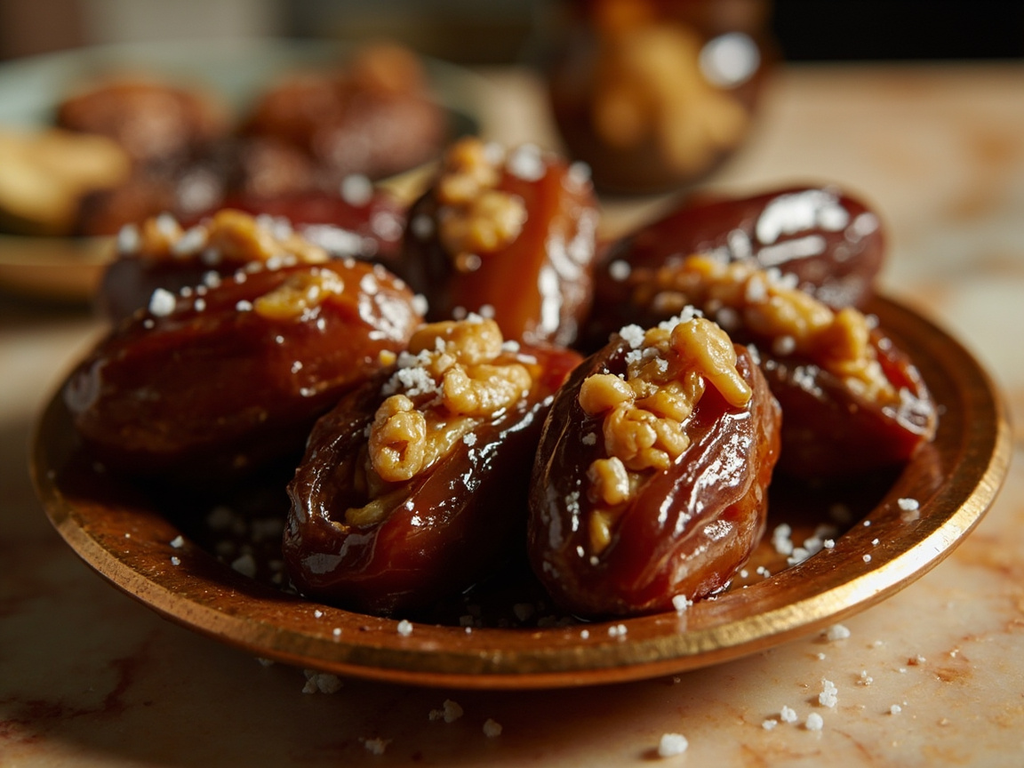
Dulcia domestica — honey-and-nut stuffed dates
Why this dish? The secunda mensa of imperial banquets offered candied fruits and sweets — the anchor mentions candied fruits on her table. Apicius' stuffed dates, imported from the East at great expense, signaled the refinement and wealth of a house like Agrippina's.
Pitted dates stuffed with walnuts and pine nuts, rolled in salt then candied in hot honey. A melting sweetness where the sugar of honey and fruit dialogues with a hint of salt — again the Roman taste for sweet-savory.
To close my feasts, I have these dates served, brought from the ends of the Empire, stuffed with walnuts and pine nuts. They are passed through salt — yes, salt! — before being candied in boiling honey: that is how they are loved, unsettling, neither quite sweet nor quite salty. My son Nero adored them as a child. Take one, savor it, and tell yourself you are tasting what the future master of the world delighted in.
- •Dates — a bowl (base fruit)
- •Walnuts and pine nuts — a handful (stuffing)
- •Ground pepper — a pinch (spice)
- •Salt — a little (salty contrast)
- •Honey — generous (candying)
Dulcia domestica — honey-and-nut stuffed dates
Pitted dates stuffed with walnuts and pine nuts, rolled in salt then candied in hot honey. A melting sweetness where the sugar of honey and fruit dialogues with a hint of salt — again the Roman taste for sweet-savory.
Why this dish? The secunda mensa of imperial banquets offered candied fruits and sweets — the anchor mentions candied fruits on her table. Apicius' stuffed dates, imported from the East at great expense, signaled the refinement and wealth of a house like Agrippina's.
To close my feasts, I have these dates served, brought from the ends of the Empire, stuffed with walnuts and pine nuts. They are passed through salt — yes, salt! — before being candied in boiling honey: that is how they are loved, unsettling, neither quite sweet nor quite salty. My son Nero adored them as a child. Take one, savor it, and tell yourself you are tasting what the future master of the world delighted in.
Ingredients (period version)
- Dates — a bowl (base fruit)
- Walnuts and pine nuts — a handful (stuffing)
- Ground pepper — a pinch (spice)
- Salt — a little (salty contrast)
- Honey — generous (candying)
Ingredients
- Large Medjool dates — 12 (base fruit)
- Walnut halves — 12 halves (stuffing)
- Pine nuts — 2 tbsp (stuffing)
- Ground black pepper — 1 pinch (spice)
- Fine salt — 1 pinch (contrast)
- Liquid honey — 4 tbsp (candying)
Method
- Pit the dates by slitting them open on one side.
- Chop a few walnuts with the pine nuts and a pinch of pepper, then stuff each date.
- Very lightly roll the dates in fine salt.
- Heat the honey in a pan, candy the dates for 2-3 minutes, turning until glossy and coated.
- Serve warm, drizzled with the cooking honey.
How it was made : The recipe for dulcia domestica comes directly from Apicius: pitted dates stuffed with walnuts, pine nuts, or pepper, salted then candied in honey. The salt-before-honey step illustrates the Roman taste for sweet-savory contrasts that we have largely lost.
The contemporary twist : Served warm with a flake of fleur de sel and a touch of edible gold leaf — for the emperor's daughter that she was.
Sources : Apicius, De re coquinaria, book VII (dulcia domestica)
Agrippina the Younger · Charactorium