 flip
flipKuurdak
Kuurdak
Why this dish? In the Book of Dede Korkut, every victory, every return from a raid, every Oghuz wedding is celebrated with a great feast (toy) where sheep and horses are slaughtered. Kuurdak — mutton sautéed in its own fat — is the festive dish par excellence of the nomadic Turkic peoples, the one that Dede Korkut would have blessed with his words before it was served to the heroes gathered under the khan's yurt.
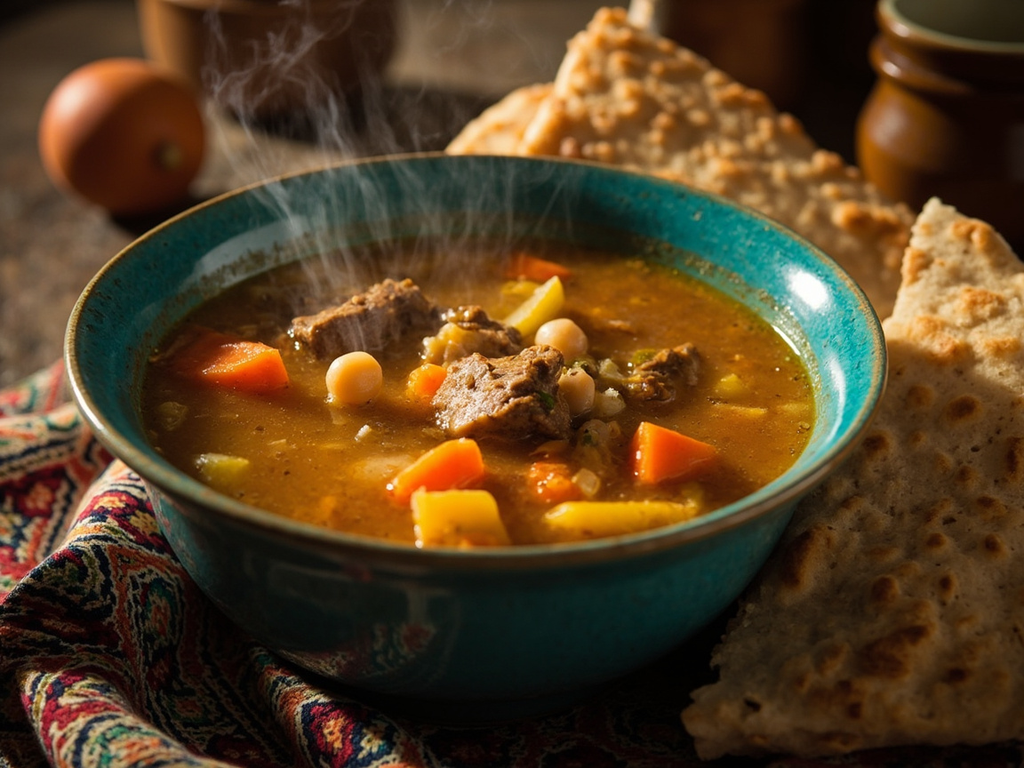
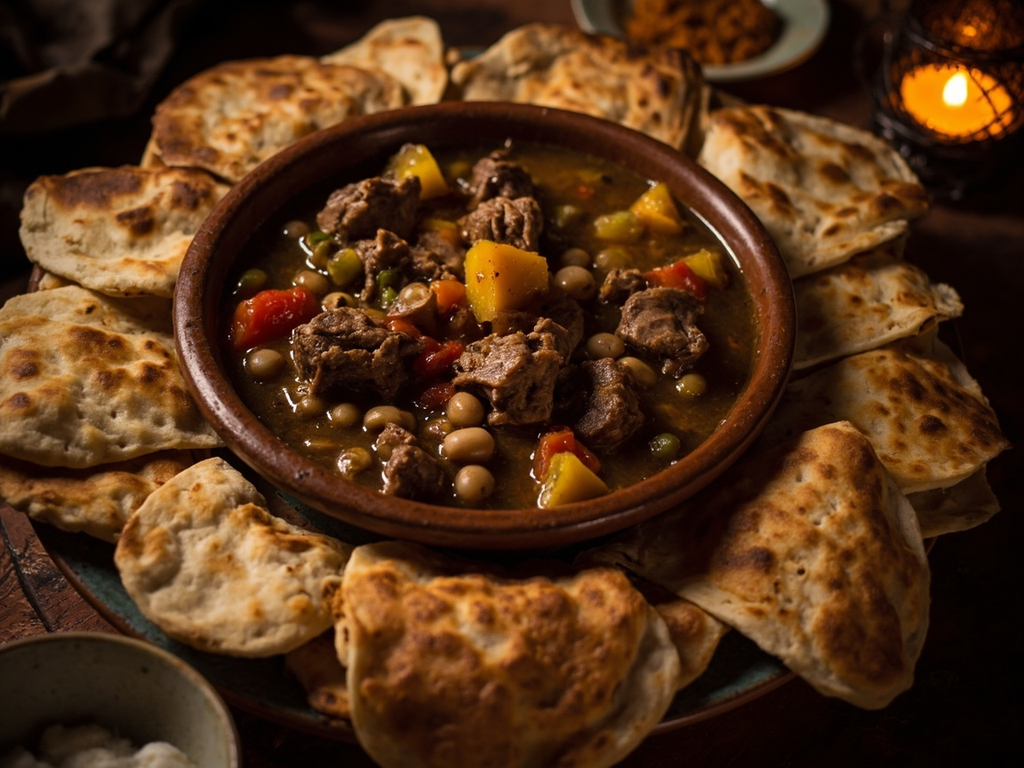
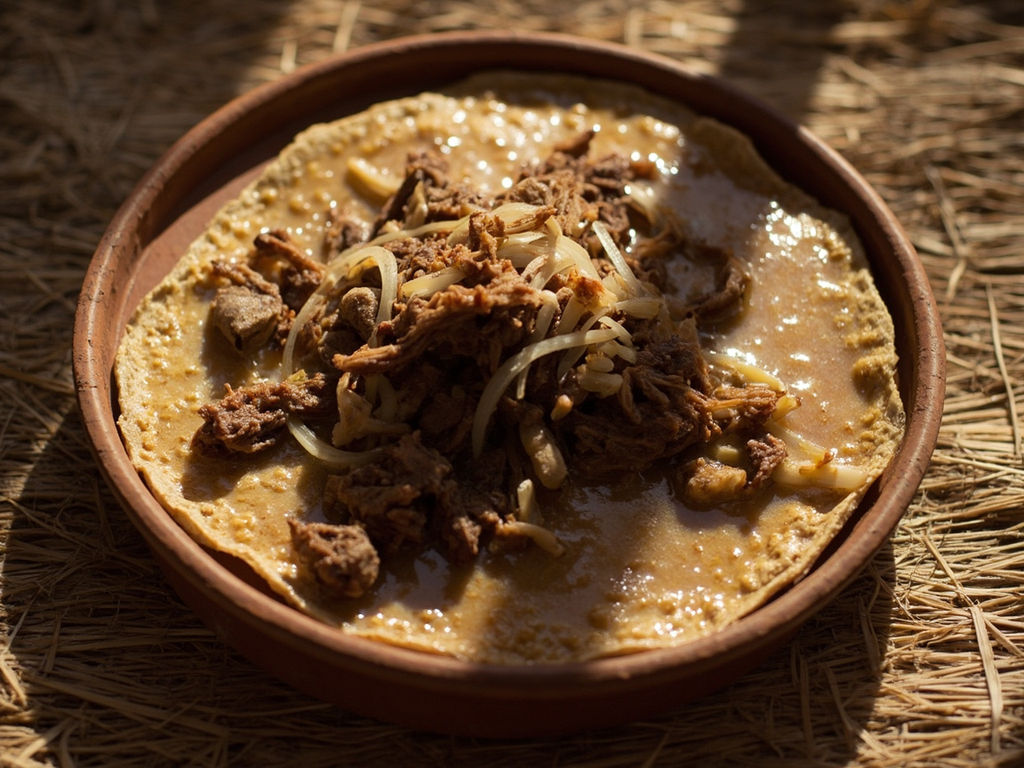
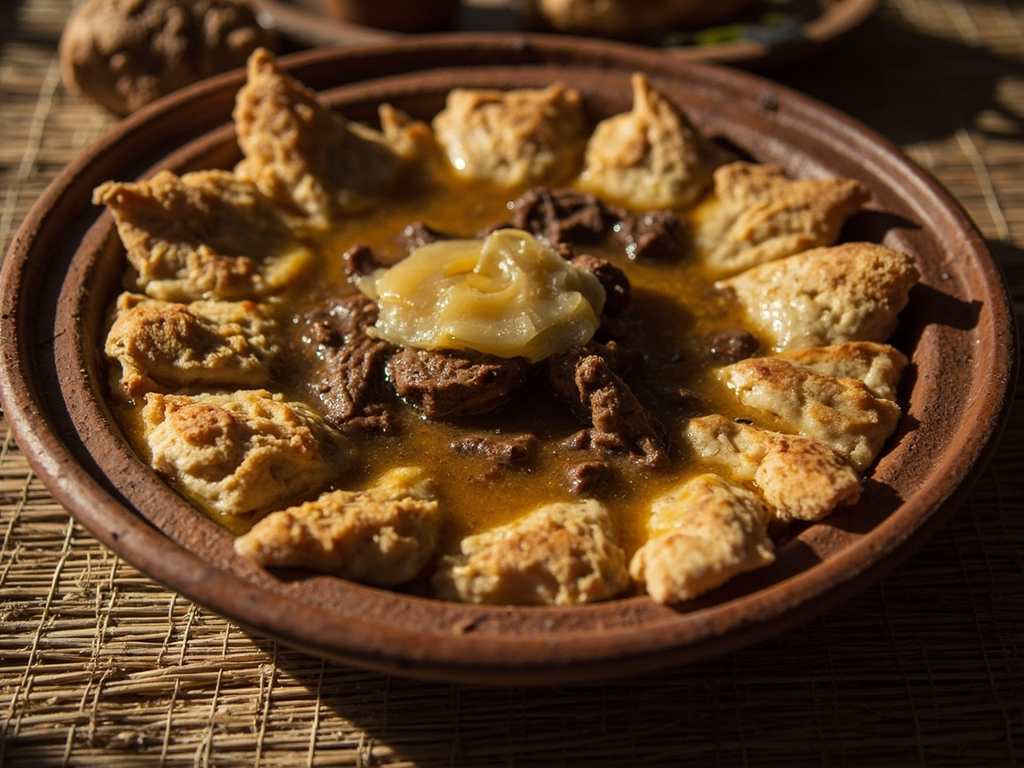
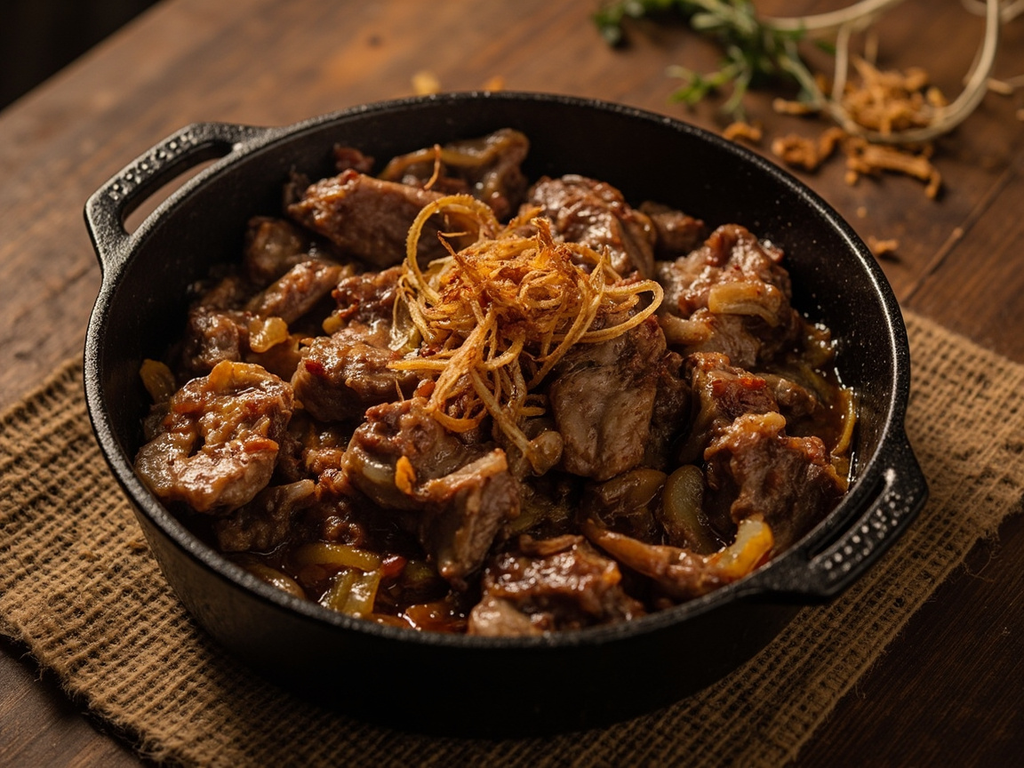
Sautéed mutton in tail fat, cooked in a cast-iron cauldron over a fire of dried dung. Shoulder and leg pieces are seared with wild onions in melted kurdiuk fat. A simple, generous dish with a deep flavor of meat and fragrant fat — the heart of the nomadic banquet.
Listen well, son of my son. When the khan returns victorious and the horse-tail standards snap in the steppe wind, we light a great fire and set the copper cauldron down. I myself cut the kurdiuk, the fat tail of the ram, and melt it until it sings in the fire. Then come the shoulder pieces, cut squarely, and the wild onions from the Seyhun plain. He who eats this kuurdak at my dastarkhan, let him know that the memory of the Oghuz is in every bite. I pluck my kopuz and bless the meal — for a feast without words is a sheep without a shepherd.
- •Mutton shoulder and leg — a good quarter (base of the dish)
- •Fat-tail sheep fat (kurdiuk) — a piece the size of a fist (cooking fat and flavor)
- •Steppe wild onions — a handful (aromatic)
- •Rock salt — to taste (seasoning)
Kuurdak
Sautéed mutton in tail fat, cooked in a cast-iron cauldron over a fire of dried dung. Shoulder and leg pieces are seared with wild onions in melted kurdiuk fat. A simple, generous dish with a deep flavor of meat and fragrant fat — the heart of the nomadic banquet.
Why this dish? In the Book of Dede Korkut, every victory, every return from a raid, every Oghuz wedding is celebrated with a great feast (toy) where sheep and horses are slaughtered. Kuurdak — mutton sautéed in its own fat — is the festive dish par excellence of the nomadic Turkic peoples, the one that Dede Korkut would have blessed with his words before it was served to the heroes gathered under the khan's yurt.
Listen well, son of my son. When the khan returns victorious and the horse-tail standards snap in the steppe wind, we light a great fire and set the copper cauldron down. I myself cut the kurdiuk, the fat tail of the ram, and melt it until it sings in the fire. Then come the shoulder pieces, cut squarely, and the wild onions from the Seyhun plain. He who eats this kuurdak at my dastarkhan, let him know that the memory of the Oghuz is in every bite. I pluck my kopuz and bless the meal — for a feast without words is a sheep without a shepherd.
Ingredients (period version)
- Mutton shoulder and leg — a good quarter (base of the dish)
- Fat-tail sheep fat (kurdiuk) — a piece the size of a fist (cooking fat and flavor)
- Steppe wild onions — a handful (aromatic)
- Rock salt — to taste (seasoning)
Ingredients
- Boneless lamb shoulder — 800 g (base of the dish)
- Lamb tail fat (from Middle Eastern butcher) or lard — 100 g (fat)
- Yellow onions — 3 medium (aromatic)
- Salt — 1 tsp (seasoning)
- Black pepper, ground — 1/2 tsp (seasoning)
Method
- Cut the tail fat into small dice and melt over medium heat in a large cast-iron skillet or wok until you have a pool of liquid fat and crispy cracklings (reserve them for serving).
- Cut the lamb shoulder into 3-4 cm cubes. Season with salt and pepper.
- Increase heat. Sear the meat in the hot fat in batches (do not overcrowd) until golden brown on all sides (about 5 minutes per batch).
- Slice the onions into thick half-rings. Add to the meat, reduce heat to medium, and sauté for 8-10 minutes, stirring, until soft and golden.
- Cover and simmer on low heat for 20 minutes, until the meat is tender. Adjust seasoning.
- Serve in a large communal dish, sprinkled with the crispy fat cracklings, with flatbread on the side.
How it was made : Kuurdak (or kuyrdaq, qourdaq) is attested throughout the Turco-Mongol world as the oldest and simplest sautéed meat dish. The tales of the Book of Dede Korkut mention gigantic feasts where hundreds of sheep are slaughtered. Cooking was done in a copper or cast-iron cauldron (kazan) set on a tripod over a fire of dried dung (tezek), the main fuel of the treeless steppe.
The contemporary twist : Serve in an individual blazing-hot cast-iron kazan, with a pinch of sumac and a few fresh herbs for color — a dastarkhan of today.
Sources : Le Livre de Dede Korkut (Kitab-ı Dedem Korkut), Oghuz epic, Dresden and Vatican manuscripts (15th-16th c.) · Zubaida, Sami & Tapper, Richard, A Taste of Thyme: Culinary Cultures of the Middle East, I.B. Tauris, 2000 · Buell, Paul D. & Anderson, Eugene N., A Soup for the Qan: Chinese Dietary Medicine of the Mongol Era as Seen in Hu Sihui's Yinshan Zhengyao, Brill, 2010
Dede Korkut · Charactorium