 flip
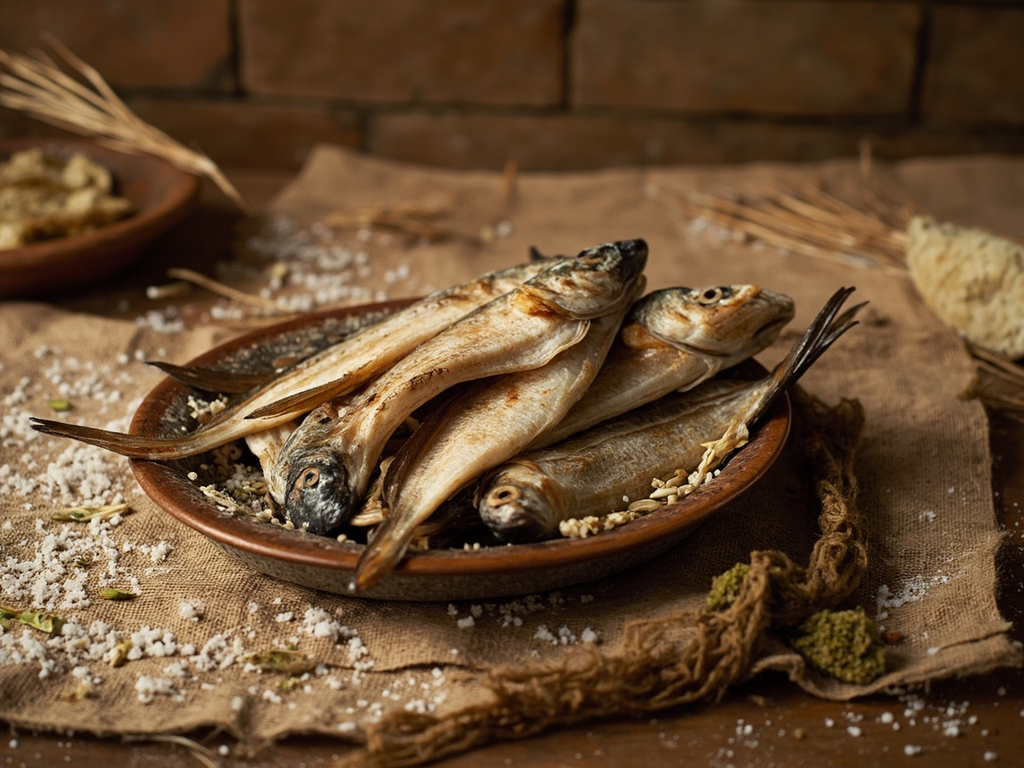
flipNile fish dried with salt and coriander
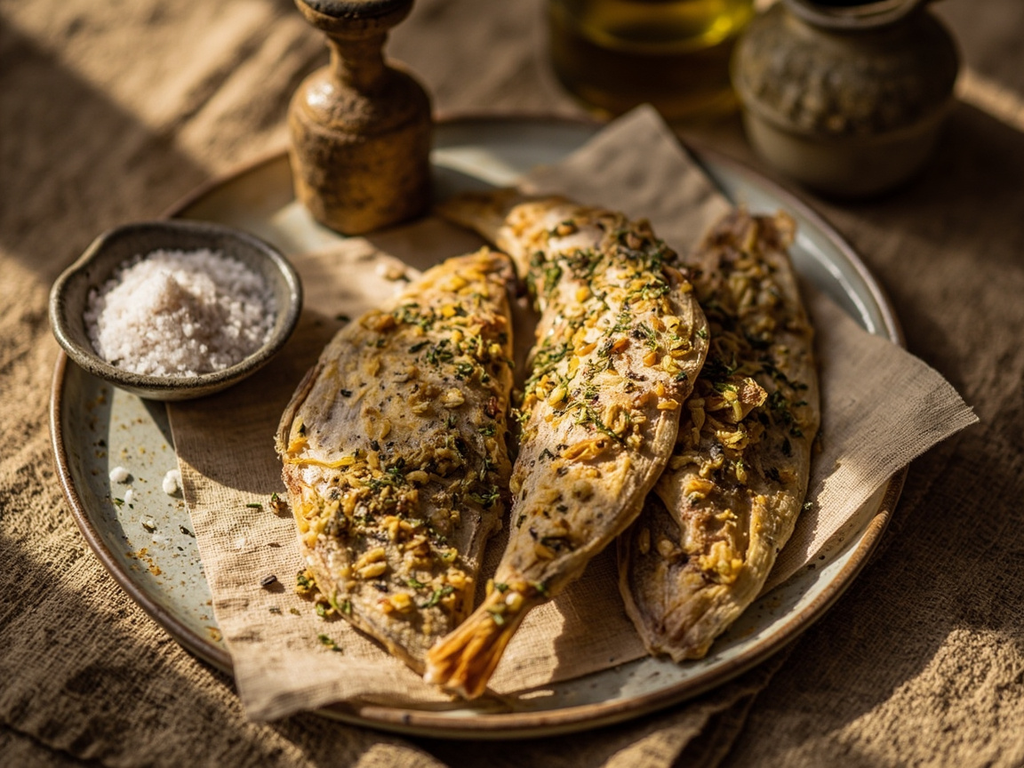
Nile fish dried with salt and coriander
Why this dish? Djoser erected a stele on the island of Sehel, near Aswan, at the first cataract of the Nile — land of fishermen. Salted and dried Nile fish, the quintessential preserved food, fed the crews sailing up the river and the temple stores: a simple food, tied to the nourishing river of the reign.
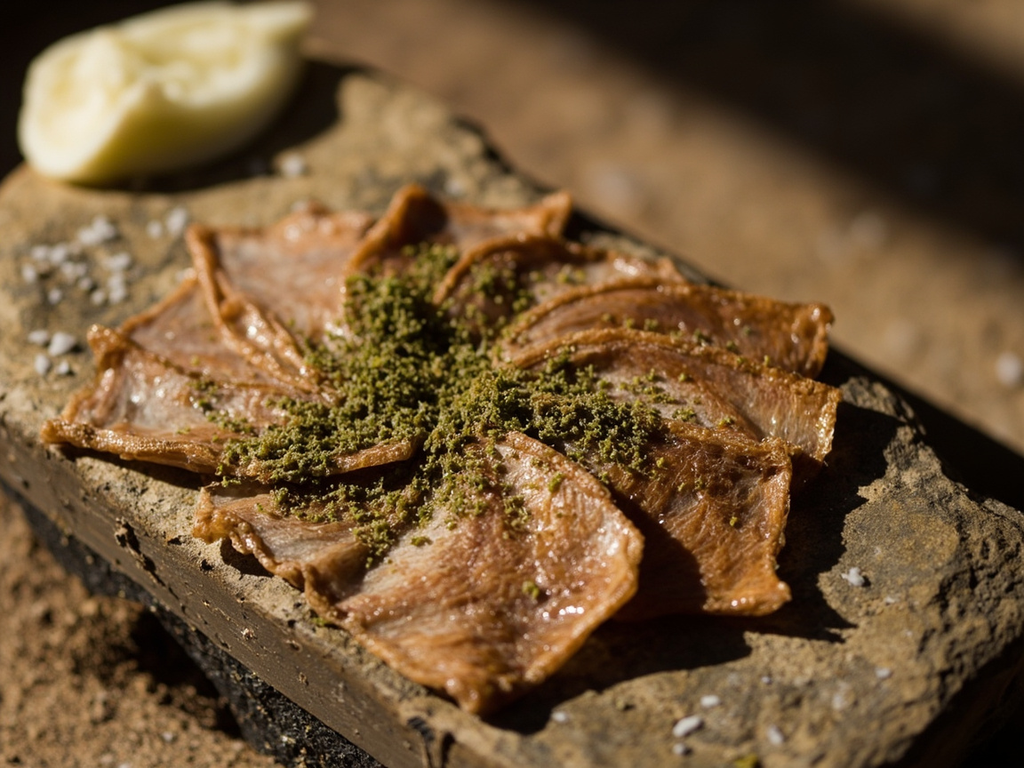
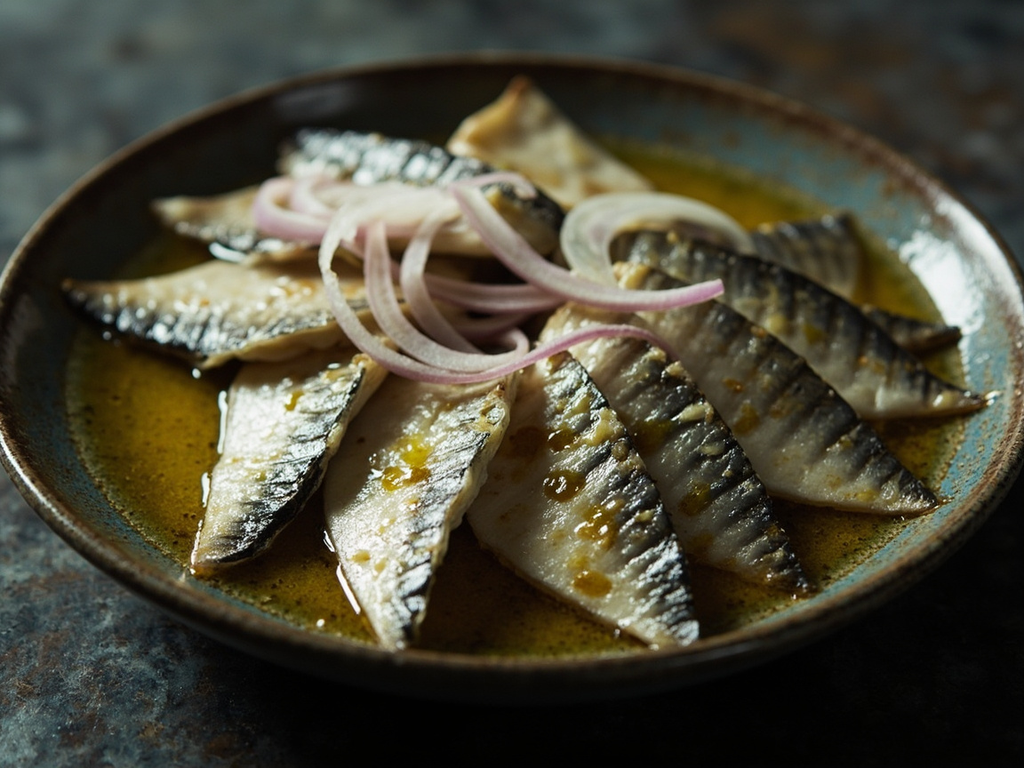
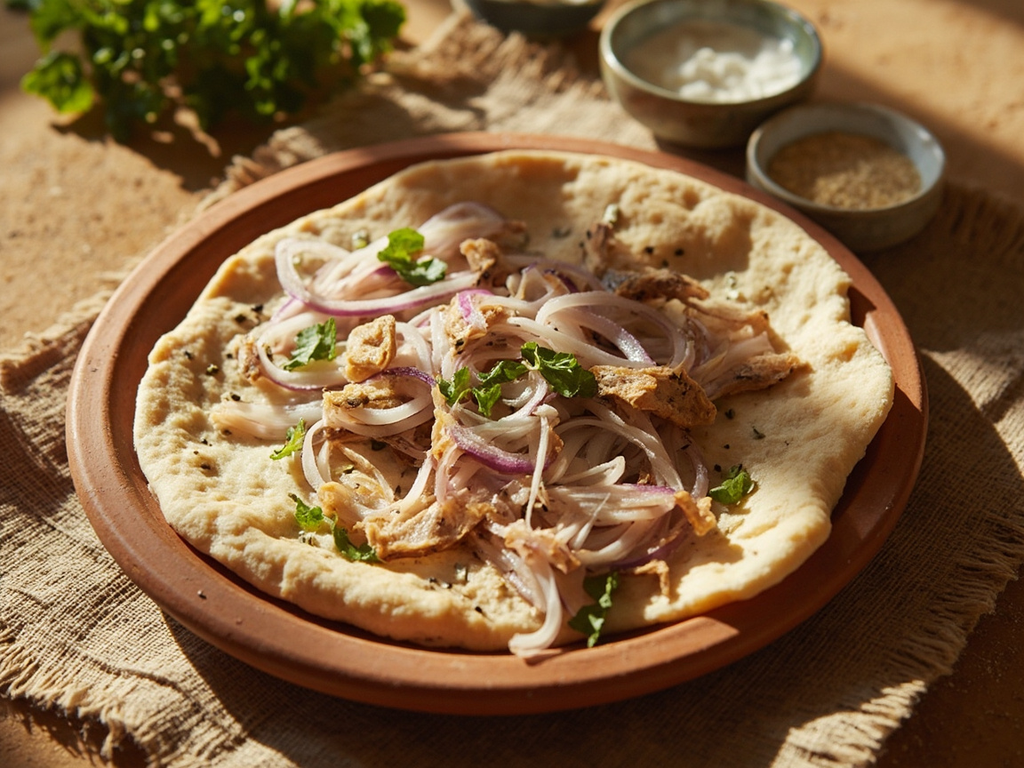
Nile fish fillets salted then sun-dried, rubbed with coriander and cumin. Salty, intensely umami, slightly fermented — they are desalted and rehydrated before eating with bread and onion.
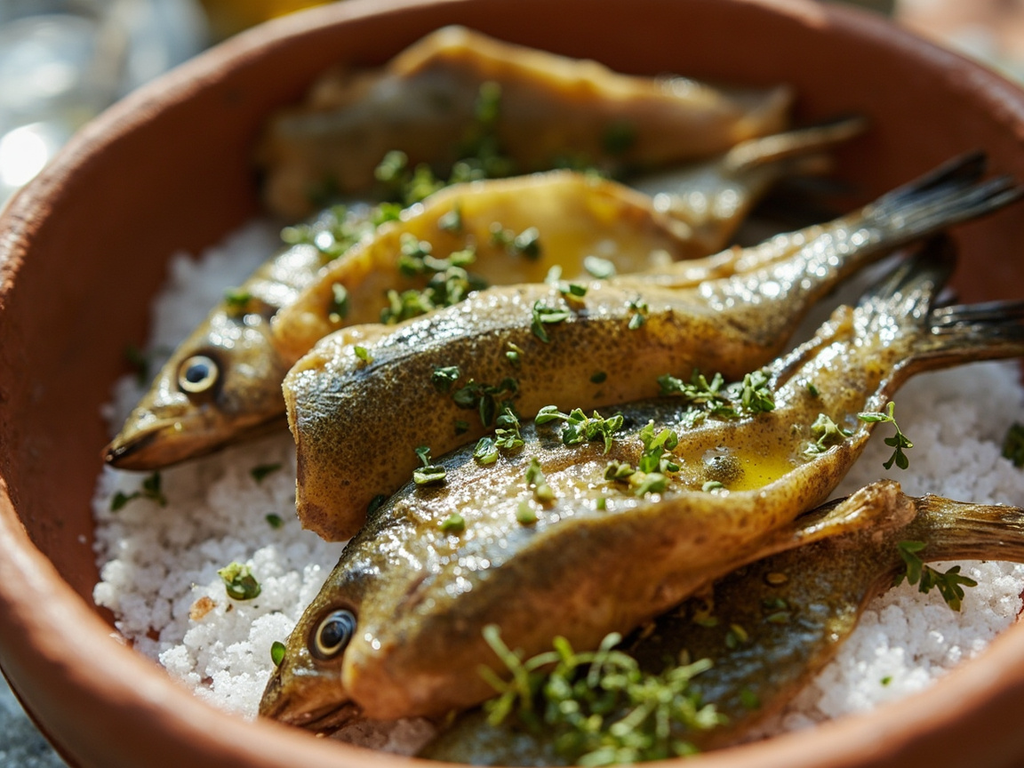
The Nile gives, but the wise man sets aside for lean days. On the banks, my fishermen open the fish, rub it with salt to the core, and offer it to the sun of Ra, which dries and preserves it. Thus our boats sail up to Sehel without ever lacking. Soak it before eating, break a piece over bread and onion: it is the food of river men, and it is worth that of palaces.
- •Nile fish (tilapia, mullet) — several (base to preserve)
- •Salt — in abundance (preservative)
- •Coriander and cumin — a pinch (flavor and protection)
Nile fish dried with salt and coriander
Nile fish fillets salted then sun-dried, rubbed with coriander and cumin. Salty, intensely umami, slightly fermented — they are desalted and rehydrated before eating with bread and onion.
Why this dish? Djoser erected a stele on the island of Sehel, near Aswan, at the first cataract of the Nile — land of fishermen. Salted and dried Nile fish, the quintessential preserved food, fed the crews sailing up the river and the temple stores: a simple food, tied to the nourishing river of the reign.
The Nile gives, but the wise man sets aside for lean days. On the banks, my fishermen open the fish, rub it with salt to the core, and offer it to the sun of Ra, which dries and preserves it. Thus our boats sail up to Sehel without ever lacking. Soak it before eating, break a piece over bread and onion: it is the food of river men, and it is worth that of palaces.
Ingredients (period version)
- Nile fish (tilapia, mullet) — several (base to preserve)
- Salt — in abundance (preservative)
- Coriander and cumin — a pinch (flavor and protection)
Ingredients
- Tilapia or mullet fillets — 4 fillets (base)
- Coarse salt — 500 g (dry brine)
- Crushed coriander seeds — 1 tbsp (flavor)
- Ground cumin — 1 tsp (flavor)
- Onion and flatbread — for serving (accompaniment)
Method
- Generously rub the fillets with coarse salt mixed with coriander and cumin, on all sides.
- Place them on a rack and let them drain in the refrigerator for 24 hours, turning halfway.
- Rinse off the surface salt, pat dry, then dry the fillets in a ventilated area (or in an oven with the door ajar at 50 °C for a few hours) until firm.
- To serve: soak the dried fish in fresh water for 1 to 2 hours to desalt.
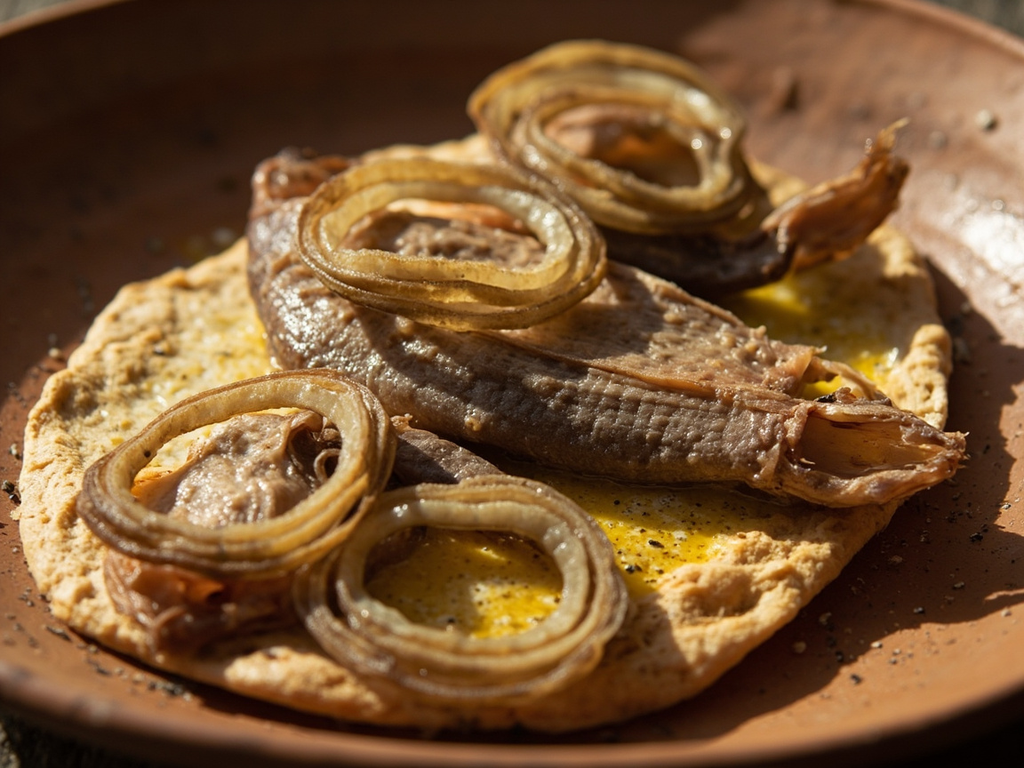
- Flake it over warm flatbread with thin slices of raw onion and a drizzle of oil.
How it was made : Salting and sun-drying was THE great Egyptian preservation technique, applied to fish and poultry alike. Without refrigeration, the salt of the oases (notably natron) and the desert heat allowed proteins to be stored for months.
The contemporary twist : Serve as small bites on crispy flatbread with a splash of marinated onion juice — a "Nile tapas" for appetizers.
Sources : William J. Darby, Paul Ghalioungui & Louis Grivetti, Food: The Gift of Osiris (Academic Press, 1977) · Douglas Brewer & Renée Friedman, Fish and Fishing in Ancient Egypt (Aris & Phillips, 1989)
Djoser · Charactorium