 flip
flipAmazake — Sweet Fermented Rice Drink
Amazake — Sweet Fermented Rice Drink
Why this dish? Amazake was sold in the streets of Edo by vendors crying out their rounds, summer and winter. For Hokusai, a great tea drinker who fueled himself for work, this sweet, non-alcoholic, nourishing, and cheap drink was the natural pick-me-up for the Edo city-dweller between two engraved blocks.
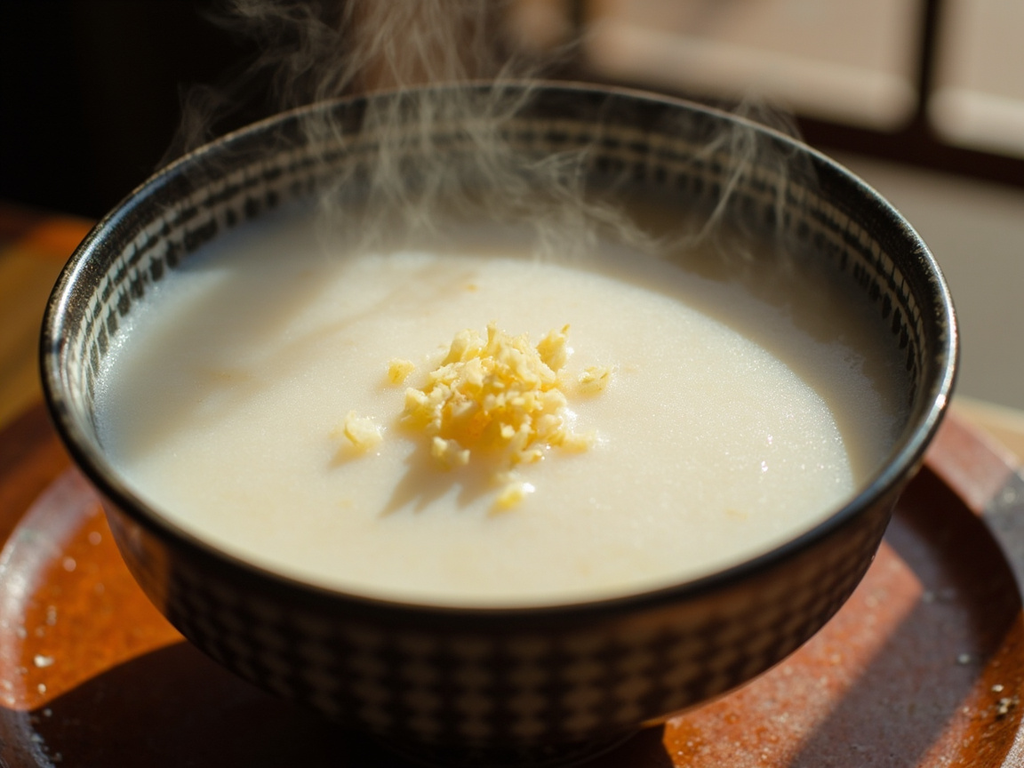
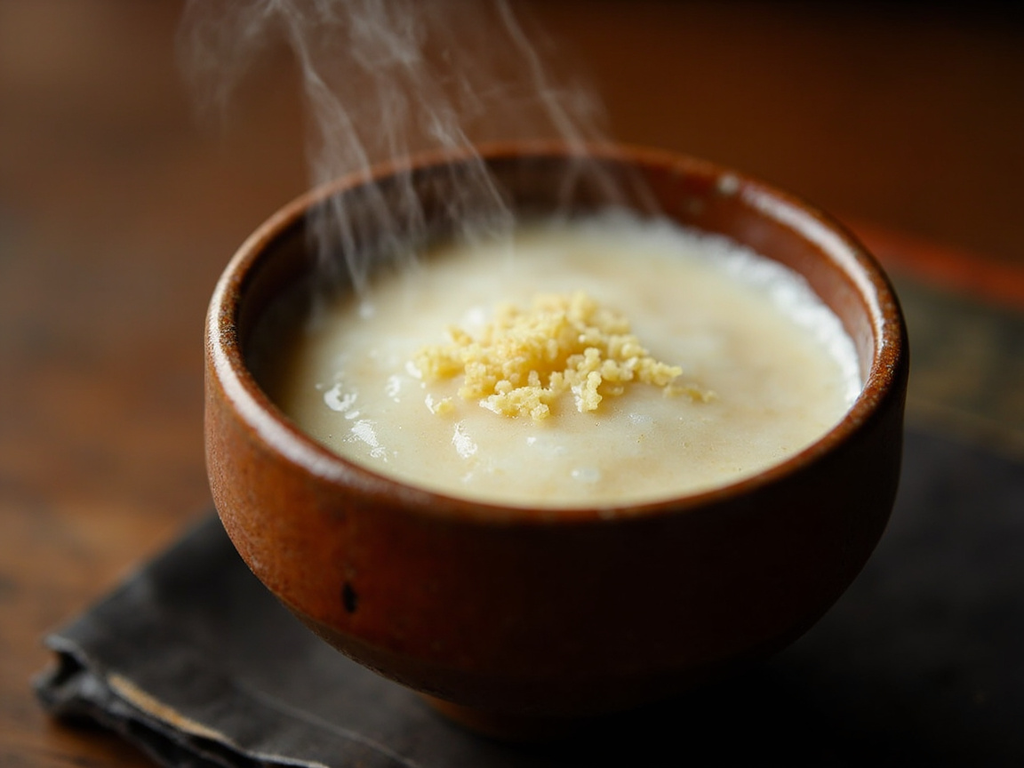
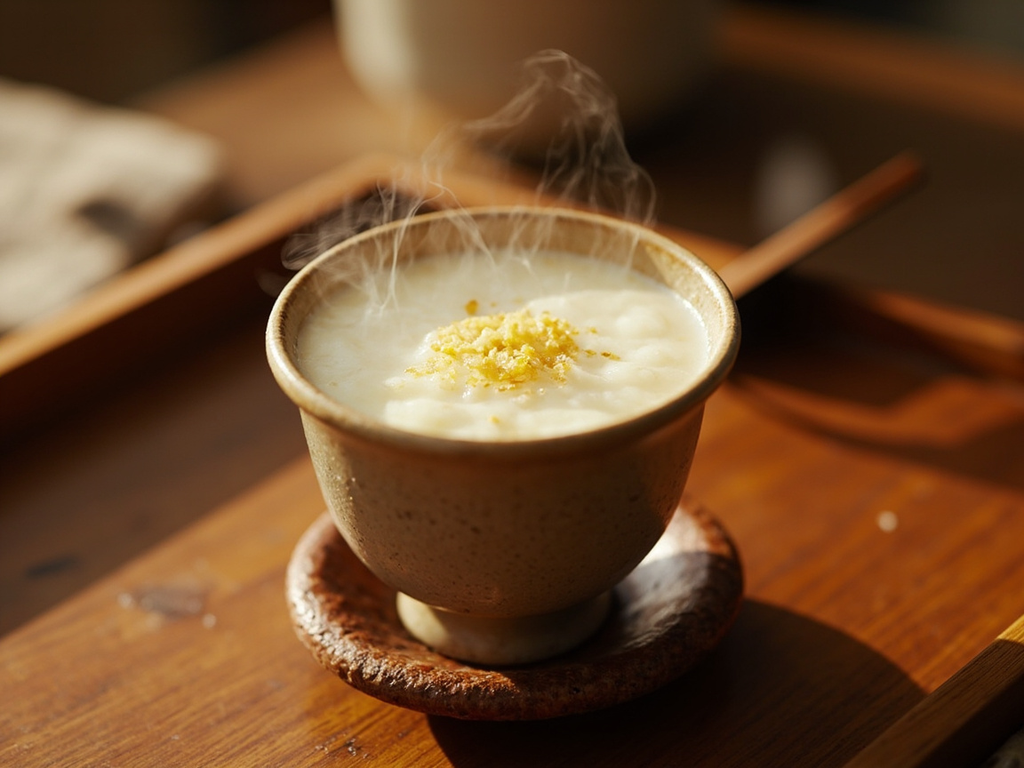
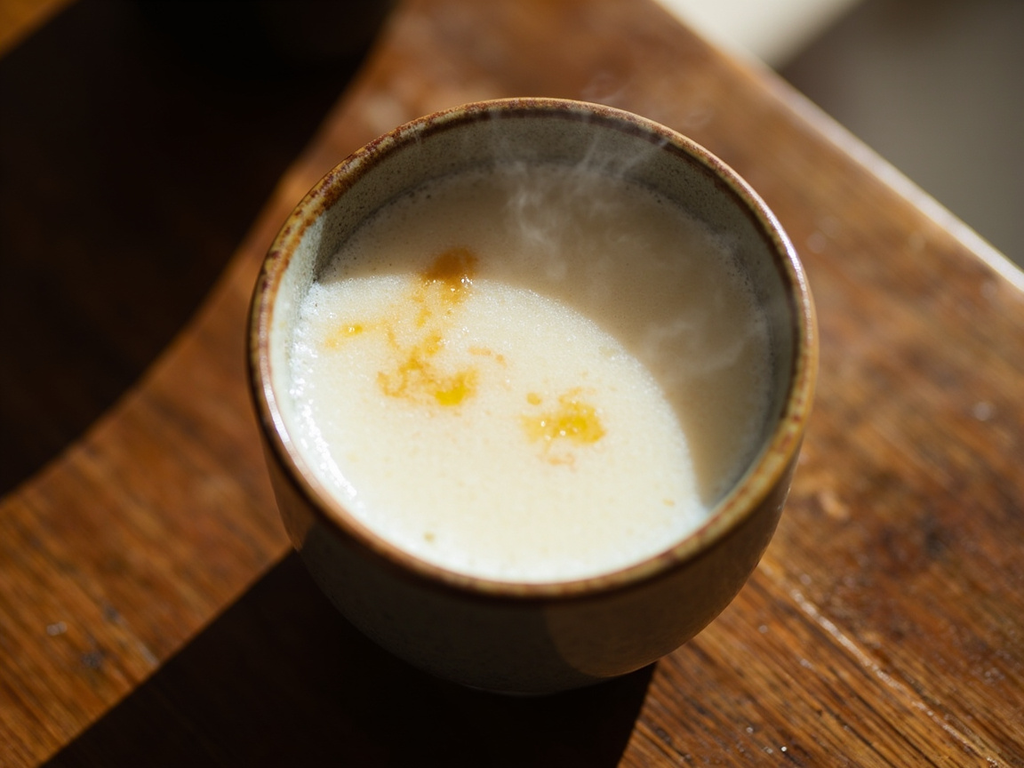
A thick, sweet, milky drink obtained by letting koji (rice inoculated with ferment) transform the starch into sugar. Non-alcoholic, naturally sweet, it is drunk warm: a gentle boost that was rightly nicknamed "drinkable IV."
When the cold stiffened my fingers, I would hear the amazake vendor pass through the alley with his balance pole, and I would bring out my bowl. It is sweet as rice that learned sweetness all by itself, without a grain of sugar — koji performs this miracle while you sleep. A warm sip, and the heat rises from your hands to your brush. That is what kept me going through many Edo winters, I who never had any fortune but my work.
- •Cooked rice (okayu, rice porridge) — one bowl (sugar base)
- •Kome-koji (rice inoculated with koji) — same volume as the rice (saccharifying ferment)
- •Hot water — to thin (medium)
- •Fresh ginger — a little, grated (kick (optional))
Amazake — Sweet Fermented Rice Drink
A thick, sweet, milky drink obtained by letting koji (rice inoculated with ferment) transform the starch into sugar. Non-alcoholic, naturally sweet, it is drunk warm: a gentle boost that was rightly nicknamed "drinkable IV."
Why this dish? Amazake was sold in the streets of Edo by vendors crying out their rounds, summer and winter. For Hokusai, a great tea drinker who fueled himself for work, this sweet, non-alcoholic, nourishing, and cheap drink was the natural pick-me-up for the Edo city-dweller between two engraved blocks.
When the cold stiffened my fingers, I would hear the amazake vendor pass through the alley with his balance pole, and I would bring out my bowl. It is sweet as rice that learned sweetness all by itself, without a grain of sugar — koji performs this miracle while you sleep. A warm sip, and the heat rises from your hands to your brush. That is what kept me going through many Edo winters, I who never had any fortune but my work.
Ingredients (period version)
- Cooked rice (okayu, rice porridge) — one bowl (sugar base)
- Kome-koji (rice inoculated with koji) — same volume as the rice (saccharifying ferment)
- Hot water — to thin (medium)
- Fresh ginger — a little, grated (kick (optional))
Ingredients
- Cooked short-grain rice — 200 g (cooked rice) (base)
- Kome-koji (rice koji, dry or fresh) — 200 g (ferment)
- Water — 400 ml (dilution)
- Fresh grated ginger — 1 tsp (optional) (finish)
Method
- Mix the still-warm cooked rice with the water to obtain a warm porridge (about 60 °C — the hand can bear it, but no more).
- Add the crumbled koji, making sure the temperature never exceeds 60 °C (above that, the ferment dies).
- Keep the mixture at 55-60 °C for 6 to 8 hours (yogurt maker, rice cooker on "keep warm" mode with lid ajar, or thermos), stirring occasionally.
- When the mixture has become distinctly sweet and milky, it is ready. Blend for a smooth texture if desired.
- Thin with a little hot water, serve warm, with a pinch of grated ginger on top. Keeps for a few days in the fridge.
How it was made : Edo amazake, contrary to what one might think, was mostly sold in summer as a nutritious and invigorating drink: records count it among remedies for fatigue from great heat. Non-alcoholic (not to be confused with sake), it was suitable for everyone, including children.
The contemporary twist : Serve it chilled in summer, like a rice smoothie, under the name "Fuji Milk" — white and cloudy like the snows of the peak that Hokusai drew a hundred times.
Sources : Eric C. Rath, Food and Fantasy in Early Modern Japan, University of California Press, 2010 · Naomichi Ishige, The History and Culture of Japanese Food, Kegan Paul, 2001
Hokusai · Charactorium