 flip
flipKhwarezmian Harisa
Khwarezmian Harisa
Why this dish? Al-Zamakhshari mentions in his writings a frugal life nourished by grain porridges. Harisa — cracked wheat slowly cooked with meat until it forms a thick porridge — is the quintessential subsistence dish of the itinerant scholar traveling between Khwarezm, Bukhara, and Baghdad. This dish is found throughout the medieval Islamic world, from Abbasid tables to caravanserais.
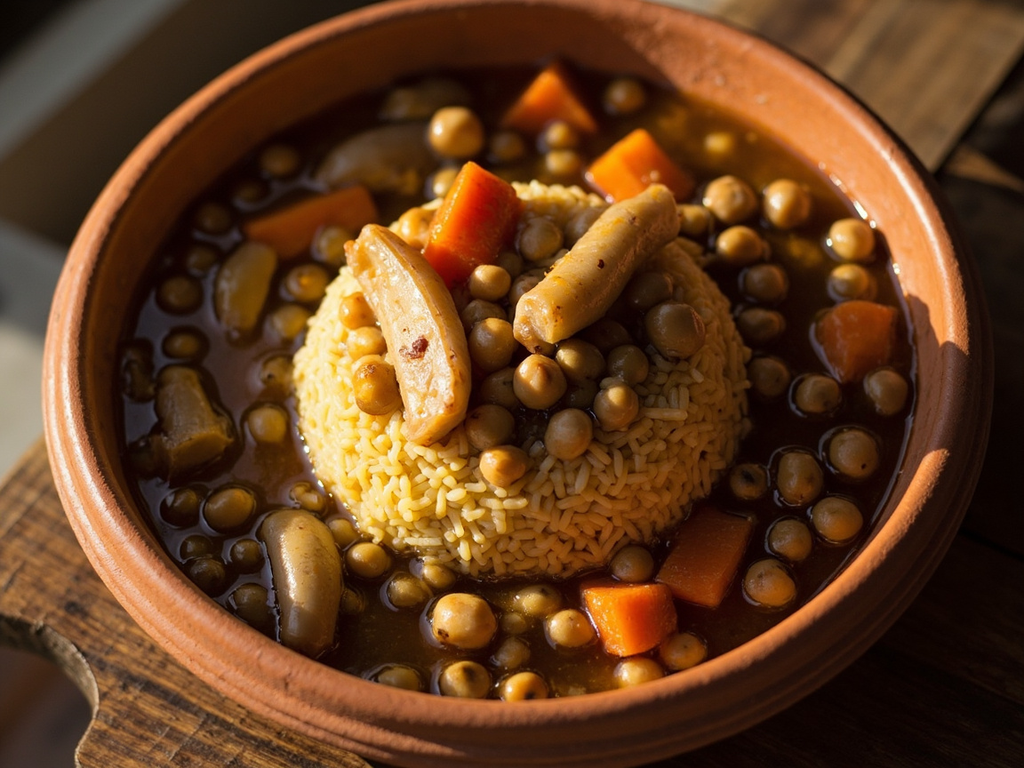
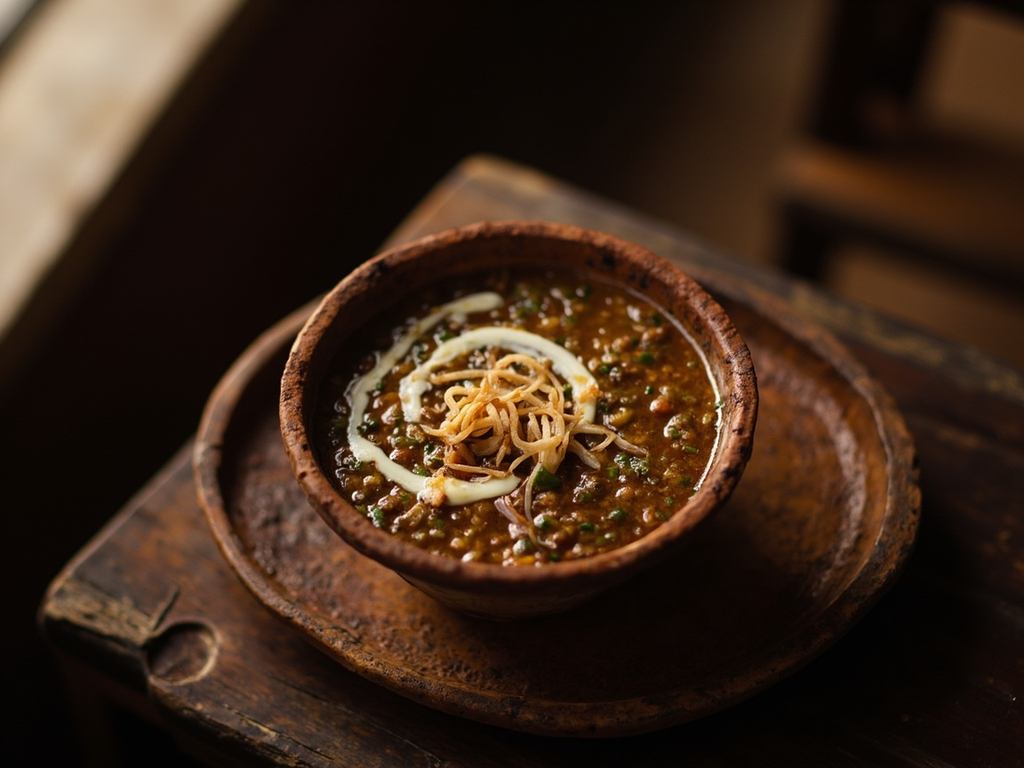
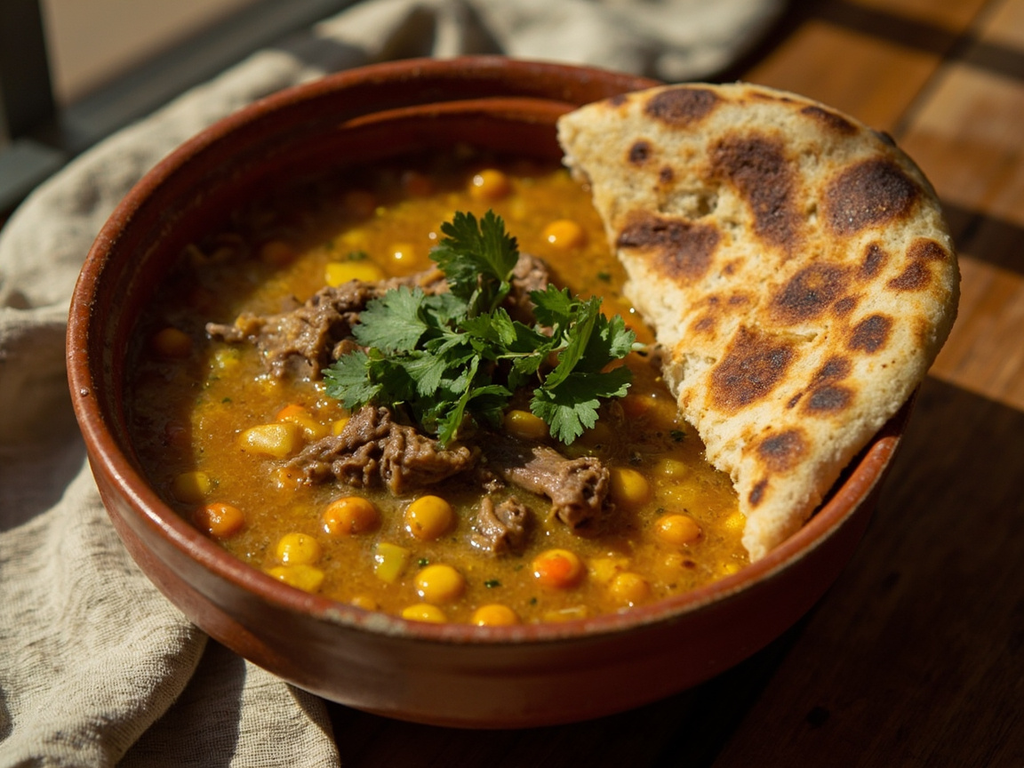
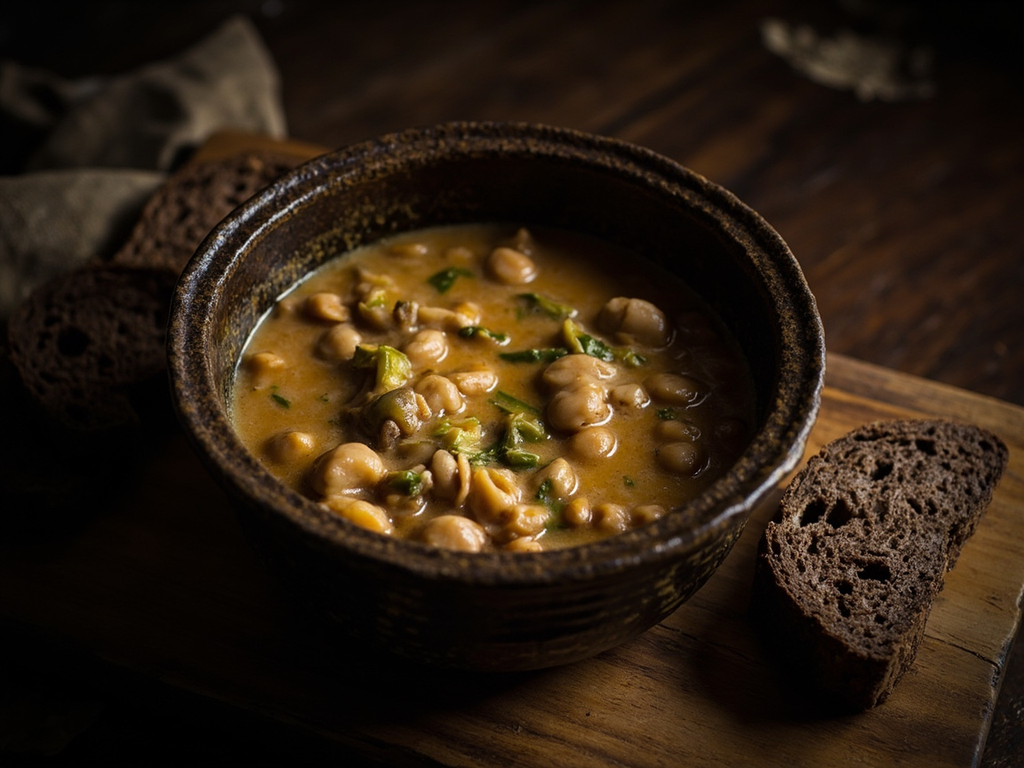
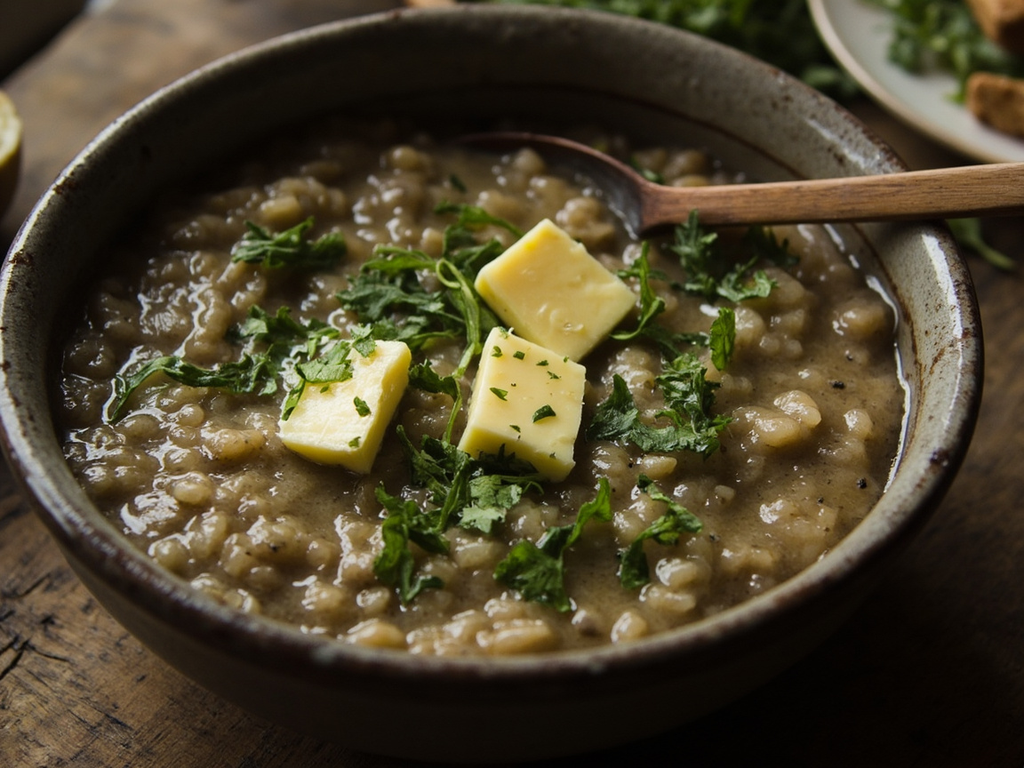
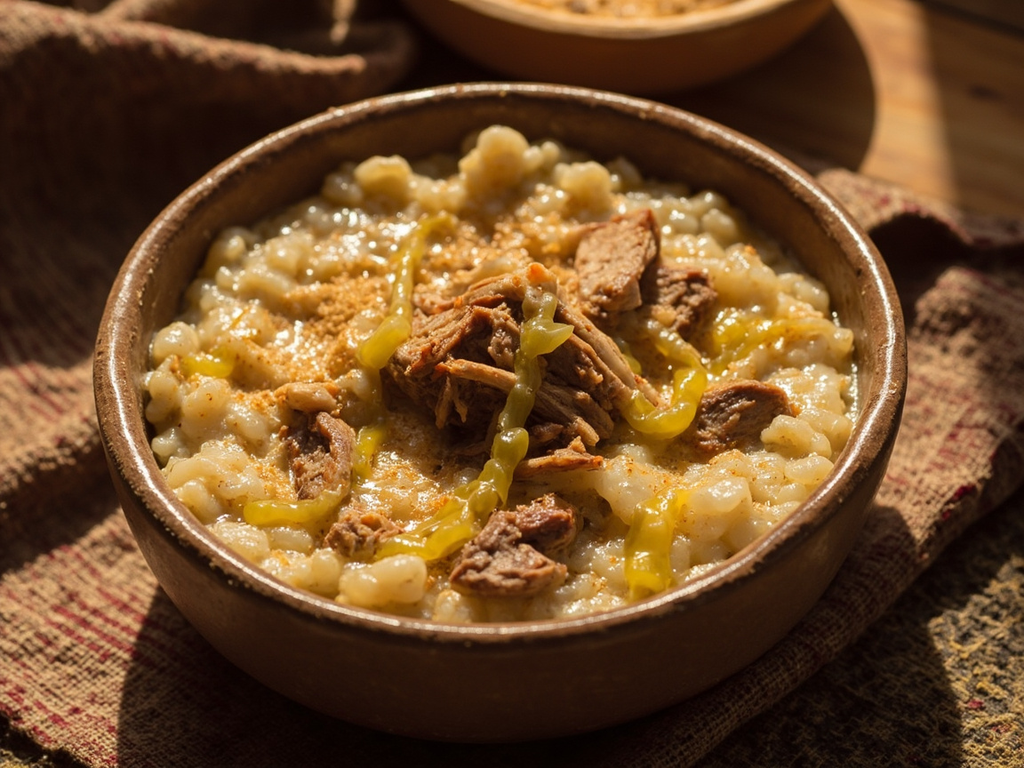
A thick, creamy porridge of cracked wheat and lamb, cooked long until the meat dissolves into fibers within the grain. Fragrant with cumin and cinnamon, drizzled with clarified butter, it is a comforting, nourishing, and economical dish, consumed daily by travelers and scholars of Khwarezm.
Know, you who read these lines, that harisa is the faithful companion of him who spends his nights deciphering the Book. You put the wheat and the mutton in the copper pot at evening prayer, and you stir, and stir again, until the grain and the flesh become one — like meaning and word in a well-turned metaphor. Come morning, a bowl of this porridge sustains you until dusk. In Bukhara, I added a pinch of cinnamon; in Khwarezm, cumin takes precedence. Pour melted butter on top and give thanks: this is the food of the mind that does not distract from study.
- •Cracked wheat (jariish) — two generous handfuls (grain base)
- •Lamb shoulder on the bone — one good-sized piece (meat and broth)
- •Clarified butter (roghan) — one ladle (finishing and richness)
- •Cumin (zira) — a pinch (signature spice)
- •Cinnamon stick — one piece (sweet aroma)
- •Salt — to taste (seasoning)
- •Water — abundant (long cooking)
Khwarezmian Harisa
A thick, creamy porridge of cracked wheat and lamb, cooked long until the meat dissolves into fibers within the grain. Fragrant with cumin and cinnamon, drizzled with clarified butter, it is a comforting, nourishing, and economical dish, consumed daily by travelers and scholars of Khwarezm.
Why this dish? Al-Zamakhshari mentions in his writings a frugal life nourished by grain porridges. Harisa — cracked wheat slowly cooked with meat until it forms a thick porridge — is the quintessential subsistence dish of the itinerant scholar traveling between Khwarezm, Bukhara, and Baghdad. This dish is found throughout the medieval Islamic world, from Abbasid tables to caravanserais.
Know, you who read these lines, that harisa is the faithful companion of him who spends his nights deciphering the Book. You put the wheat and the mutton in the copper pot at evening prayer, and you stir, and stir again, until the grain and the flesh become one — like meaning and word in a well-turned metaphor. Come morning, a bowl of this porridge sustains you until dusk. In Bukhara, I added a pinch of cinnamon; in Khwarezm, cumin takes precedence. Pour melted butter on top and give thanks: this is the food of the mind that does not distract from study.
Ingredients (period version)
- Cracked wheat (jariish) — two generous handfuls (grain base)
- Lamb shoulder on the bone — one good-sized piece (meat and broth)
- Clarified butter (roghan) — one ladle (finishing and richness)
- Cumin (zira) — a pinch (signature spice)
- Cinnamon stick — one piece (sweet aroma)
- Salt — to taste (seasoning)
- Water — abundant (long cooking)
Ingredients
- Coarse cracked wheat (or hulled barley) — 200 g (grain base)
- Lamb shoulder on the bone — 400 g (meat and broth)
- Clarified butter (ghee) — 40 g (finishing)
- Ground cumin — 1 tsp (spice)
- Cinnamon stick — 1 (aroma)
- Salt — 1 tsp (seasoning)
- Water — 1.5 L (cooking)
Method
- Soak the cracked wheat in cold water for 2 hours, then drain.
- Place the lamb shoulder in a large pot, cover with cold water, bring to a boil, and skim thoroughly.
- Add the cinnamon stick, cumin, and salt. Simmer covered for 1 hour.
- Remove the meat, debone, and shred coarsely. Strain the broth.
- Return the broth to the pot, add the soaked cracked wheat. Cook over low heat, stirring regularly, for 45 minutes to 1 hour, until a thick, homogeneous porridge forms.
- Reincorporate the shredded meat and stir vigorously with a wooden spoon so the fibers blend into the grain. Adjust seasoning.
- Serve in bowls, drizzle with melted ghee, and sprinkle with a pinch of cumin.
How it was made : Harisa is attested in Abbasid culinary treatises (Kitab al-Tabikh by al-Baghdadi, 13th c.) and in earlier sources. The dish required an entire night of cooking, often entrusted to a neighborhood cook. In Central Asia, local wheat (jariish) sometimes replaced the fine wheat of Iraqi cities. The result had to be thick enough for a spoon to stand upright.
The contemporary twist : Serve in a stoneware bowl with a drizzle of olive oil infused with toasted cumin and a few pistachio slivers to evoke the oases of Khwarezm.
Sources : Al-Baghdadi, Muhammad ibn al-Hasan, Kitab al-Tabikh (13th century) — harisa recipes · Perry, Charles, A Baghdad Cookery Book (English translation of Kitab al-Tabikh), 2005 · Zaouali, Lilia, L'Islam à table, 2007
Al-Zamakhshari · Charactorium