 flip
flipRehydrated Beef and Carrot Mess-Tin Stew
Rehydrated Beef and Carrot Mess-Tin Stew
Why this dish? This was the daily fare of Alain Colas sailing solo on the 1972 Transat, which he won aboard Pen Duick IV, renamed Manureva: a freeze-dried or canned meal, revived with boiling fresh water, gulped down standing up between steering corrections when the sea allowed a lull.
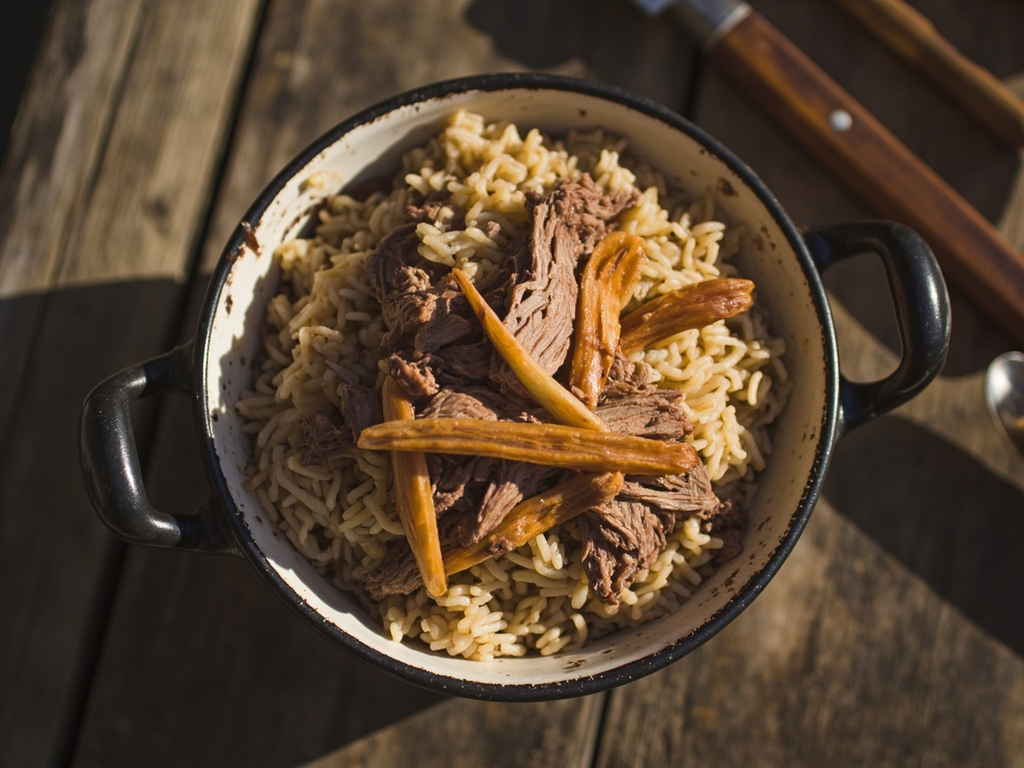
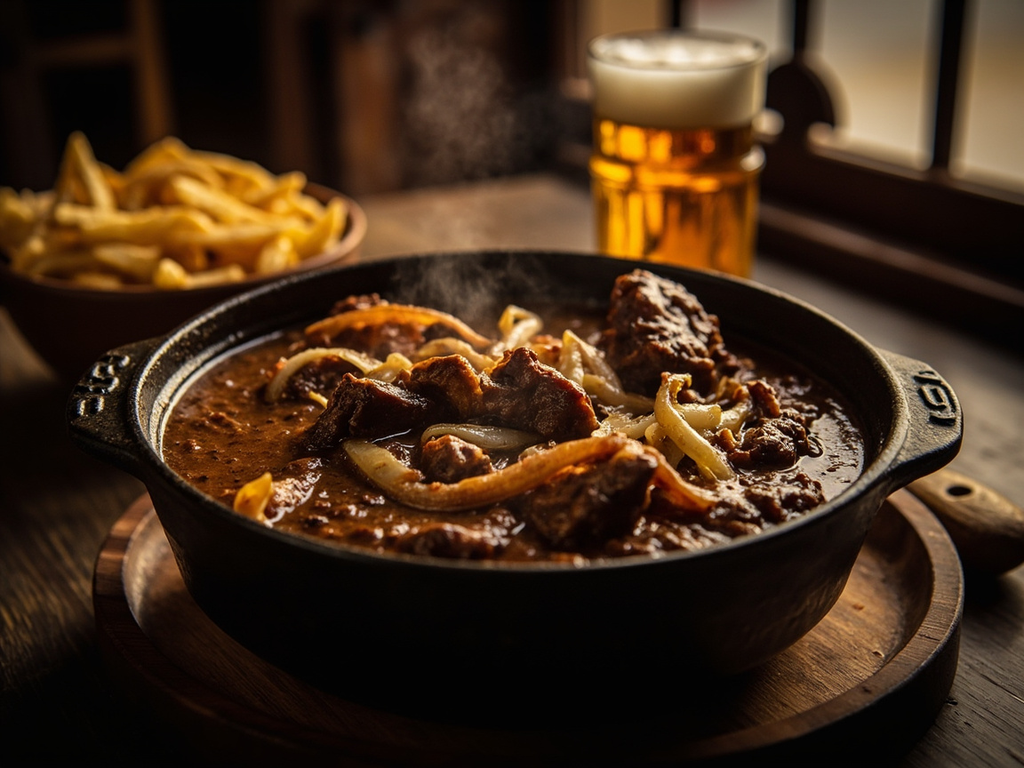
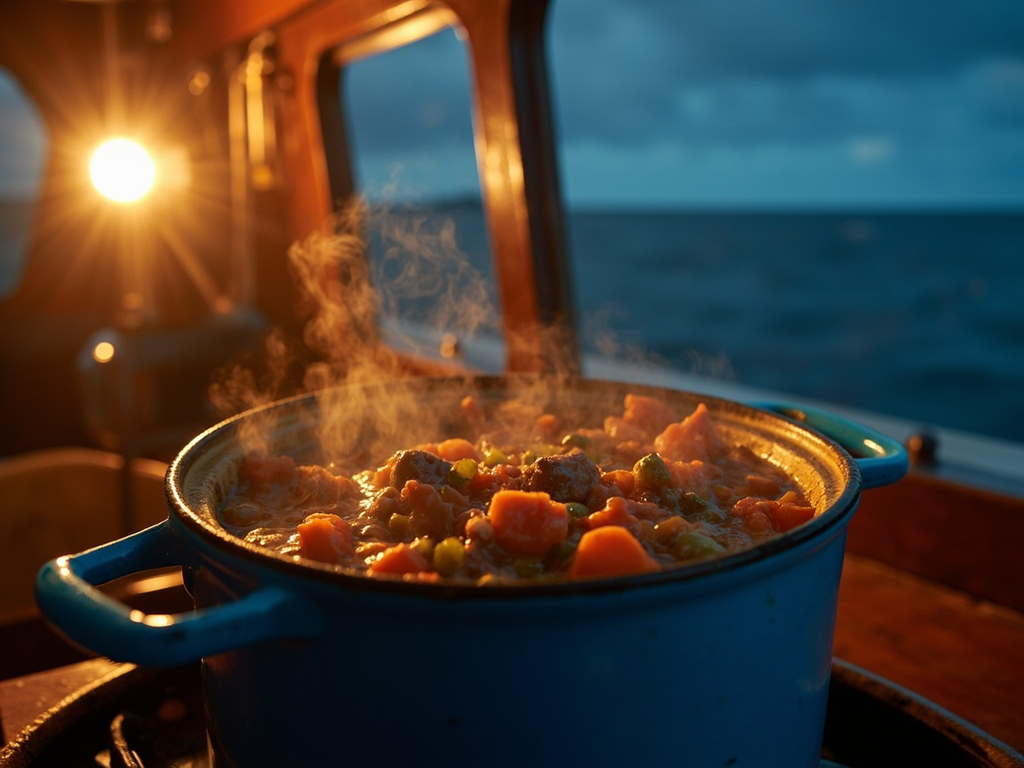
A beef and carrot stew, dried or canned, brought back to life in a little boiling water on the gimballed stove. Comforting, salty, nourishing: the dish that keeps a man on his feet through a night watch.
You know, at sea you don't dine, you refuel. I would heat a little fresh water — every drop is gold on board — and revive my freeze-dried beef and carrots while watching the helm. You eat it standing up, braced against the coachroof, the mess tin dancing, and believe me, after twelve hours of maneuvers it's the best feast in the world. What matters isn't the taste, it's the warmth that sets you straight to go back out into the night.
- •Freeze-dried beef packet (or canned stew) — one ration (preserved protein base)
- •Dehydrated carrots — a handful (quick-rehydrating vegetable)
- •Fresh water — a little in the mess tin (rehydration, carefully measured)
- •Bouillon cube — 1 (salt and umami)
- •Dried onion — a pinch (travel-friendly aromatic)
Rehydrated Beef and Carrot Mess-Tin Stew
A beef and carrot stew, dried or canned, brought back to life in a little boiling water on the gimballed stove. Comforting, salty, nourishing: the dish that keeps a man on his feet through a night watch.
Why this dish? This was the daily fare of Alain Colas sailing solo on the 1972 Transat, which he won aboard Pen Duick IV, renamed Manureva: a freeze-dried or canned meal, revived with boiling fresh water, gulped down standing up between steering corrections when the sea allowed a lull.
You know, at sea you don't dine, you refuel. I would heat a little fresh water — every drop is gold on board — and revive my freeze-dried beef and carrots while watching the helm. You eat it standing up, braced against the coachroof, the mess tin dancing, and believe me, after twelve hours of maneuvers it's the best feast in the world. What matters isn't the taste, it's the warmth that sets you straight to go back out into the night.
Ingredients (period version)
- Freeze-dried beef packet (or canned stew) — one ration (preserved protein base)
- Dehydrated carrots — a handful (quick-rehydrating vegetable)
- Fresh water — a little in the mess tin (rehydration, carefully measured)
- Bouillon cube — 1 (salt and umami)
- Dried onion — a pinch (travel-friendly aromatic)
Ingredients
- Beef for braising (chuck, shank) — 400 g (protein base)
- Carrots — 4 medium (vegetable)
- Onion — 1 (aromatic)
- Beef broth — 50 cl (salt and umami)
- Bay leaf — 1 (flavor)
- Salt, pepper — to taste (seasoning)
Method
- Cut the beef into large cubes and brown them in a pot with a drizzle of oil.
- Add the sliced onion, let it soften, then the carrots cut into rounds.
- Pour in the broth, add the bay leaf, salt and pepper.
- Cover and simmer on low heat for 2 hours, until the meat shreds.
- For the seafaring spirit: serve piping hot, in a deep mess tin, with a spoon, no fuss.
How it was made : In the 1960s-70s, ocean racing borrowed its logistics from polar expeditions: freeze-dried foods, canned goods, rationed fresh water. Everything was heated on a small gimballed stove to keep it level despite the heel. Meals were taken in a few minutes, often standing up.
The contemporary twist : Serve it in a blue enamel sailor's mess tin with a large spoon, and call it "high-seas stew."
Sources : Alain Colas, Cap Horn pour un homme seul, 1974
Alain Colas · Charactorium