 flip
flipRoast Capon with Verjus Sauce
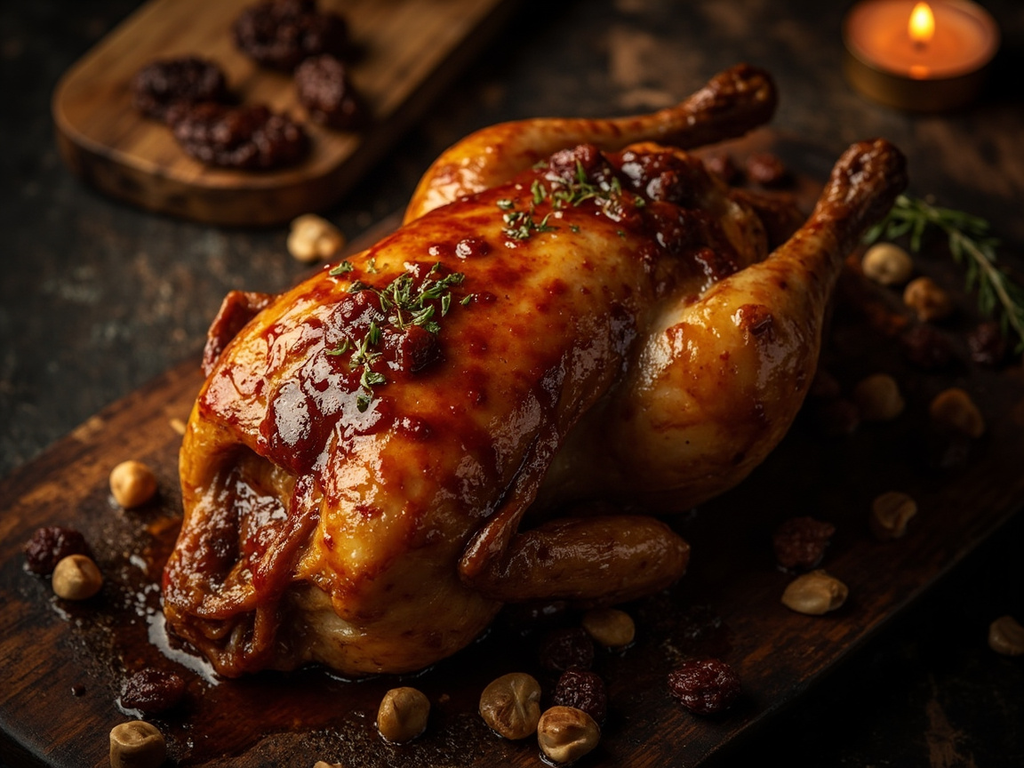
Roast Capon with Verjus Sauce
Why this dish? The rôt is the climax of the court meal, the one served when receiving guests in Célimène's salon. Alceste sits through it despite himself, a gentleman bound by the customs of a world from which he dreams of retreating to his "desert".
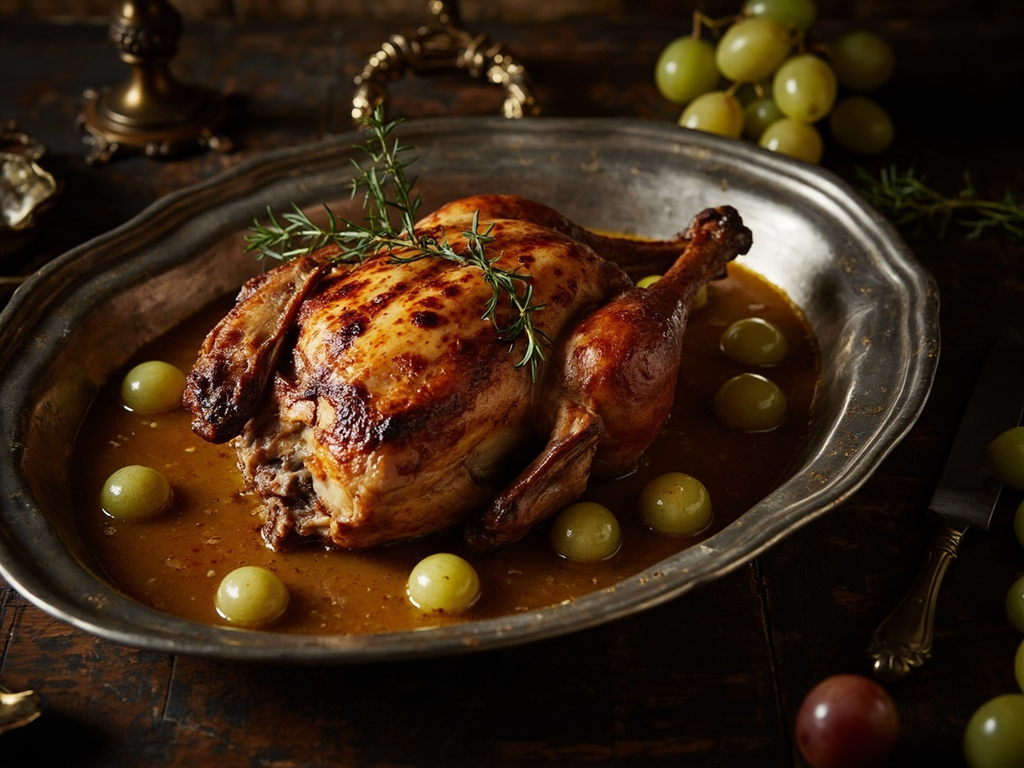
A golden capon roasted on a spit, basted with its own fat, accompanied by a lively verjus sauce spiked with a hint of nutmeg. The quintessential festive meat of the Grand Siècle, generous but honest.
Here then is the capon that must be served when one holds a salon; I submit to it, but without losing myself. Let it turn on the spit, let it be basted with its own fat, and let a dash of verjus be thrown over it, for acidity awakens the flesh as frankness awakens fools. I hate to drown a meat under twenty spices to hide that it is common — mine stands upright, as I do at court. Carve, and do not speak to me while I eat.
- •Capon — a fine one (roast piece)
- •Lard — a few barding strips (cooking fat)
- •Verjus — a glass (acidic sauce)
- •Nutmeg and pepper — a pinch (fine spices)
- •Salt — to taste (seasoning)
Roast Capon with Verjus Sauce
A golden capon roasted on a spit, basted with its own fat, accompanied by a lively verjus sauce spiked with a hint of nutmeg. The quintessential festive meat of the Grand Siècle, generous but honest.
Why this dish? The rôt is the climax of the court meal, the one served when receiving guests in Célimène's salon. Alceste sits through it despite himself, a gentleman bound by the customs of a world from which he dreams of retreating to his "desert".
Here then is the capon that must be served when one holds a salon; I submit to it, but without losing myself. Let it turn on the spit, let it be basted with its own fat, and let a dash of verjus be thrown over it, for acidity awakens the flesh as frankness awakens fools. I hate to drown a meat under twenty spices to hide that it is common — mine stands upright, as I do at court. Carve, and do not speak to me while I eat.
Ingredients (period version)
- Capon — a fine one (roast piece)
- Lard — a few barding strips (cooking fat)
- Verjus — a glass (acidic sauce)
- Nutmeg and pepper — a pinch (fine spices)
- Salt — to taste (seasoning)
Ingredients
- Free-range chicken or capon — 1 (1.8–2 kg) (roast piece)
- Butter — 60 g (basting fat)
- Verjus (or green grape juice / dry white wine + 1 tsp vinegar) — 150 ml (acidic sauce)
- Freshly grated nutmeg — 1 pinch (fine spice)
- Black pepper and salt — to taste (seasoning)
Method
- Season the bird inside and out with salt and pepper, truss it.
- Roast in the oven at 200°C for about 1 hour 15 minutes, basting regularly with melted butter.
- When golden, remove the bird and let rest under foil.
- Deglaze the pan with verjus, scrape up the juices, add nutmeg, and reduce by half.
- Adjust salt, nap the carved bird with the lively sauce, and serve.
How it was made : In the 17th century, verjus — juice pressed from unripe grapes — was the reigning acidity in French kitchens, as lemons were still rare and costly. La Varenne and Nicolas de Bonnefons recommend constant basting of the roast on the spit, a technique that gave the centerpiece of the feast its golden skin.
The contemporary twist : If you lack a spit, low-temperature roasting followed by a blast under the broiler gives the same golden skin; add a few fresh grapes burst into the sauce.
Sources : François Pierre de La Varenne, Le Cuisinier françois, 1651 · Nicolas de Bonnefons, Les Délices de la campagne, 1654
Alceste · Charactorium