 flip
flipKeeping Quince Marmalade
Keeping Quince Marmalade
Why this dish? During his prudent exile in the United Provinces, in Amsterdam, Locke lived close to Dutch and English bourgeois kitchens, where autumn fruits were preserved to last the winter. Firm quince paste, which keeps for months, was the typical stored sweetmeat in the careful houses where he lodged.
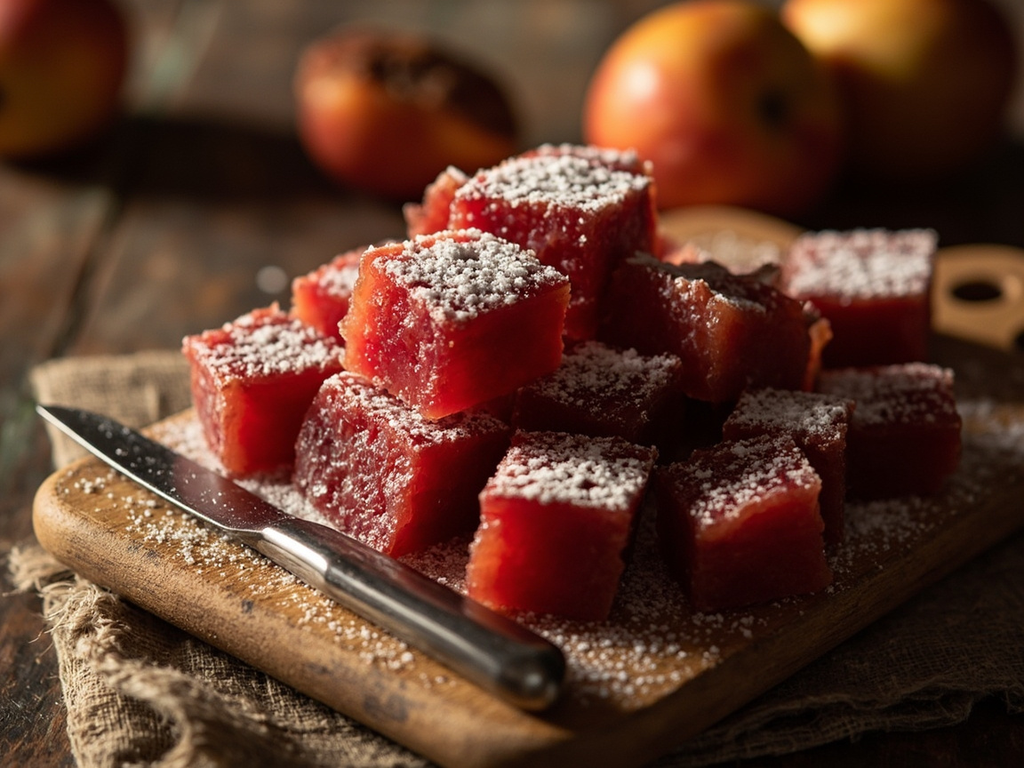
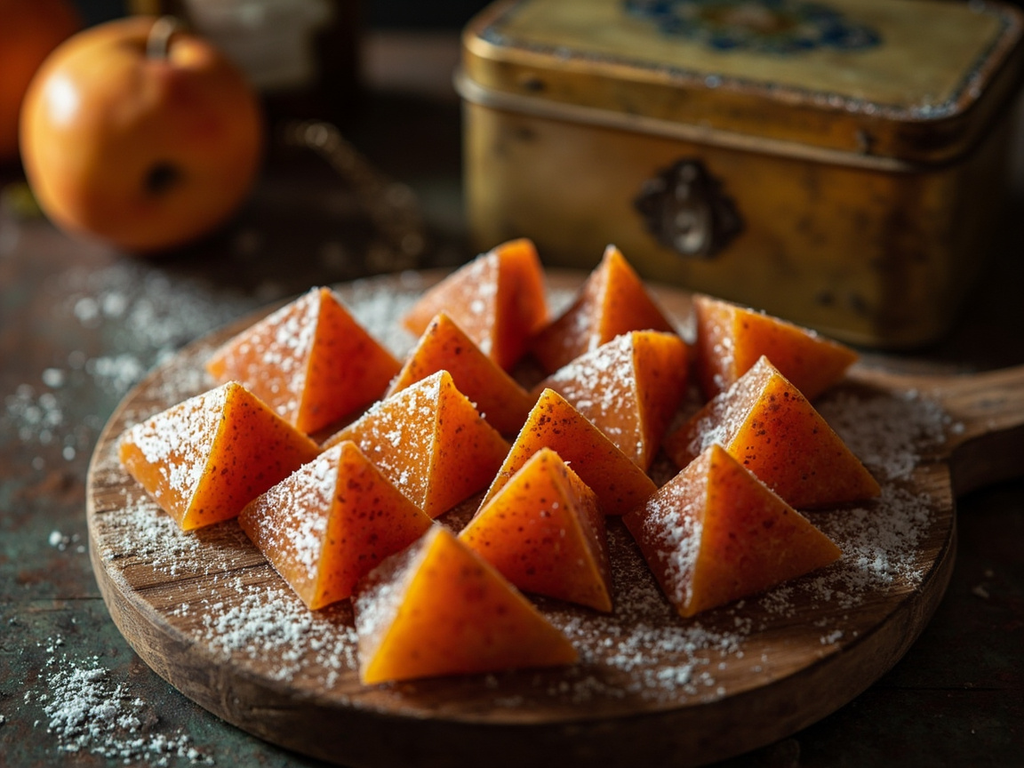
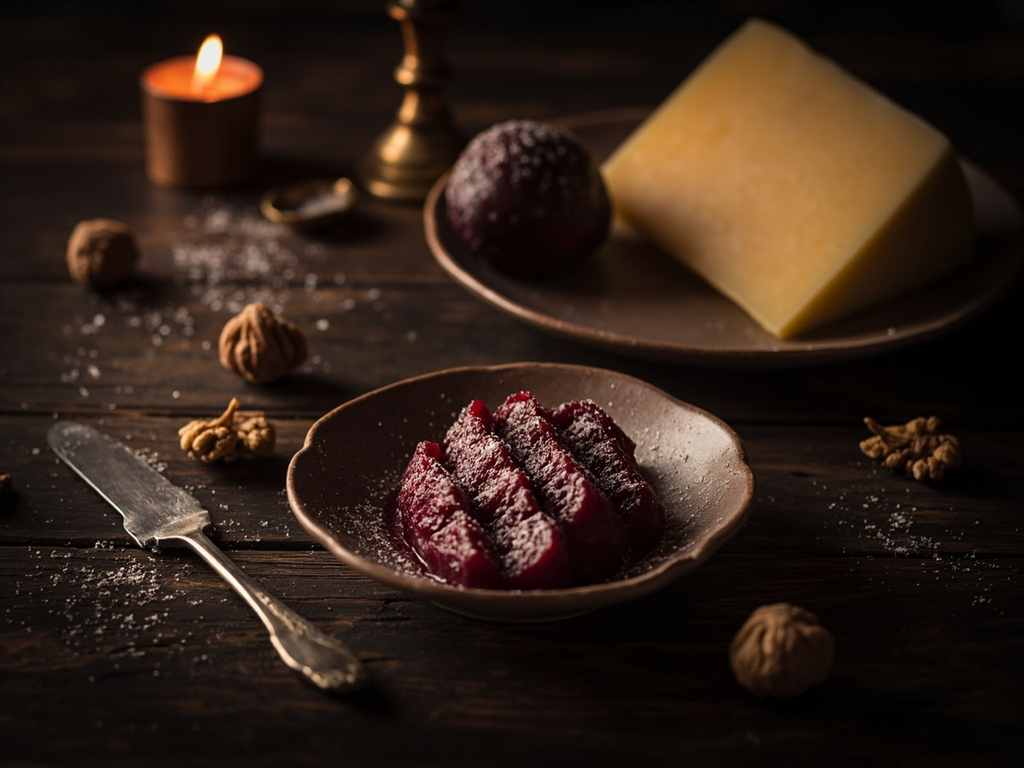
A dense, translucent fruit paste made from quinces long boiled with sugar until it sets firm. Tart, fragrant, it keeps all winter and is cut into perfumed diamonds.
During my years in the Netherlands, far from England and its storms, I learned from housewives the art of keeping fruits beyond their season. One cooks the quince, that tart and fragrant fruit, very long with its weight of sugar, until the paste thickens and takes on the colour of a dark ruby under the spoon. Poured into boxes and dried, it keeps for months, and one cuts a small square to close a meal or comfort a traveller. Prudence and patience: two virtues that jam teaches as well as philosophy.
- •Ripe quinces — several, well-scented (base fruit)
- •Sugar — about the weight of the pulp (preservation and sweetness)
- •Water — enough to cook the fruit (cooking)
- •Rose water (optional) — a few drops (fashionable perfume)
Keeping Quince Marmalade
A dense, translucent fruit paste made from quinces long boiled with sugar until it sets firm. Tart, fragrant, it keeps all winter and is cut into perfumed diamonds.
Why this dish? During his prudent exile in the United Provinces, in Amsterdam, Locke lived close to Dutch and English bourgeois kitchens, where autumn fruits were preserved to last the winter. Firm quince paste, which keeps for months, was the typical stored sweetmeat in the careful houses where he lodged.
During my years in the Netherlands, far from England and its storms, I learned from housewives the art of keeping fruits beyond their season. One cooks the quince, that tart and fragrant fruit, very long with its weight of sugar, until the paste thickens and takes on the colour of a dark ruby under the spoon. Poured into boxes and dried, it keeps for months, and one cuts a small square to close a meal or comfort a traveller. Prudence and patience: two virtues that jam teaches as well as philosophy.
Ingredients (period version)
- Ripe quinces — several, well-scented (base fruit)
- Sugar — about the weight of the pulp (preservation and sweetness)
- Water — enough to cook the fruit (cooking)
- Rose water (optional) — a few drops (fashionable perfume)
Ingredients
- Quinces — 1 kg (fruit)
- Sugar — about 700 g (weight of cooked pulp) (preservation)
- Lemon juice — 1 tbsp (set and brightness)
- Rose water — 1/2 tsp (optional) (perfume)
Method
- Peel, core and chop the quinces, cook them in water until very tender.
- Drain and purée the pulp finely, weigh it and add about its weight in sugar.
- Cook over low heat, stirring constantly, for 30 to 45 minutes: the paste thickens, darkens and pulls away from the bottom.
- Add the lemon juice (and rose water) at the end of cooking.
- Spread 1.5 cm thick in a lined dish, let dry for 1 to 2 days, then cut into diamonds and store in a box.
How it was made : Quince paste—ancestor of 'marmalade' in its original sense—was a major preserved sweetmeat in 16th-17th century Europe, served among the 'banqueting stuffs' at the end of prestigious meals. Sugar, still costly, acted as a preservative; the paste was moulded into shapes, sometimes gilded for grand occasions. English and Dutch made winter stores of it.
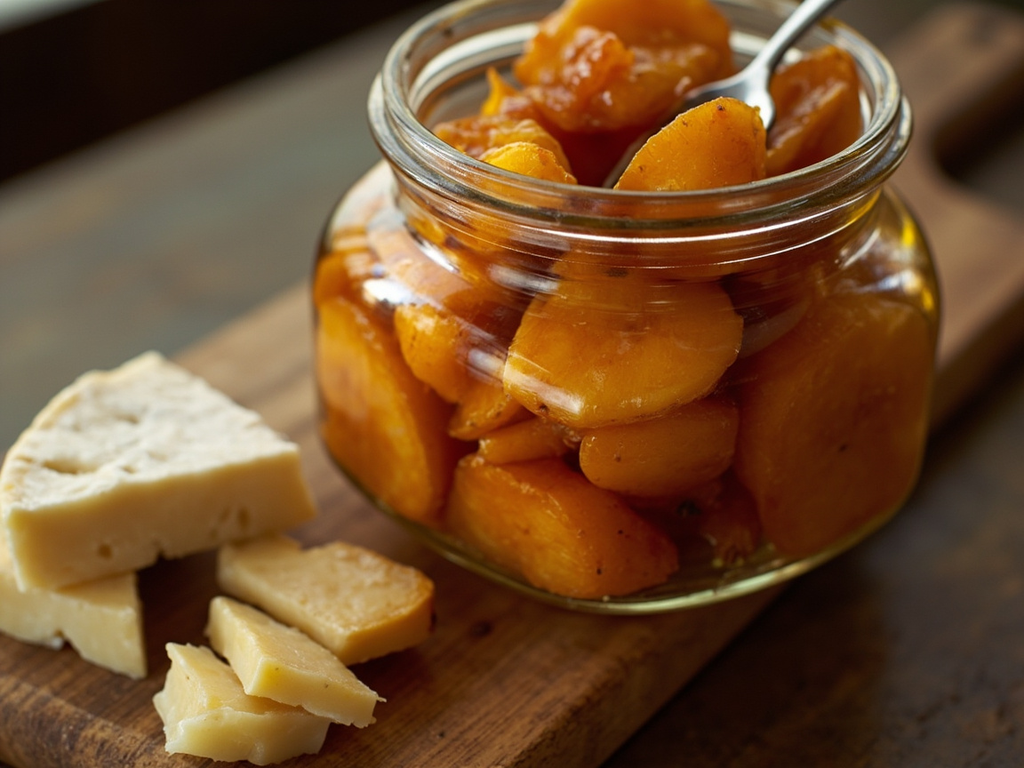
The contemporary twist : Serve the diamonds with a hard cheese and a few walnuts: the quince-cheese pairing, direct heir to Stuart desserts, still works beautifully on a modern board.
John Locke · Charactorium