 flip
flipSaffron and Verjus Roast Capon for a Feast Day
Saffron and Verjus Roast Capon for a Feast Day
Why this dish? On meat days — Easter, the election of a pope, the reception of a legate or prince — Alexander IV's table had to be magnificent. The saffron-gilded capon, bathed in verjus and fine spices, was the dish of honor that affirmed the dignity of the Apostolic See against the pomp of secular courts.
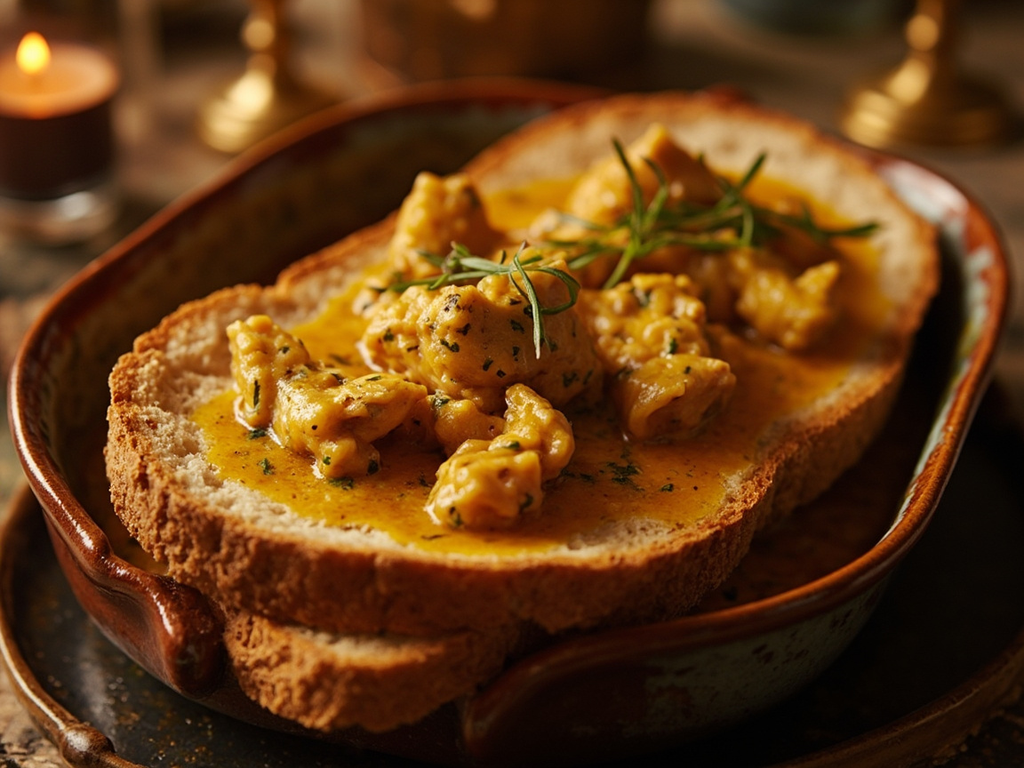
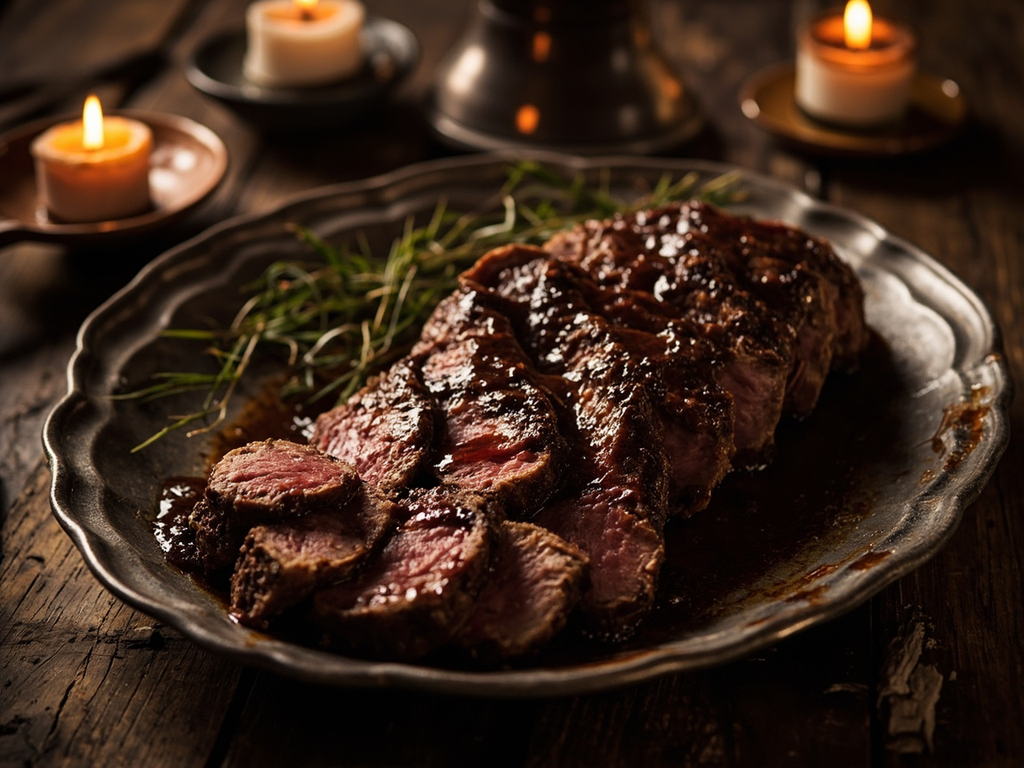
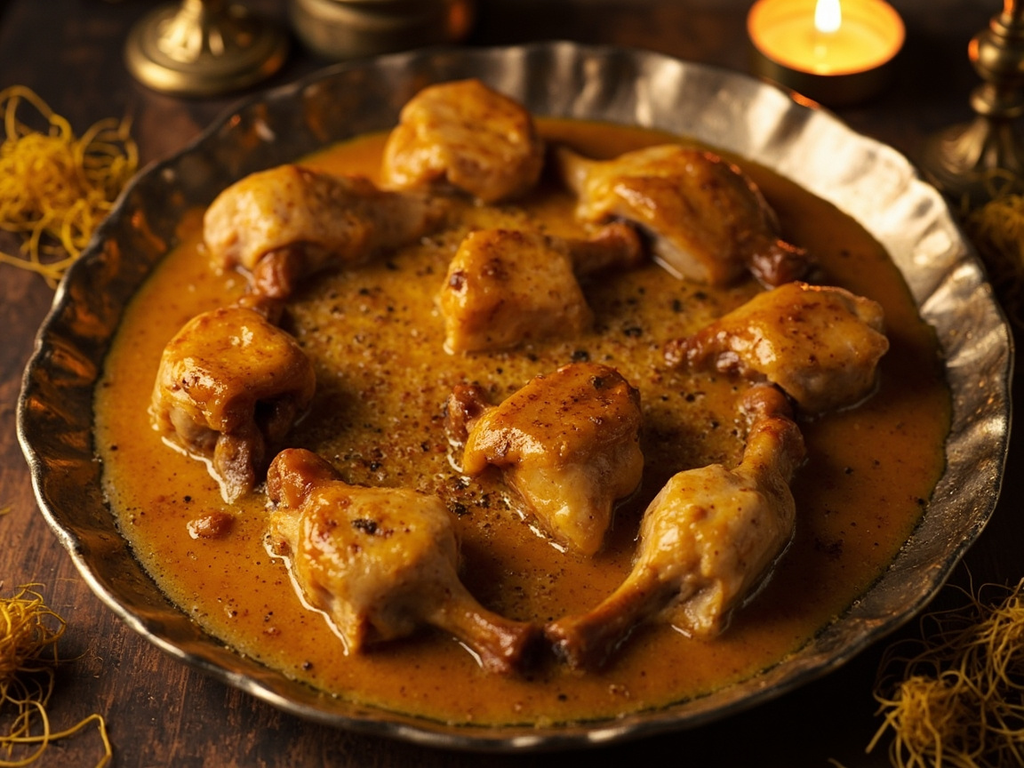
A roast capon then coated in a golden saffron sauce, perfumed with ginger and cinnamon, sharpened with verjus. The color of gold and the fragrance of rare spices made it the centerpiece of ecclesiastical banquets.
On those days when the Church celebrates in joy, We do not refuse the flesh, and the table must bear witness to the dignity that God has entrusted to Us. Choose a fine capon, roast it to perfection, then cover it with a sauce where saffron lends gold, ginger warmth, and verjus that tart point that awakens the tongue. Fear not to add spice: it is the gift that merchants bring from distant lands, and to honor it at our table is to honor Creation in its variety. Serve it hot, and give thanks.
- •Capon — one, well fattened (ceremonial meat)
- •Saffron — a pinch (golden color, signature)
- •Ginger — to taste (warm spice)
- •Cinnamon — a little (sweet spice)
- •Verjus — a bowl (acidity (juice of unripe grapes))
- •Pounded almonds — a handful (sauce thickener)
- •Toasted breadcrumbs — a little (thickener)
Saffron and Verjus Roast Capon for a Feast Day
A roast capon then coated in a golden saffron sauce, perfumed with ginger and cinnamon, sharpened with verjus. The color of gold and the fragrance of rare spices made it the centerpiece of ecclesiastical banquets.
Why this dish? On meat days — Easter, the election of a pope, the reception of a legate or prince — Alexander IV's table had to be magnificent. The saffron-gilded capon, bathed in verjus and fine spices, was the dish of honor that affirmed the dignity of the Apostolic See against the pomp of secular courts.
On those days when the Church celebrates in joy, We do not refuse the flesh, and the table must bear witness to the dignity that God has entrusted to Us. Choose a fine capon, roast it to perfection, then cover it with a sauce where saffron lends gold, ginger warmth, and verjus that tart point that awakens the tongue. Fear not to add spice: it is the gift that merchants bring from distant lands, and to honor it at our table is to honor Creation in its variety. Serve it hot, and give thanks.
Ingredients (period version)
- Capon — one, well fattened (ceremonial meat)
- Saffron — a pinch (golden color, signature)
- Ginger — to taste (warm spice)
- Cinnamon — a little (sweet spice)
- Verjus — a bowl (acidity (juice of unripe grapes))
- Pounded almonds — a handful (sauce thickener)
- Toasted breadcrumbs — a little (thickener)
Ingredients
- Free-range chicken (or capon) — 1 (1.5–2 kg) (ceremonial meat)
- Saffron — 1 pinch (color and fragrance)
- Ground ginger — 1 tsp (warm spice)
- Cinnamon — 1/2 tsp (sweet spice)
- Verjus — 150 ml (or green grape juice + squeeze of lemon) (acidity)
- Ground almonds — 40 g (sauce thickener)
- Chicken broth — 250 ml (sauce base)
- Salt — to taste (seasoning)
Method
- Season the poultry and roast at 180 °C until well browned (about 1 h 15 min).
- Infuse the saffron in warm broth.
- In a saucepan, combine the saffron broth, verjus, ginger, and cinnamon; bring to a simmer.
- Thicken the sauce with ground almonds, let it gently reduce for 10 min, stirring.
- Carve the poultry, coat with the golden sauce, and serve immediately, very hot.
How it was made : Medieval sauces were thickened with bread or almonds, never with roux: the 'roux' did not yet exist. The sweet-sour balance dominated by verjus and the generous use of saffron characterize the haute cuisine of the 13th century, where the color of gold signaled the prestige of the guest.
The contemporary twist : Plate the shredded poultry on its saffron sauce in a 'dry risotto' style with crushed toasted bread: an Italian wink to a cardinal's dish.
Sources : Liber de coquina (southern Italy, late 13th c.) · Tractatus de modo preparandi et condiendi omnia cibaria
Alexander IV · Charactorium