 flip
flipBuckwheat Blini with Caviar and Smetana
Buckwheat Blini with Caviar and Smetana
Why this dish? In *Eugene Onegin*, Pushkin describes with relish the splendors of the St. Petersburg table. Blini with caviar, laid on the zakuski table with ice-cold vodka, were the luxury of the noble receptions he frequented between duels and poems.
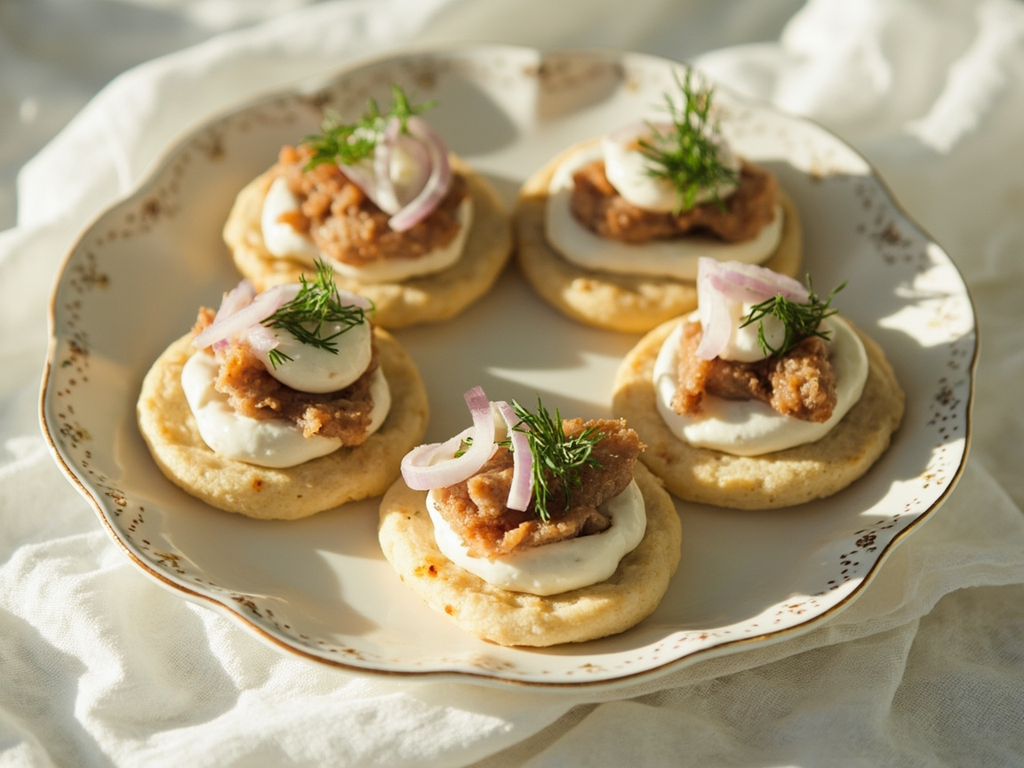
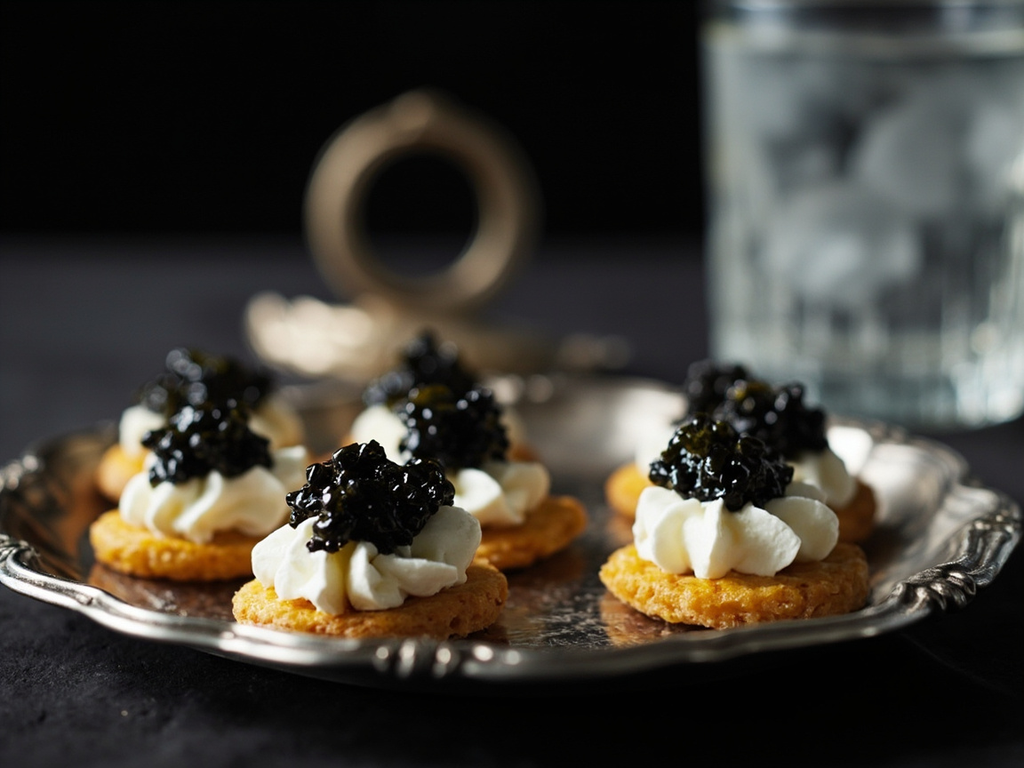
Thin, yeasted buckwheat pancakes, golden and fluffy, topped with a dollop of sour cream and sturgeon roe from the Neva. The showpiece bite that opens a festive Russian meal.
Ah, there was the splendor I loved in St. Petersburg! The zakuski table was laid, the vodka brought in ice, and these warm blini crowned with a tear of smetana and the black caviar of our sturgeons. You folded them with your fingertips, swallowed them in one gulp between witty remarks — and the evening flew by, light as a quatrain. What can I say? I have always had a taste for keen pleasures and things that do not last.
- •Buckwheat flour — two bowls (batter base)
- •Sourdough or brewer's yeast — a little (leavening)
- •Milk — as needed (liquid)
- •Eggs — a few (binder)
- •Smetana (sour cream) — a bowl (topping)
- •Sturgeon caviar — according to one's purse (noble garnish)
- •Melted butter — for the pan (cooking)
Buckwheat Blini with Caviar and Smetana
Thin, yeasted buckwheat pancakes, golden and fluffy, topped with a dollop of sour cream and sturgeon roe from the Neva. The showpiece bite that opens a festive Russian meal.
Why this dish? In *Eugene Onegin*, Pushkin describes with relish the splendors of the St. Petersburg table. Blini with caviar, laid on the zakuski table with ice-cold vodka, were the luxury of the noble receptions he frequented between duels and poems.
Ah, there was the splendor I loved in St. Petersburg! The zakuski table was laid, the vodka brought in ice, and these warm blini crowned with a tear of smetana and the black caviar of our sturgeons. You folded them with your fingertips, swallowed them in one gulp between witty remarks — and the evening flew by, light as a quatrain. What can I say? I have always had a taste for keen pleasures and things that do not last.
Ingredients (period version)
- Buckwheat flour — two bowls (batter base)
- Sourdough or brewer's yeast — a little (leavening)
- Milk — as needed (liquid)
- Eggs — a few (binder)
- Smetana (sour cream) — a bowl (topping)
- Sturgeon caviar — according to one's purse (noble garnish)
- Melted butter — for the pan (cooking)
Ingredients
- Buckwheat flour — 120 g (base)
- Wheat flour — 80 g (flexibility)
- Warm milk — 350 ml (liquid)
- Baker's yeast — 5 g (leavening)
- Eggs — 2 (yolks + stiff whites) (binder and fluffiness)
- Sour cream (smetana) — 150 g (topping)
- Caviar or trout/herring roe — 50 g (garnish)
- Butter — 30 g (cooking)
Method
- Dissolve the yeast in warm milk, add the flours and yolks, cover and let rise for 1 to 1½ hours until frothy.
- Gently fold in the stiffly beaten egg whites just before cooking.
- Cook small pancakes in butter in a hot skillet, 1-2 minutes per side, until golden and lacy.
- Keep blini warm under a cloth.
- Top each blini with a spoonful of smetana and a little caviar, serve immediately.
How it was made : The blini has far older, ritual origins: they were gorged on in spring at Maslenitsa (Butter Week), where their round, golden shape evoked the returning sun. On the aristocratic 19th-century table, they became the natural vehicle for caviar, which was abundant and relatively accessible as long as sturgeon populated the Neva and Volga.
The contemporary twist : Lacking caviar, orange trout roe and a touch of chopped dill make an equally elegant — and more wallet-friendly — bite.
Sources : A. Pushkin, *Eugene Onegin*, ch. I — descriptions of St. Petersburg feasts · Elena Molokhovets, *Подарок молодым хозяйкам*, 1861
Alexander Pushkin · Charactorium