 flip
flipFish Koulibiak
Fish Koulibiak
Why this dish? Chekhov was a passionate fisherman: at Melikhovo he spent hours by the pond, and fresh fish was his joy. Koulibiak, this festive pie filled with fish, crowned Sundays and visits from friends like Tolstoy or the actors of the Art Theatre.
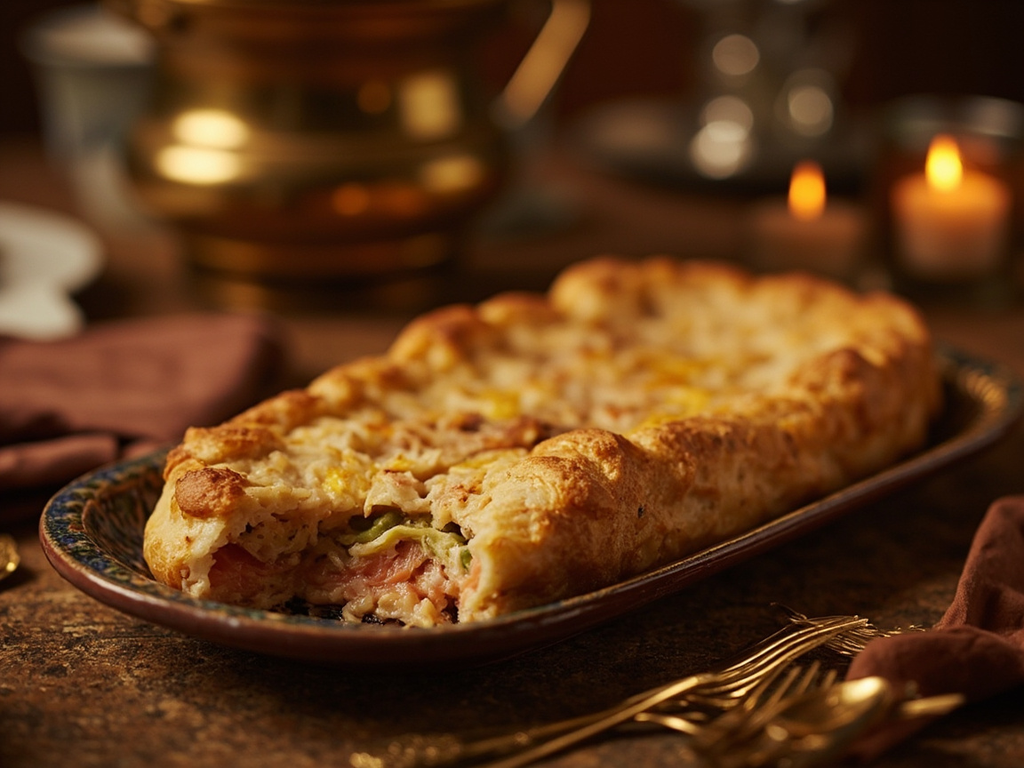
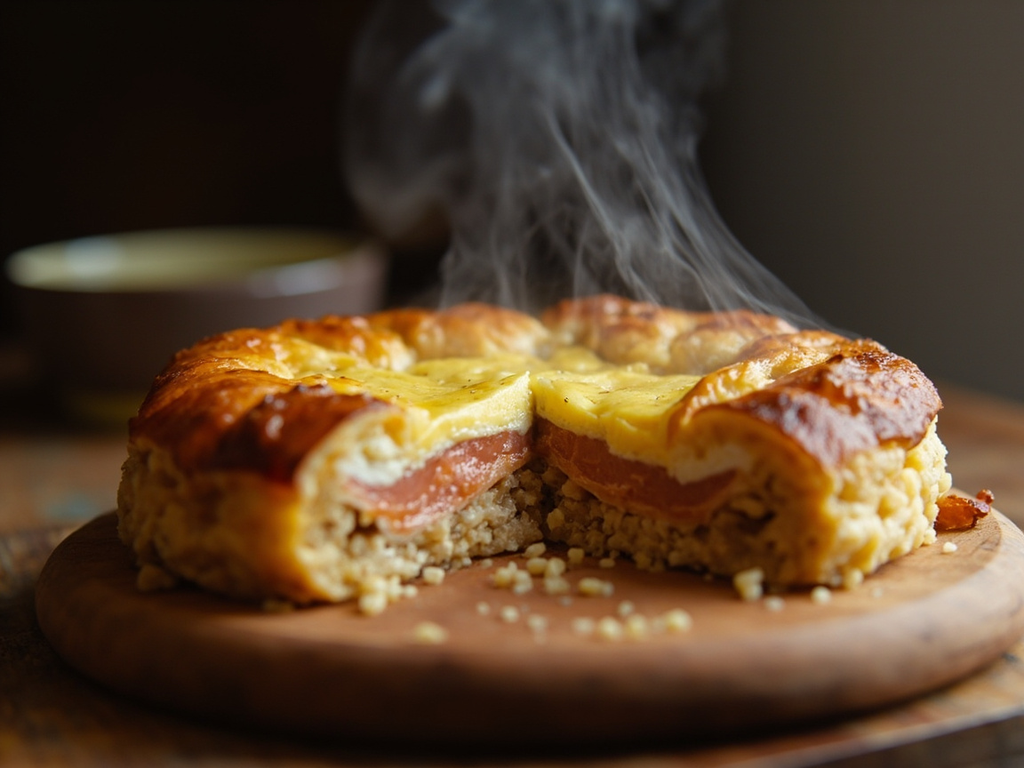
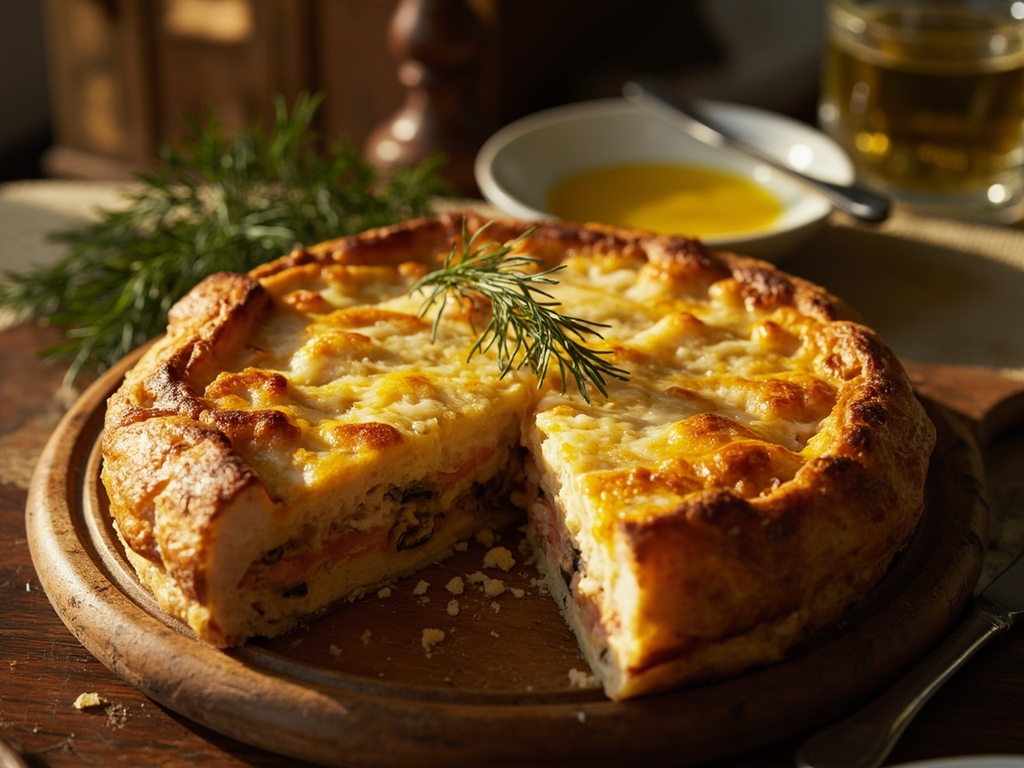
A majestic raised-crust pie, golden from the oven, enclosing layers of fish, buckwheat or rice, hard-boiled eggs and melted onions. It is sliced at the table into wide portions that reveal their strata: a prestigious, warm and generous dish.
Ah, koulibiak! When you're expecting guests, that's what you put in the middle of the table, golden like a summer evening on the Volga. I liked to put in the fish I had pulled from the pond myself—there is no better seasoning than the patience of a morning spent with rod in hand. You cut it in front of the guests, the steam rises, everyone falls silent for a second: that, I believe, is the only moment when my visitors stop discoursing on the future of Russia. Eat it while it's hot; the rest can wait.
- •Butter-enriched raised dough — one large sheet (envelope)
- •Sturgeon or salmon fillet — a nice piece (main filling)
- •Buckwheat (kasha) or rice — one bowl cooked (absorbent layer)
- •Hard-boiled eggs — several (filling)
- •Onions melted in butter — two (aromatic)
- •Wild mushrooms — a handful (umami)
- •Melted butter, dill — to taste (binding and flavor)
Fish Koulibiak
A majestic raised-crust pie, golden from the oven, enclosing layers of fish, buckwheat or rice, hard-boiled eggs and melted onions. It is sliced at the table into wide portions that reveal their strata: a prestigious, warm and generous dish.
Why this dish? Chekhov was a passionate fisherman: at Melikhovo he spent hours by the pond, and fresh fish was his joy. Koulibiak, this festive pie filled with fish, crowned Sundays and visits from friends like Tolstoy or the actors of the Art Theatre.
Ah, koulibiak! When you're expecting guests, that's what you put in the middle of the table, golden like a summer evening on the Volga. I liked to put in the fish I had pulled from the pond myself—there is no better seasoning than the patience of a morning spent with rod in hand. You cut it in front of the guests, the steam rises, everyone falls silent for a second: that, I believe, is the only moment when my visitors stop discoursing on the future of Russia. Eat it while it's hot; the rest can wait.
Ingredients (period version)
- Butter-enriched raised dough — one large sheet (envelope)
- Sturgeon or salmon fillet — a nice piece (main filling)
- Buckwheat (kasha) or rice — one bowl cooked (absorbent layer)
- Hard-boiled eggs — several (filling)
- Onions melted in butter — two (aromatic)
- Wild mushrooms — a handful (umami)
- Melted butter, dill — to taste (binding and flavor)
Ingredients
- Raised dough (or all-butter puff pastry) — 2 rolls (envelope)
- Skinless salmon fillet — 500 g (main filling)
- Cooked white rice — 200 g (raw weight) (absorbent layer)
- Hard-boiled eggs — 4 (filling)
- Onions — 2, sliced (aromatic)
- Button mushrooms or porcini — 200 g (umami)
- Butter — 60 g (binding)
- Fresh dill — 1 bunch (flavor)
- Egg yolk — 1, for glazing (glaze)
Method
- Melt the onions in butter without browning, add the mushrooms and let the water evaporate. Season with salt and pepper, flavor with dill.
- Mix the cooked rice with half of this sauté and the chopped hard-boiled eggs.
- Roll out a first sheet of dough. Layer the rice mixture, then the salmon in chunks, the remaining mushrooms, then more rice.
- Cover with the second sheet, seal the edges well and form a nice crimp. Cut two steam vents.
- Glaze with egg yolk and bake at 190 °C for about 35–40 min, until the crust is deep golden.
- Let rest 10 min, then slice at the table, drizzling each piece with melted butter.
How it was made : Luxury koulibiak was filled with vesiga, the dried spinal marrow of sturgeon, and enriched with thin pancakes (blinchiki) layered between the fillings to absorb juices without sogging the crust. It was a dish of grand houses, but also of inns that welcomed travelers.
The contemporary twist : Present it on a raw wooden board, sliced on the bias to show the layers, with a small bowl of dill-infused melted butter for drizzling.
Sources : Elena Molokhovets, A Gift to Young Housewives (Подарок молодым хозяйкам), 1861 · William Pokhlebkin, History of Russian Cuisine
Anton Chekhov · Charactorium