 flip
flipCodonyat — Aragonese Quince Paste
Codonyat — Aragonese Quince Paste
Why this dish? An Iberian specialty par excellence, candied quince (codony) connected Alexander VI to his Valencian homeland. Prepared in autumn, quince paste kept for months: it was displayed on the credence at banquets and given as gifts — a taste of Aragon at the heart of Rome.
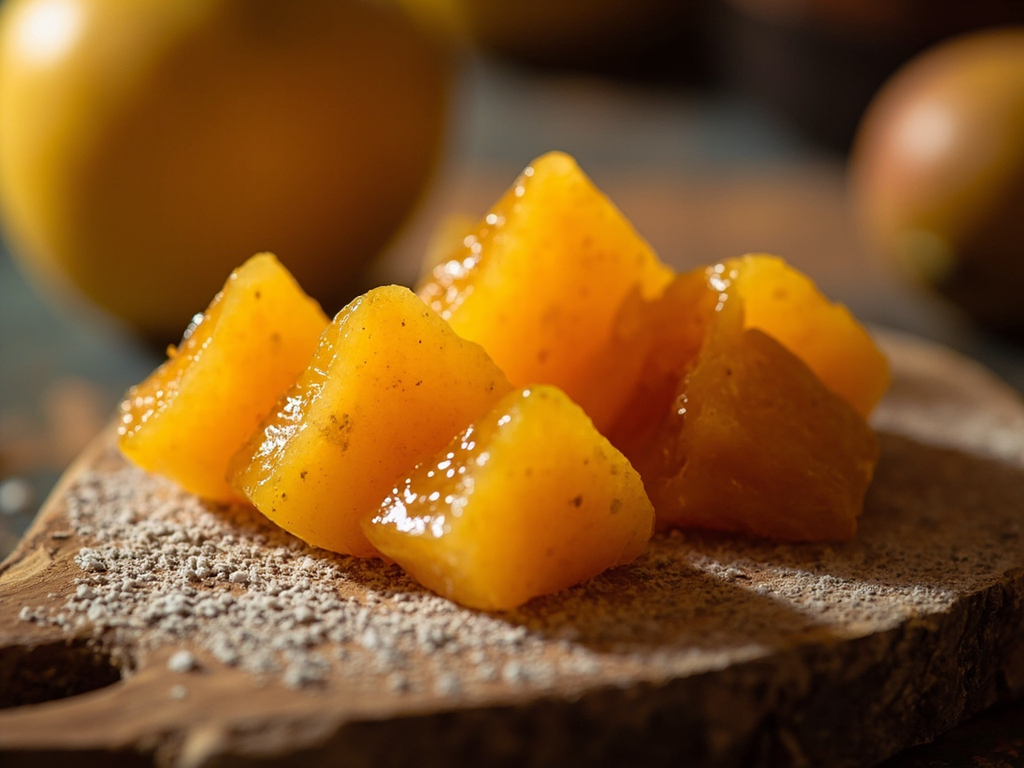
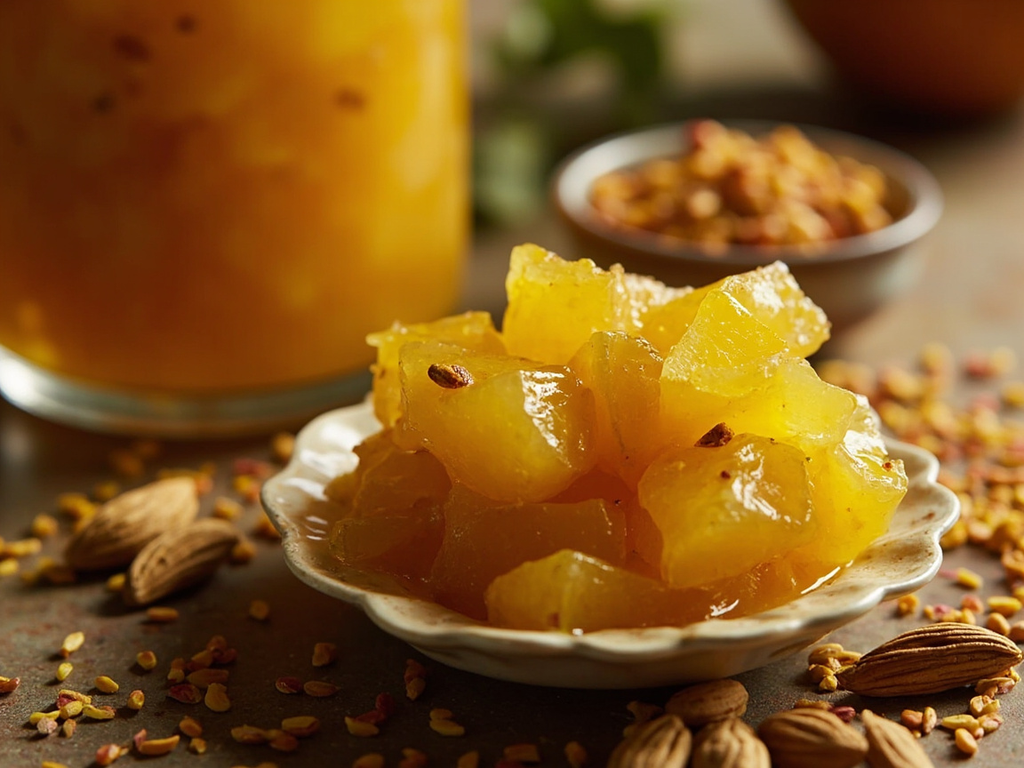
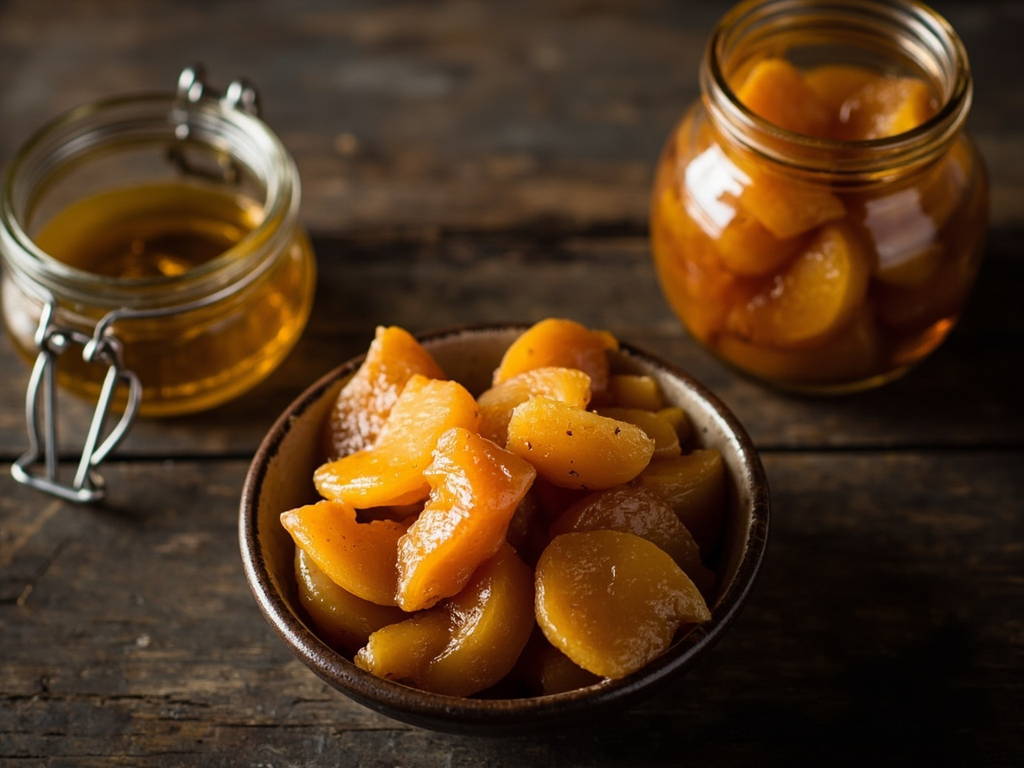
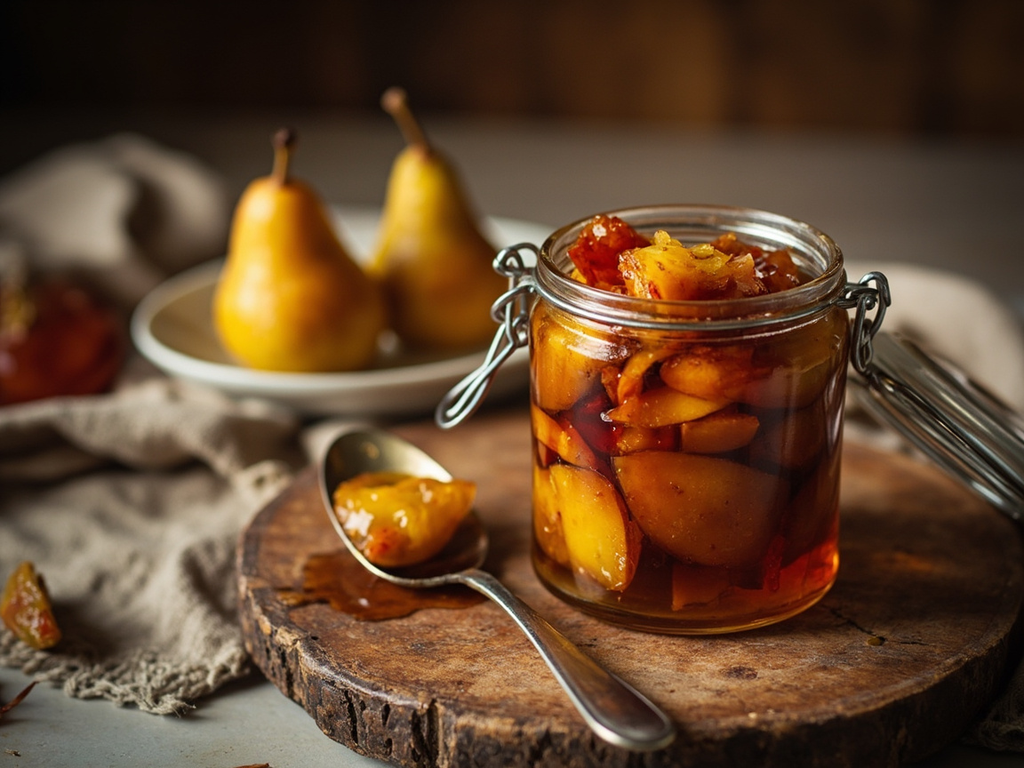
Quince pulp slowly cooked with sugar (or honey) until it forms a firm, amber, translucent paste, which is left to set then cut into diamonds. Tart and fragrant, it keeps for a very long time.
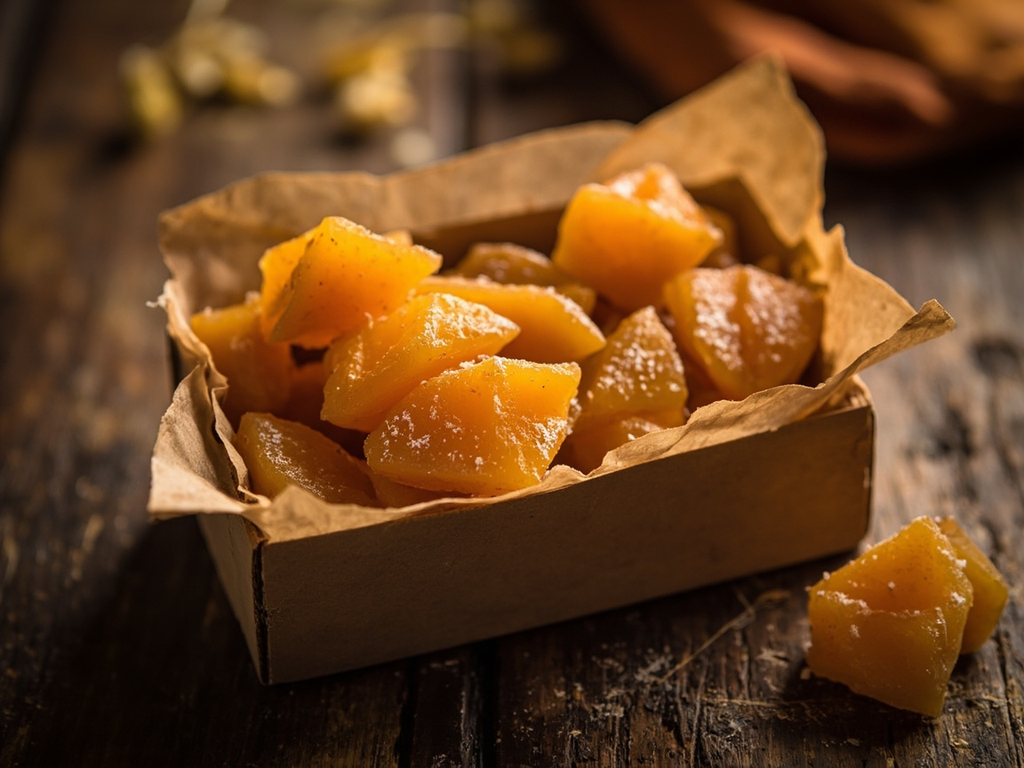
The quince is a fruit of difficult humor — hard, astringent, not edible raw — but he who knows how to tame it obtains a treasure. At home, in Aragon, we cook it in autumn with plenty of sugar, stirring, stirring until the hand tires, and the paste takes on a ruby color. Cut it into diamonds, store them in a wooden box: they will last through winter and keep you company when lean days weigh. I had them sent as gifts: nothing wins a heart better than a little well-placed sweetness.
- •Ripe quinces — as many as you have (base)
- •Sugar or honey — nearly equal weight to pulp (sweetness and preservation)
- •Rose water — a dash (perfume (optional))
- •Cinnamon — a pinch (spice)
Codonyat — Aragonese Quince Paste
Quince pulp slowly cooked with sugar (or honey) until it forms a firm, amber, translucent paste, which is left to set then cut into diamonds. Tart and fragrant, it keeps for a very long time.
Why this dish? An Iberian specialty par excellence, candied quince (codony) connected Alexander VI to his Valencian homeland. Prepared in autumn, quince paste kept for months: it was displayed on the credence at banquets and given as gifts — a taste of Aragon at the heart of Rome.
The quince is a fruit of difficult humor — hard, astringent, not edible raw — but he who knows how to tame it obtains a treasure. At home, in Aragon, we cook it in autumn with plenty of sugar, stirring, stirring until the hand tires, and the paste takes on a ruby color. Cut it into diamonds, store them in a wooden box: they will last through winter and keep you company when lean days weigh. I had them sent as gifts: nothing wins a heart better than a little well-placed sweetness.
Ingredients (period version)
- Ripe quinces — as many as you have (base)
- Sugar or honey — nearly equal weight to pulp (sweetness and preservation)
- Rose water — a dash (perfume (optional))
- Cinnamon — a pinch (spice)
Ingredients
- Quinces — 1 kg (base)
- Sugar — 700 to 800 g (≈ 80% of pulp weight) (sweetness and preservation)
- Lemon juice — 1 tbsp (acidity, helps setting)
- Cinnamon — 1 pinch (spice)
- Rose water — 1 tsp (optional) (perfume)
Method
- Wash quinces, cut into quarters (skin and seeds reserved in a cloth for pectin), and cook in a little water until tender.
- Peel, remove cores, then puree the flesh finely.
- Weigh the pulp and add about 80% of its weight in sugar, plus lemon juice and cinnamon.
- Cook over medium heat, stirring CONSTANTLY, for 30-45 min: the paste thickens, darkens, and pulls away from the pot bottom.
- Pour into a lined mold, smooth the top, and let dry/set for 24-48 h.
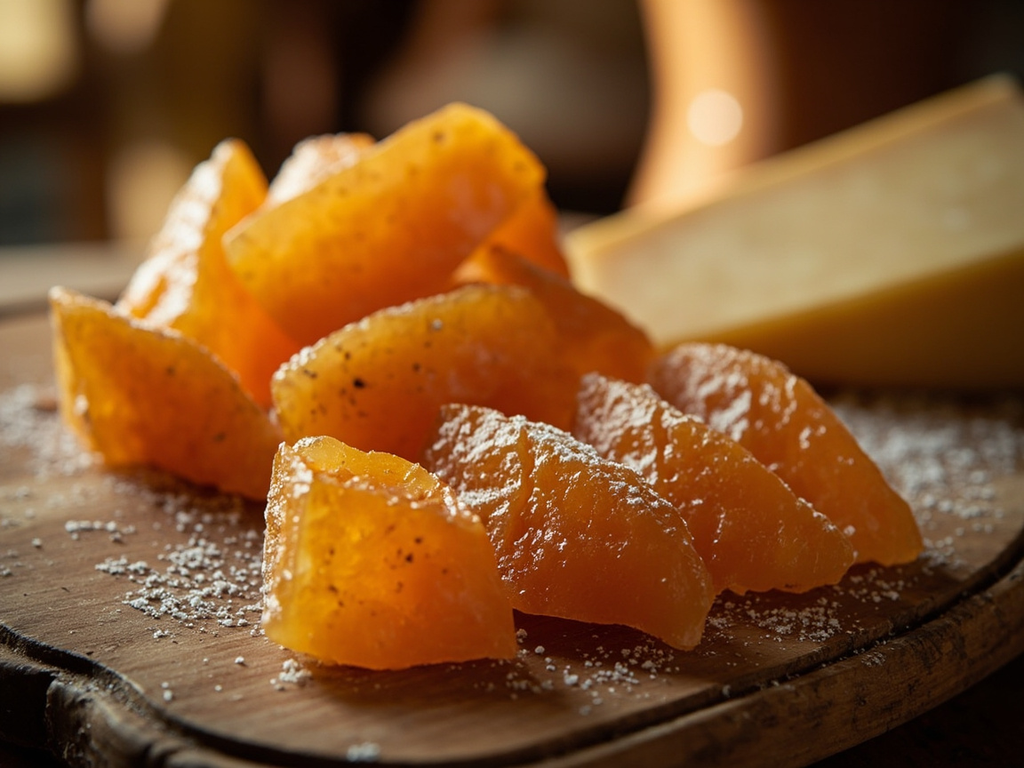
- Cut into diamonds, optionally roll in a little sugar; store in an airtight container.
How it was made : Candied quince (codony, codoñate, later membrillo) is attested from the Middle Ages in Catalan-Aragonese cuisine and among apothecaries (French cotignac is a cousin). It was cooked in large copper cauldrons, stirred with a wooden spatula for hours; the quantity of sugar or honey ensured preservation for months — precious before artificial refrigeration.
The contemporary twist : Cut into thin diamonds served with aged sheep cheese, as a “Renaissance” appetizer board — the ancestor of the quince-cheese duo we still love.
Sources : Llibre de Sent Soví (XIVe s.) · Ruperto de Nola, Llibre del Coch (éd. 1520)
Alexander VI · Charactorium