 flip
flipKvashenaya Kapusta — Lacto-Fermented Cabbage
Kvashenaya Kapusta — Lacto-Fermented Cabbage
Why this dish? In Leonov's native Siberia, winter is long and without fresh vegetables. Fermented cabbage in large jars was THE vitamin reserve for the whole family, crunchy and tangy until spring. It is the basic zakuska of every Russian table, and a preservation food dear to the peasant world from which he came.
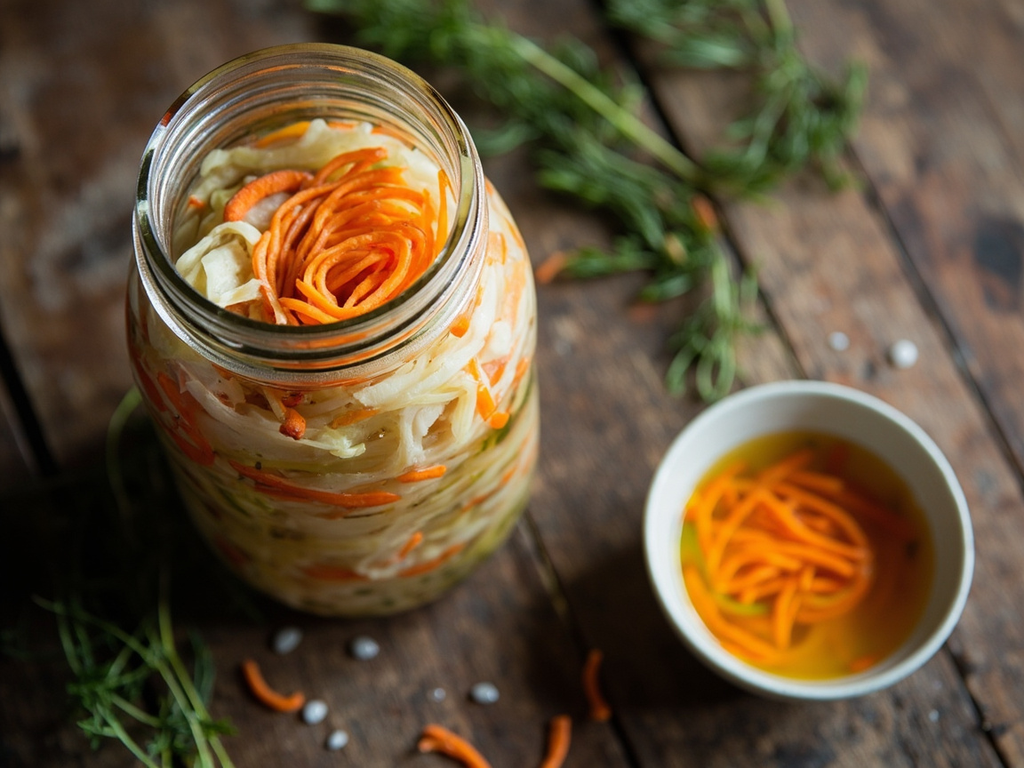
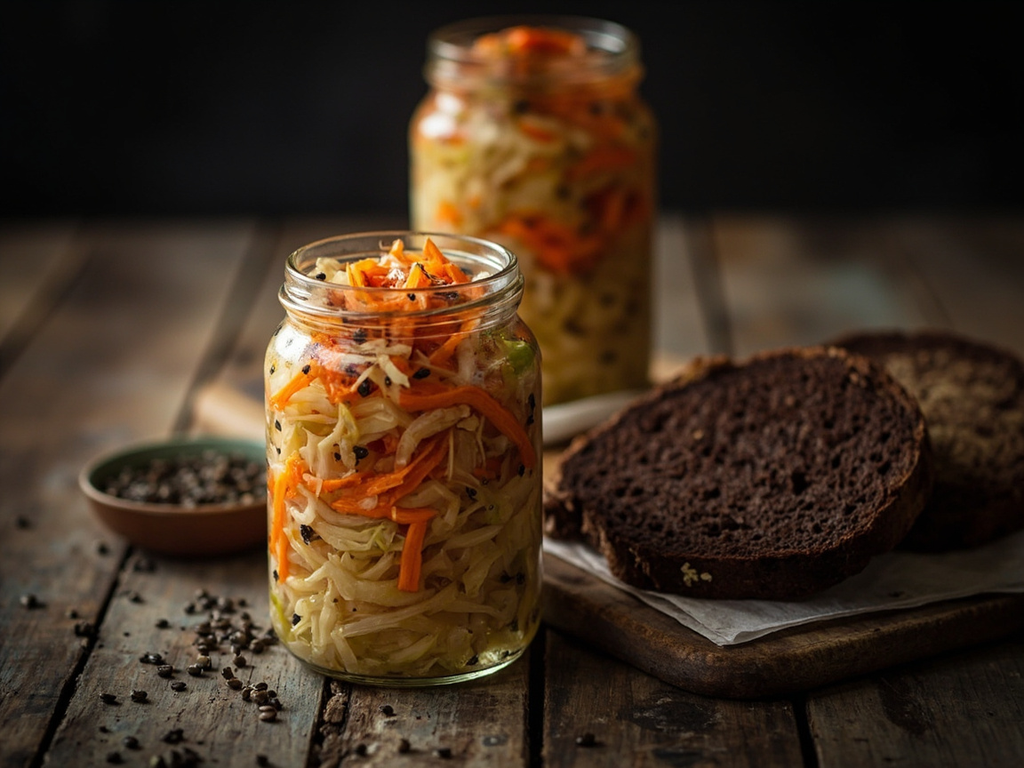
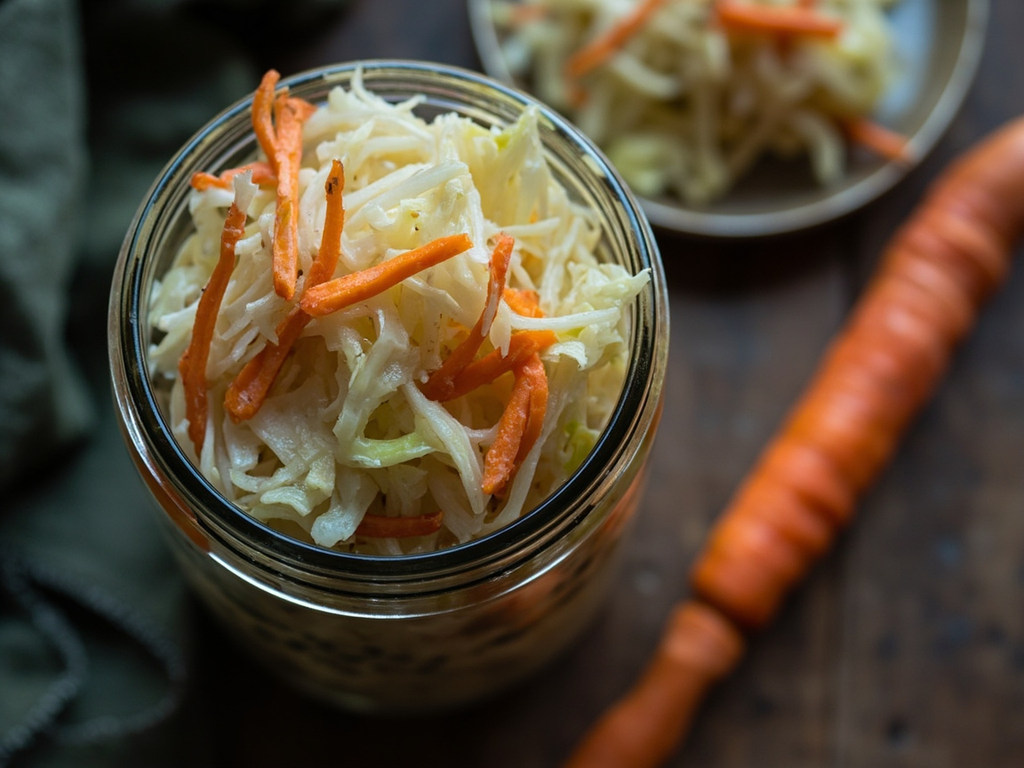
Finely shredded cabbage, salted and packed, left to ferment naturally for a few days until tangy, crunchy, and full of life. Flavored with carrot and seeds, served as a small fresh bite all winter.
The Siberian winter shows no mercy, comrade: not a green vegetable for months. So in autumn, we shred mountains of cabbage, salt it, pack it into the big jar with our fists, and nature does the rest — a few days, and it's sour, crunchy, alive. That's what kept us healthy until the thaw. A forkful of kapusta, and even at minus thirty you feel that spring will return.
- •White cabbage — one large, finely shredded (base vegetable to ferment)
- •Salt — enough to salt well (fermentation agent)
- •Carrot — one or two, grated (color and sweetness)
- •Seeds (caraway or dill) — a pinch (flavor)
Kvashenaya Kapusta — Lacto-Fermented Cabbage
Finely shredded cabbage, salted and packed, left to ferment naturally for a few days until tangy, crunchy, and full of life. Flavored with carrot and seeds, served as a small fresh bite all winter.
Why this dish? In Leonov's native Siberia, winter is long and without fresh vegetables. Fermented cabbage in large jars was THE vitamin reserve for the whole family, crunchy and tangy until spring. It is the basic zakuska of every Russian table, and a preservation food dear to the peasant world from which he came.
The Siberian winter shows no mercy, comrade: not a green vegetable for months. So in autumn, we shred mountains of cabbage, salt it, pack it into the big jar with our fists, and nature does the rest — a few days, and it's sour, crunchy, alive. That's what kept us healthy until the thaw. A forkful of kapusta, and even at minus thirty you feel that spring will return.
Ingredients (period version)
- White cabbage — one large, finely shredded (base vegetable to ferment)
- Salt — enough to salt well (fermentation agent)
- Carrot — one or two, grated (color and sweetness)
- Seeds (caraway or dill) — a pinch (flavor)
Ingredients
- White cabbage — 1 kg, finely shredded (base)
- Non-iodized salt — 20 g (2%) (fermentation)
- Carrot — 1, grated (color)
- Caraway or dill seeds — 1 tsp (flavor)
Method
- Mix shredded cabbage with salt and massage vigorously for 10 min until it releases its juice.
- Add grated carrot and seeds.
- Pack tightly into a clean jar so that the cabbage is submerged in its brine; weigh down with a weight.
- Ferment at room temperature for 3 to 7 days, pressing daily to release bubbles; taste until desired sourness.
- Once tangy enough, close and refrigerate; serve cold as a small bite.
How it was made : Cabbage fermentation (in autumn) was a collective and vital task in the Russian countryside: whole wooden barrels were filled, a source of vitamin C that prevented scurvy during the long winters when no fresh vegetables grew. The brine itself was drunk as a remedy.
The contemporary twist : Drain and quickly pan-fry a handful of kapusta with bacon bits: the cold zakuska reinvents itself as a crispy hot garnish.
Alexei Leonov · Charactorium