 flip
flipKvashyonaya kapusta (lacto-fermented cabbage)
Kvashyonaya kapusta (lacto-fermented cabbage)
Why this dish? To survive the long winters of the North Caucasus, every peasant family in Stavropol, like Gorbachev's, fermented barrels of cabbage in autumn. This tangy, vitamin-rich reserve graced the table until spring and went into borscht.
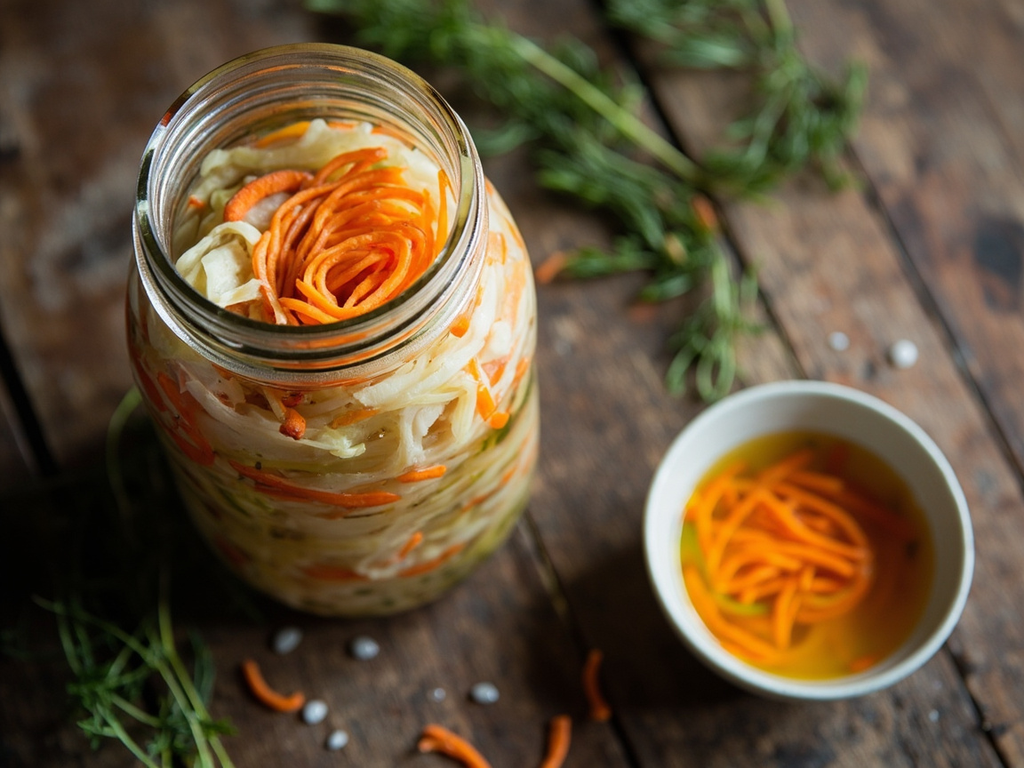
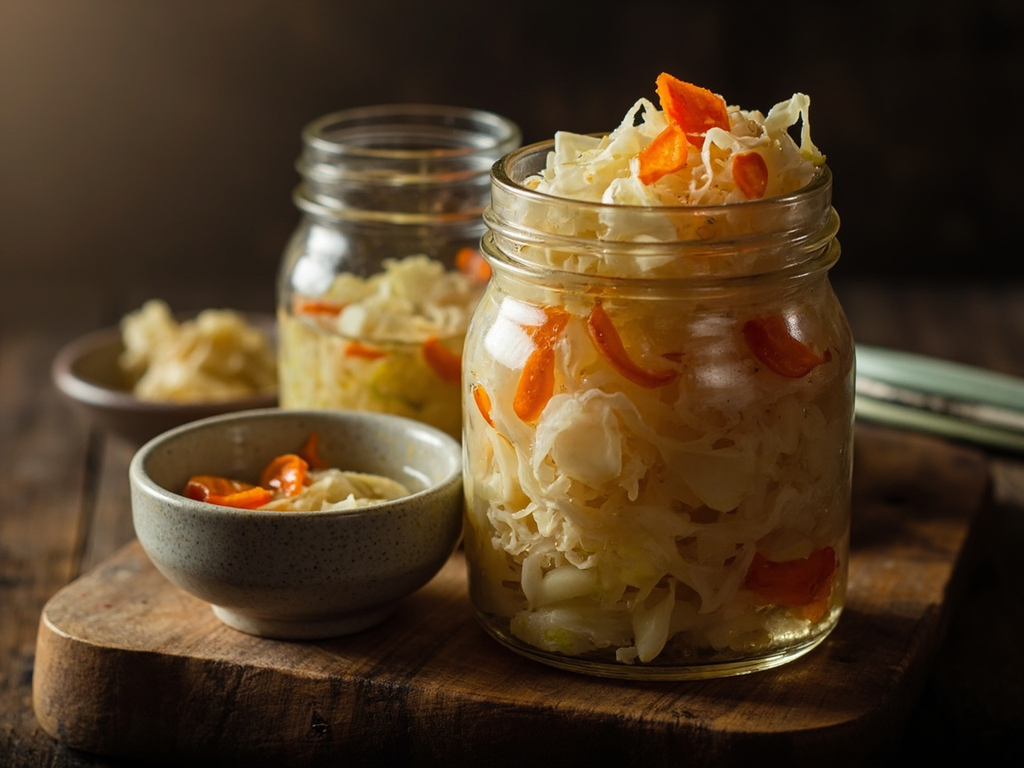
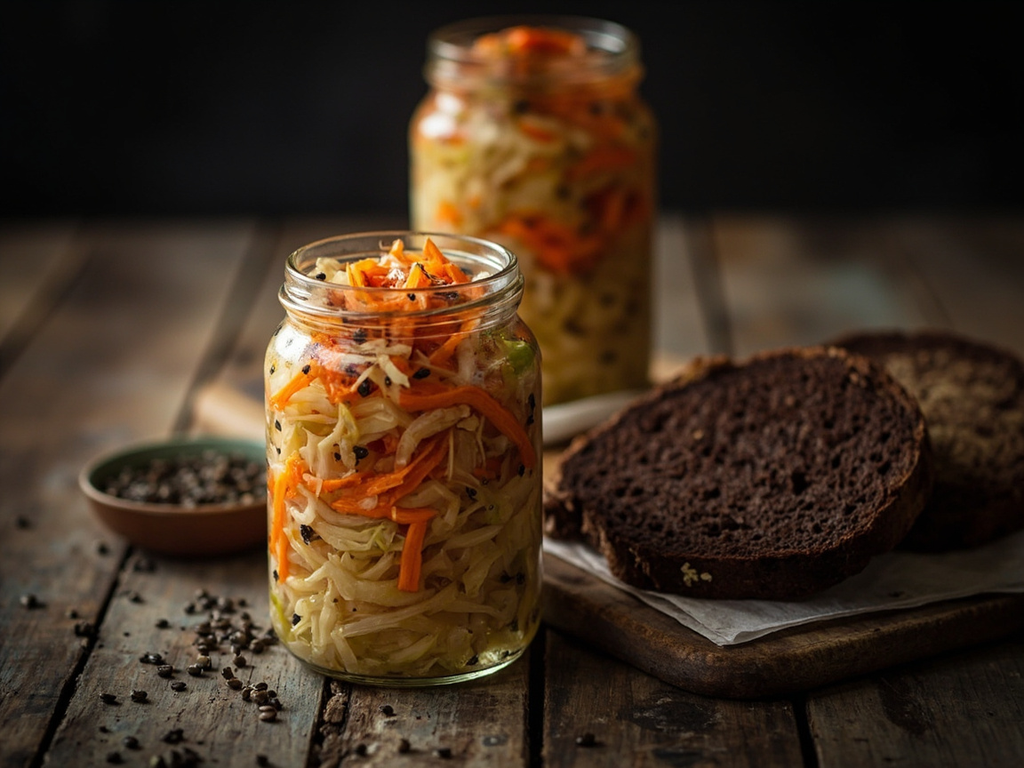
Finely shredded cabbage, transformed by salt and time into crunchy, tangy, fizzy morsels. Brightened with grated carrot and seeds, it is the queen of Russian cellar pickles — an ideal *zakuski*, eaten cold.
In autumn, you see, it was a whole family affair: we'd shred mountains of cabbage, salt it, and punch it down in the barrel with our fists until it released its juice. Then we'd leave it to work on its own in the cold cellar — time does the rest, you need nothing more than a good pinch of salt and patience. All winter, that tangy cabbage kept us healthy, and it ended up both in borscht and on the plate next to black bread. That's the foresight of people of the land, comrade.
- •Autumn white cabbage — several heads (vegetable to ferment)
- •Salt — the right measure (starts and controls fermentation)
- •Carrots — a few (color and sweetness)
- •Caraway or dill seeds — a pinch (flavor)
Kvashyonaya kapusta (lacto-fermented cabbage)
Finely shredded cabbage, transformed by salt and time into crunchy, tangy, fizzy morsels. Brightened with grated carrot and seeds, it is the queen of Russian cellar pickles — an ideal *zakuski*, eaten cold.
Why this dish? To survive the long winters of the North Caucasus, every peasant family in Stavropol, like Gorbachev's, fermented barrels of cabbage in autumn. This tangy, vitamin-rich reserve graced the table until spring and went into borscht.
In autumn, you see, it was a whole family affair: we'd shred mountains of cabbage, salt it, and punch it down in the barrel with our fists until it released its juice. Then we'd leave it to work on its own in the cold cellar — time does the rest, you need nothing more than a good pinch of salt and patience. All winter, that tangy cabbage kept us healthy, and it ended up both in borscht and on the plate next to black bread. That's the foresight of people of the land, comrade.
Ingredients (period version)
- Autumn white cabbage — several heads (vegetable to ferment)
- Salt — the right measure (starts and controls fermentation)
- Carrots — a few (color and sweetness)
- Caraway or dill seeds — a pinch (flavor)
Ingredients
- White cabbage — 1 kg (shredded) (vegetable to ferment)
- Non-iodized salt — 20 g (2% of cabbage weight) (starts and controls fermentation)
- Grated carrot — 1 large (color and sweetness)
- Caraway or dill seeds — 1 tsp (flavor)
Method
- Finely shred cabbage, grate carrot; mix in a large bowl with salt and seeds.
- Massage and squeeze vigorously by hand for 10 minutes until cabbage releases plenty of juice.
- Pack tightly into a clean jar, cabbage must be fully submerged in its brine; weigh down with a weight.
- Cover loosely (not airtight), let ferment 5-10 days at room temperature (skim foam, check cabbage stays under liquid).
- When acidity is to your liking, seal and refrigerate. Serve cold as *zakuski*, or add to borscht.
How it was made : Cabbage fermentation is a food life-insurance of Eastern Europe: without refrigeration, it preserved the vegetable for months and provided vitamin C that prevented winter scurvy. Families packed it into large wooden barrels, often singing, during collective autumn chores.
The contemporary twist : Slide a thin apple slice or a few juniper berries into the jar for a perfumed note; serve in individual small pots bar-style for *zakuski*.
Gorbachev · Charactorium