 flip
flipMalossol Lacto-Fermented Pickles
Malossol Lacto-Fermented Pickles
Why this dish? Zakuski are mentioned in Yeltsin's profile, and lacto-fermented cucumbers are their archetype: they accompanied every round. Their brine, rassol, is also the Russian folk remedy for hangovers — a detail that resonates with the man's notoriety in that regard.
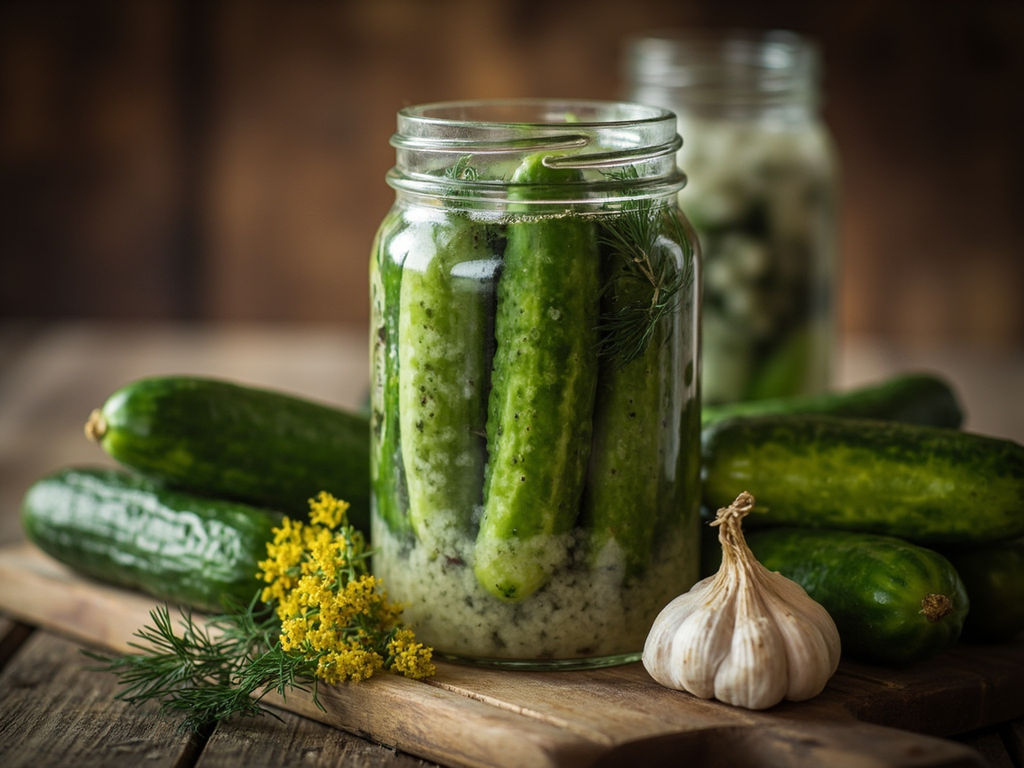
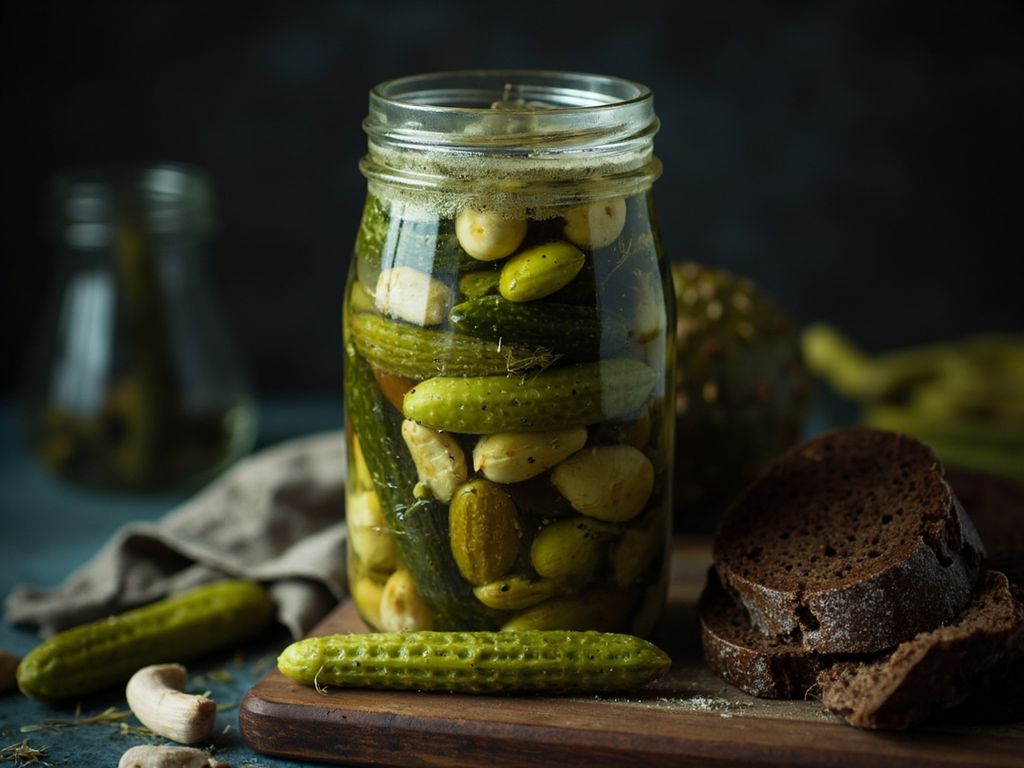
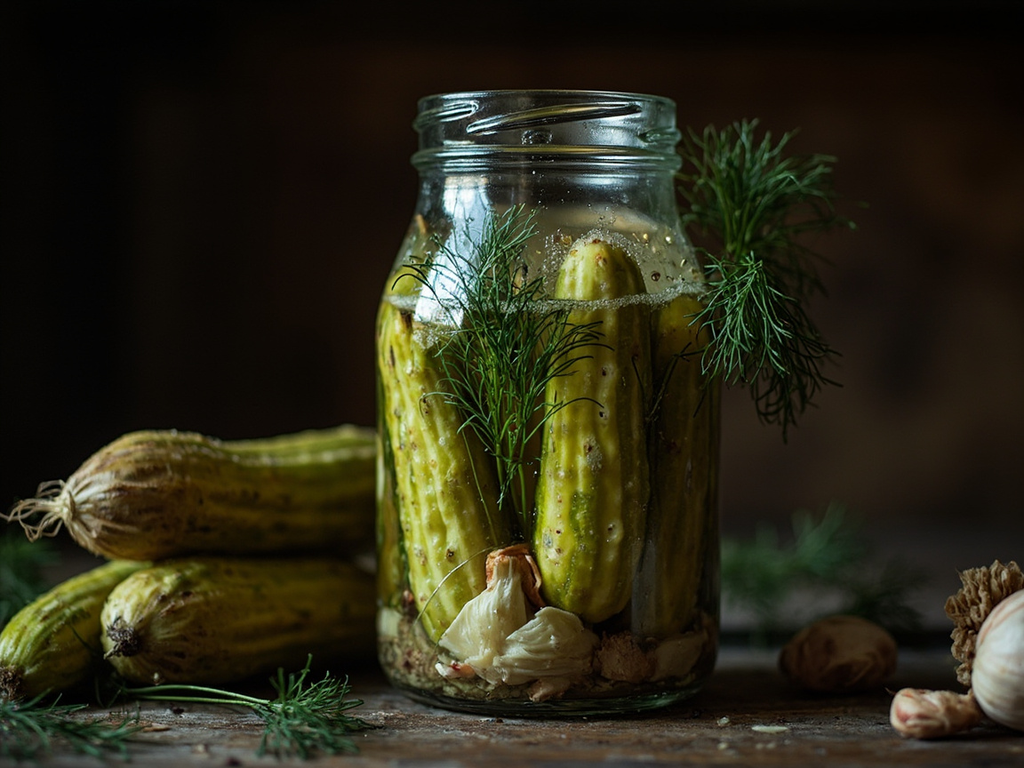
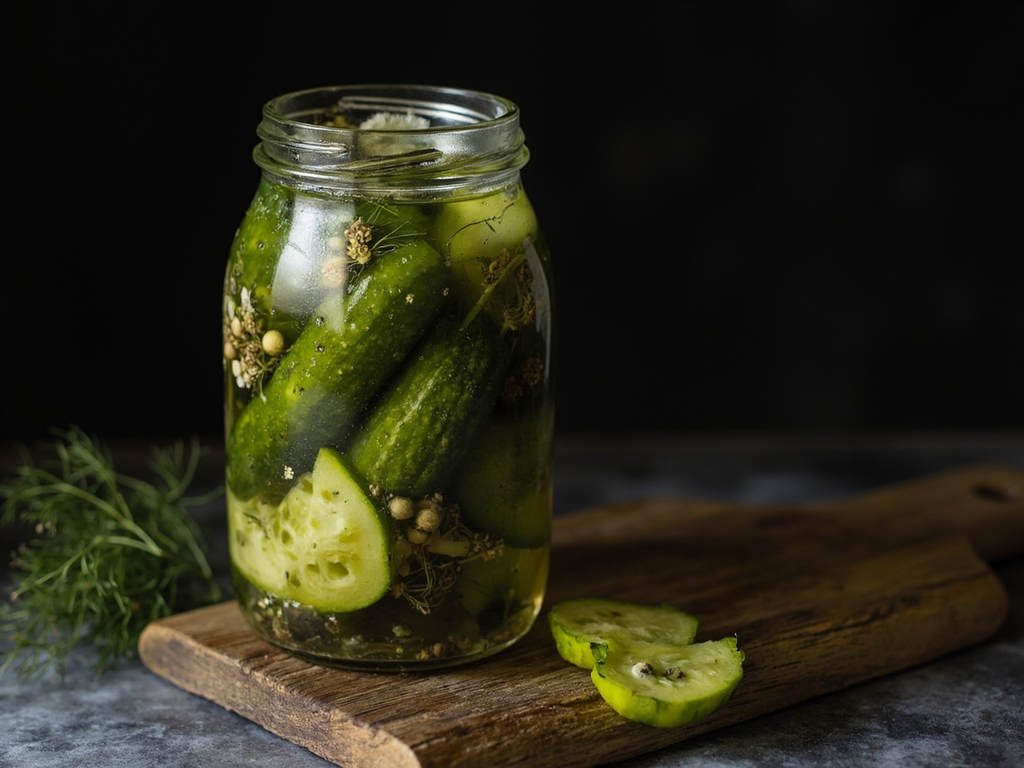
Cucumbers fermented in a brine flavored with dill, garlic, and horseradish leaf. Crunchy, salty-sour, alive: the quintessence of Slavic preserves that got you through winter and accompanied the zakuski.
Ah, the jar of pickles! No Russian table without it. We ferment them in brine with dill and garlic, and the cellar is full of them for winter. And I'll let you in on a secret every Russian knows: the morning after a little too much celebrating, it's not the doctor you need, it's rassol — the pickle brine. A glass of that salty juice, and you're back on your feet. Take it from my experience.
- •Firm cucumbers — enough to fill a jar (vegetable to ferment)
- •Spring water and salt — brine (fermentation medium)
- •Flowering dill (umbels) — several (flavor)
- •Garlic — a few cloves (flavor)
- •Horseradish, blackcurrant, and oak leaves — a few (keep crunch (tannins))
- •Peppercorns — a pinch (spice)
Malossol Lacto-Fermented Pickles
Cucumbers fermented in a brine flavored with dill, garlic, and horseradish leaf. Crunchy, salty-sour, alive: the quintessence of Slavic preserves that got you through winter and accompanied the zakuski.
Why this dish? Zakuski are mentioned in Yeltsin's profile, and lacto-fermented cucumbers are their archetype: they accompanied every round. Their brine, rassol, is also the Russian folk remedy for hangovers — a detail that resonates with the man's notoriety in that regard.
Ah, the jar of pickles! No Russian table without it. We ferment them in brine with dill and garlic, and the cellar is full of them for winter. And I'll let you in on a secret every Russian knows: the morning after a little too much celebrating, it's not the doctor you need, it's rassol — the pickle brine. A glass of that salty juice, and you're back on your feet. Take it from my experience.
Ingredients (period version)
- Firm cucumbers — enough to fill a jar (vegetable to ferment)
- Spring water and salt — brine (fermentation medium)
- Flowering dill (umbels) — several (flavor)
- Garlic — a few cloves (flavor)
- Horseradish, blackcurrant, and oak leaves — a few (keep crunch (tannins))
- Peppercorns — a pinch (spice)
Ingredients
- Small pickling cucumbers — 1 kg (vegetable)
- Non-chlorinated water — 1 liter (brine)
- Non-iodized salt — 50 g (5%) (brine)
- Dill umbels (or seeds + stems) — 2-3 (flavor)
- Garlic — 4 cloves (flavor)
- Blackcurrant or grape leaves — 3-4 (tannins for crunch)
- Black peppercorns — 1 tsp (spice)
Method
- Soak the cucumbers in cold water for 2 hours to firm them up, then wash.
- Dissolve the salt in water to make the brine (5%).
- Line the bottom of a clean jar with dill, crushed garlic, leaves, and peppercorns. Pack the cucumbers tightly.
- Cover completely with brine. Keep the cucumbers submerged with a leaf or a small weight (anything above the brine will mold).
- Cover loosely (not airtight) and ferment at room temperature for 5 to 10 days: the brine will turn cloudy and become sour.
- When the taste is right, seal and store in the fridge. Save the brine (the famous rassol) carefully.
How it was made : Before refrigeration, lacto-fermentation was the main way to preserve vegetables for the long Russian winters (cucumbers, sauerkraut, later tomatoes, mushrooms). Jars and barrels filled the cellars. The brine was never thrown away: it was drunk as a tonic.
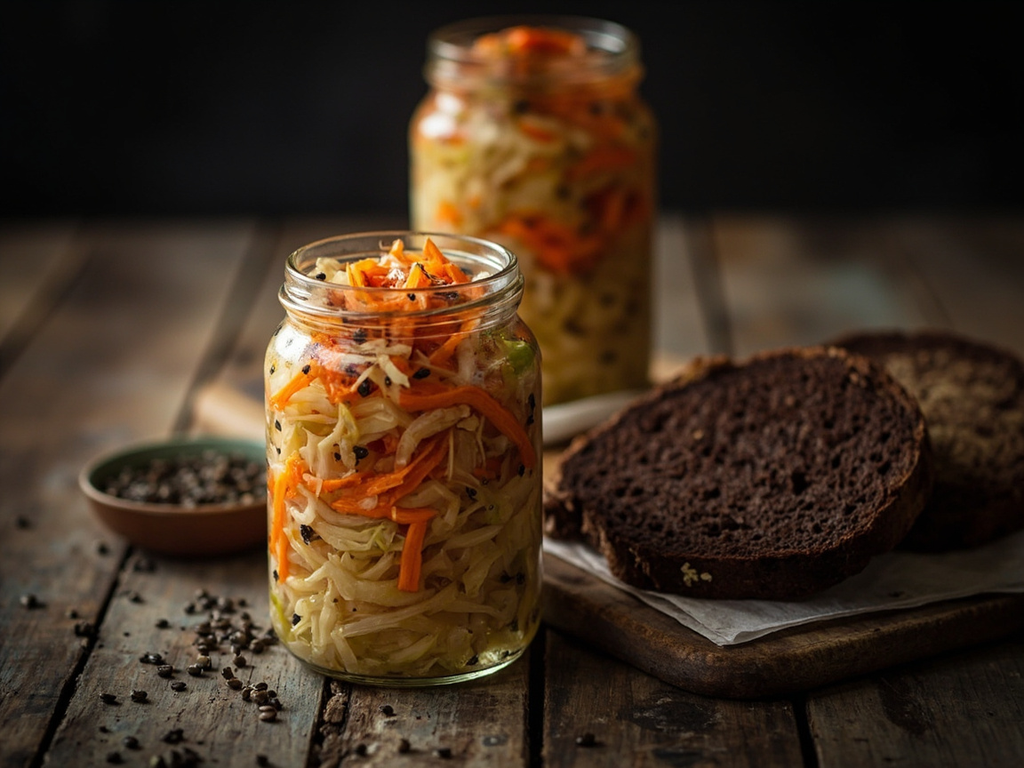
The contemporary twist : Serve the pickles sliced on buttered black bread with a little dill — the instant zakuska toast.
Boris Yeltsin · Charactorium