 flip
flipRiwwelkuche — Volga German Crumb Cake
Riwwelkuche — Volga German Crumb Cake
Why this dish? Schnittke was born in Engels, capital of the Volga German Republic, to a German-speaking mother. Riwwelkuche (crumb cake) was THE dessert of these communities: brought out for Sundays and holidays. It's the taste of his German roots, those before his family's exile.
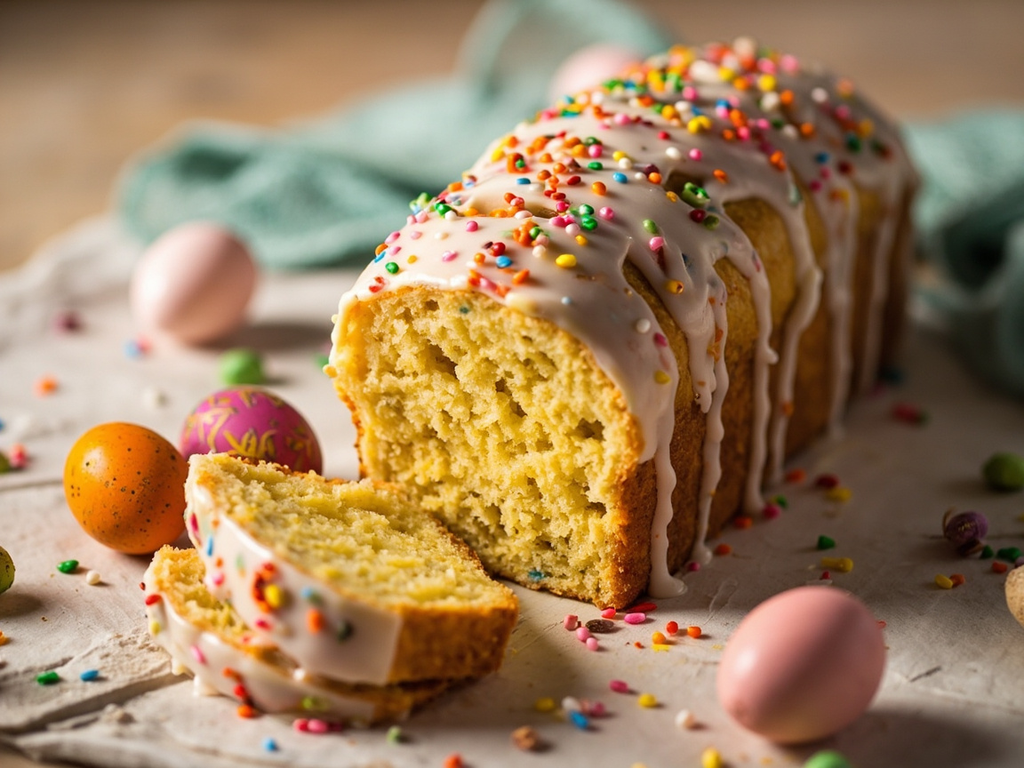
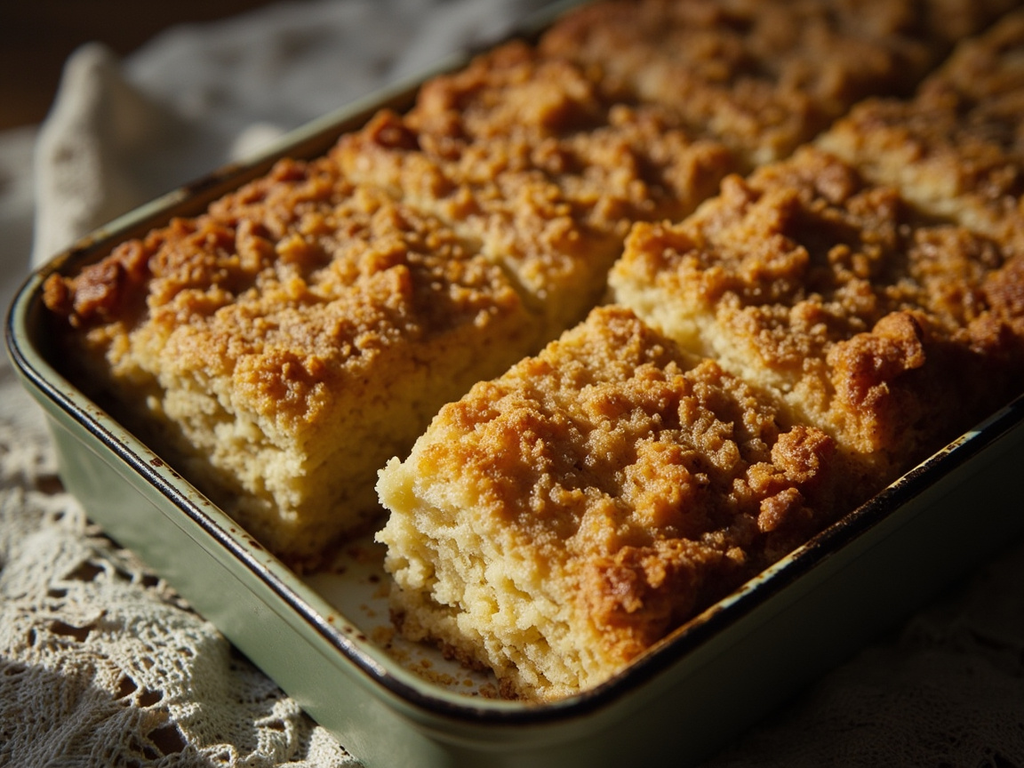
A soft yeast dough topped with a thick layer of buttery, sugary, floury crumble, baked golden. Crisp on top, tender underneath, scented with vanilla or lemon.
My family came from the German colonies on the Volga, and even in Russian we kept tastes from elsewhere. Riwwelkuche, we called it the crumb cake: you rub butter, sugar and flour between your fingers until you get a coarse semolina, and you cover the dough with a generous layer. It wasn't an everyday dish—it smelled of Sunday, of the German spoken more softly after the war. Two languages in one house, two musics in one measure: I grew up in that.
- •Wheat flour — for dough and crumb (structure)
- •Baker's yeast — a piece (leavening)
- •Milk — warm (hydration)
- •Butter — generous (richness, crumb)
- •Sugar — generous (sweetness)
- •Eggs — a few (binding)
Riwwelkuche — Volga German Crumb Cake
A soft yeast dough topped with a thick layer of buttery, sugary, floury crumble, baked golden. Crisp on top, tender underneath, scented with vanilla or lemon.
Why this dish? Schnittke was born in Engels, capital of the Volga German Republic, to a German-speaking mother. Riwwelkuche (crumb cake) was THE dessert of these communities: brought out for Sundays and holidays. It's the taste of his German roots, those before his family's exile.
My family came from the German colonies on the Volga, and even in Russian we kept tastes from elsewhere. Riwwelkuche, we called it the crumb cake: you rub butter, sugar and flour between your fingers until you get a coarse semolina, and you cover the dough with a generous layer. It wasn't an everyday dish—it smelled of Sunday, of the German spoken more softly after the war. Two languages in one house, two musics in one measure: I grew up in that.
Ingredients (period version)
- Wheat flour — for dough and crumb (structure)
- Baker's yeast — a piece (leavening)
- Milk — warm (hydration)
- Butter — generous (richness, crumb)
- Sugar — generous (sweetness)
- Eggs — a few (binding)
Ingredients
- Flour — 300 g (dough) + 200 g (crumb) (structure)
- Active dry yeast — 7 g (leavening)
- Warm milk — 150 ml (hydration)
- Soft butter — 60 g (dough) + 120 g (crumb) (richness)
- Sugar — 50 g (dough) + 120 g (crumb) (sweetness)
- Egg — 1 (binding)
- Vanilla sugar or lemon zest — 1 packet or 1 zest (flavoring)
- Salt — 1 pinch (balance)
Method
- Dissolve yeast in warm milk with a spoonful of sugar, let foam for 10 minutes.
- Knead dough: flour, sugar, salt, egg, soft butter, and the yeast-milk mixture, until smooth. Let rise covered for 1 hour, until doubled.
- Prepare crumb: rub flour, sugar, cold butter, and vanilla between fingertips until coarse, irregular crumbs form.
- Roll out dough in a buttered pan, cover with a thick, even layer of crumb.
- Let rest 20 minutes, then bake at 180°C for 25-30 minutes, until the crumb is golden.
- Let cool slightly before cutting into squares.
How it was made : Among the Volga Germans, this cake was baked in the communal bread oven, in large sheets, for celebrations and visits. After the community's deportation in 1941, these recipes survived in family kitchens as a memory of the lost homeland.
The contemporary twist : Slide a thin layer of apple or plum compote between the dough and crumb for a fruity, tangy heart.
Alfred Schnittke · Charactorium