 flip
flipGreenland expedition pemmican
Greenland expedition pemmican
Why this dish? Wegener led several expeditions onto the Greenland ice sheet — the last, in 1930, proved fatal. Like all polar explorers of his time, his sledges were loaded with pemmican: dried meat and compressed fat, the most calorie-dense and durable food known for surviving on the ice.
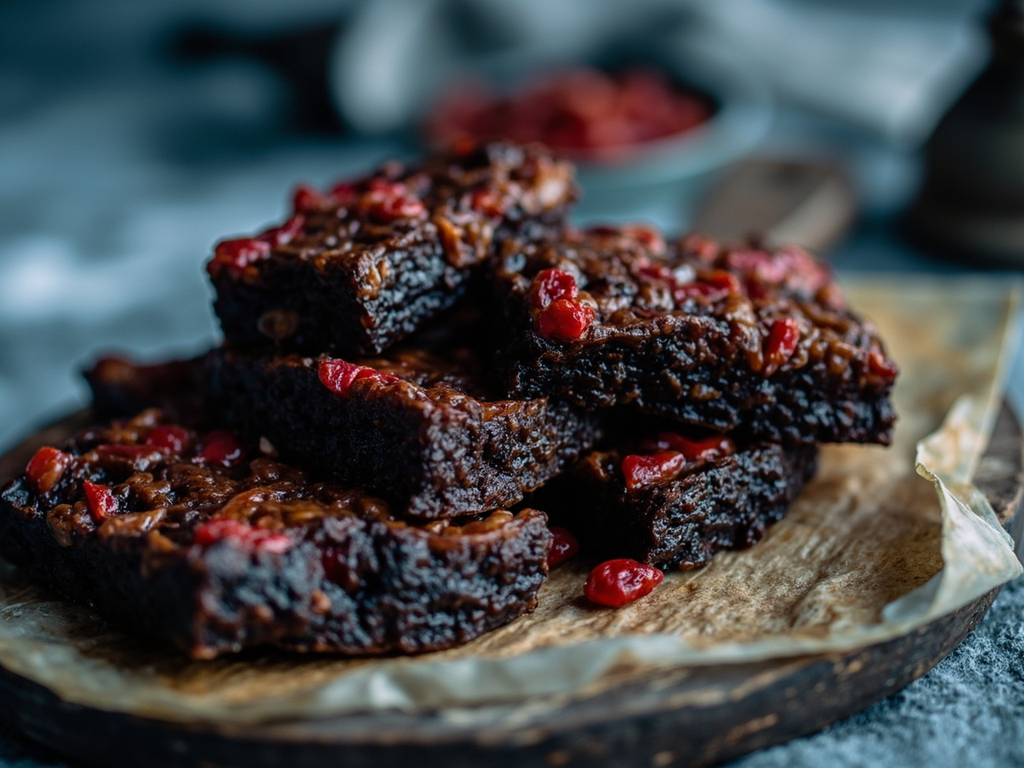
A dense bar of dried beef reduced to powder, bound with melted fat and sometimes enriched with dried berries. It doesn't look like much, but concentrates in a small cake all the energy needed to pull a sledge at −40°C.
On the ice sheet, one does not eat for pleasure but to avoid freezing to death. Our pemmican was our life: dried meat, ground fine, drowned in hot fat until it forms a paste that we let harden in the frost. We eat it as is, frozen, or melted in boiled snow water to make a thick soup, the 'hoosh.' Believe me, after ten hours of marching in a blizzard, this greasy block is worth all the feasts of Berlin.
- •Lean dried beef — in large part (protein, base)
- •Beef fat (suet) — in almost equal parts (energy, binder)
- •Dried berries (lingonberries, currants) — a handful (vitamins, acidity)
- •Salt — a little (preservation, taste)
Greenland expedition pemmican
A dense bar of dried beef reduced to powder, bound with melted fat and sometimes enriched with dried berries. It doesn't look like much, but concentrates in a small cake all the energy needed to pull a sledge at −40°C.
Why this dish? Wegener led several expeditions onto the Greenland ice sheet — the last, in 1930, proved fatal. Like all polar explorers of his time, his sledges were loaded with pemmican: dried meat and compressed fat, the most calorie-dense and durable food known for surviving on the ice.
On the ice sheet, one does not eat for pleasure but to avoid freezing to death. Our pemmican was our life: dried meat, ground fine, drowned in hot fat until it forms a paste that we let harden in the frost. We eat it as is, frozen, or melted in boiled snow water to make a thick soup, the 'hoosh.' Believe me, after ten hours of marching in a blizzard, this greasy block is worth all the feasts of Berlin.
Ingredients (period version)
- Lean dried beef — in large part (protein, base)
- Beef fat (suet) — in almost equal parts (energy, binder)
- Dried berries (lingonberries, currants) — a handful (vitamins, acidity)
- Salt — a little (preservation, taste)
Ingredients
- Lean dried beef (like Bündnerfleisch or homemade) — 250 g (protein base)
- Beef suet or duck fat — 200 g (energy, binder)
- Dried lingonberries or cranberries — 50 g (acidity, vitamins)
- Salt — 1 tsp (seasoning)
- Onion powder (optional) — 1/2 tsp (flavor)
Method
- Dry the meat very slowly in the oven (70°C, door ajar, 6-8 h) until brittle, then grind into coarse powder.
- Gently melt the suet without burning it.
- Mix the meat powder, chopped berries, and salt; pour in the melted fat little by little until you get a paste that holds together.
- Press firmly into a mold or form bars, let set in a cool place.
- Store well wrapped in a cool place; eat as is on the trail, or crumble into hot water for a quick soup ('hoosh').
How it was made : Inherited from the First Nations peoples of North America, pemmican was adopted by all major polar expeditions (Nansen, Scott, Wegener). It was calculated in daily rations per man and per dog; its fat provided the fuel that extreme cold burns at high speed.
The contemporary twist : Rebranded 'tectonic energy bar' for modern trekking: same principles, molded into small slabs easy to slip into a down jacket pocket.
Alfred Wegener · Charactorium