 flip
flipBread of the Desert Man (Barley Flatbread with Dried Figs and Olives)
Bread of the Desert Man (Barley Flatbread with Dried Figs and Olives)
Why this dish? Leviticus entrusts the goat to 'a designated man' (ish itti) who leads it far into the desert, to a rugged place — Beth Hadudo, the Dudaël of Enochic tradition. For this long arid walk, robust provisions were needed: this flat barley bread, studded with figs and olives, is the traveler's snack escorting the beast to Azazel's domain.
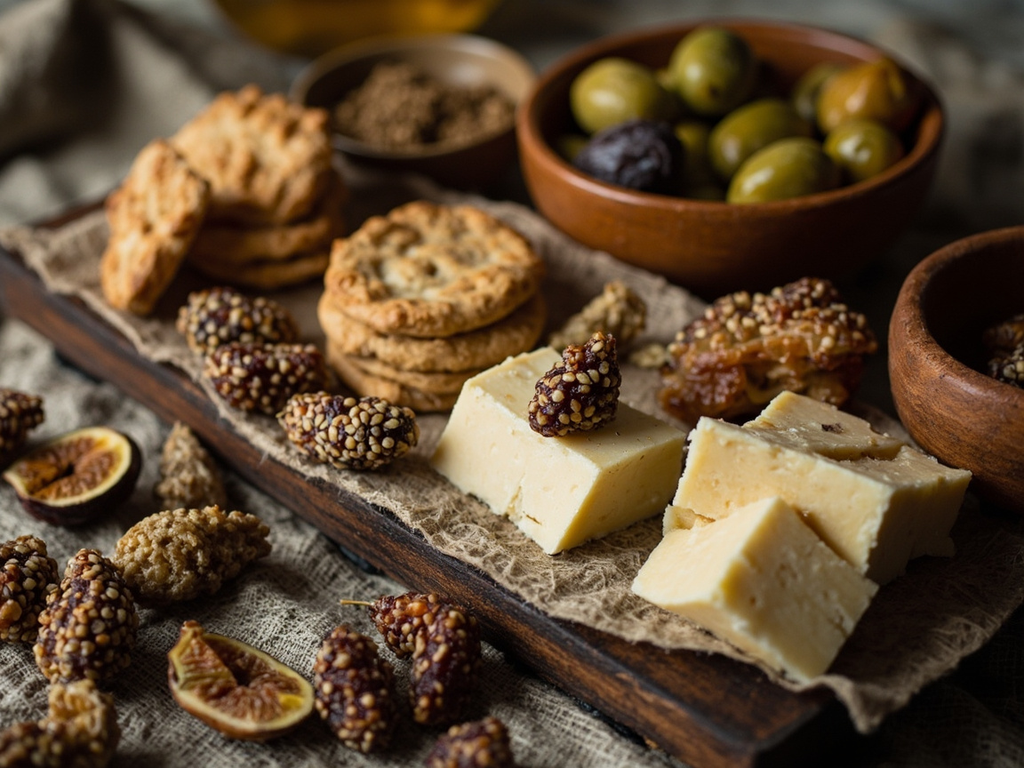
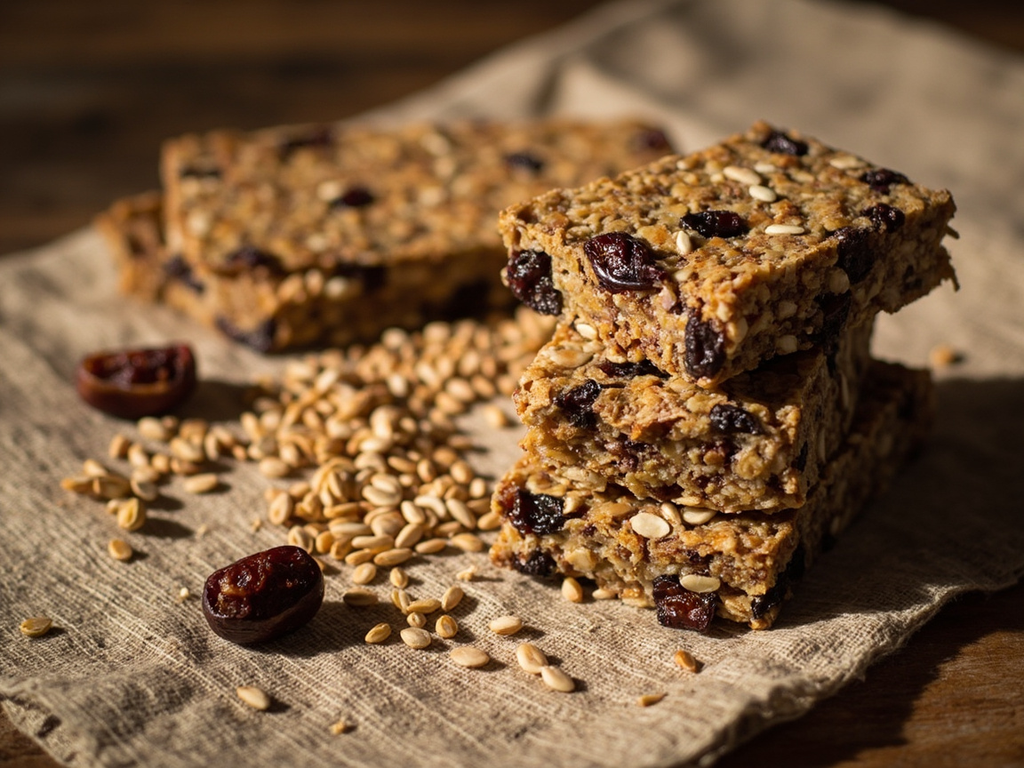
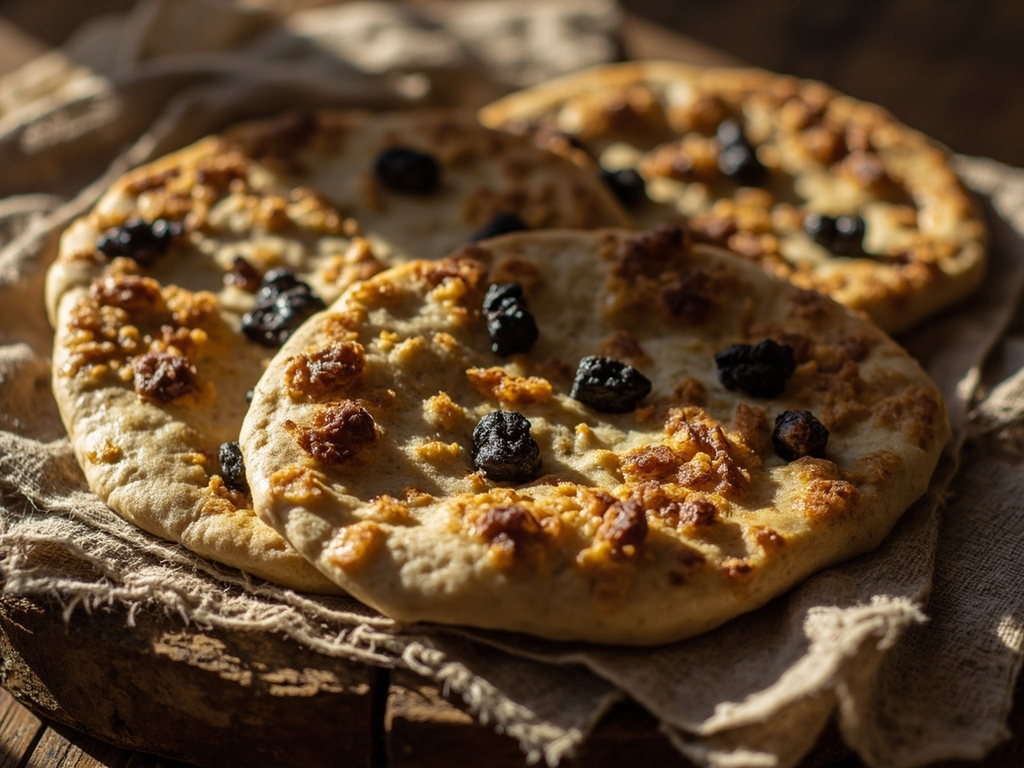
A dense, rustic barley flatbread, baked on hot stone, dotted with sweet dried figs and salty olives. It keeps for several days and sticks to the ribs — exactly what you need to cross the ravines of the Judean desert.
You who go into my lands, take heed and take bread. The desert does not forgive an empty stomach: knead the barley with water and a little oil, press the figs into it, slip in the olives, and cook it all on the burning stone until it sings. Keep it in a cloth, it will follow you three days. Thus we marched toward Dudaël, where I was chained under the rough stones.
- •Barley flour — two measures (bread base)
- •Spring water — as needed (binder)
- •Olive oil — a drizzle (softness, preservation)
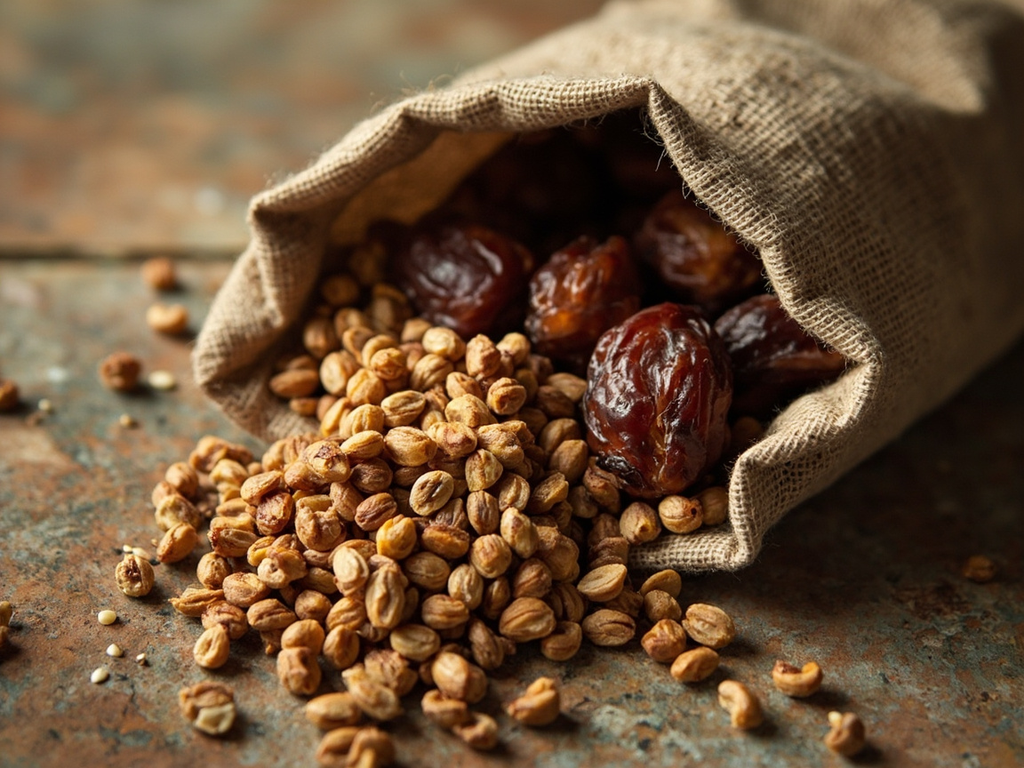
- •Dried figs — a handful, chopped (sweetness, energy)
- •Pitted olives — a handful (salt, fat)
- •Salt — a pinch (seasoning)
Bread of the Desert Man (Barley Flatbread with Dried Figs and Olives)
A dense, rustic barley flatbread, baked on hot stone, dotted with sweet dried figs and salty olives. It keeps for several days and sticks to the ribs — exactly what you need to cross the ravines of the Judean desert.
Why this dish? Leviticus entrusts the goat to 'a designated man' (ish itti) who leads it far into the desert, to a rugged place — Beth Hadudo, the Dudaël of Enochic tradition. For this long arid walk, robust provisions were needed: this flat barley bread, studded with figs and olives, is the traveler's snack escorting the beast to Azazel's domain.
You who go into my lands, take heed and take bread. The desert does not forgive an empty stomach: knead the barley with water and a little oil, press the figs into it, slip in the olives, and cook it all on the burning stone until it sings. Keep it in a cloth, it will follow you three days. Thus we marched toward Dudaël, where I was chained under the rough stones.
Ingredients (period version)
- Barley flour — two measures (bread base)
- Spring water — as needed (binder)
- Olive oil — a drizzle (softness, preservation)
- Dried figs — a handful, chopped (sweetness, energy)
- Pitted olives — a handful (salt, fat)
- Salt — a pinch (seasoning)
Ingredients
- Barley flour — 250 g (base)
- Whole wheat flour — 100 g (structure (easier shaping))
- Warm water — about 200 ml (hydration)
- Olive oil — 2 tbsp (softness)
- Chopped dried figs — 80 g (natural sweetness)
- Chopped black olives — 60 g (salty note)
- Salt — 1 tsp (seasoning)
Method
- Mix flours, salt, oil and water to a soft, non-sticky dough; knead 5 min.
- Fold in chopped figs and olives, distribute evenly.
- Rest 30 min under a cloth.
- Divide and flatten into 1 cm thick rounds.
- Cook on a very hot stone or cast-iron pan, 3–4 min per side, until puffed and browned in spots.
- Cool before wrapping in a clean cloth for travel.
How it was made : Barley, more rustic and cheaper than wheat, was the grain of the poor and the traveler. Flatbreads were baked on a flat stone over embers (le'hem 'ugot) or against the wall of a tabun. Dried figs and olives were the quintessential travel provisions, light and nourishing.
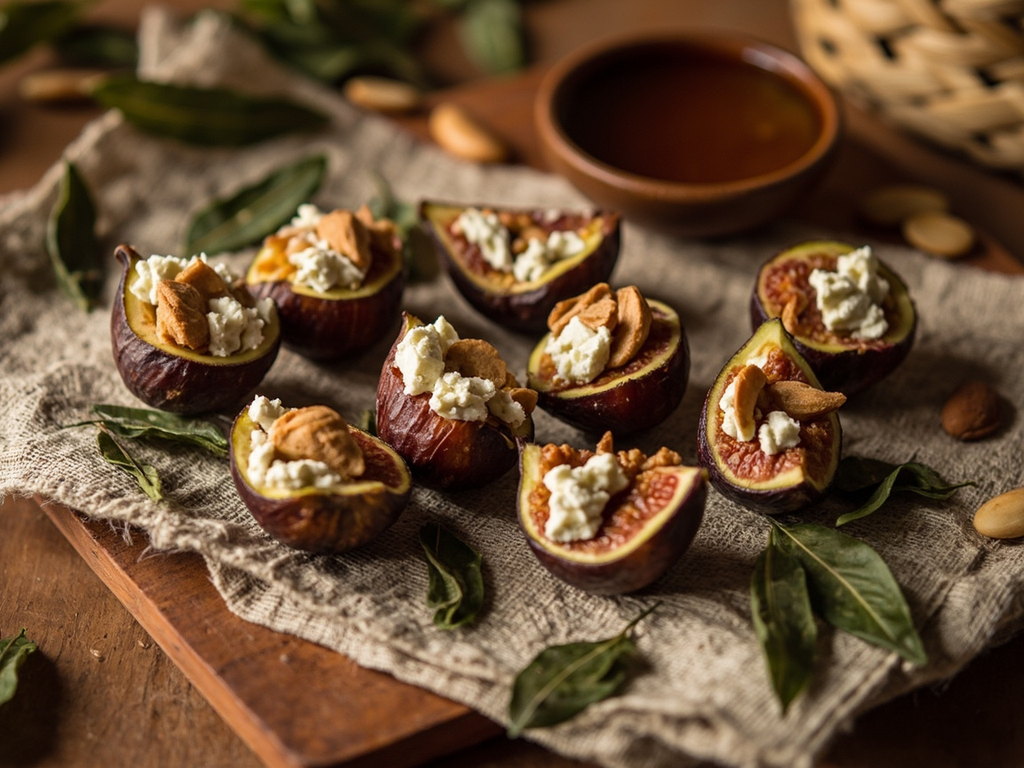
The contemporary twist : Rolled into a cone and stuffed with fresh goat cheese, it becomes a perfect hiking snack — the modern walker's lunch on the trails of the Judean desert.
Sources : Leviticus 16:21-22 (the designated man leads the goat into the desert) · 1 Enoch 10 (Azazel chained at Dudaël) · Oded Borowski, Agriculture in Iron Age Israel
Azazel · Charactorium