 flip
flipTuh'u, Purple Stew of Babylon
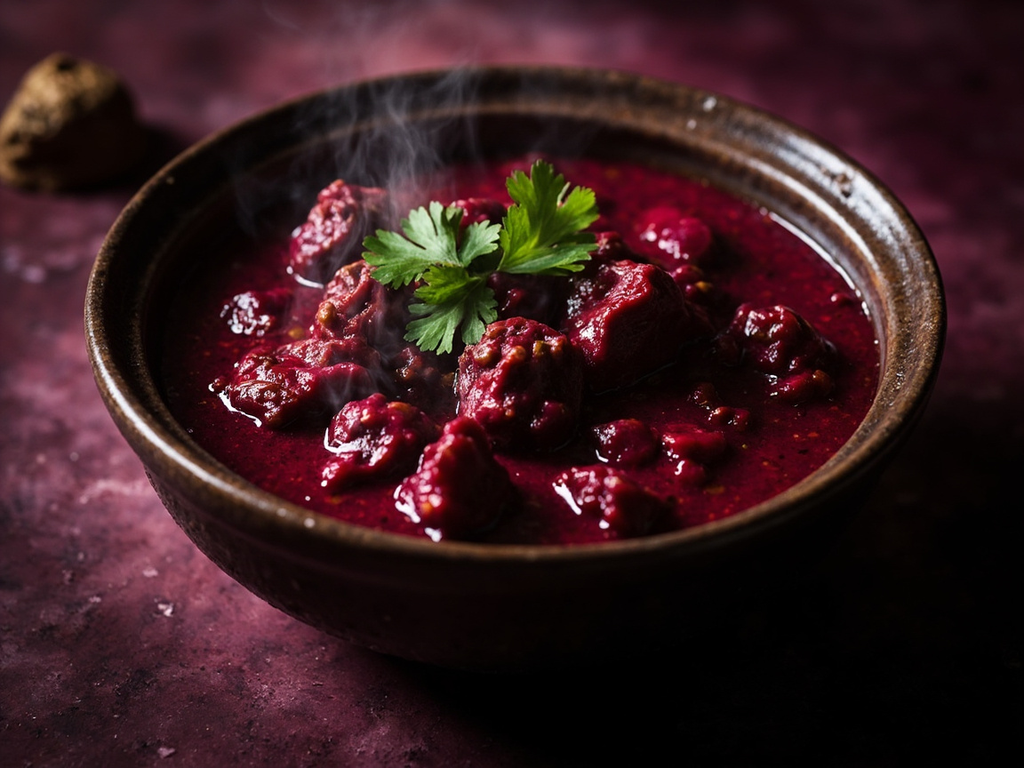
Tuh'u, Purple Stew of Babylon
Why this dish? Babylon, one of the great cities where exorcisms and incantations against Asmodeus were performed, kept refined cuisine in its palaces. The tuh'u, a meat stew with beetroot that gives it its purple robe, is among the recipes engraved on the Babylonian culinary tablets — a banquet dish worthy of the table the demon, they say, loved to disturb.
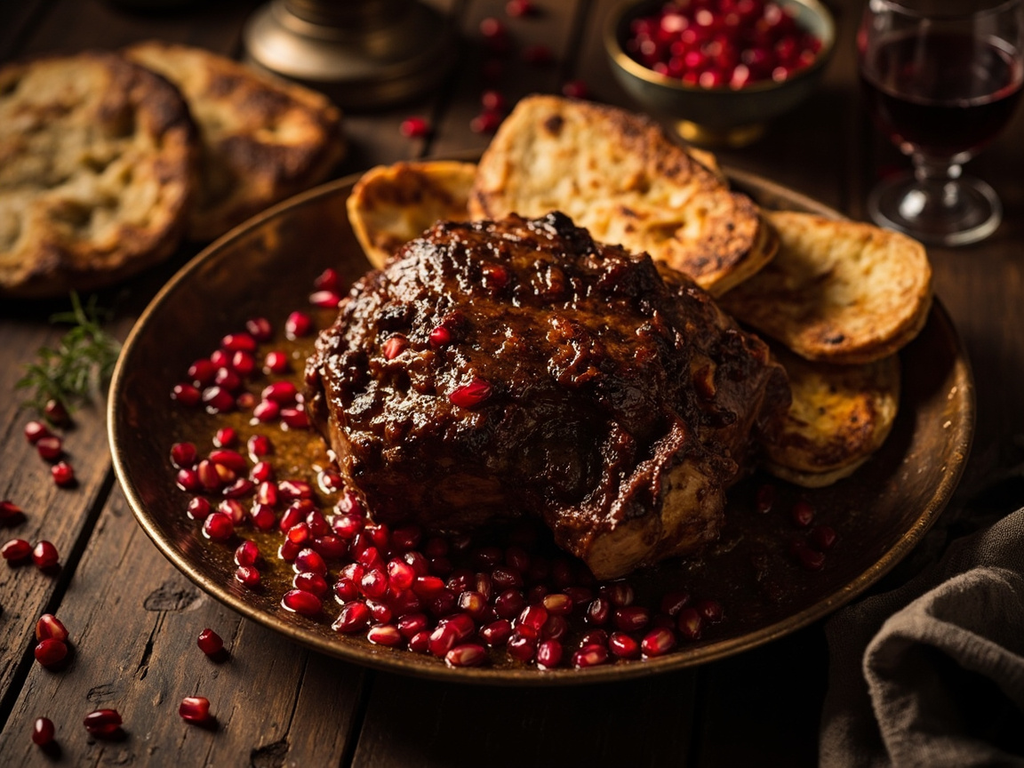
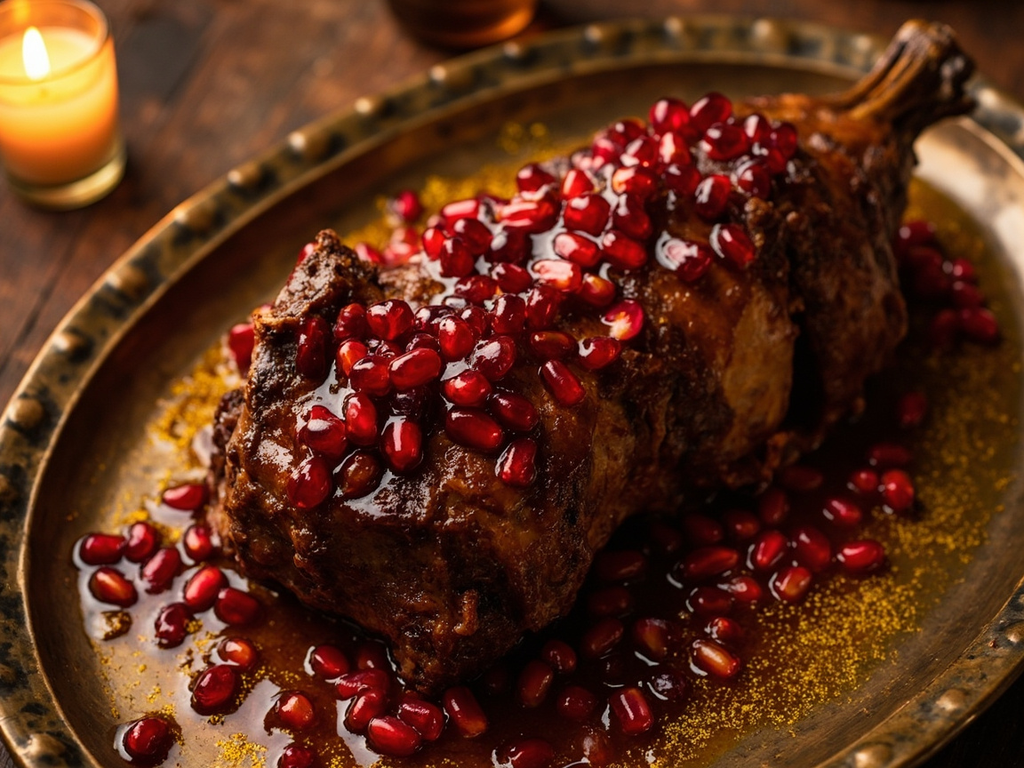
A deep red lamb stew, tinted by beetroot, perfumed with leeks, garlic, and coriander, bound with siqqu. One of the oldest written dishes of humanity.
Come closer, and watch this cauldron redden like a stormy sky. In the palaces of Babylon, they thought I was kept at bay by engraved rings and incense smoke — poor fools, I sat at their weddings disguised as a guest. This purple stew, the tuh'u, they stirred slowly with blood and beetroot, leek crushed under the palm, and that brine whose smell wakes the dead. Serve it to the newlyweds, mortal: I know what the flesh desires when the wine flows.
- •Leg of lamb — a nice piece (base)
- •Beetroot (silqu) — according to desired color (color and earthy sweetness)
- •Leeks and garlic — in quantity (crushed aromatics)
- •Onion — a few (aromatic)
- •Siqqu (fish brine) — a splash (umami)
- •Sheep fat — a ladle (fat)
- •Fresh coriander, cumin — as desired (herbs and spices)
- •Blood (optional, ancient binder) — a little (binder and color)
Tuh'u, Purple Stew of Babylon
A deep red lamb stew, tinted by beetroot, perfumed with leeks, garlic, and coriander, bound with siqqu. One of the oldest written dishes of humanity.
Why this dish? Babylon, one of the great cities where exorcisms and incantations against Asmodeus were performed, kept refined cuisine in its palaces. The tuh'u, a meat stew with beetroot that gives it its purple robe, is among the recipes engraved on the Babylonian culinary tablets — a banquet dish worthy of the table the demon, they say, loved to disturb.
Come closer, and watch this cauldron redden like a stormy sky. In the palaces of Babylon, they thought I was kept at bay by engraved rings and incense smoke — poor fools, I sat at their weddings disguised as a guest. This purple stew, the tuh'u, they stirred slowly with blood and beetroot, leek crushed under the palm, and that brine whose smell wakes the dead. Serve it to the newlyweds, mortal: I know what the flesh desires when the wine flows.
Ingredients (period version)
- Leg of lamb — a nice piece (base)
- Beetroot (silqu) — according to desired color (color and earthy sweetness)
- Leeks and garlic — in quantity (crushed aromatics)
- Onion — a few (aromatic)
- Siqqu (fish brine) — a splash (umami)
- Sheep fat — a ladle (fat)
- Fresh coriander, cumin — as desired (herbs and spices)
- Blood (optional, ancient binder) — a little (binder and color)
Ingredients
- Lamb shoulder or leg, cubed — 600 g (base)
- Raw beetroots — 2 medium, grated (color and sweetness)
- Leeks — 2, sliced (aromatic)
- Garlic — 1 head, crushed (aromatic)
- Onion — 1, sliced (aromatic)
- Fish sauce — 1 tbsp (umami)
- Clarified butter or oil — 2 tbsp (fat)
- Fresh coriander and ground cumin — 1 bunch + 1 tsp (herbs and spices)
- Water — to cover (liquid)
Method
- Sear the lamb pieces in hot fat until browned.
- Add onion, leeks, and grated beetroot, sweat for a few minutes.
- Add water to cover, fish sauce, and cumin, simmer covered for 1 hour 30 minutes.
- Crush garlic into a paste, stir in at the end with chopped fresh coriander.
- Reduce until a deep red coating sauce forms; adjust salt.
How it was made : The tuh'u is one of 25 recipes engraved around 1730 BC on three Babylonian tablets in Akkadian, kept at Yale University and deciphered by Assyriologist Jean Bottéro. The period version sometimes bound the sauce with blood and used kasû and samidu, aromatic plants now difficult to identify.
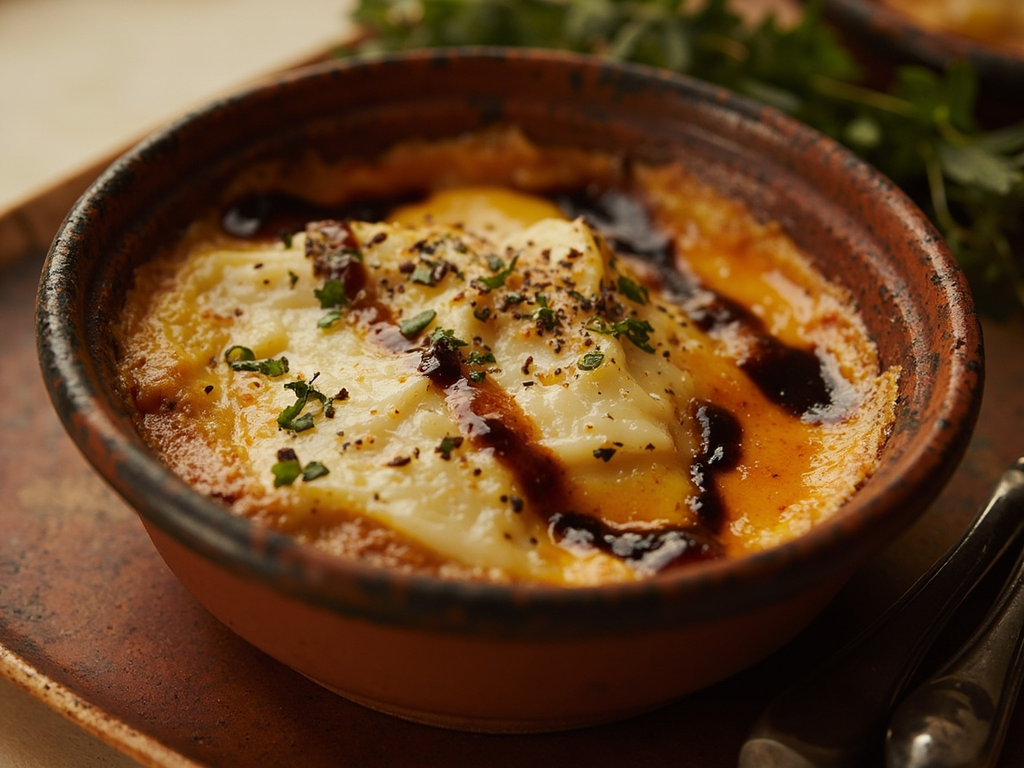
The contemporary twist : Served in a matte black bowl to make the purple pop, with a piece of edible gold leaf on the surface — the 'demon's feast.'
Sources : Jean Bottéro, Textes culinaires Mésopotamiens, Eisenbrauns, 1995 · Babylonian culinary tablets YBC 4644, 8958, 4648 (Yale Babylonian Collection)
Asmodeus · Charactorium