 flip
flipPatina of fish with garum and defrutum — the mensa prima of the banquet
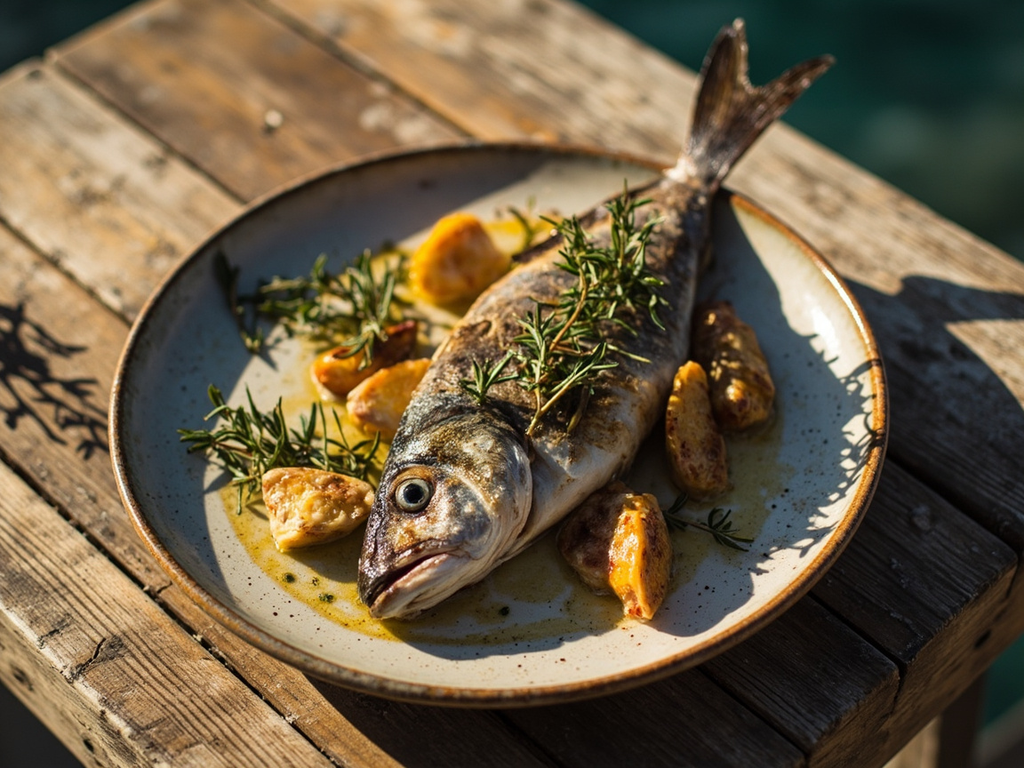
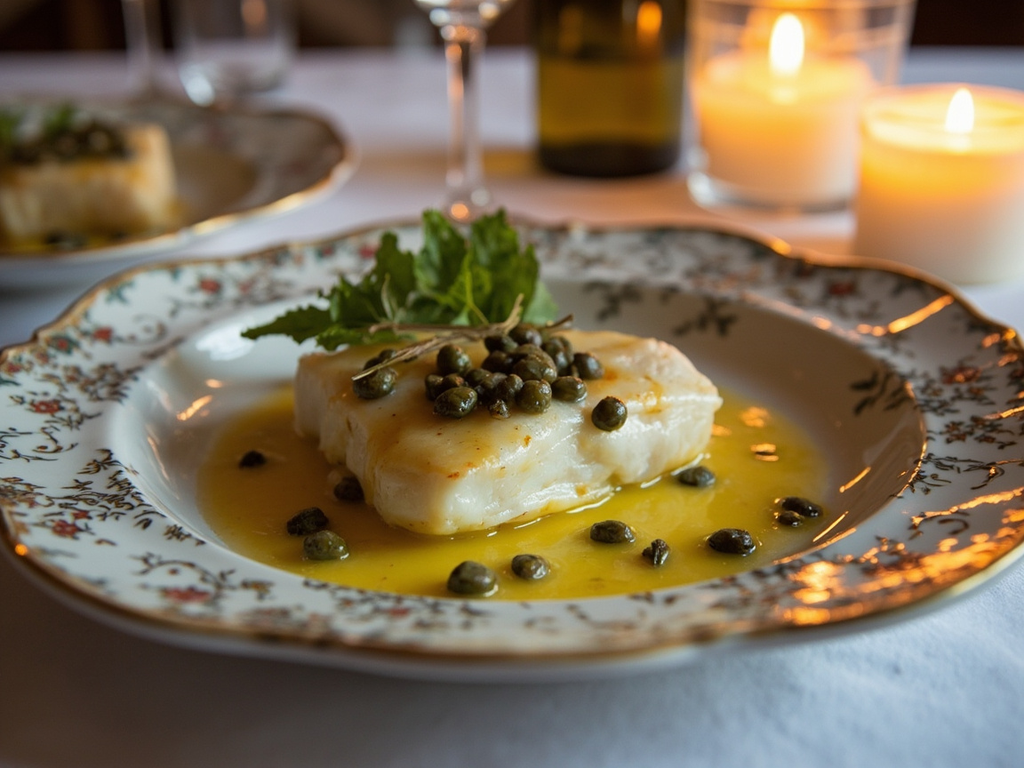
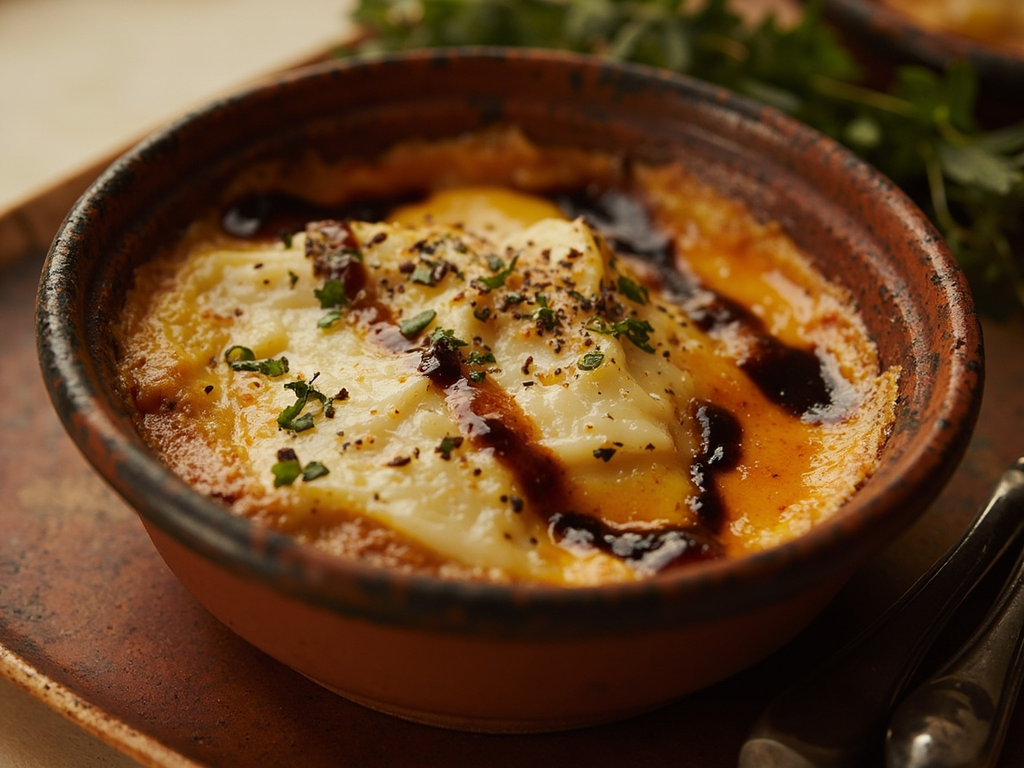
Patina of fish with garum and defrutum — the mensa prima of the banquet
Why this dish? In Clodia's gardens on the Tiber and at her villa in Baiae on the Bay of Naples, fresh fish abounded. This patina, a fish custard bound with eggs and seasoned with garum, was exactly the kind of dish a prominent hostess would serve at banquets where the art of pleasing was cultivated.
A melting fish custard baked in a terrine, bound with eggs, perfumed with wine and garum, balanced by honey and defrutum: the pinnacle of sweet-sour-salty refined Roman cuisine.
At Baiae, on my terrace overlooking the bay, the fish arrives still wriggling from the fishponds — one must do it honor. You crumble the cooked flesh, bind it with beaten eggs, moisten with wine and a dash of garum, sweeten with honey and defrutum, then let it all cook gently until it sets like a firm cream. Cicero may drag me through his court and call me every name; my guests, however, will forget neither my verses nor my table. Serve it warm, and let the cups be filled.
- •Sea fish (sea bass, sea bream) — a fine piece (base)
- •Eggs — a few (binder)
- •Garum — a dash (umami seasoning)
- •White wine — a ladleful (flavor)
- •Defrutum (reduced grape must) — a drizzle (sweetness)
- •Honey — a spoonful (sweetness)
- •Pepper, lovage, oregano — to taste (aromatics)
- •Olive oil — for the dish (cooking)
Patina of fish with garum and defrutum — the mensa prima of the banquet
A melting fish custard baked in a terrine, bound with eggs, perfumed with wine and garum, balanced by honey and defrutum: the pinnacle of sweet-sour-salty refined Roman cuisine.
Why this dish? In Clodia's gardens on the Tiber and at her villa in Baiae on the Bay of Naples, fresh fish abounded. This patina, a fish custard bound with eggs and seasoned with garum, was exactly the kind of dish a prominent hostess would serve at banquets where the art of pleasing was cultivated.
At Baiae, on my terrace overlooking the bay, the fish arrives still wriggling from the fishponds — one must do it honor. You crumble the cooked flesh, bind it with beaten eggs, moisten with wine and a dash of garum, sweeten with honey and defrutum, then let it all cook gently until it sets like a firm cream. Cicero may drag me through his court and call me every name; my guests, however, will forget neither my verses nor my table. Serve it warm, and let the cups be filled.
Ingredients (period version)
- Sea fish (sea bass, sea bream) — a fine piece (base)
- Eggs — a few (binder)
- Garum — a dash (umami seasoning)
- White wine — a ladleful (flavor)
- Defrutum (reduced grape must) — a drizzle (sweetness)
- Honey — a spoonful (sweetness)
- Pepper, lovage, oregano — to taste (aromatics)
- Olive oil — for the dish (cooking)
Ingredients
- Sea bream or sea bass fillets — 500 g (base)
- Eggs — 4 (binder)
- Fish sauce (nuoc-mam or colatura di alici, garum substitute) — 2 tbsp (umami seasoning)
- Dry white wine — 100 ml (flavor)
- Reduced grape must (or grape juice reduced by half) — 2 tbsp (sweetness)
- Honey — 1 tbsp (sweetness)
- Pepper, dried oregano, lovage (or celery) — 1 pinch each (aromatics)
- Olive oil — 2 tbsp (cooking)
Method
- Poach the fish fillets for a few minutes in simmering water, then flake them, removing bones and skin.
- Beat the eggs with the white wine, fish sauce, reduced must, honey, and aromatics.
- Mix the flaked fish into the egg mixture.
- Grease an oven dish with oil and pour in the mixture.
- Cook in a bain-marie at medium heat (160°C) for about 30 minutes, until the custard is set but still slightly jiggly.
- Let cool slightly, grind some pepper on top, and serve with a spoon.
How it was made : Patinae are savory custards very common in Apicius. Garum, made by fermenting small fish in salt for months, provided saltiness and umami; defrutum and honey created the sweet-sour balance the Romans cherished. They were baked in low ovens or under ashes, in earthenware molds.
The contemporary twist : Bake in individual ramekins and unmold, like a 'sea flan,' with a dash of colatura di alici (the direct heir of garum, still produced in Cetara).
Sources : Apicius, De re coquinaria, book IV (Patinae)
Clodia Metella · Charactorium