 flip
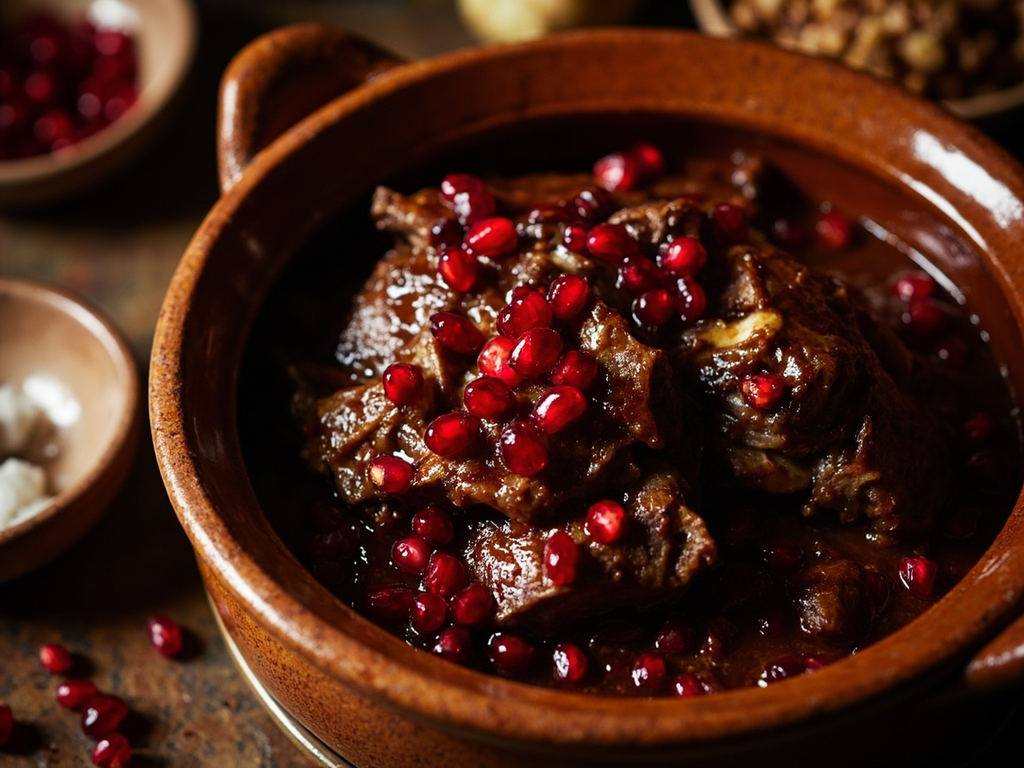
flipLamb Stew with Pomegranate and Walnuts, in the Style of the Great Persian Tables
Lamb Stew with Pomegranate and Walnuts, in the Style of the Great Persian Tables
Why this dish? Anahita is venerated throughout the Achaemenid empire, even in the splendors of royal banquets that kings dedicate to her before battles to obtain victory. This sweet-and-sour stew, ancestor of Persian khoresh, unites her two faithful symbols: the pomegranate that represents her and the lamb from the herds consecrated to her.
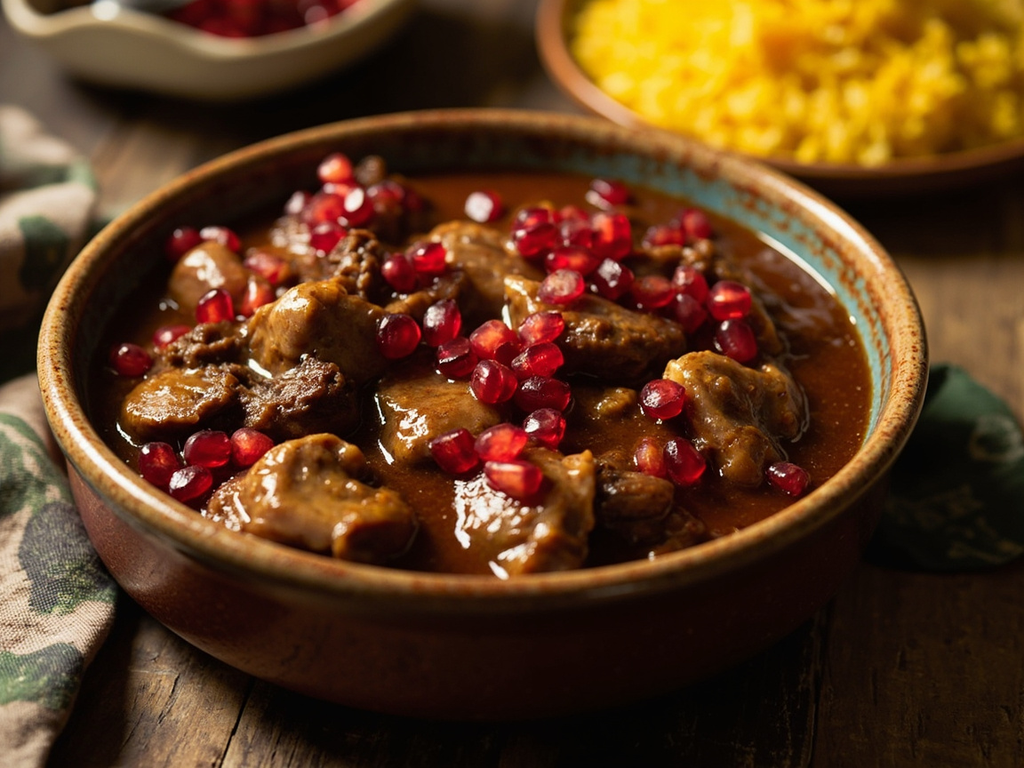
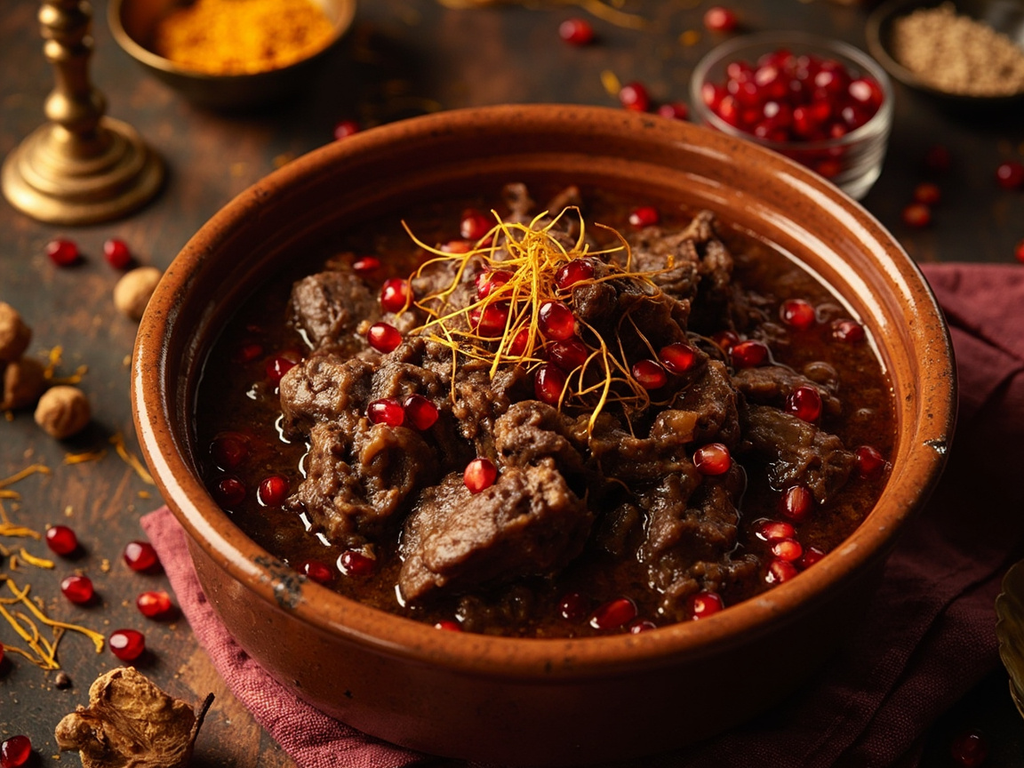
Tender lamb slowly simmered in a dark sauce of pomegranate and ground walnuts, tart and deep. The dish for great occasions, to share.
When the king goes to war, it is to me that he offers the hundred stallions and the thousand sheep, so that I may grant him victory—then his table overflows. Take the fattest lamb, brown it, then drown it in the thick juice of my pomegranates and the paste of ground walnuts. Let it simmer until the meat yields under the tongue and the sauce becomes dark as wine. This is a dish of triumph: serve it to whom you wish to honor.
- •Lamb shoulder — a fine piece (festive meat)
- •Ground walnut kernels — two handfuls (binder, fat, umami)
- •Reduced pomegranate juice — generously (acidity and color)
- •Onions — several (stew base)
- •Honey — a drizzle (sweet-sour balance)
- •Salt, coriander seeds, saffron — to taste (seasoning)
Lamb Stew with Pomegranate and Walnuts, in the Style of the Great Persian Tables
Tender lamb slowly simmered in a dark sauce of pomegranate and ground walnuts, tart and deep. The dish for great occasions, to share.
Why this dish? Anahita is venerated throughout the Achaemenid empire, even in the splendors of royal banquets that kings dedicate to her before battles to obtain victory. This sweet-and-sour stew, ancestor of Persian khoresh, unites her two faithful symbols: the pomegranate that represents her and the lamb from the herds consecrated to her.
When the king goes to war, it is to me that he offers the hundred stallions and the thousand sheep, so that I may grant him victory—then his table overflows. Take the fattest lamb, brown it, then drown it in the thick juice of my pomegranates and the paste of ground walnuts. Let it simmer until the meat yields under the tongue and the sauce becomes dark as wine. This is a dish of triumph: serve it to whom you wish to honor.
Ingredients (period version)
- Lamb shoulder — a fine piece (festive meat)
- Ground walnut kernels — two handfuls (binder, fat, umami)
- Reduced pomegranate juice — generously (acidity and color)
- Onions — several (stew base)
- Honey — a drizzle (sweet-sour balance)
- Salt, coriander seeds, saffron — to taste (seasoning)
Ingredients
- Boneless lamb shoulder or neck — 1 kg, cut into large cubes (meat)
- Walnut kernels — 200 g, finely ground (sauce and binder)
- Pomegranate molasses — 5 tbsp (concentrated acidity)
- Pomegranate juice — 300 ml (liquid)
- Onions — 2 large, thinly sliced (aromatic base)
- Honey — 1 to 2 tbsp (balance)
- Saffron — a pinch, infused (flavor and color)
- Ground coriander seeds, salt — to taste (seasoning)
- Fresh pomegranate seeds — for serving (decoration and freshness)
Method
- Brown the lamb cubes on all sides in a little fat, set aside.
- In the same pot, cook the sliced onions over low heat for 15 minutes until golden.
- Add the ground walnuts and toast for 2 minutes, stirring, then return the lamb.
- Pour in the pomegranate juice and molasses, add coriander, infused saffron, and enough water to cover.
- Cover and simmer over very low heat for 2 to 2.5 hours, stirring occasionally: the sauce should darken and thicken.
- At the end of cooking, balance with honey and salt (the sauce should be distinctly sweet-sour), then sprinkle with fresh pomegranate seeds before serving with rice or drôn.
How it was made : The combination of meat, walnuts, and pomegranate is ancient in Iran and survives in modern fesenjân. At Achaemenid tables, meats were slowly simmered in sweet-sour fruit-based sauces; kings multiplied animal sacrifices to Anahita before military campaigns, according to Greek sources and royal inscriptions.
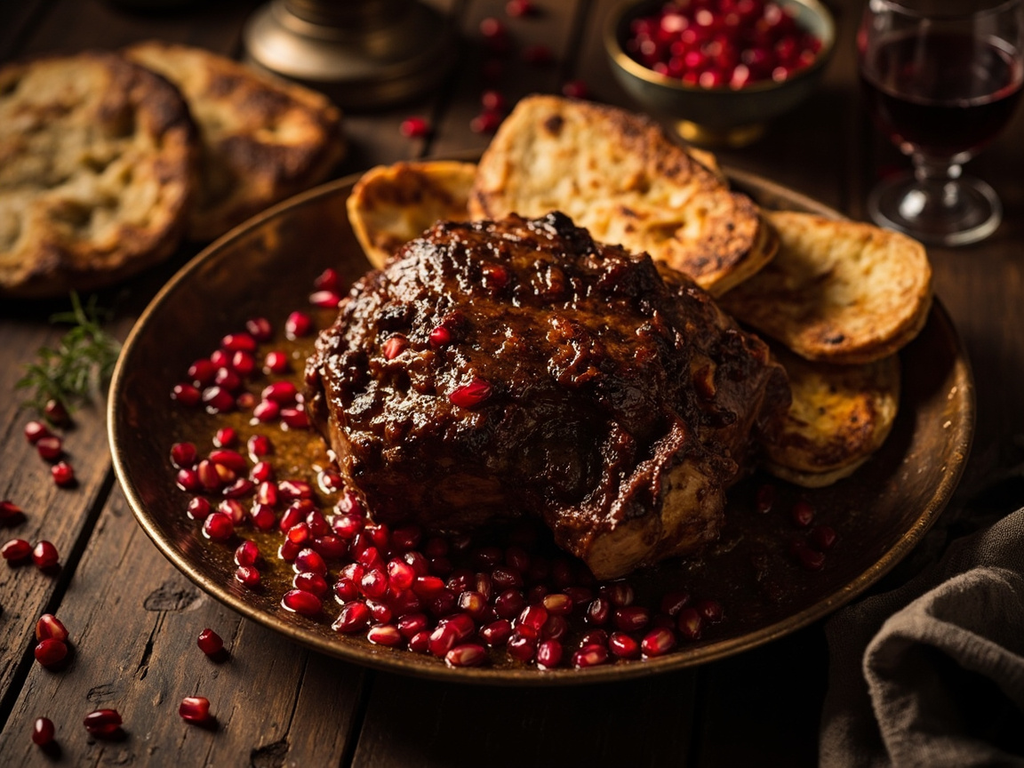
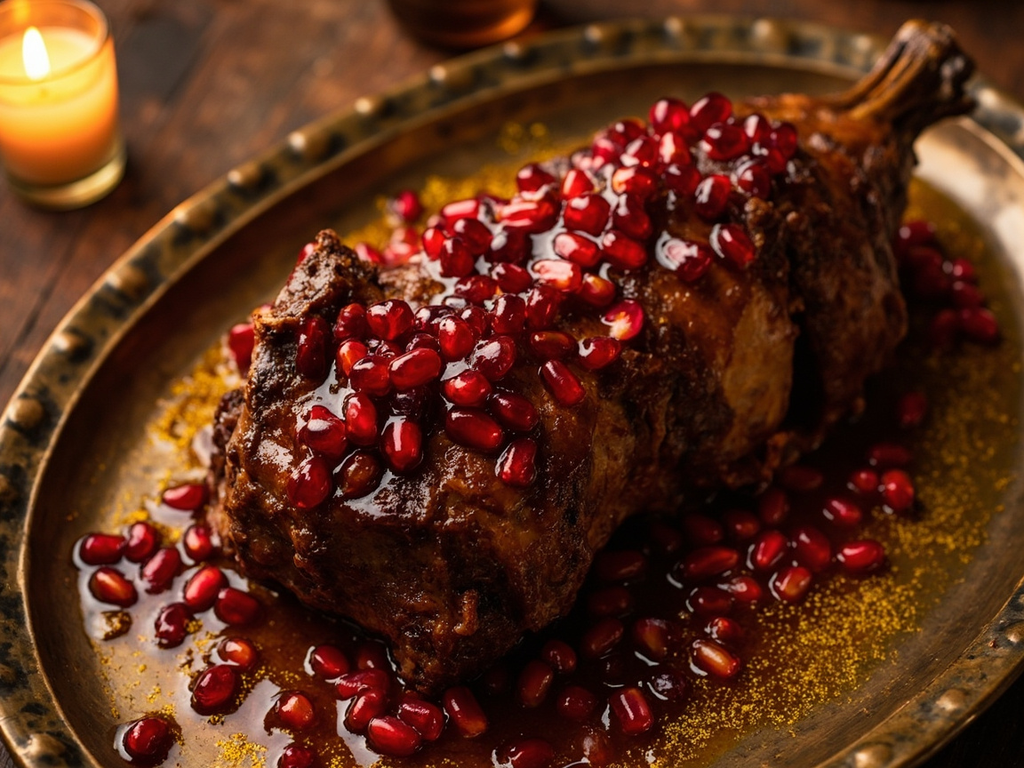
The contemporary twist : Plate the dark sauce as a mirror at the bottom of the dish, place the lamb on top, crowned with pomegranate seeds: a "red shield" for the goddess of victory.
Sources : Herodotus, Histories (Persian banquets and sacrifices) · Strabo, Geography (Book XI, cult of Anahita in Cappadocia and Armenia) · Najmieh Batmanglij, Food of Life: Ancient Persian and Modern Iranian Cooking
Anahita · Charactorium