 flip
flipSteamed whole fish with ginger and scallion
Steamed whole fish with ginger and scallion
Why this dish? In *Eat Drink Man Woman*, Ang Lee opens with a father-chef preparing a Sunday banquet where the whole fish sits at the center. Fish, yu, is a homophone for 'abundance' in Chinese: it is served whole to wish that prosperity lasts all year. This is cooking as the language of family love, dear to the filmmaker.
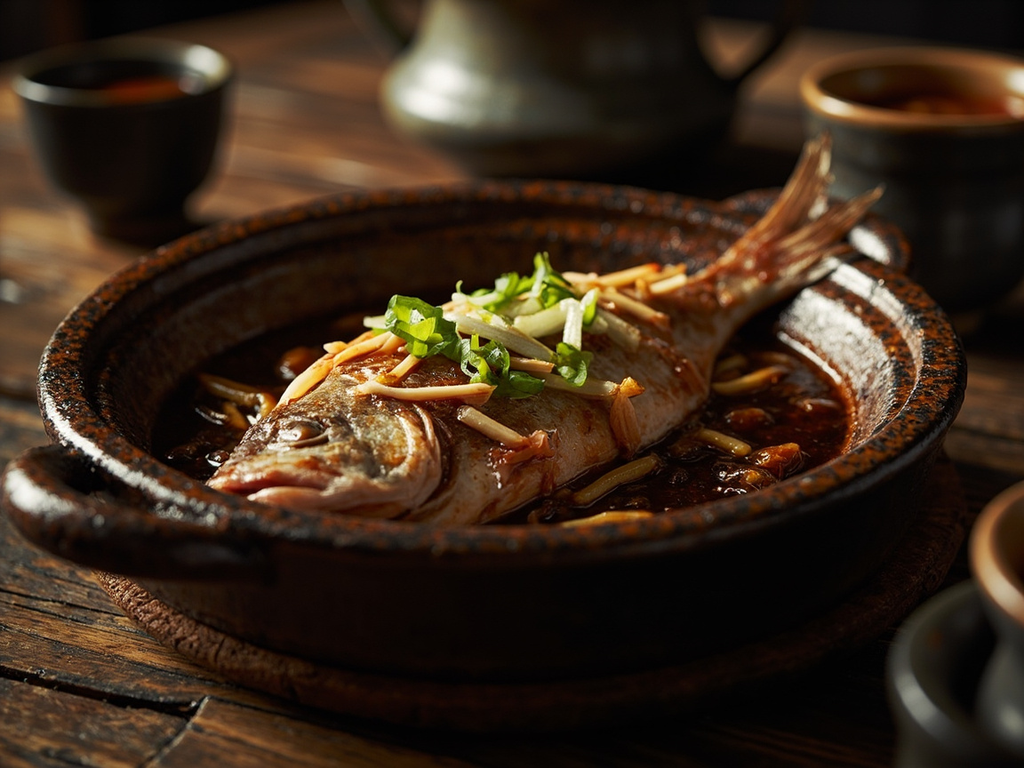
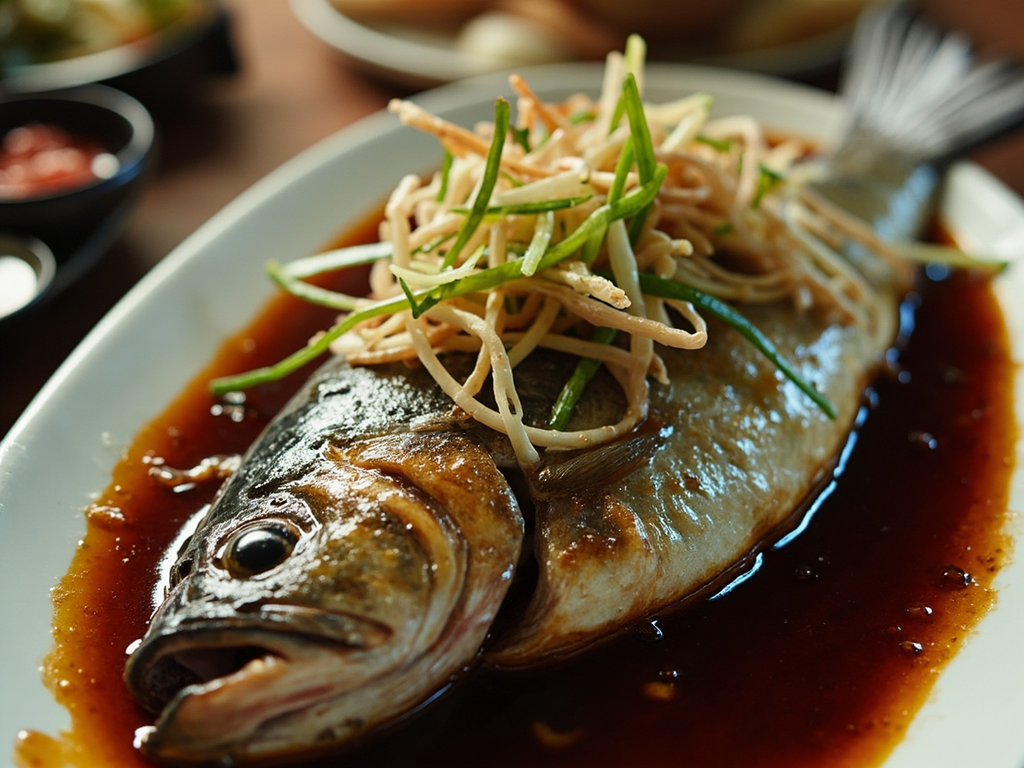
A whole fish steamed for only a few minutes, drizzled with hot soy sauce, crowned with ginger and scallion shreds, then finished with a splash of sizzling oil that awakens all the aromas in a hiss.
My father would have said you judge a cook by his steaming, not by his complicated sauces. The fish must remain whole, head and tail, so that the year remains whole too. Choose it very fresh — the flesh should still tremble. You only have a few minutes: overcooked, it is lost, like a shot held one second too long. The hot oil poured at the end, that little cry in the kitchen, is the moment the whole family waits for.
- •Whole fish (sea bass, bream) — one, very fresh (centerpiece)
- •Ginger — a piece (aroma, in shreds)
- •Scallions — a few stalks (freshness, in shreds)
- •Light soy sauce — to taste (seasoning)
- •Rice wine — a splash (deodorize)
- •Hot oil — a ladleful (awaken aromas)
Steamed whole fish with ginger and scallion
A whole fish steamed for only a few minutes, drizzled with hot soy sauce, crowned with ginger and scallion shreds, then finished with a splash of sizzling oil that awakens all the aromas in a hiss.
Why this dish? In *Eat Drink Man Woman*, Ang Lee opens with a father-chef preparing a Sunday banquet where the whole fish sits at the center. Fish, yu, is a homophone for 'abundance' in Chinese: it is served whole to wish that prosperity lasts all year. This is cooking as the language of family love, dear to the filmmaker.
My father would have said you judge a cook by his steaming, not by his complicated sauces. The fish must remain whole, head and tail, so that the year remains whole too. Choose it very fresh — the flesh should still tremble. You only have a few minutes: overcooked, it is lost, like a shot held one second too long. The hot oil poured at the end, that little cry in the kitchen, is the moment the whole family waits for.
Ingredients (period version)
- Whole fish (sea bass, bream) — one, very fresh (centerpiece)
- Ginger — a piece (aroma, in shreds)
- Scallions — a few stalks (freshness, in shreds)
- Light soy sauce — to taste (seasoning)
- Rice wine — a splash (deodorize)
- Hot oil — a ladleful (awaken aromas)
Ingredients
- Whole sea bass or bream — 1 (about 600-800 g), gutted and scaled (centerpiece)
- Fresh ginger — 30 g, fine slices + shreds (aroma)
- Scallions — 4, cut into sections then shreds (freshness)
- Shaoxing wine — 2 tbsp (fragrant steam)
- Soy sauce for steamed fish (or light soy + pinch of sugar) — 3 tbsp (sauce)
- Neutral oil — 3 tbsp (final sizzling oil)
- Cilantro — a few sprigs (garnish)
Method
- Score the fish on both sides, place on a plate with ginger slices underneath and on top, drizzle with rice wine.
- Steam over high heat for 8-10 minutes depending on size, until the flesh flakes.
- Discard the released liquid, remove cooked ginger, place raw ginger shreds, scallion shreds, and cilantro on the fish.
- Heat the soy sauce and pour around; heat oil until just smoking and pour over the herbs to sizzle.
- Serve immediately, at the center of the table.
How it was made : Steaming a whole fish is a pinnacle of Cantonese and Taiwanese festive cooking: it demands impeccable freshness because nothing masks the taste. Serving the fish with the head on, and turning it carefully (never flipping it over in one go, an inauspicious gesture among fishermen) is part of banquet etiquette.
The contemporary twist : Present the fish on a long black slate, scallion shreds arranged like a crest, like a symmetrical film shot.
Ang Lee · Charactorium