 flip
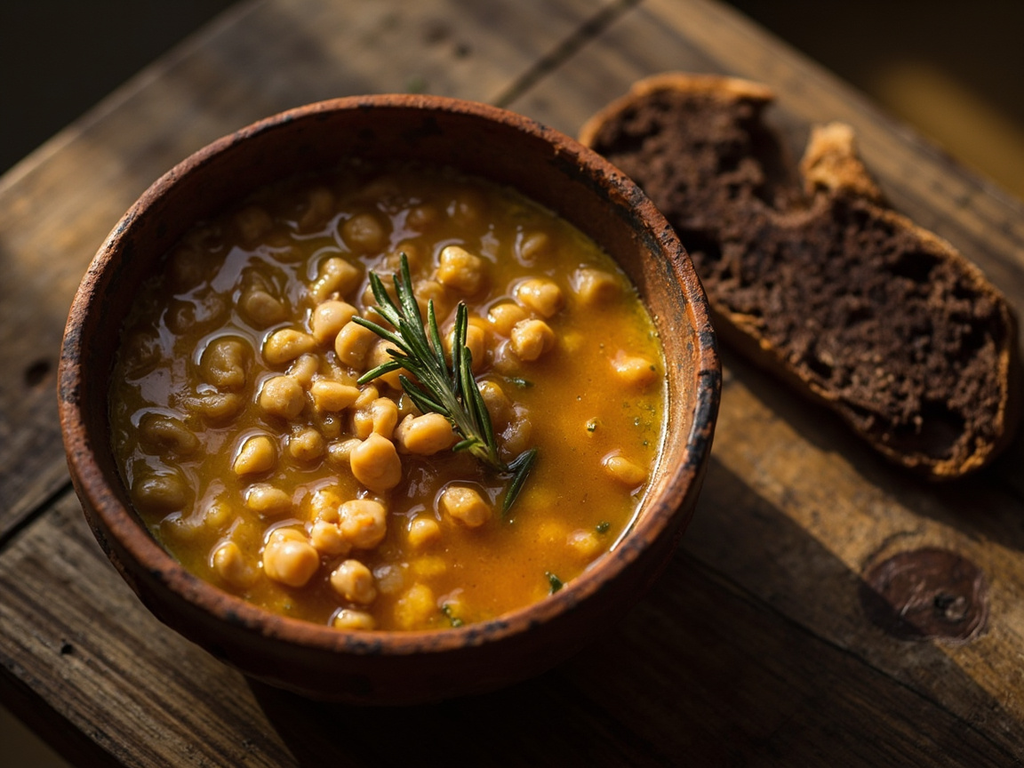
flipMinestra di farro e ceci — farro and chickpea soup with rosemary
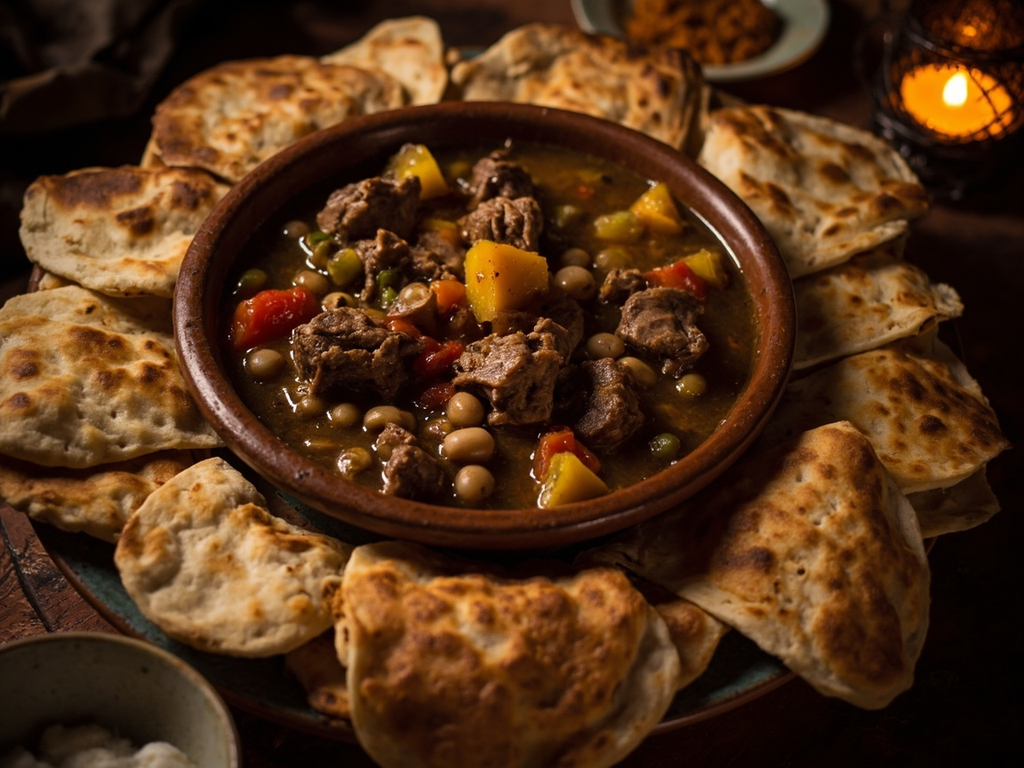
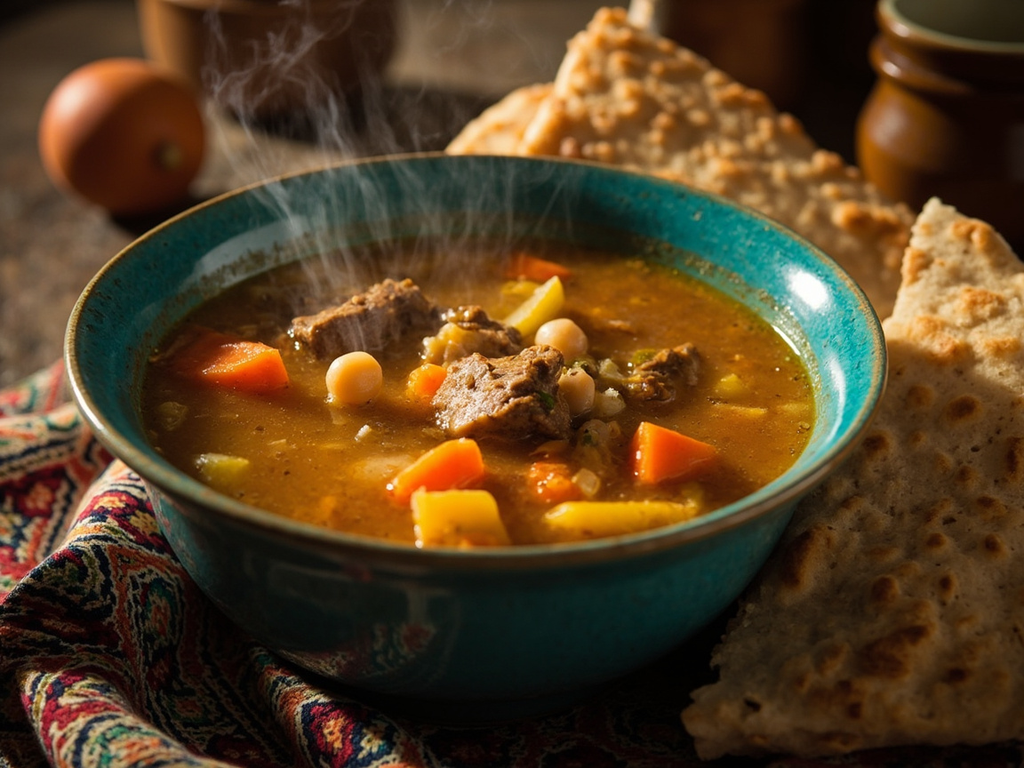
Minestra di farro e ceci — farro and chickpea soup with rosemary
Why this dish? For Saint Francis' Day (October 4) or major feasts, the tertiary community broke the fast with a hot, nourishing soup. Umbrian farro and chickpeas, long simmered, brought brothers and sisters together at a shared table, as Angela loved.
A thick, comforting soup of farro (spelt) and chickpeas, flavored with rosemary, sage, and garlic, bound with olive oil. Hearty and fragrant, it is the joyful, fraternal face of the Franciscan table.
On the days when the Church grants us leave to feast, I invite the brothers and the poor to this soup, and none rises hungry. I soak the farro and chickpeas from the night before, for patience is the first spice; then I let them simmer for hours by the embers, with a sprig of rosemary picked from the cloister wall. Pour in your best oil at the last moment, and break bread into it: it is a poor man's meal, but God is invited as to a feast.
- •Umbrian farro (spelt) — two handfuls per person (grain base)
- •Dried chickpeas — as much as farro (legume)
- •Rosemary and sage from the cloister — one sprig each (flavoring)
- •Garlic — a few cloves (aromatic base)
- •Olive oil from the hills — a good drizzle (binding and flavor)
- •Salt — to taste (seasoning)
Minestra di farro e ceci — farro and chickpea soup with rosemary
A thick, comforting soup of farro (spelt) and chickpeas, flavored with rosemary, sage, and garlic, bound with olive oil. Hearty and fragrant, it is the joyful, fraternal face of the Franciscan table.
Why this dish? For Saint Francis' Day (October 4) or major feasts, the tertiary community broke the fast with a hot, nourishing soup. Umbrian farro and chickpeas, long simmered, brought brothers and sisters together at a shared table, as Angela loved.
On the days when the Church grants us leave to feast, I invite the brothers and the poor to this soup, and none rises hungry. I soak the farro and chickpeas from the night before, for patience is the first spice; then I let them simmer for hours by the embers, with a sprig of rosemary picked from the cloister wall. Pour in your best oil at the last moment, and break bread into it: it is a poor man's meal, but God is invited as to a feast.
Ingredients (period version)
- Umbrian farro (spelt) — two handfuls per person (grain base)
- Dried chickpeas — as much as farro (legume)
- Rosemary and sage from the cloister — one sprig each (flavoring)
- Garlic — a few cloves (aromatic base)
- Olive oil from the hills — a good drizzle (binding and flavor)
- Salt — to taste (seasoning)
Ingredients
- Pearled spelt (farro) — 200 g (grain base)
- Dried chickpeas — 200 g (soaked overnight) (legume)
- Fresh rosemary — 1 sprig (flavoring)
- Fresh sage — 4 leaves (flavoring)
- Garlic — 3 cloves (aromatic base)
- Extra virgin olive oil — 5 tbsp (binding and flavor)
- Salt — to taste (seasoning)
- Water — 1.5 to 2 liters (cooking liquid)
Method
- The night before, soak the chickpeas in plenty of cold water.
- Drain the chickpeas, cover with fresh cold water, add one garlic clove and a sage leaf, bring to a boil, then simmer gently for 1 hour 30 minutes (do not salt at the start).
- Heat 3 tbsp oil in a large pot, sauté the remaining crushed garlic, rosemary, and sage until fragrant.
- Add the rinsed farro, stir for a minute, then pour in the chickpeas with their cooking water and top up with hot water.
- Simmer for 40 to 50 minutes until the farro is tender and the soup creamy; season with salt at the end.
- To thicken, mash a ladleful of chickpeas with a fork and stir back in. Serve hot, drizzled generously with raw olive oil.
How it was made : Farro (spelt) is the ancient grain of Umbria, inherited from the Romans, and chickpeas were one of the major legumes of the Middle Ages — rich in protein, they replaced meat, forbidden on numerous lean days. These soups were cooked for hours in an earthenware pot placed by the fire, perfumed with herbs from the monastic garden. Olive oil, poured raw at the end, was the only fat allowed during Lent.
The contemporary twist : A spoonful of sage and walnut pesto placed in the center of the bowl, and a few dry-toasted farro grains for crunch: the refectory becomes a guest table.
Sources : Massimo Montanari, La faim et l'abondance · Anna Martellotti, Il Liber de coquina
Angela of Foligno · Charactorium