 flip
flipRendang daging
Rendang daging
Why this dish? Rendang, a Minangkabau dish from Sumatra, is served at major occasions and family feasts throughout Indonesia. Anggun, an ambassador of her culture on world stages, cites it as an emblem of Indonesian culinary art: a dish of patience and celebration.
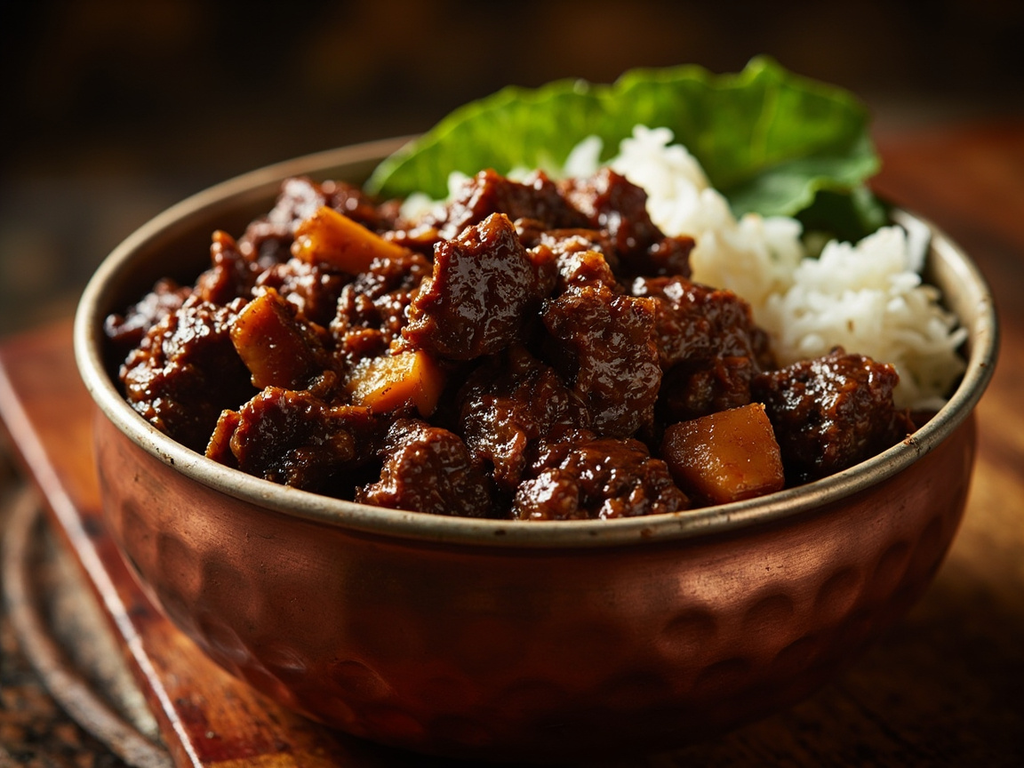
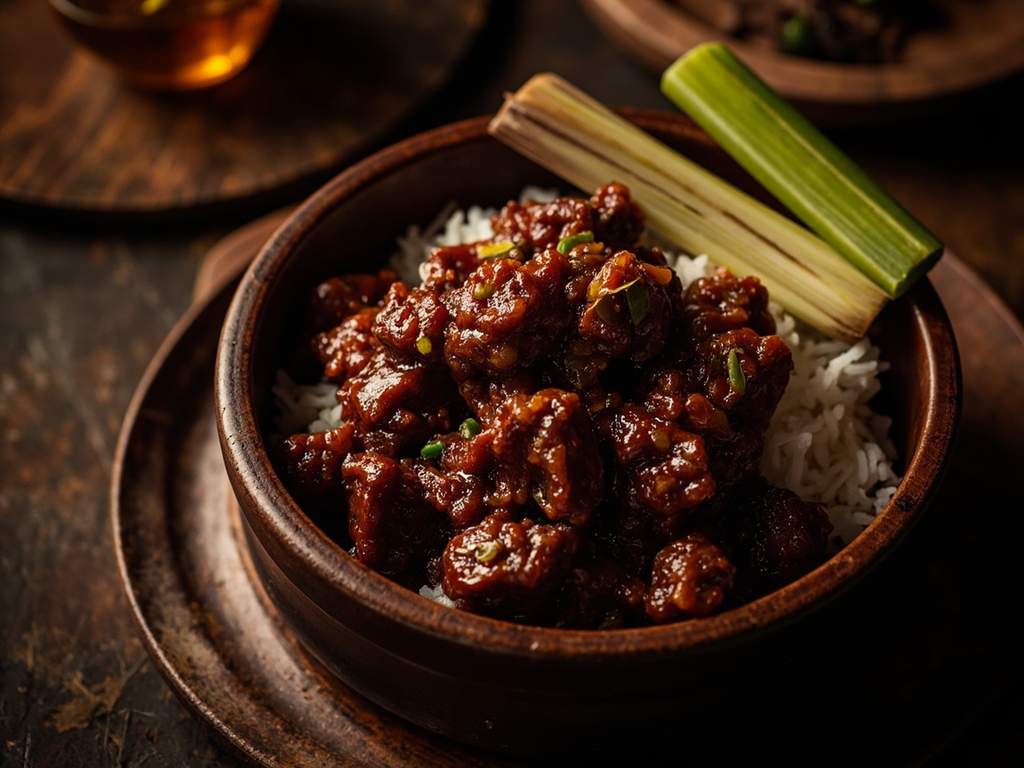
Beef slowly simmered in coconut milk and a spice paste (galangal, lemongrass, turmeric) until the sauce evaporates and caramelizes, coating the meat with a dark brown, intensely fragrant velvet.
Rendang is not made in a hurry: it's a dish that demands the whole afternoon. The coconut milk simmers and simmers, and you have to stir constantly so it doesn't burn, until it releases its oil and the meat becomes almost black, tender like nothing else. Among the Minang, the darker the rendang, the nobler it is. When I entertain far from home, it's this scent of galangal and lemongrass that brings all of Indonesia into my kitchen.
- •Beef (shank) — in large cubes (meat)
- •Fresh coconut milk — abundant (cooking medium)
- •Galangal, ginger, turmeric — pounded (spice paste)
- •Lemongrass, kaffir lime leaves, salam leaf — a few stalks and leaves (fragrance)
- •Shallot, garlic, dried chilies — a large amount, pounded (paste base)
- •Salt — to taste (seasoning)
Rendang daging
Beef slowly simmered in coconut milk and a spice paste (galangal, lemongrass, turmeric) until the sauce evaporates and caramelizes, coating the meat with a dark brown, intensely fragrant velvet.
Why this dish? Rendang, a Minangkabau dish from Sumatra, is served at major occasions and family feasts throughout Indonesia. Anggun, an ambassador of her culture on world stages, cites it as an emblem of Indonesian culinary art: a dish of patience and celebration.
Rendang is not made in a hurry: it's a dish that demands the whole afternoon. The coconut milk simmers and simmers, and you have to stir constantly so it doesn't burn, until it releases its oil and the meat becomes almost black, tender like nothing else. Among the Minang, the darker the rendang, the nobler it is. When I entertain far from home, it's this scent of galangal and lemongrass that brings all of Indonesia into my kitchen.
Ingredients (period version)
- Beef (shank) — in large cubes (meat)
- Fresh coconut milk — abundant (cooking medium)
- Galangal, ginger, turmeric — pounded (spice paste)
- Lemongrass, kaffir lime leaves, salam leaf — a few stalks and leaves (fragrance)
- Shallot, garlic, dried chilies — a large amount, pounded (paste base)
- Salt — to taste (seasoning)
Ingredients
- Beef for braising (chuck or shank) — 800 g (meat)
- Coconut milk — 800 ml (cooking medium)
- Fresh galangal (or ginger if unavailable) — 30 g (spice paste)
- Fresh or ground turmeric — 1 tsp (color and fragrance)
- Lemongrass — 2 stalks, bruised (fragrance)
- Kaffir lime leaves — 4 (fragrance)
- Shallots — 6 (paste base)
- Garlic — 4 cloves (paste base)
- Dried red chilies — 4 to 8 depending on taste (heat)
- Salt — 1 tsp (seasoning)
Method
- Blend shallots, garlic, rehydrated chilies, galangal, and turmeric into a fine paste.
- Fry the paste in a heavy pot until it releases its aroma.
- Add beef, coconut milk, lemongrass, and kaffir lime leaves.
- Simmer uncovered for 2h30 to 3h, stirring regularly, until the sauce thickens and reduces to a dark brown coating.
- Continue over low heat, stirring often: the meat should caramelize in the oil released from the coconut, without burning.
- Adjust salt and serve with steamed white rice.
How it was made : Rendang was originally a preservation technique: prolonged cooking until total evaporation of liquid and caramelization allowed the meat to keep for several days without refrigeration in the Sumatran climate. It accompanied travelers and major Minangkabau adat (customary) ceremonies.
The contemporary twist : Served in a generous portion on pandan-scented coconut rice, with a few crispy fried leaves as a graphic garnish.
Anggun · Charactorium