 flip
flipTchaïepitié with Samovar and Sour Cherry Jam
Tchaïepitié with Samovar and Sour Cherry Jam
Why this dish? The tea samovar is among the typical objects of Akhmatova. The tea ceremony is the center of Russian sociability and a refuge for poets: it was around tea that verses were read, vigils kept, and cold and fear resisted during the Stalinist years.
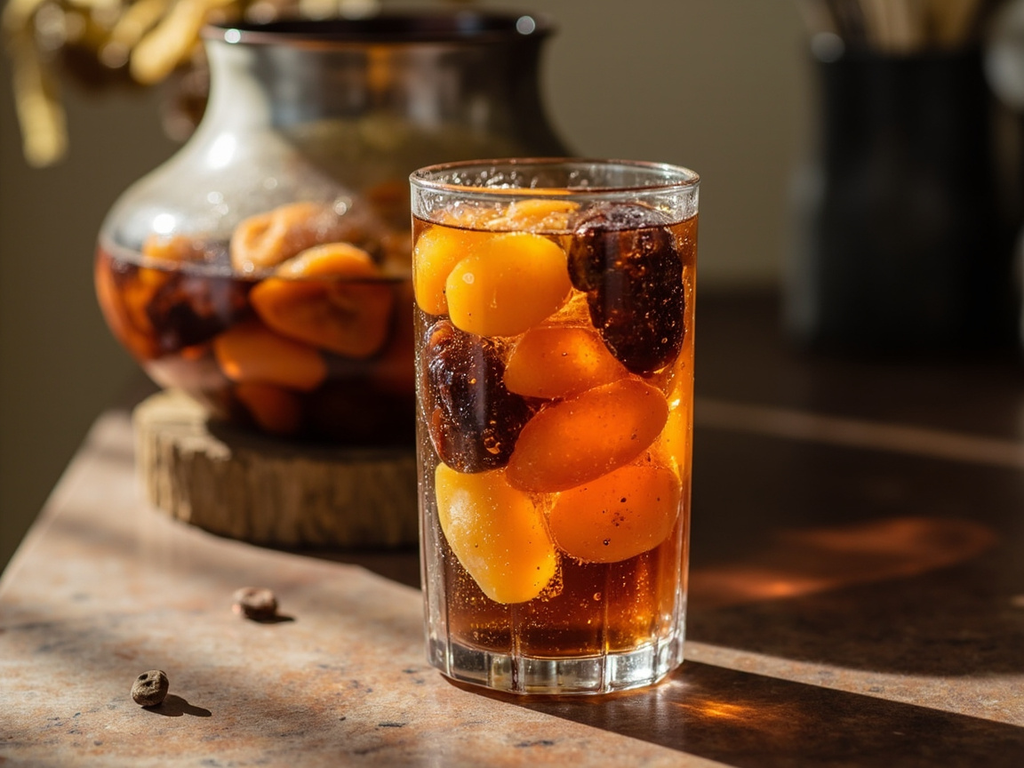
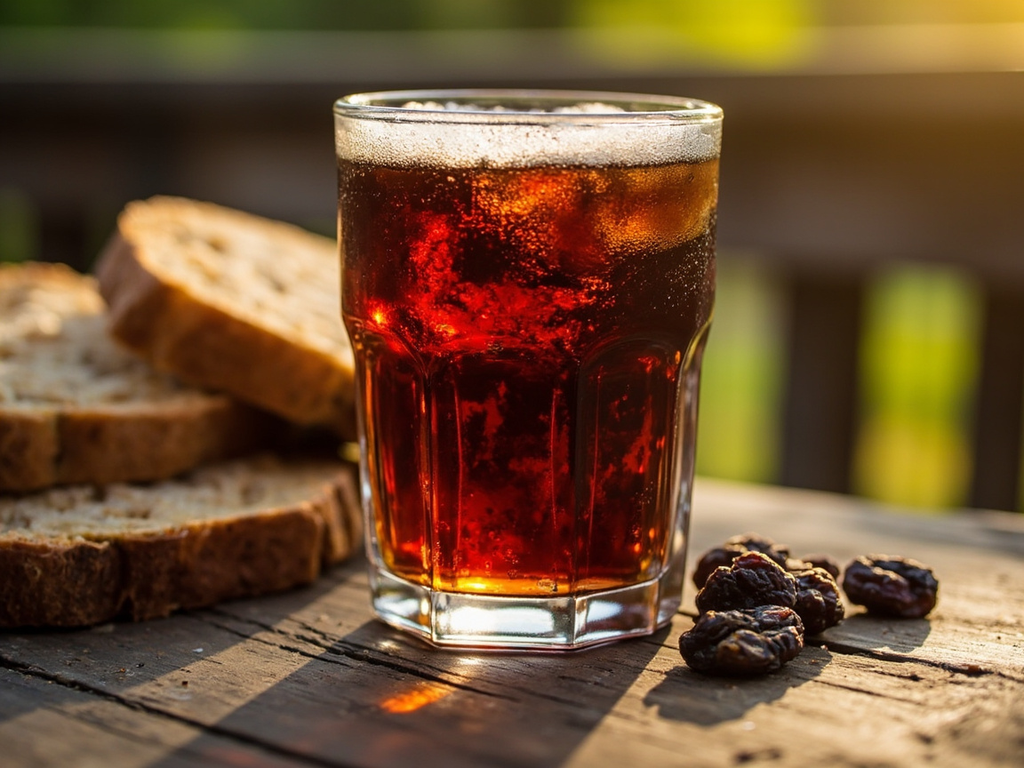
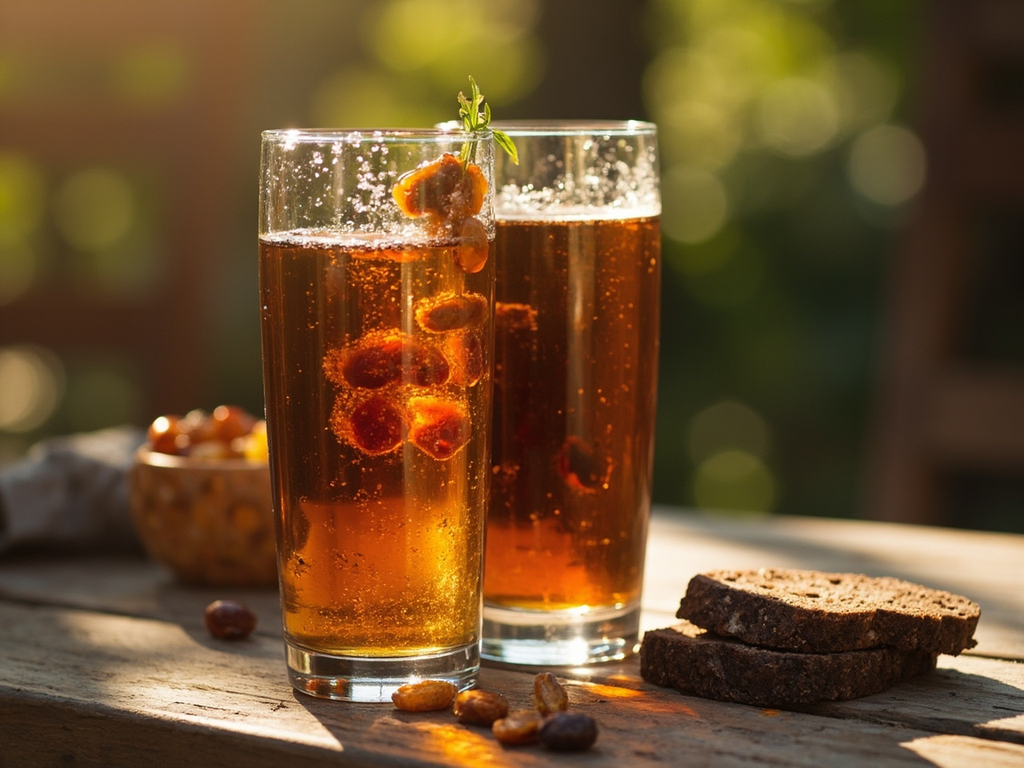
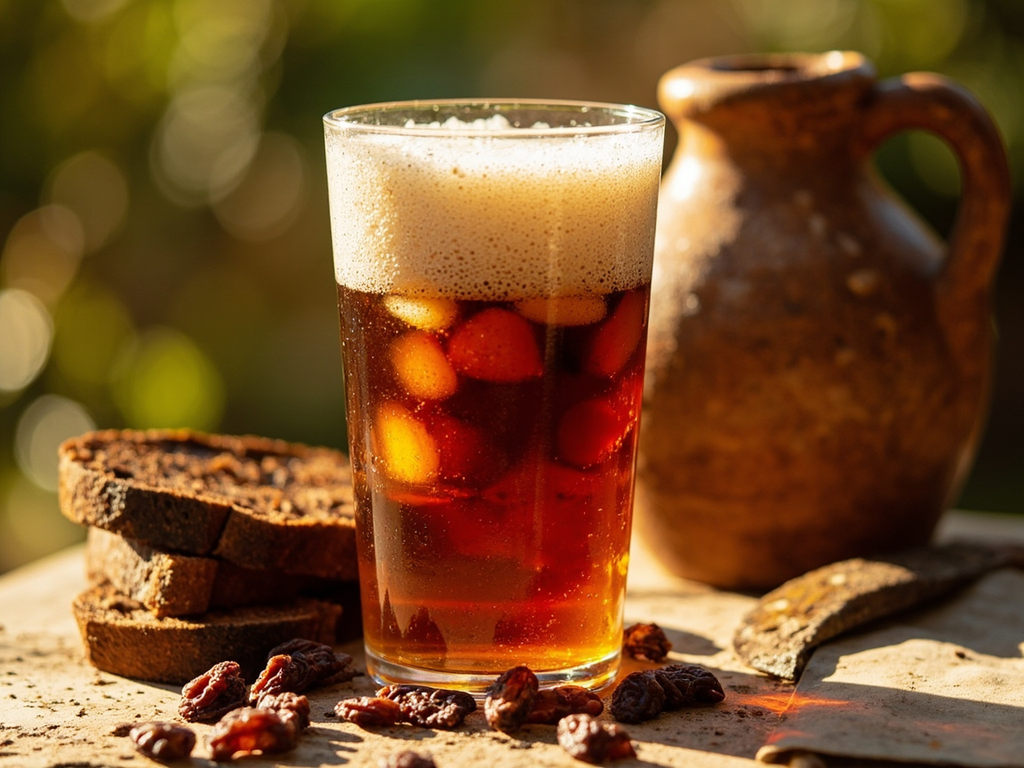
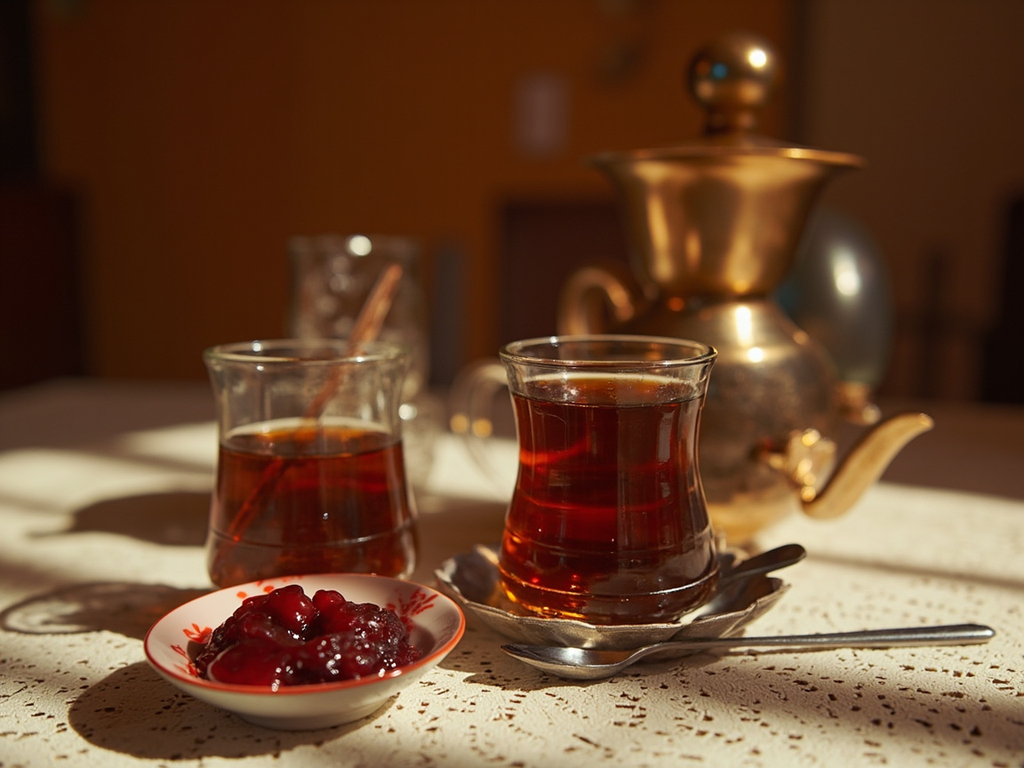
A strong black tea drawn from the samovar, lengthened with boiling water, sweetened not with melted sugar but "Russian style": by holding a spoonful of sour cherry jam (*varenye*) in the mouth between sips. The ritual of comfort and conversation.
Tea, my friend, is not drunk in haste: it is kept vigil over. First you draw the *zavarka*, that dark and bitter concentrate, into the small teapot sitting atop the samovar, then you lengthen it according to each heart. As for me, I never put sugar in the cup — I take a spoonful of *varenye* of sour cherries, and I hold it under my tongue while the hot tea passes over it. That is how one endures the long Leningrad nights, talking of verse until the samovar falls silent.
- •Black tea leaves — for a strong zavarka (infusion)
- •Water from the samovar — as needed (dilution)
- •Sour cherries (vishnya) — a large bowl (jam)
- •Sugar — equal weight to cherries (preservation, sweetness)
Tchaïepitié with Samovar and Sour Cherry Jam
A strong black tea drawn from the samovar, lengthened with boiling water, sweetened not with melted sugar but "Russian style": by holding a spoonful of sour cherry jam (*varenye*) in the mouth between sips. The ritual of comfort and conversation.
Why this dish? The tea samovar is among the typical objects of Akhmatova. The tea ceremony is the center of Russian sociability and a refuge for poets: it was around tea that verses were read, vigils kept, and cold and fear resisted during the Stalinist years.
Tea, my friend, is not drunk in haste: it is kept vigil over. First you draw the *zavarka*, that dark and bitter concentrate, into the small teapot sitting atop the samovar, then you lengthen it according to each heart. As for me, I never put sugar in the cup — I take a spoonful of *varenye* of sour cherries, and I hold it under my tongue while the hot tea passes over it. That is how one endures the long Leningrad nights, talking of verse until the samovar falls silent.
Ingredients (period version)
- Black tea leaves — for a strong zavarka (infusion)
- Water from the samovar — as needed (dilution)
- Sour cherries (vishnya) — a large bowl (jam)
- Sugar — equal weight to cherries (preservation, sweetness)
Ingredients
- Loose black tea (Russian/Ceylon type) — 2 heaping tsp (zavarka (concentrate))
- Simmering water — as needed for cups (infusion and dilution)
- Pitted sour cherries (fresh or frozen) — 500 g (jam base)
- Sugar — 400 g (sweetness, preservation)
- Lemon juice — 1 tbsp (balance, gelling)
Method
- Jam: place cherries and sugar in a pot, let macerate for 1–2 hours.
- Gently bring to a boil, skim foam, then cook over medium heat for 25–35 minutes, stirring, until the syrup coats a spoon; add lemon juice at the end.
- Pour into hot jars and let cool.
- Tea: prepare a very strong *zavarka* in a small teapot (steep 5 minutes).
- Pour a little *zavarka* into each glass or cup, then top up with simmering water to taste.
- Serve without sugar in the cup: take a spoonful of cherry jam in the mouth between sips, "Russian style."
How it was made : The samovar, heated with charcoal, kept water boiling for hours; the small teapot of *zavarka* sat on its crown. Tea was often drunk from glasses in metal holders (*podstakannik*), sometimes by biting a lump of hard sugar (*vprikusku*) rather than dissolving it.
The contemporary twist : Present the cherry jam in a small bowl at the center of the table with a spoon per guest, and serve the tea in glasses with *podstakannik* holders: all the theater of *tchaïepitié* without the samovar.
Sources : Darra Goldstein, A Taste of Russia, 1983 · Anya von Bremzen, Mastering the Art of Soviet Cooking, 2013
Anna Akhmatova · Charactorium